
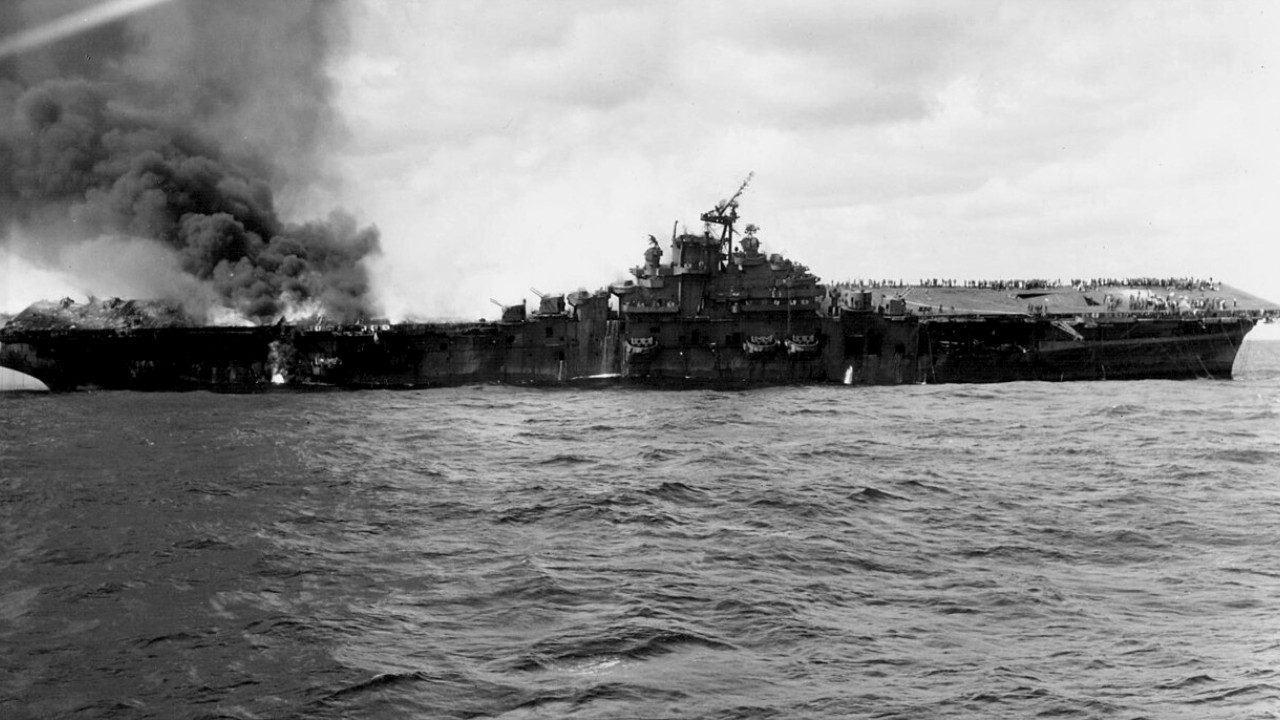
“We all admire a ship that can’t be licked.” Fleet Admiral Nimitz sent those words to a battered destroyer-minelayer off Okinawa in May 1945. He could have said the same about USS Franklin, which had limped home from Japan just weeks earlier.
Some ships simply refuse to go down. Usually, the steel is only half of the story. The rest belongs to the crews who pumped, patched, cooled magazines and kept generators running long after the ship should have sunk. Their accounts, and the damage reports written afterward, tell the real story.
These are Combat Rated’s picks: eight warships that survived damage that sinks most ships. Every entry rests on what sailors, commanders or official damage reports recorded at the time. We never put words in their mouths.
1. SMS Seydlitz
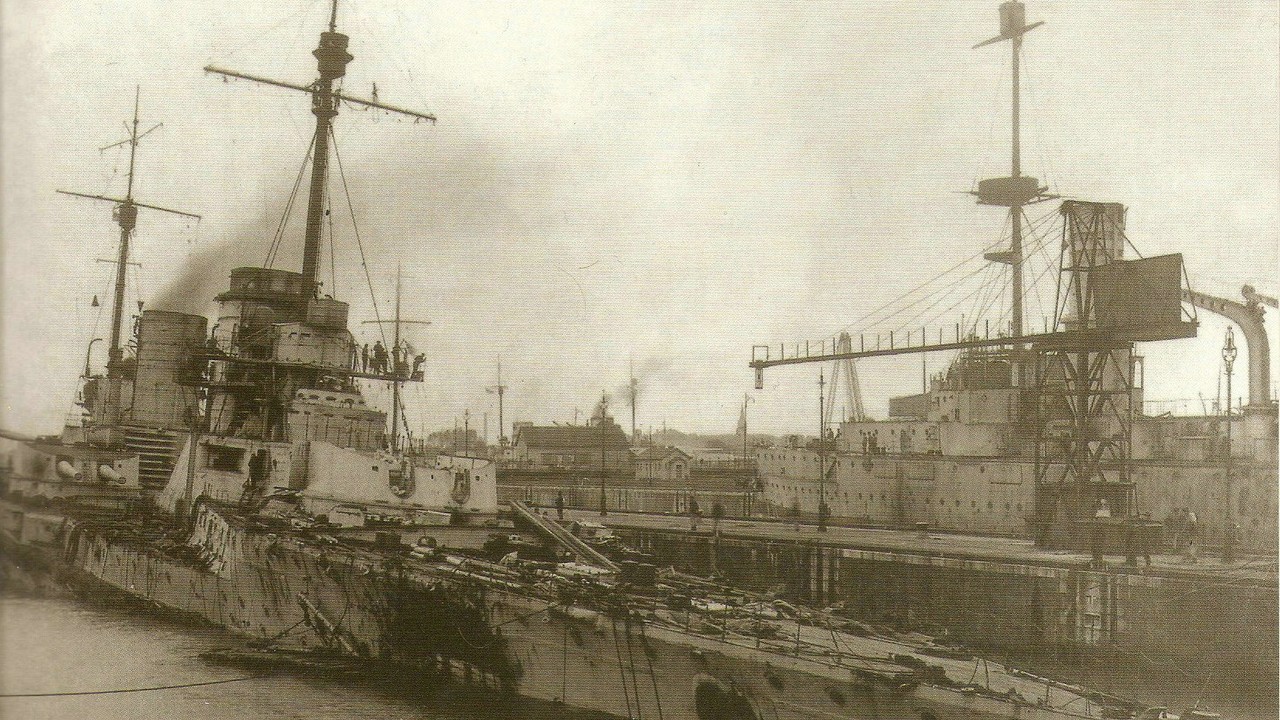
SMS Seydlitz was a German battlecruiser with a habit of surviving the impossible. At Dogger Bank in 1915, a hit wrecked her rear turrets and killed 159 men. Her crew flooded the ammunition bunkers to stop the fire from destroying the ship. A year later, she sailed into something even worse.
At Jutland in 1916, she helped sink HMS Queen Mary early in the battle. Then the Royal Navy caught up with her. According to the International Maritime Museum Hamburg, she took 22 major shell hits and one torpedo. By some German accounts, she had about 5,400 tonnes of water inside her. At one point, her bow rode only 2.5 meters above the sea. She crept home “almost as a wreck,” at times steaming backwards, and needed a tow for the last part of the trip.
Her fleet commander gave the credit to the people aboard. In his memoir, Admiral Reinhard Scheer wrote that “the vessel ever reached the harbour” only because of “the remarkable seamanship of her commander and crew.” Finally, she was backed stern-first into dock at Wilhelmshaven. She was repaired and served on until her crew scuttled her at Scapa Flow on June 21, 1919.
2. HMS Illustrious
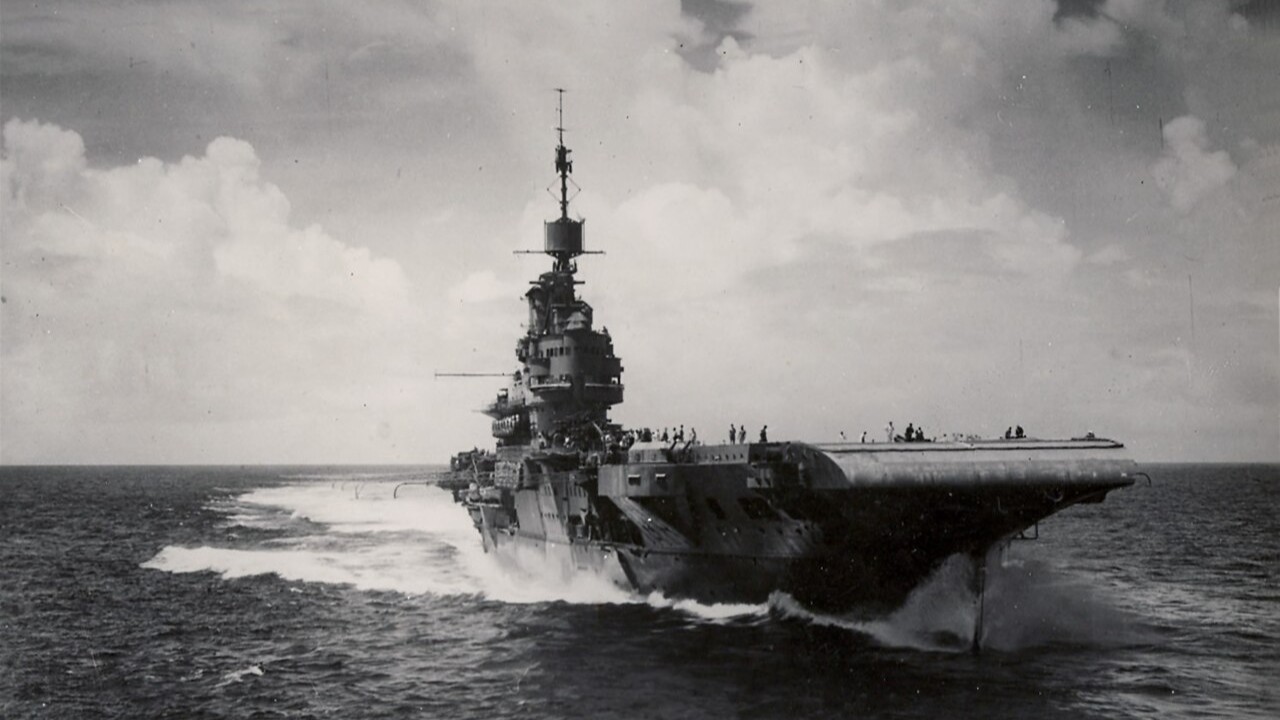
HMS Illustrious was one of Britain’s armored-deck aircraft carriers, and January 10, 1941, put that armor to the test. While covering a Malta convoy, she came under heavy German dive-bomber attack. Malta’s first report to the Admiralty counted six bomb hits and several near misses. A later review judged the bomb that pierced her deck at about 1,000 kilograms.
The cost was severe. She lost 83 men killed, with around 100 more wounded. Flooding knocked out her electric steering, and an oil leak then disabled the steam steering engine. So her crew steered her by her engines alone, regaining control by 14:35. She reached Malta about five feet down by the stern, with many underwater holes. Even then, German bombers kept hunting her in harbor.
The men aboard remembered the strain. Richard Griffin, who survived a blast in her hangar, wrote that “Captain Boyd finally steered with the engines into Malta; the ship was quiet at last.” The Royal Navy’s war damage report singled out the boiler room crews, whose work “was a large factor in the ship’s safe arrival in harbour.” Patched up, she slipped out of Malta on January 24 and later sailed to Norfolk, Virginia, for full repairs.
3. USS Franklin (CV-13)
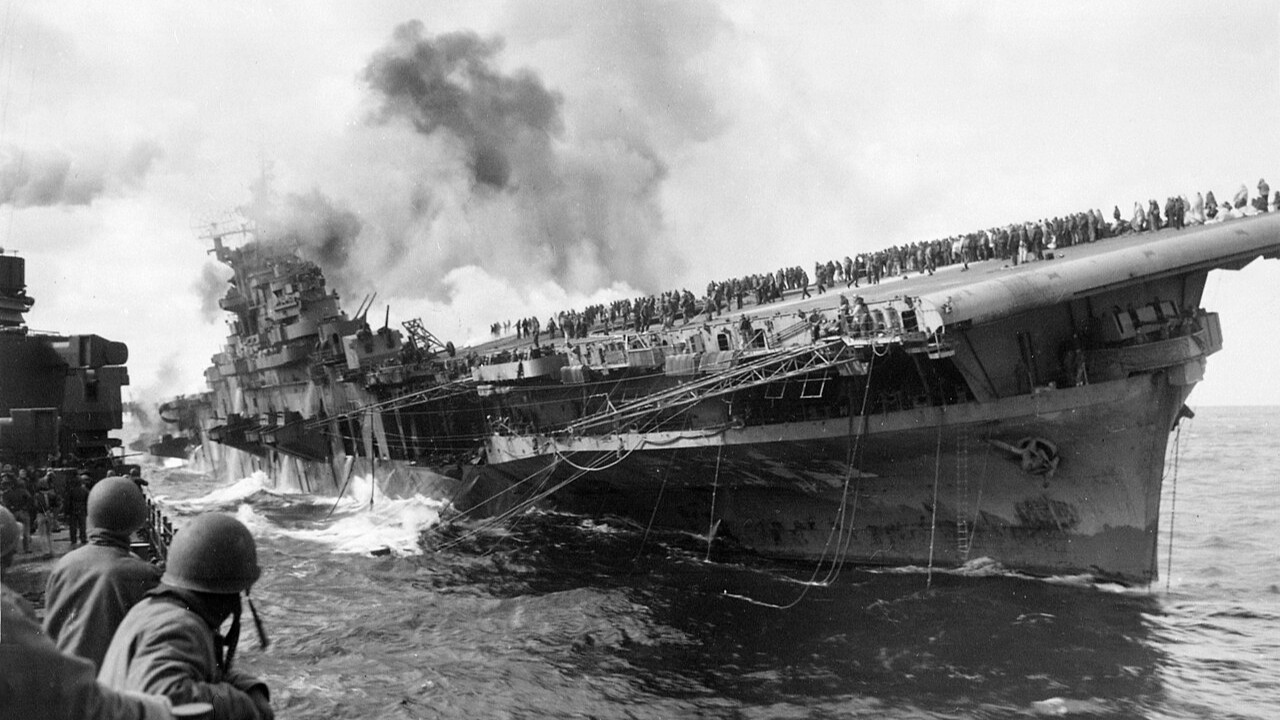
USS Franklin was an Essex-class carrier, and on March 19, 1945, she sat within 50 miles of the Japanese mainland. That was closer than any other American carrier had come during the war. Then a Japanese plane hit her with bombs, and fires and explosions tore through the ship.
The toll was staggering. She lost 724 men killed and 265 wounded, and she lay dead in the water with a 13-degree list. Chaplain Joseph O’Callahan organized firefighting parties and led men below to wet down magazines that threatened to explode. Lieutenant (jg) Donald Gary found 300 men trapped in a darkened compartment and led them out in groups. Both men received the Medal of Honor. Meanwhile, the cruiser USS Pittsburgh took Franklin in tow until she could make 14 knots on her own.
Radioman 3rd Class George Black survived going into the sea that day. Later, he learned the news from aboard a destroyer: “She was still afloat; her list was corrected.” The crew’s effort earned her the name “The Ship That Wouldn’t Die.” After cleanup at Pearl Harbor, she steamed under her own power to Brooklyn, arriving on April 28, 1945.
4. USS Aaron Ward (DM-34)
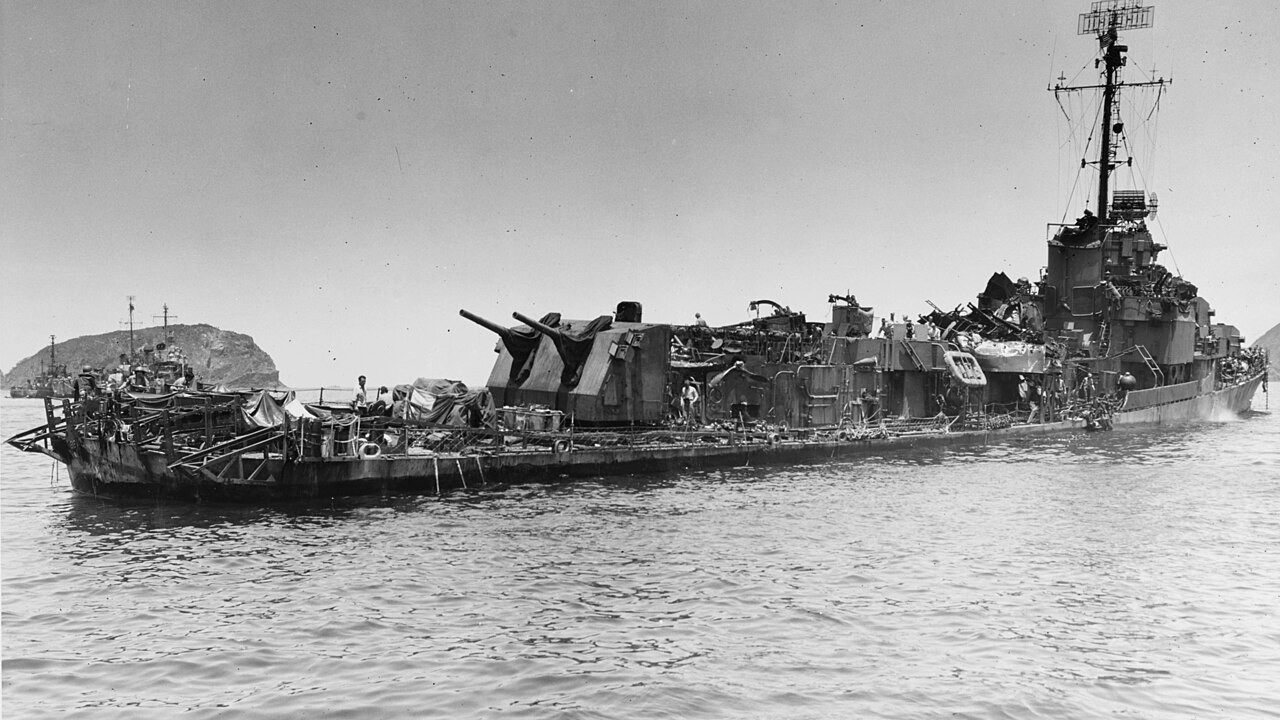
USS Aaron Ward was a destroyer-minelayer serving off Okinawa. On May 3, 1945, a wave of kamikazes found her. She took six kamikaze hits, and one of those planes also dropped a bomb. In addition, another bomb went through her hull below the waterline and exploded in the after engine room.
Her crew fought back on every front. Commander William H. Sanders Jr. was credited with destroying five kamikazes and badly damaging four more. Below decks, damage control parties fought fires, flooded and wet down magazines and shifted steering aft. Meanwhile, an emergency diesel generator kept some pressure in the fire main. The ship lost 42 men, and the fires were out by 20:45. The Naval History and Heritage Command titles its account “The Ship That Couldn’t Be Licked.”
That phrase came from the top. Nimitz signaled, “We all admire a ship that can’t be licked. Congratulations on your magnificent performance.” Later, her Presidential Unit Citation praised “the courage and determination of her entire company.” She made it to New York in mid-August but was decommissioned on September 28, 1945. Today, her anchor stands in a park in Elgin, Illinois.
5. USS Stark (FFG-31)
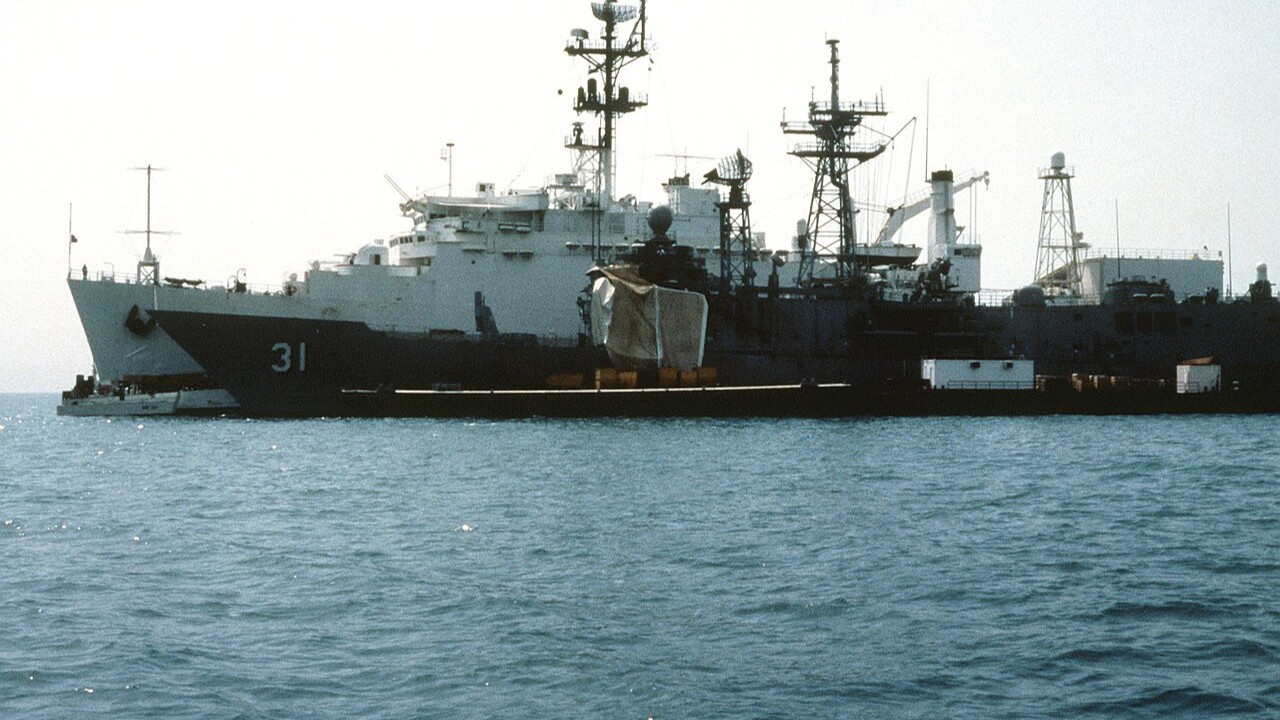
USS Stark was an Oliver Hazard Perry-class frigate on patrol during the Iran-Iraq War. On May 17, 1987, an Iraqi Mirage F1 fired two Exocet missiles at her. The pilot reportedly believed she was an Iranian tanker. The first missile hit near the port bridge wing and failed to explode. However, its burning rocket fuel spread through the ship. The second hit just forward of it and detonated.
Fires burned at more than 3,500 degrees and lasted almost a day. The attack killed 37 sailors. One of the biggest dangers was the missile magazine. Gunner’s Mate 3rd Class Mark Samples sprayed it with cooling water for about 12 hours. “Had it exploded, the Stark would have gone to the bottom,” said Lieutenant Art Conklin, the ship’s damage control assistant.
Conklin credited training above all. As he later wrote, the crew “acted correctly, using their training to solve a complex casualty.” Admiral Frank Kelso, then commanding the Atlantic Fleet, agreed that Stark and nearby ships “did a magnificent job of fighting the fire and saving the ship,” as USNI News recounts. After more than a year of repairs, she returned to service.
6. USS Samuel B. Roberts (FFG-58)
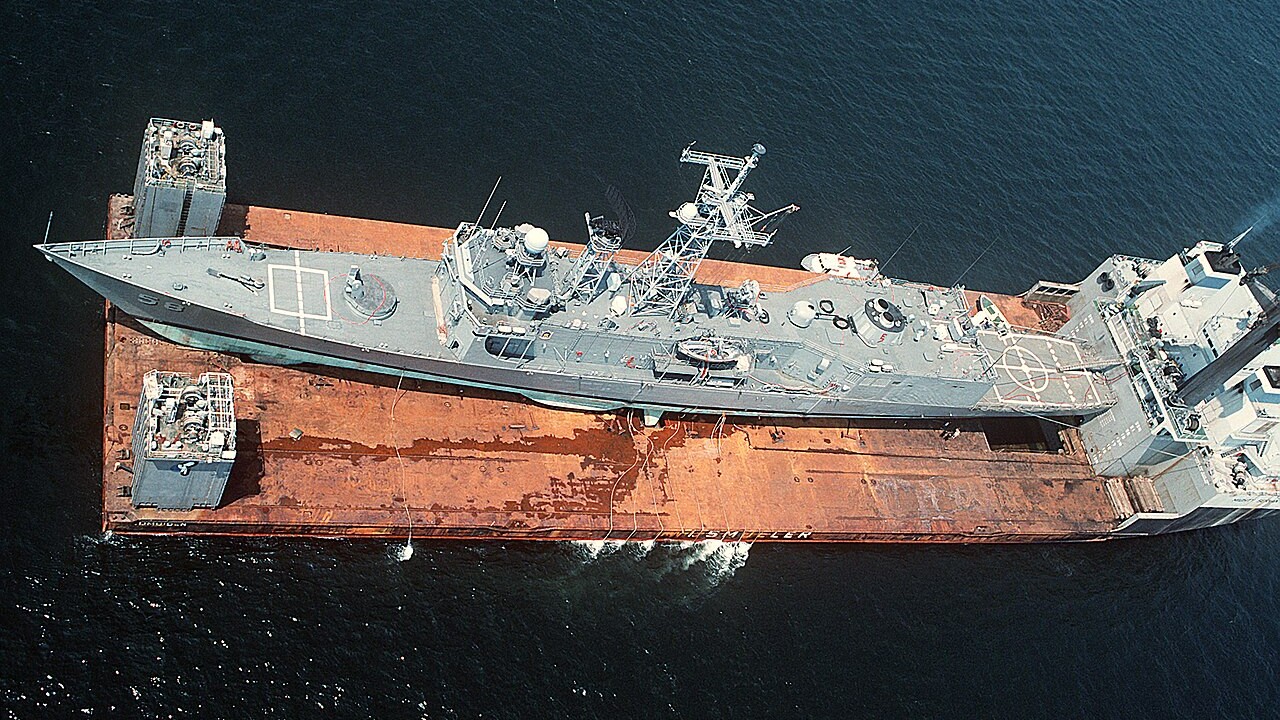
This Samuel B. Roberts was a Perry-class frigate, not the famous World War II destroyer escort of the same name. On April 14, 1988, she was escorting tankers in the Persian Gulf when she struck a mine. The explosion involved about 250 pounds of TNT. It tore a truck-size hole in her hull and snapped her keel.
Her engine room and another engineering space flooded, and a third compartment filled fast. Sailors jammed mattresses, clothing and wooden beams into the leaks. Fireman Mike Tilley restarted a dead generator with a risky “suicide start,” restoring power. Then Commander Paul Rinn noticed that firefighting water was adding to the flooding. So he halted the hoses to cut the load, a call that helped keep her afloat. Chief Alex Perez, trapped in the flooded engine room, later said, “I thought I was going to drown.”
The crew put out the last major fire at 21:05. As USNI News tells it, Rinn’s own thought during the crisis was simple: “We’re going to get out.” They did. She was towed to Dubai, carried to Maine and repaired for more than $90 million.
7. USS Princeton (CG-59)
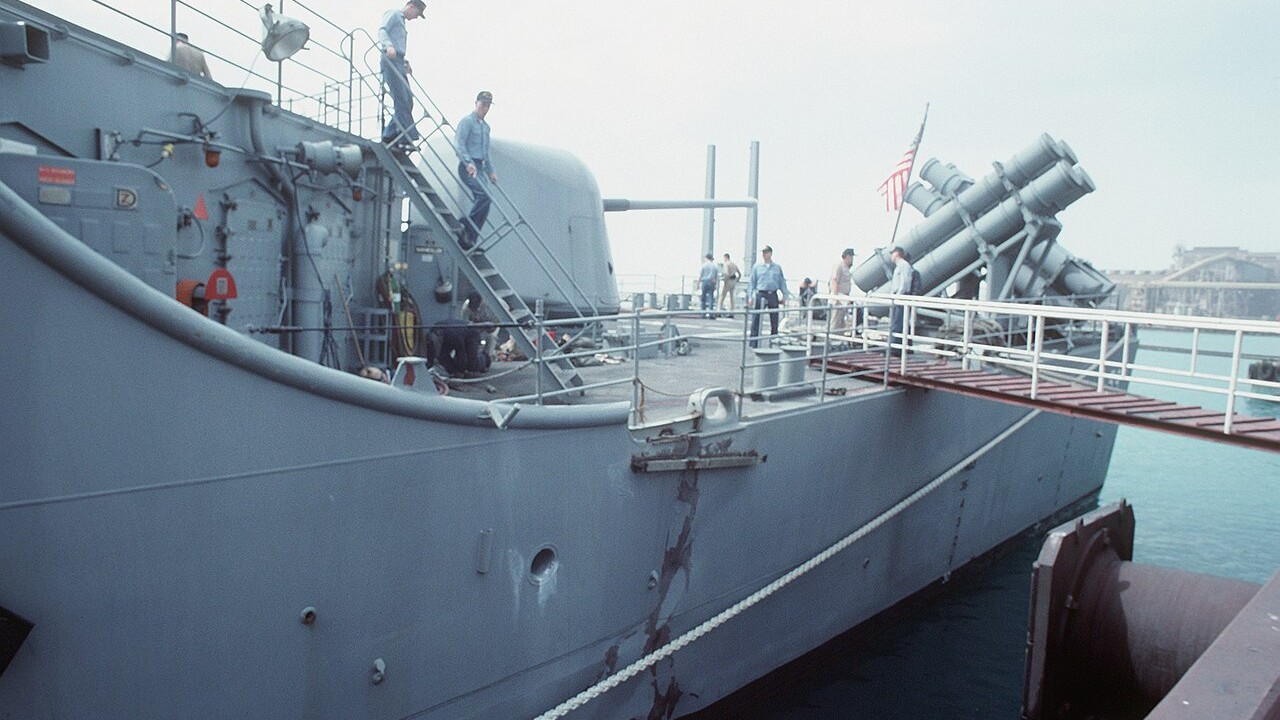
USS Princeton was a Ticonderoga-class guided-missile cruiser working in the Persian Gulf during Desert Storm. On February 18, 1991, a mine exploded under her stern. Seconds later, a second mine went off. According to the Navy’s history division, the blasts “nearly split Princeton in half and tossed men about for seven seconds.”
Water poured into parts of the ship. Her radar and combat systems went down, leaving her nearly defenseless in a minefield. Even so, her crew got her fighting again. Lieutenant Michael Gilday, the tactical action officer, quickly brought the combat system back on line. He then took over local air defense duties. His commendation called him “the key to Princeton’s unequaled combat readiness throughout Operation Desert Storm.”
Meanwhile, the danger around her stayed real. The minesweeper Adroit found so many mines nearby that she ran out of flares and marked them with chemical lights. Still, the “exhausted crewmen manned their Battle Stations” until the salvage tug Beaufort towed Princeton clear the next day. Gilday later recalled the long shipyard repairs. Years later, that young lieutenant rose to become Chief of Naval Operations.
8. USS Cole (DDG-67)
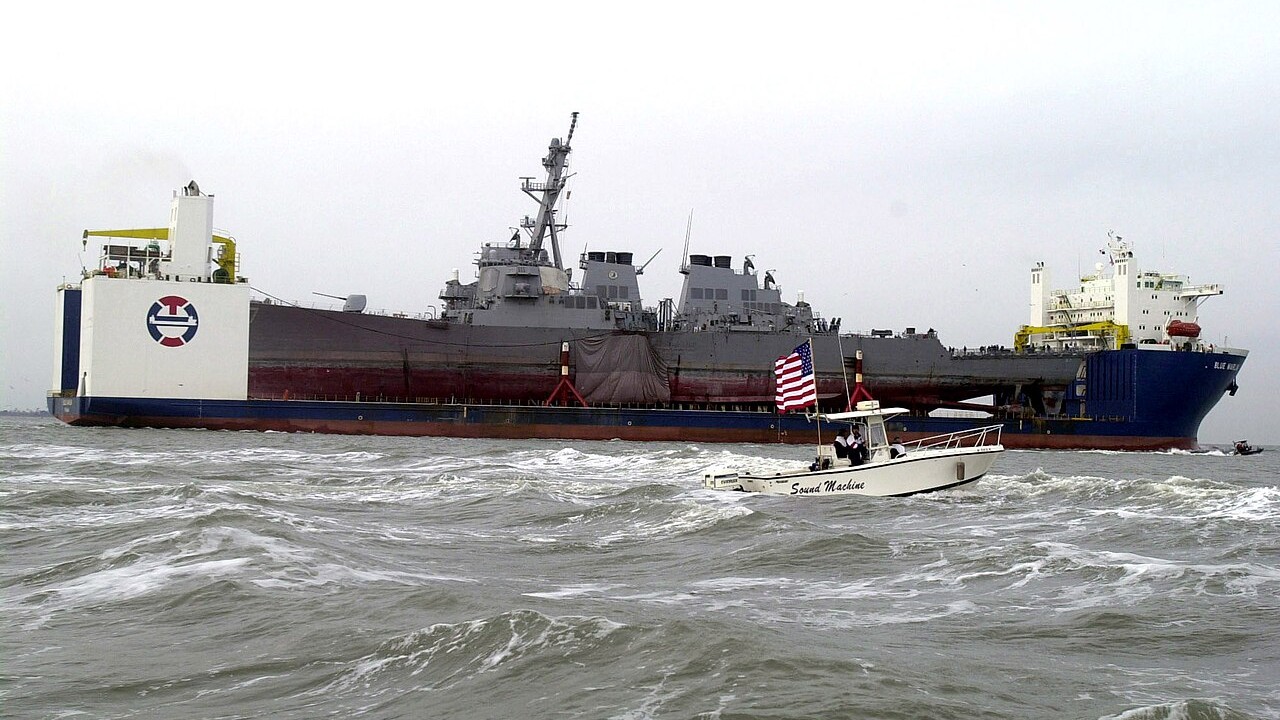
USS Cole was an Arleigh Burke-class destroyer making a stop in Aden, Yemen, on October 12, 2000. A small boat packed with explosives pulled alongside and blew up. The blast tore a hole about 40 feet wide in her side. It killed 17 sailors and wounded at least 37 more. Fire controlman Jason Mosher was standing in the mess line when it went off.
What followed was a marathon. The crew fought flooding that threatened to sink the ship, with more than 96 hours of sustained damage control. They worked in extreme heat, with little sleep, food or shelter. Her commanding officer, Commander Kirk Lippold, later said of his crew, “They literally fell back on the training.” He added, “No one panicked.” Mosher recalled that the effort lasted about three days, with no one resting.
Cole did not go home under her own power, and that was no surprise given the damage. On October 30, the heavy-lift ship Blue Marlin loaded her and carried her to Pascagoula, Mississippi. The Naval History and Heritage Command notes she arrived on December 13, 2000. Repaired and rebuilt, she returned to the fleet in 2002.