
Northrop paid for the F-20 Tigershark with its own money, built three prototypes and never sold one. It could reach Mach 2, yet most people outside aviation circles have never heard of it.
The Cold War produced plenty of famous jets, and they still dominate museum floors and model shelves. Meanwhile, many solid designs did hard, useful work and then faded from memory. Some were victims of politics or bad timing. Others simply flew in the shadow of louder, faster neighbors.
These are Combat Rated’s picks for eight Cold War jets that deserved more attention than they got. The selection and the verdicts are our opinion. The facts behind each one, from production numbers to combat records, come from museum and official sources. They appear roughly in the order they entered service.
1. Republic F-84F Thunderstreak
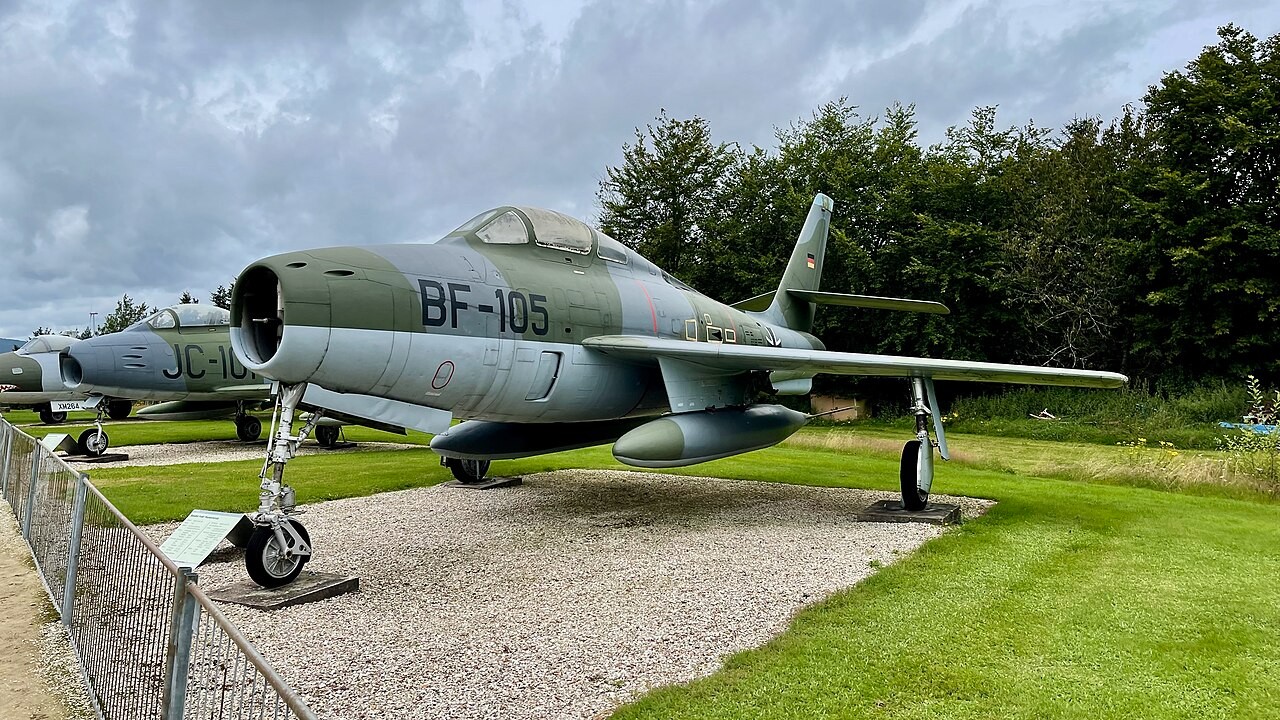
The F-84F took the straight-wing F-84 Thunderjet and gave it swept wings and a new life. The prototype flew in June 1950, and deliveries began in 1954, mostly to Tactical Air Command as ground-support fighter-bombers. It carried six .50-caliber machine guns, 24 five-inch rockets and up to 6,000 lb of bombs. Its Wright J65 engine produced 7,220 lb of thrust, good for a top speed of 685 mph.
Production numbers tell the real story. Republic built 2,112 F-84Fs, and General Motors added 599 more. Of those, 1,301 went to NATO air forces, according to the National Museum of the U.S. Air Force. Another 715 were built as RF-84F Thunderflash reconnaissance jets, including 386 for allied countries.
In our view, few jets did more to arm Western Europe in the 1950s, and few get less credit for it. The F-86 Sabre took the headlines, while the Thunderstreak filled the squadrons. When the 1961 Berlin crisis flared, Thunderstreaks returned to Air Force service, and 200 fighters deployed across the Atlantic to Europe. The museum’s own example served with the Ohio Air National Guard before flying to Dayton in 1970.
2. Folland Gnat
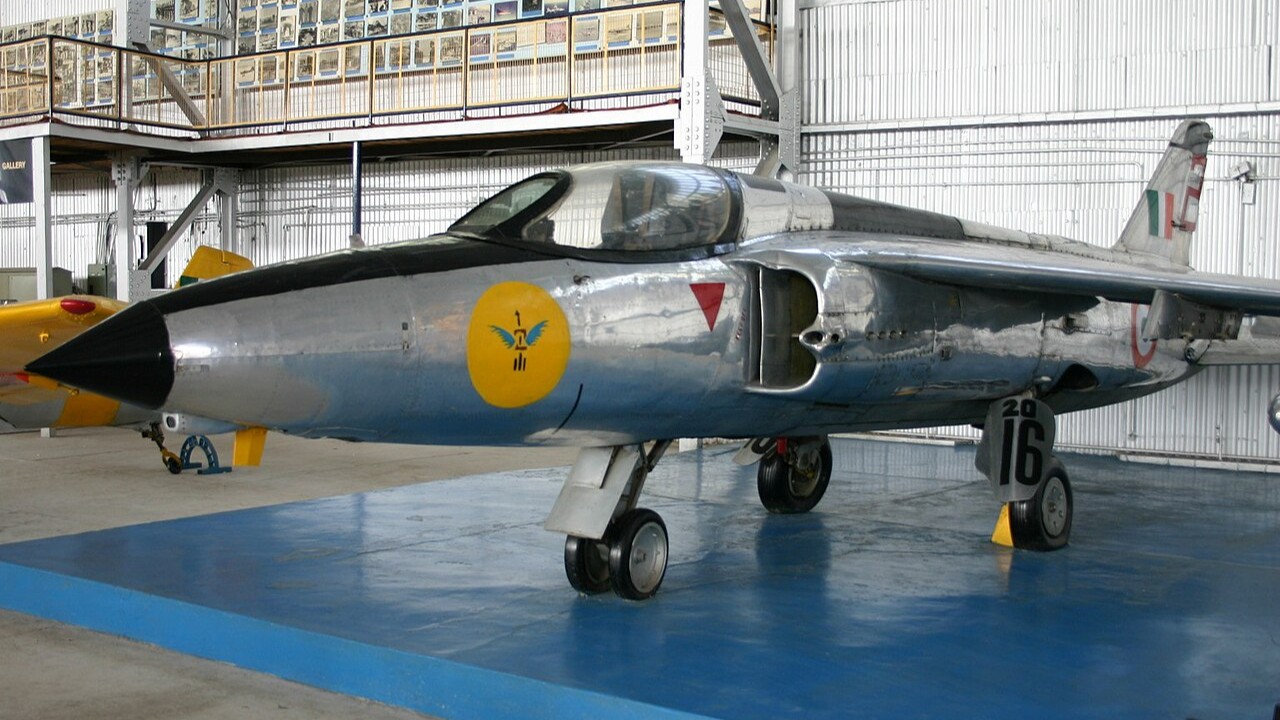
W.E.W. Petter designed the Gnat in the mid-1950s as an answer to fighters that had grown too big and too costly. It was a small, single-seat, swept-wing jet that industrialized countries could build and maintain cheaply, without specialized tools. One Bristol Siddeley Orpheus turbojet of 4,850 lb thrust gave it a top speed of 695 mph, or Mach 0.98. It measured just 29 feet 9 inches long, with a wingspan of 22 feet 2 inches.
Britain’s RAF never used it as a fighter. Instead, it became a trainer and the mount of the Red Arrows. India took the fighter version to war, though. Armed with two 30 mm ADEN cannons, Indian Gnats fought Pakistan in 1965 and 1971 and earned the nickname “Sabre Slayer” for their success against Canadair Sabres.
The March Field Air Museum displays E1076, a Gnat assembled by Hindustan Aeronautics that flew in both conflicts. In 1971, Flt Lt V.P. Vadera flew 20 combat missions in it. In our view, the Gnat proved that a light, cheap fighter could hold its own in real air combat. The production total reached 449.
3. Douglas A-4 Skyhawk
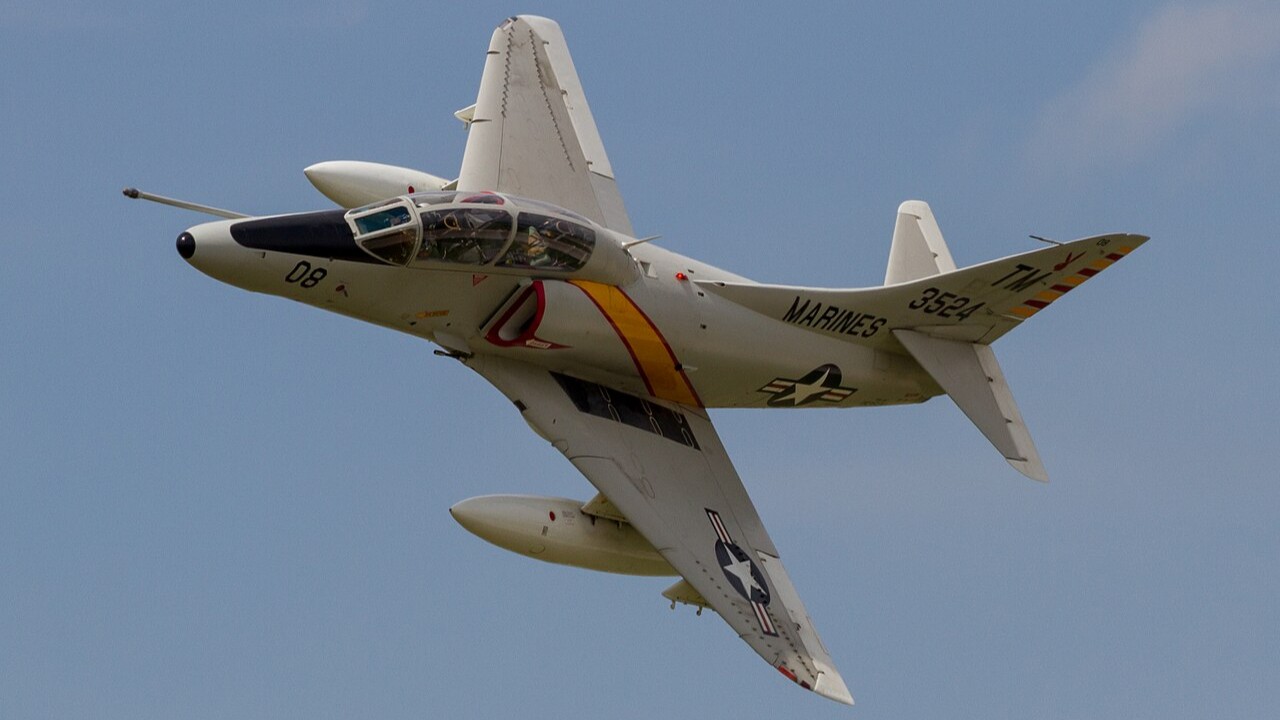
In 1952, Douglas chief engineer Ed Heinemann argued that the Navy’s next attack jet should be smaller, lighter and faster. His team then met the Navy’s light attack requirement at about half the requested size and weight. The stubby delta wings were short enough that they did not need to fold, which saved weight and made the jet simpler to maintain on a carrier deck. In the A-4F, a single Pratt & Whitney J52 engine produced 9,300 lb of thrust.
The Skyhawk entered Navy and Marine Corps service in 1955 and flew combat in Vietnam. Douglas built 2,960 of them over 26 years, one of the longest production runs of any American combat aircraft. It stayed in service with the U.S. and several other countries for more than 35 years, according to The Museum of Flight.
Most fans know it, but few rank it where it belongs. In our view, it is the best argument in jet history that less can be more. The Blue Angels flew it from 1975 to 1986. The Museum of Flight’s A-4F flew with the team in four different positions before they switched to the F/A-18 Hornet in 1987.
4. Grumman F11F Tiger
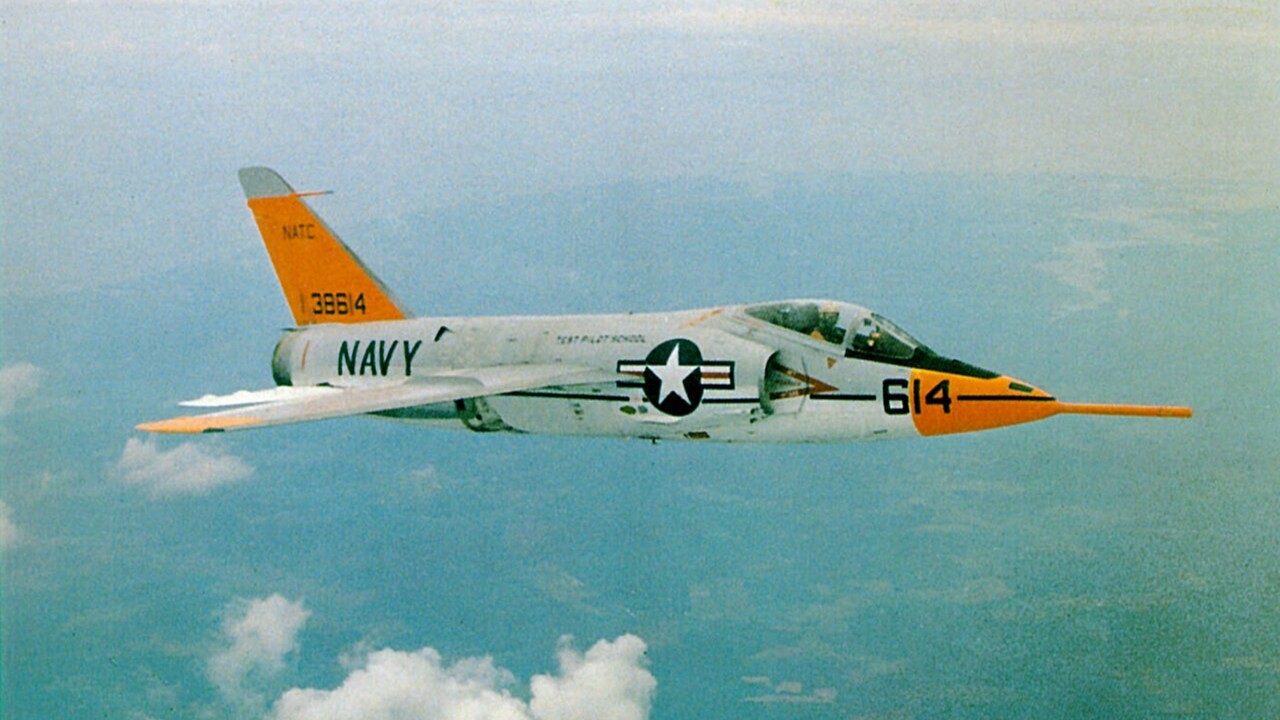
The Tiger began as an effort to modernize Grumman’s F9F Cougar by cutting drag and adding speed. Military.com describes it as the Navy’s first supersonic fighter jet, and it served the Navy from 1957 to 1969. After its maiden flight, the Navy ordered more than 400.
Unfortunately, it is best known for an odd accident: on September 21, 1956, test pilot Tom Attridge fired a burst from his 20 mm cannon during a supersonic dive at about 13,000 feet. As he kept descending, his own slowing rounds struck the Tiger 11 seconds after he fired them. The rounds left the gun at about 2,000 mph but slowed to about 400 mph, while the Tiger was doing about 880 mph. His engine then failed, the aircraft caught fire, and Attridge ejected with serious injuries.
The Navy called it a “million to one shot.” Still, it is unfair that one freak accident defines the jet. In our view, the Tiger deserves better because it was a clean, nimble design, good enough for the Navy’s own display team. The Blue Angels flew the Tiger for more than a decade, from 1957 to 1969.
5. Saab J 35 Draken
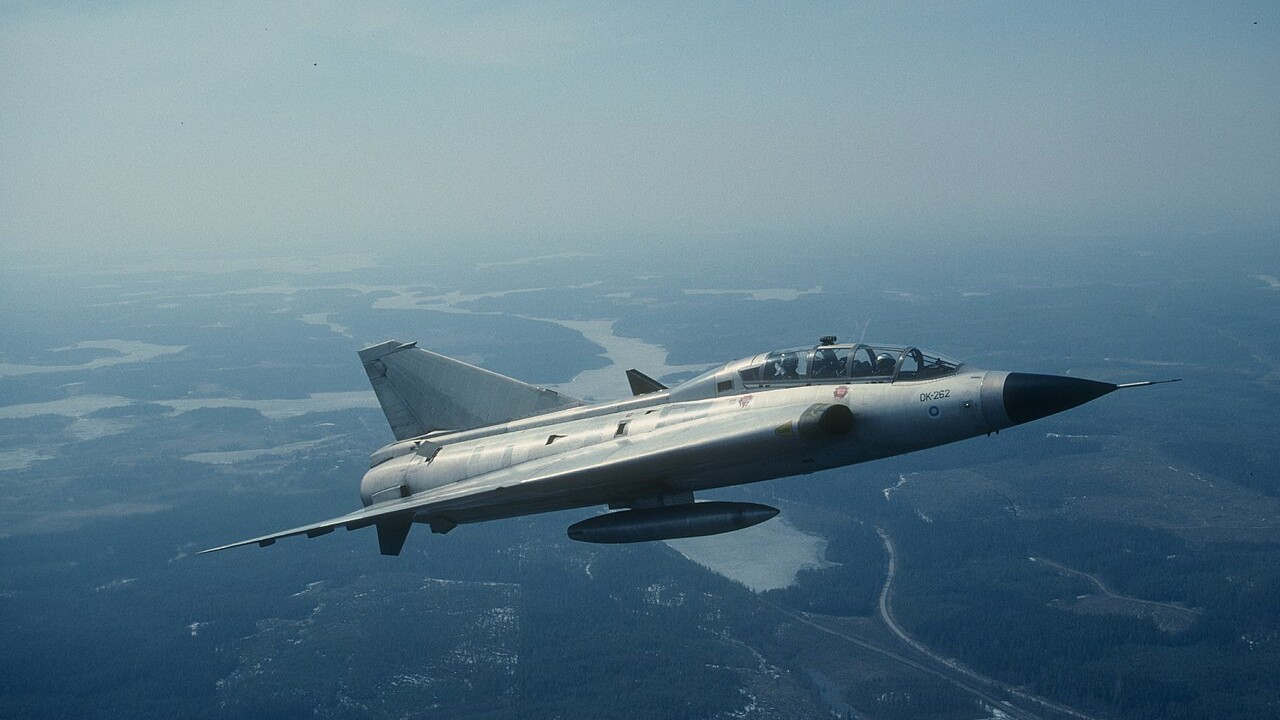
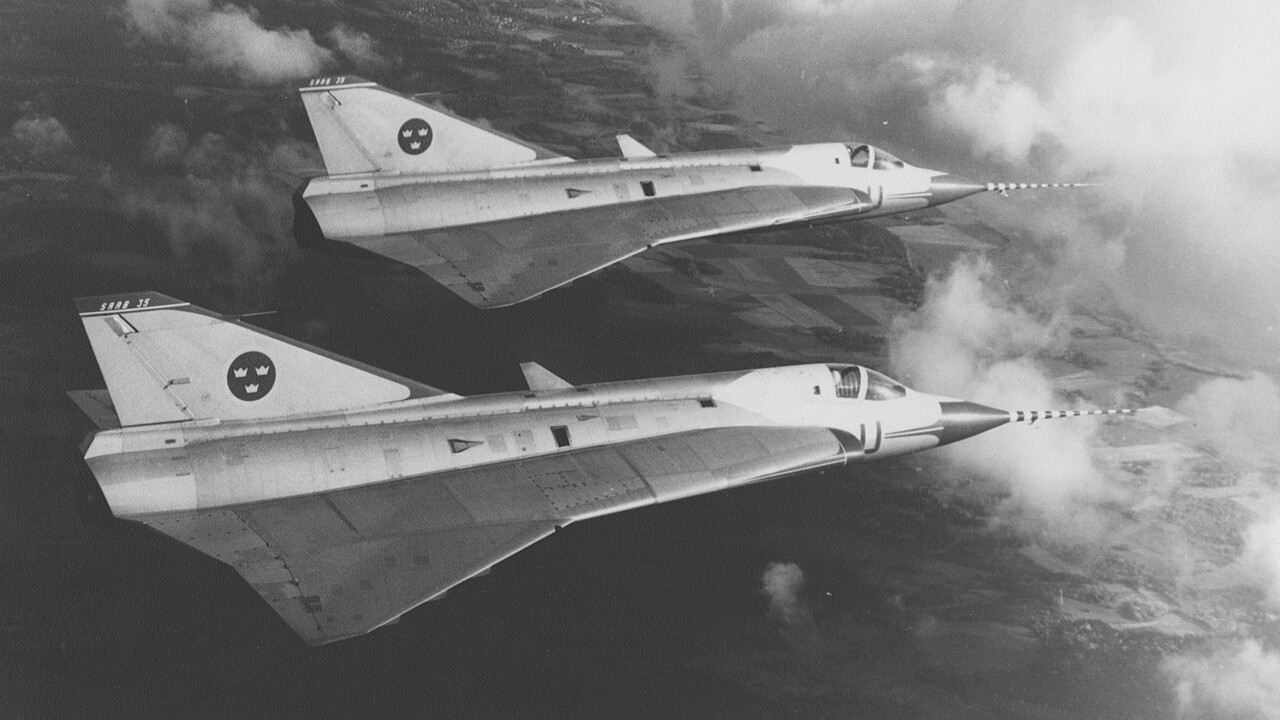
Sweden asked for a new fighter-interceptor in September 1949, and Saab answered with one of the boldest shapes of the era. The Draken used a double delta wing, with the inner section swept at 80 degrees for high speed and the outer section at 60 degrees for low speed. A sub-scale test aircraft, the Saab 210 “Lilldraken,” flew first, on January 21, 1952.
The full-size prototype flew on October 25, 1955, without an afterburner. Then the second prototype, which had one, broke the sound barrier unintentionally while climbing on its first flight. The Draken entered Swedish service in 1960. In total, 644 were built for Sweden and other European nations, according to the Ängelholm Aviation Museum.
Denmark, Finland and Austria also flew it, and the Austrian Drakens kept going until 2005. Finland updated its Drakens with new avionics in the 1990s and retired them in 2000. In our view, the Draken never gets the credit it deserves for being a supersonic fighter that a small country designed and built alone. Even now its double delta looks modern, yet Sweden officially retired it in December 1998.
6. Vought A-7 Corsair II
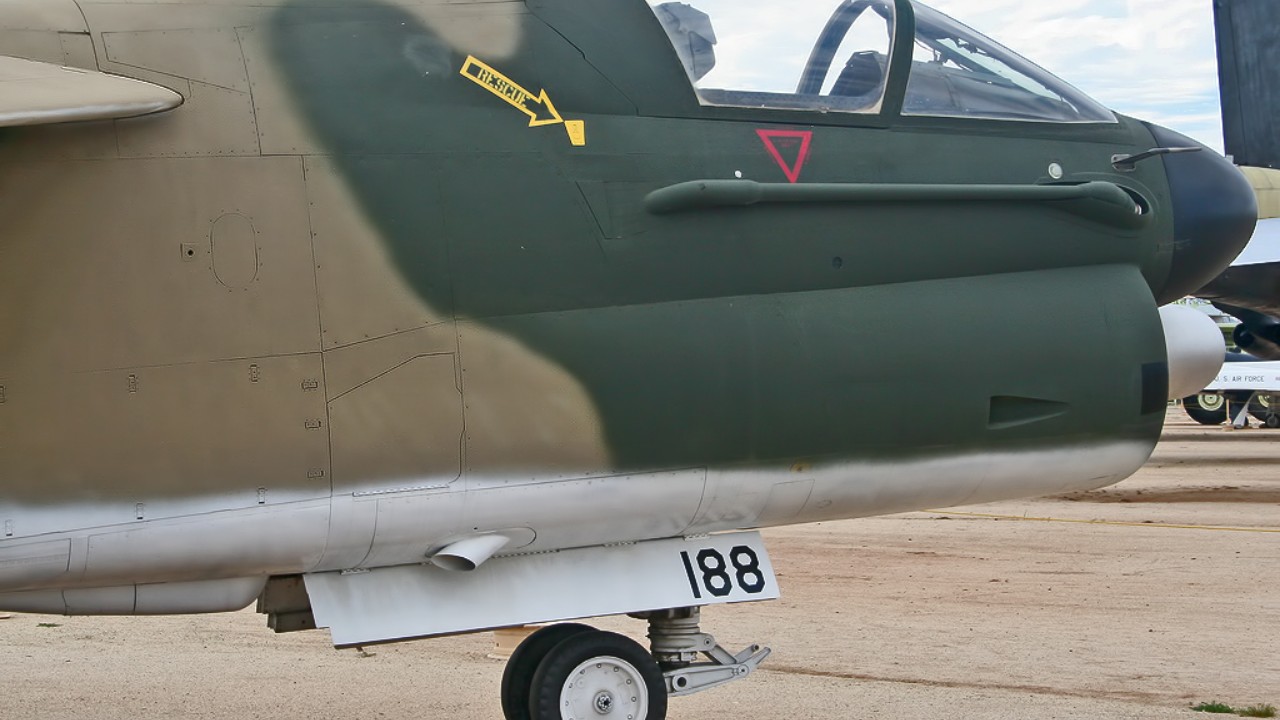
The A-7 started as a Navy attack jet, and the Air Force later bought its own version, the A-7D. That model first flew in April 1968, with deliveries starting in December. A single Allison TF41 turbofan of 14,250 lb thrust gave it a range of more than 3,000 miles. It could also carry 15,000 lb of mixed ordnance plus an M61A1 cannon, and its maximum speed was 663 mph.
Its secret weapon was accuracy. The A-7D owed its ground-attack precision to an automatic electronic navigation and weapons delivery system. A-7Ds flew with the 354th Tactical Fighter Wing from Korat, Thailand, in the closing months of the war in Southeast Asia. LTV delivered 459 to the Air Force before production ended in 1976.
From 1973, the Air Force began handing A-7Ds to the Air National Guard. By 1987, Guard units in 10 states and Puerto Rico flew them, according to the Air Force museum. In our view, the A-7 is the forgotten bridge between Vietnam-era bombing and modern precision strike. The last A-7Ds retired in the early 1990s, after flying in Panama in 1989.
7. Dassault Super Étendard
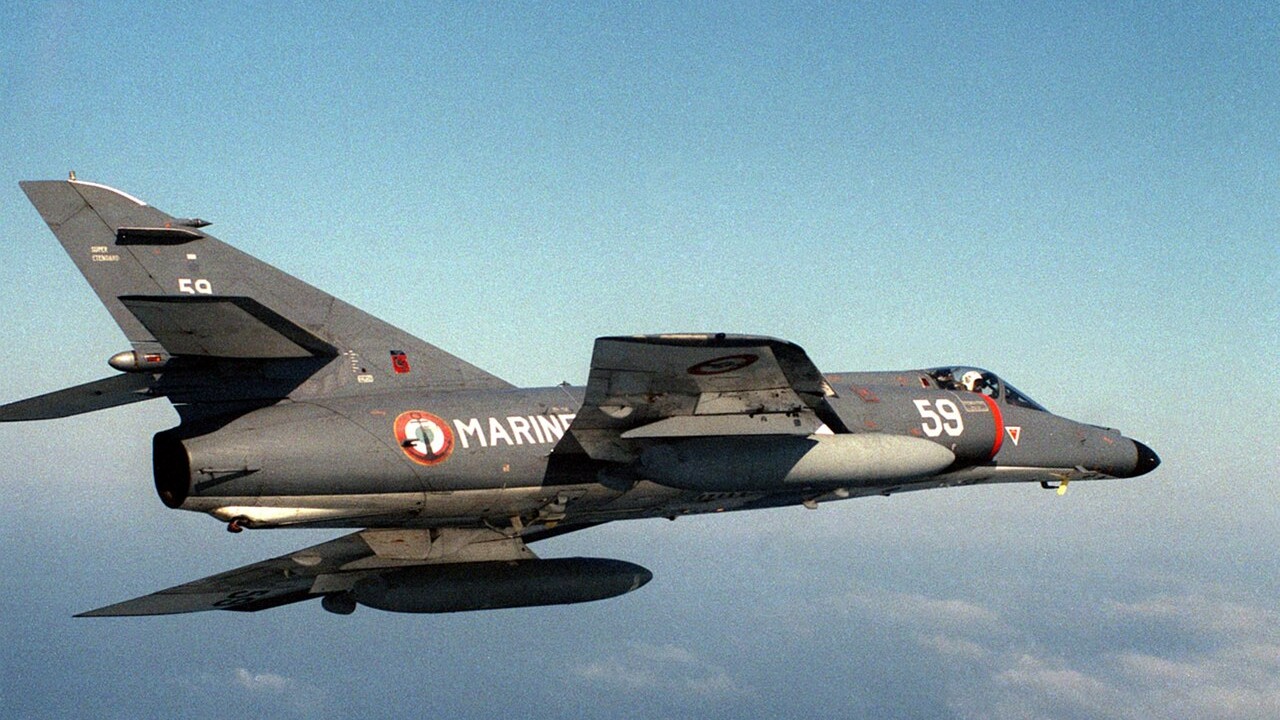
The Super Étendard was a modest, non-afterburning carrier jet developed from the older Étendard IVM. It first flew on October 28, 1974, and joined the French Navy in 1978. Its key weapon was the AM39 Exocet anti-ship missile, which needed the jet’s Agave radar to launch, and it also carried two 30 mm DEFA cannons. Later upgrades let it carry the ASMP nuclear missile, yet Dassault built only 71.
Argentina made it famous in 1982. On May 4, two Argentine Navy Super Étendards flew from Rio Grande, refueled from a Hercules, and fired two Exocets. One missile hit the destroyer HMS Sheffield, and the ship later sank. Iraq also flew leased Super Étendards against tankers and merchant ships during the Iran-Iraq War.
Yet French service is the part people forget. French Super Étendards flew over Lebanon in 1983, flew more than 400 missions over Kosovo in 1999, and served in Afghanistan, Libya and the fight against Islamic State. In our view, few jets of such modest performance changed naval warfare so much. Its last launch from the carrier Charles de Gaulle came on March 16, 2016.
8. Northrop F-20 Tigershark
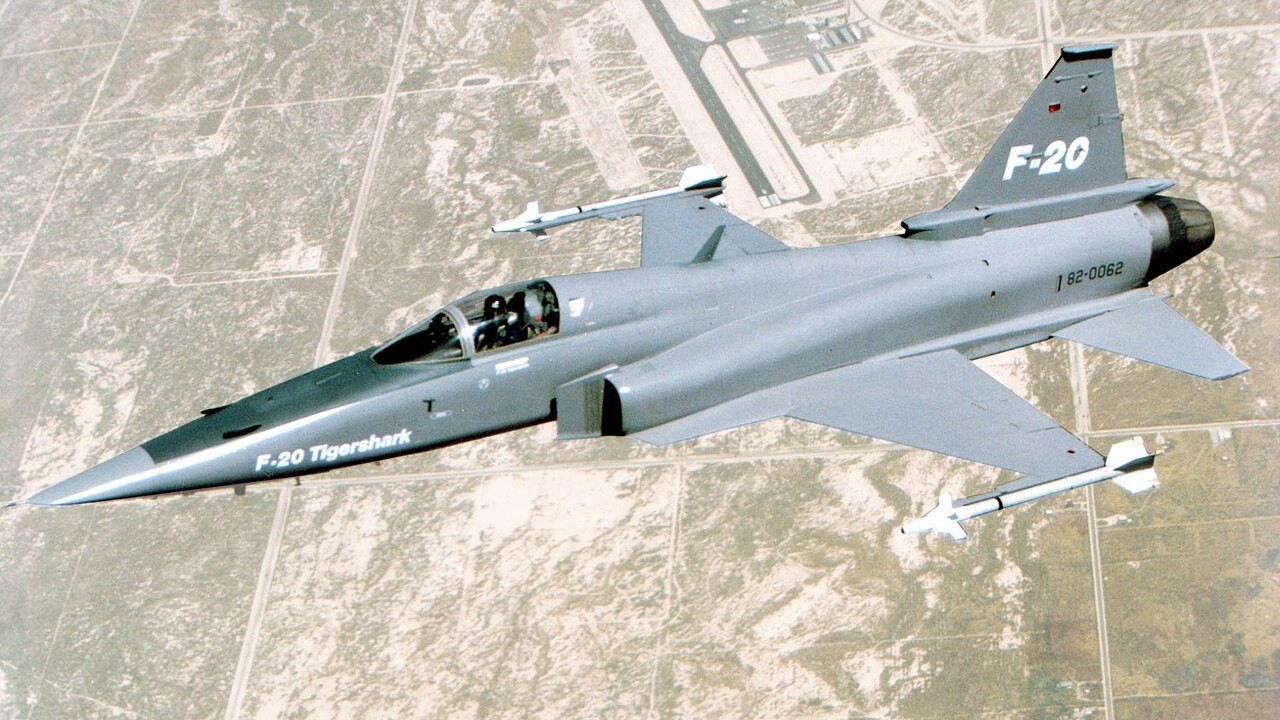
The F-20 began as Northrop’s answer to a 1977 U.S. policy that limited exports of front-line fighters. Northrop fitted its F-5 design with a single General Electric F404 engine, which gave it 60 percent more thrust than the F-5E’s two engines combined. The result could reach Mach 2, and it first flew on August 30, 1982. It also carried GE’s AN/APG-67 radar and two 20 mm cannons.
Northrop also claimed it could be ready to launch about 22 seconds after power-on, the shortest scramble time of its day. However, policy changed in 1981, when the U.S. government authorized F-16 sales to more countries. Customers chose the F-16, and Northrop cancelled the program in late 1986. Test pilot Paul Metz later summed up the worst thing about it in a Hush-Kit interview: “It did not sell.”
Two of the three prototypes were lost in crashes in 1984 and 1985, killing their Northrop pilots. In our view, the F-20 deserved a fair fight in the market and never got one. The third prototype survives today at the California Science Center in Los Angeles.