
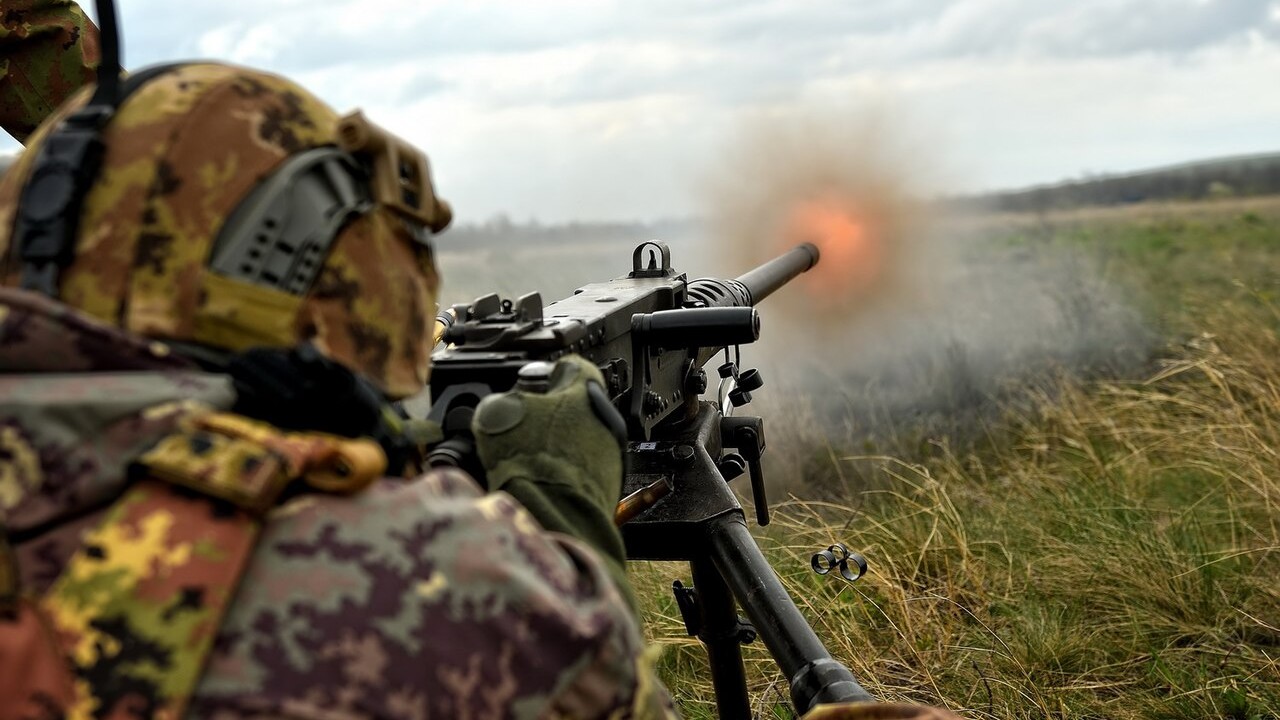
The U.S. Army type-classified John Browning’s M2 heavy machine gun in 1933. In February 2026, an American soldier was photographed firing one on an exercise. That is the M2 Browning still at work, 93 years on.
Most military hardware ages out within a few decades, as jets wear out and ships rust. Small arms play by different rules, though. A sound design that is built in huge numbers can outlast the soldiers who first carried it. Some have even outlasted the countries that adopted them.
These are Combat Rated’s picks: nine military guns from the 1930s to the 1960s that still serve somewhere. Every one is in active military service as of November 2026. We stick to history and service records, from the oldest to the youngest.
1. M2 Browning
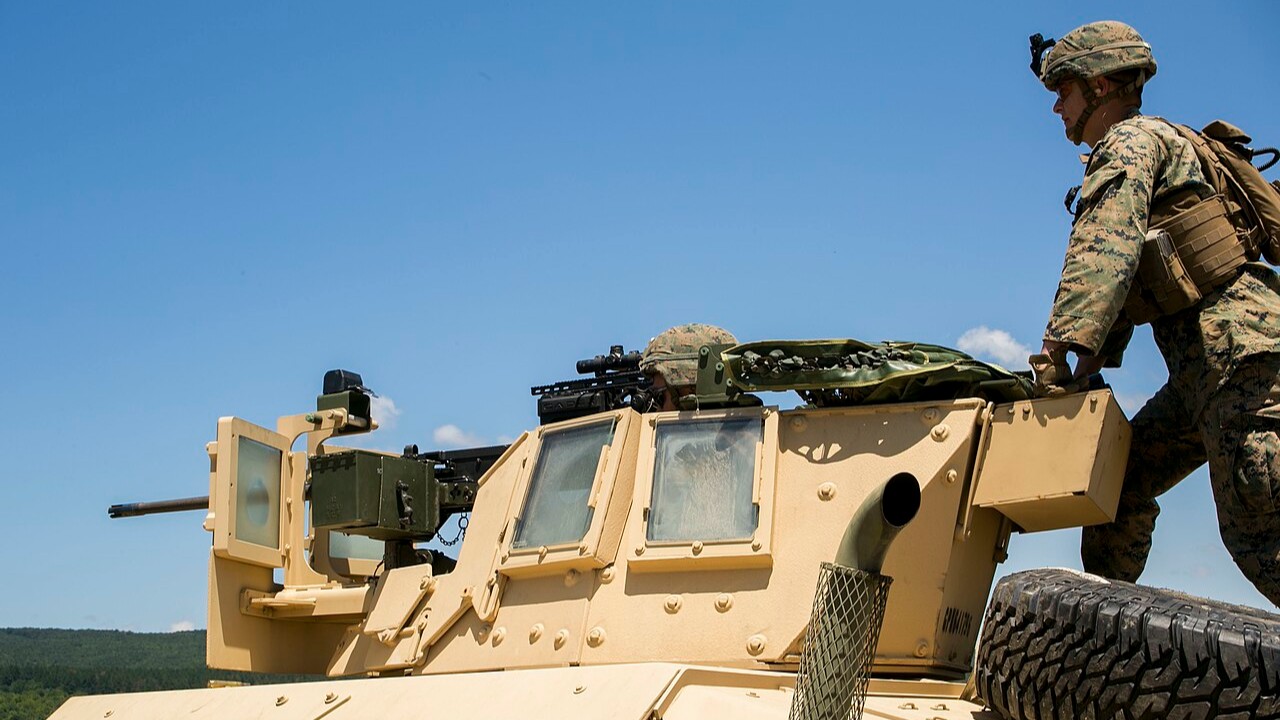
The M2 is the heavy machine gun that American soldiers have long called “Ma Deuce.” John Browning’s .50-caliber design was first adopted as the M1921. The Army then type-classified it as the M2 in 1933. Since then, about 3 million have been built for jeeps, tanks, Humvees, boats and aircraft.
The Army has tried to replace it more than once, but each time it upgraded it instead. In 2011, the service began converting more than 54,000 M2s to the new M2A1 standard. The upgrade made the Army’s list of top 10 greatest inventions for 2011. That August, a 1st Armored Division brigade at Fort Bliss, Texas, became the first unit to receive it.
Meanwhile, a lighter and slower-firing challenger came and went. General Dynamics developed the XM806, but the Army canceled it in 2012 after soldiers preferred the M2’s volume of fire. In our view, that sums up the M2, because every attempt to retire it has ended with the old gun winning. All four U.S. armed services still use it, and it should reach 100 years of service in 2033.
2. Carl Gustaf recoilless rifle
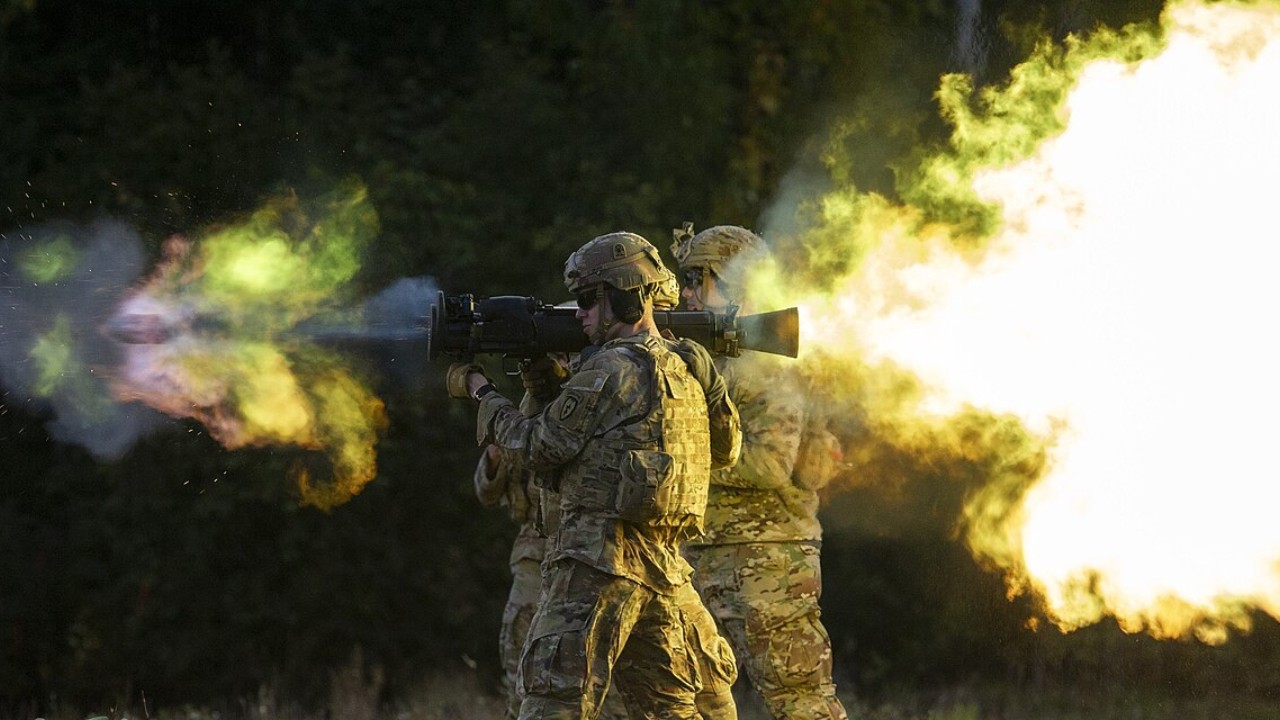
The Carl Gustaf is a shoulder-fired recoilless rifle, and it is older than NATO. Sweden’s Royal Army Materiel Administration developed it in the late 1940s as an infantry anti-tank weapon. Then, in 1948, it entered Swedish Army service as the M1. Workers built the early weapons in the Swedish town of Eskilstuna.
From there, the design kept evolving for decades. An export version, the M2, launched in 1964, and the weapon later moved into the Saab Dynamics portfolio. In September 2014, Saab unveiled the M4, which weighs 7 kilograms, half the weight of the M2. Within 12 years, 24 nations had adopted it, and soldiers in 40 countries now use the Carl Gustaf.
American troops know the weapon just as well. The 75th Ranger Regiment adopted it in the late 1980s to replace the M67, and soldiers nicknamed it the “Goose.” Crews fire anti-tank, high-explosive and illumination rounds from the same tube, so one weapon covers several jobs. In our view, no gun on this list has grown with its users better, and Saab is still adding new rounds in 2026.
3. Kalashnikov AK-47 and AKM
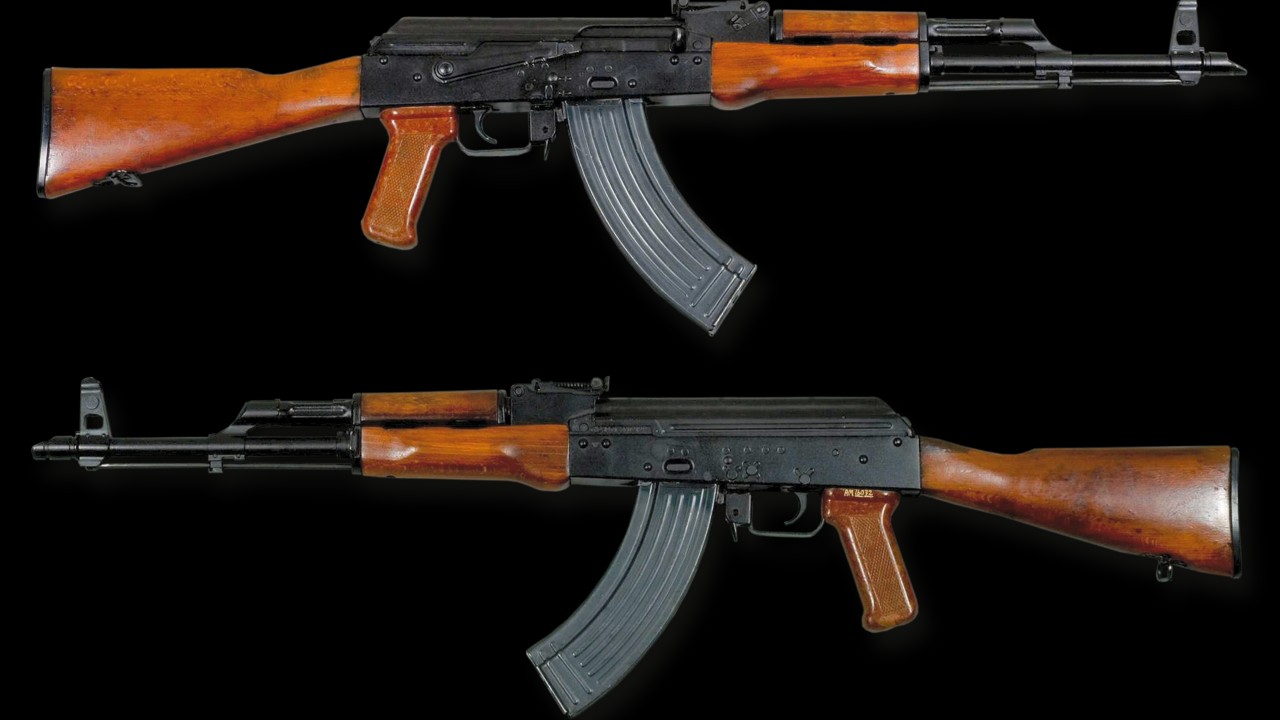
No rifle on earth is more recognizable than the Kalashnikov. Mikhail Kalashnikov’s accepted design dates to 1947, and the Soviet military officially adopted it in 1949. Then, in 1959, the improved AKM began replacing the original AK-47 in first-line Soviet units. From that point on, the rifle spread across the communist world and far beyond it.
The production numbers are staggering. Britannica estimates that about 100 million AK-type rifles have been built, and about half were made outside Russia. As a result, many armies with old ties to the Soviet Union still use Kalashnikov rifles as their basic shoulder weapon. The rifle even appears on Mozambique’s national flag and on several national coats of arms.
Ironically, the Soviet Army itself moved on first. In the 1970s, the AK-74 replaced the AKM with a smaller 5.45mm round. Yet the older 7.62mm rifles never left service elsewhere, and new owners kept them running for decades. In our view, the AK’s real achievement is becoming the default rifle for much of the world, and it remains standard issue in many armies almost eight decades after adoption.
4. M14 rifle
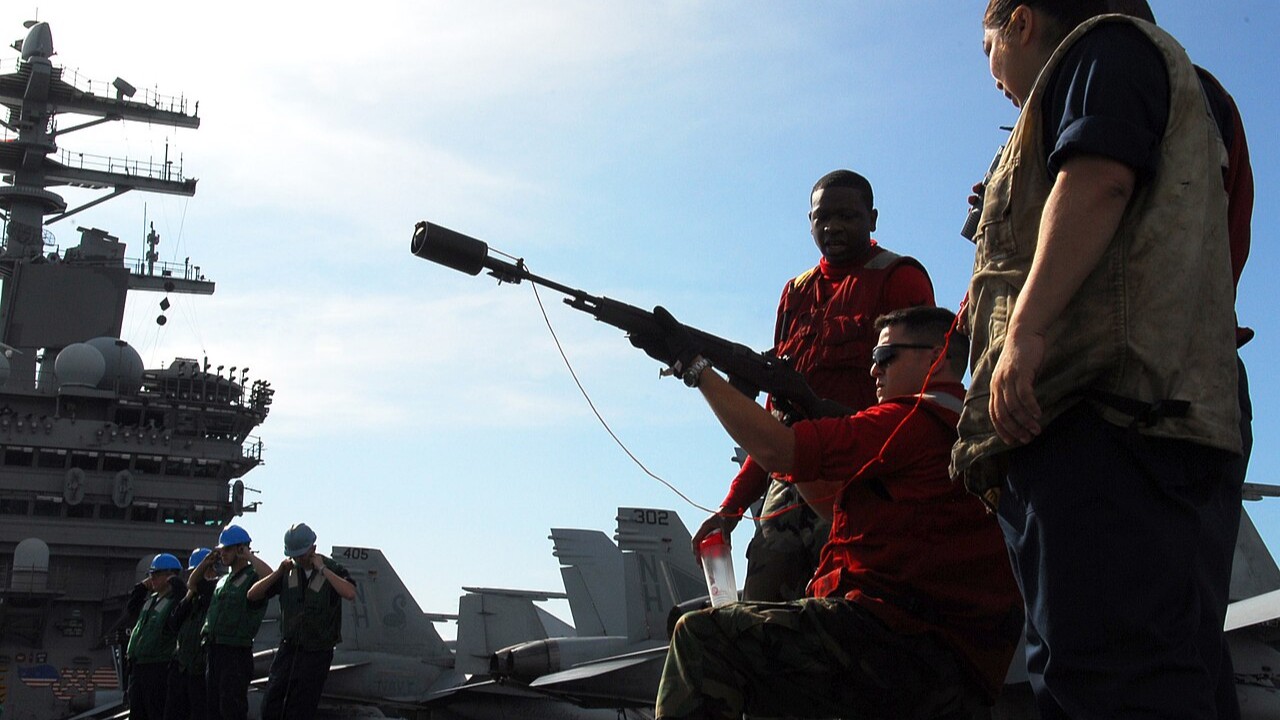
The M14 had a short career as America’s main rifle and a very long one afterward. It replaced the M1 Garand as the standard U.S. service rifle around 1957. Springfield Armory designed it to fire the full-power 7.62mm NATO round. On paper, it looked like the battle-proven Garand’s natural heir.
Its time as the front-line rifle was brief, however. The military bought about 1.38 million M14s before ending the program in 1964. The rifle proved awkward in Vietnam’s dense jungle, and the M16 began replacing it in 1967. Still, M14 variants returned in Afghanistan and Iraq as marksman and sniper rifles, as Military Times reported in August 2026.
That same report carried big news, because the Civilian Marksmanship Program can now sell more than 100,000 surplus M14s to the public. Even so, the rifle is still on duty in uniform. Defense photos from July 2026 show it with the Army’s Old Guard, explosive ordnance disposal units and Navy ship crews. Sailors also use it to fire lines between ships during underway replenishment, and we respect a rifle that retires this slowly.
5. FN MAG
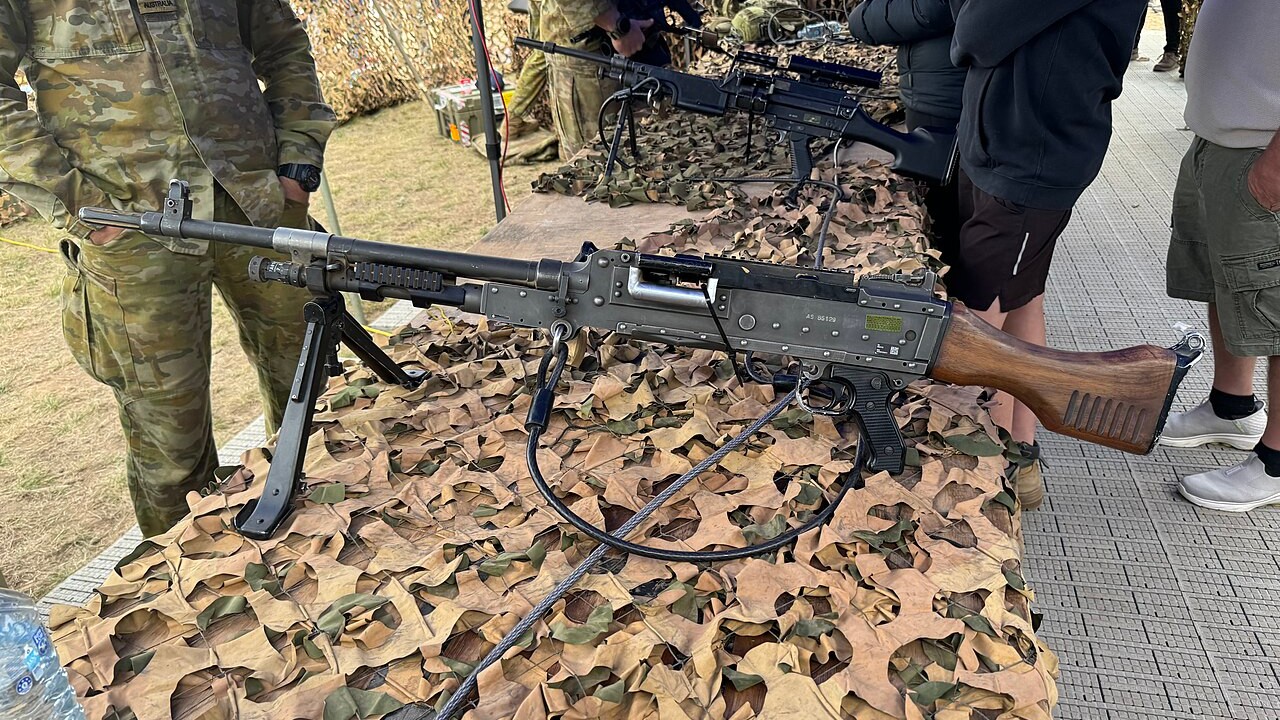
The FN MAG is the Western world’s go-to general-purpose machine gun. A team at Belgium’s FN Herstal led by engineer Ernest Vervier designed it after the Second World War. In 1958, Sweden took it into service as the Ksp 58 in 6.5mm. Later versions used the 7.62mm NATO round that most Western armies adopted.
From there, it spread fast across the free world. According to FN Herstal’s own history of the MAG, more than 90 countries use it. It has also seen action in nearly every conflict of the last six decades. In the mid-1970s, it beat every competitor in U.S. Army testing and entered American service in 1977 as the M240.
Consequently, an American soldier with an M240 and a British soldier with a GPMG carry close cousins. FN still builds the gun at its plants in Belgium, Britain and the United States. In our view, that global reach is the clearest proof of a sound design, whatever the budget or doctrine. The MAG has served for almost 70 years, and FN says it remains fully up to date.
6. MG3
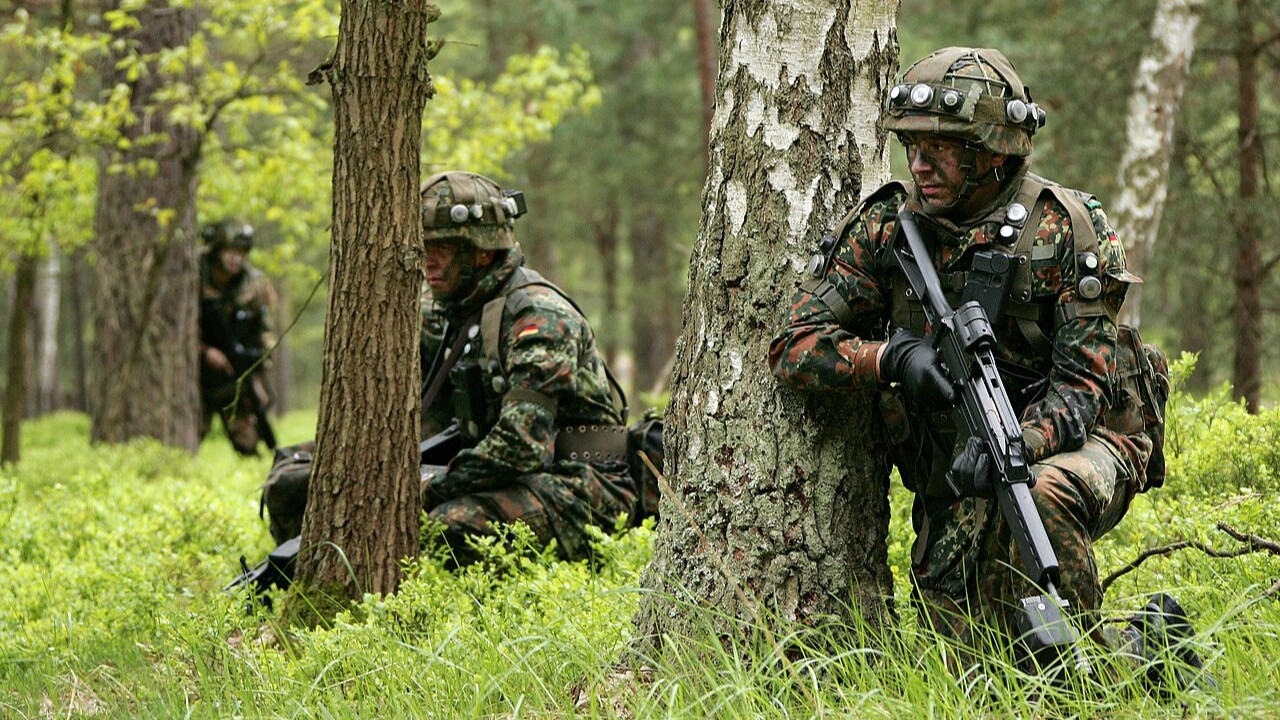
The MG3 has a history that German soldiers do not need explained. It is a variant of the MG42, the machine gun Germany used in the Second World War. After the war, West Germany’s new Bundeswehr revived the design. The MG3 soon became one of its standard weapons and stayed there for generations.
It has served for more than 60 years, and more than 40 countries still use it, according to Forces News in 2023. Infantry carry it on foot as a platoon support weapon. It also serves as a secondary weapon on most modern German armored vehicles, including the Leopard 2 tank. That vehicle role helps explain why it has proved so hard to replace.
Germany is finally working on a replacement. A 2013 framework agreement allows for up to 22,672 Heckler & Koch MG5s, and the 15,000th arrived on May 12, 2025. Even then, Heckler & Koch said the MG5 is only gradually replacing the MG3. We find that fitting, since a design with 1940s roots is retiring slowly at home while dozens of other armies keep theirs.
7. PK and PKM machine gun
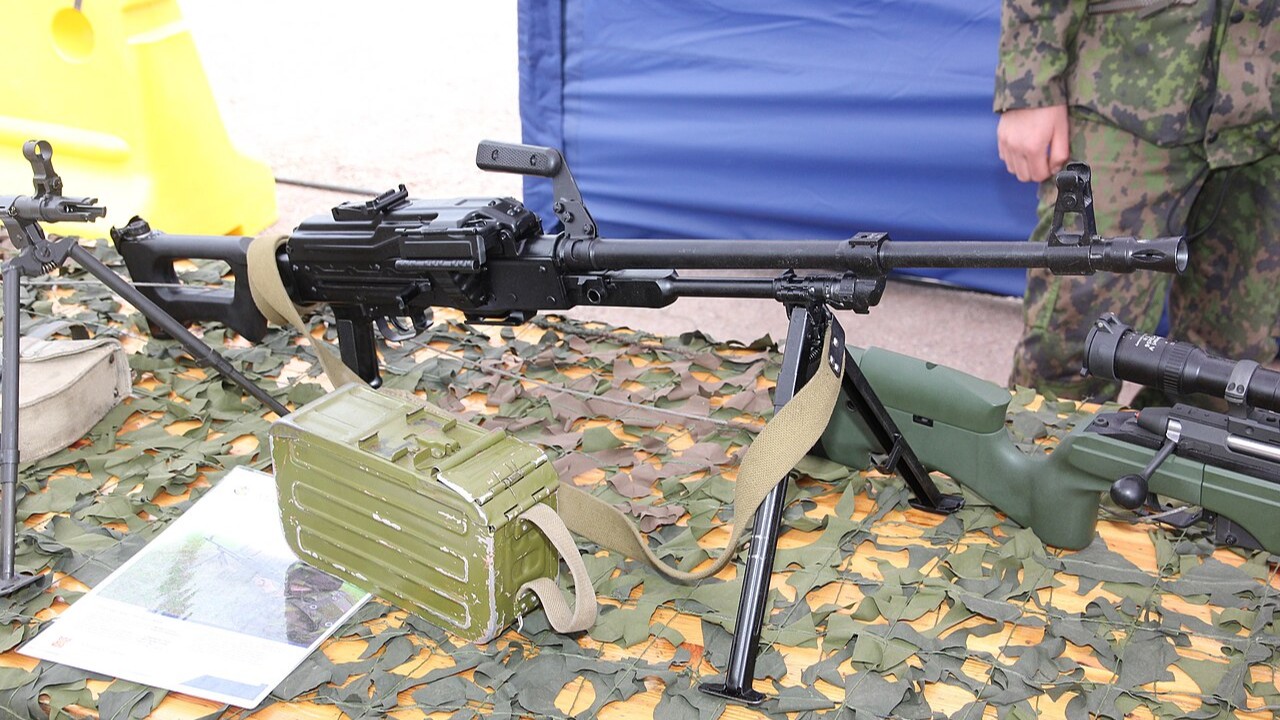
The PK is the other famous design from Mikhail Kalashnikov’s team. The Soviet Army formally adopted it on October 20, 1961, after a hard-fought competition. Soon after, a modernized version with a stamped receiver appeared. That version became known as the PKM, and it is the one most armies use today.
Kalashnikov fought hard for the contract. During trials, he promised to cut the gun’s weight to 7.5 kilograms if the army accepted it. A lighter modernized prototype helped win the day against a rival design. The result was a belt-fed machine gun that one soldier could carry, yet it was tough enough to mount on almost anything.
Today, the PKM turns up nearly everywhere. Firearms historian Vladimir Onokoy, writing in 2024, describes it on pickup trucks, tanks, ships and remote weapon stations. Russian and Ukrainian forces both field it, so it fights on both sides of Europe’s largest war since 1945. In our view, the PKM is the AK’s equal as a Cold War design that would not quit, and it is now in its seventh decade of service.
8. SVD Dragunov
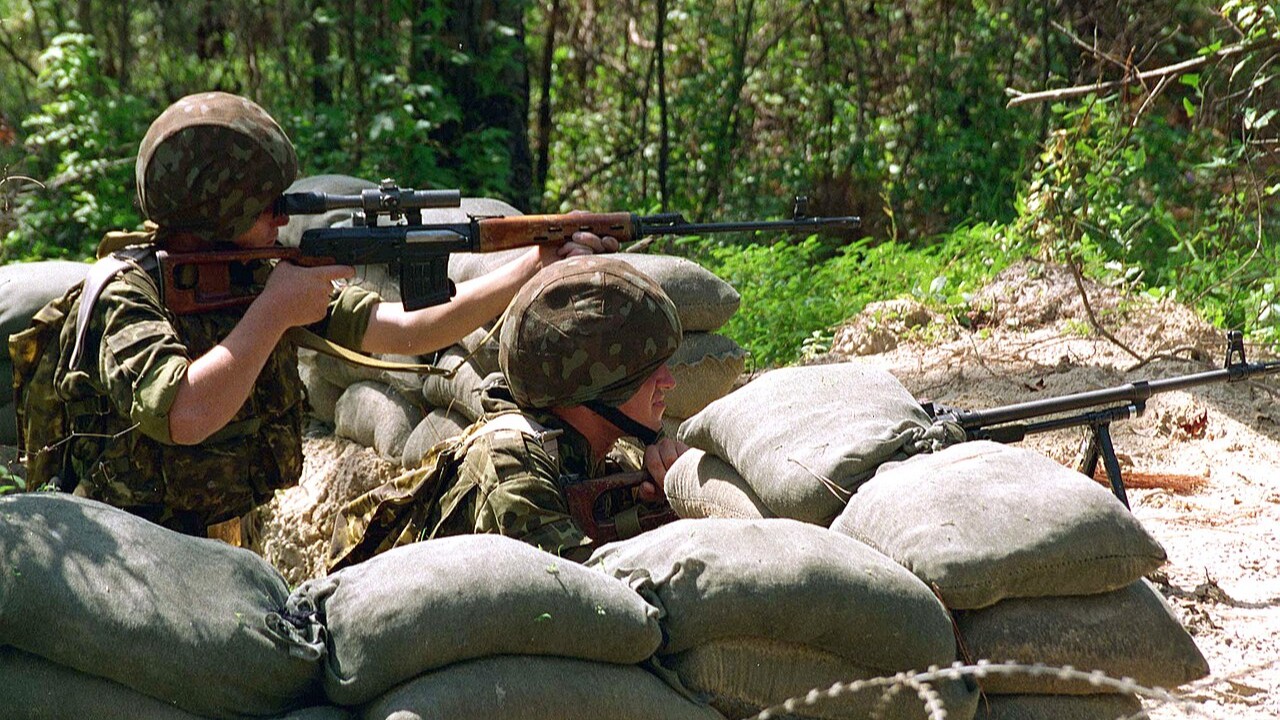
The SVD was the Soviet Army’s answer to a simple question: how do you give an infantry squad its own marksman? Yevgeny Dragunov developed the rifle between 1958 and 1963. It entered serial production in 1963, and Kalashnikov still makes it today. Soon it was a familiar sight in Soviet units.
The design is straightforward. It fires the old 7.62x54R cartridge from a 10-round magazine. Its stated effective range is up to 800 meters against personnel and unarmored targets, which made it a squad marksman’s rifle rather than a specialist sniper system. Russia even fielded a modern successor, the SVCh, which entered production in 2023.
Yet the SVD keeps rolling off the line. Kalashnikov announced increased SVD output in 2024, and in October 2026 it said it had completed its 2026 contract for Russian security agencies. The rifle “remains in use across Russian military and security units,” as United24 Media reported in October 2026. In our view, no army on this list refuses to retire a gun more clearly, because Russia has a newer rifle and still buys the 1963 one.
9. Mk 19 grenade launcher
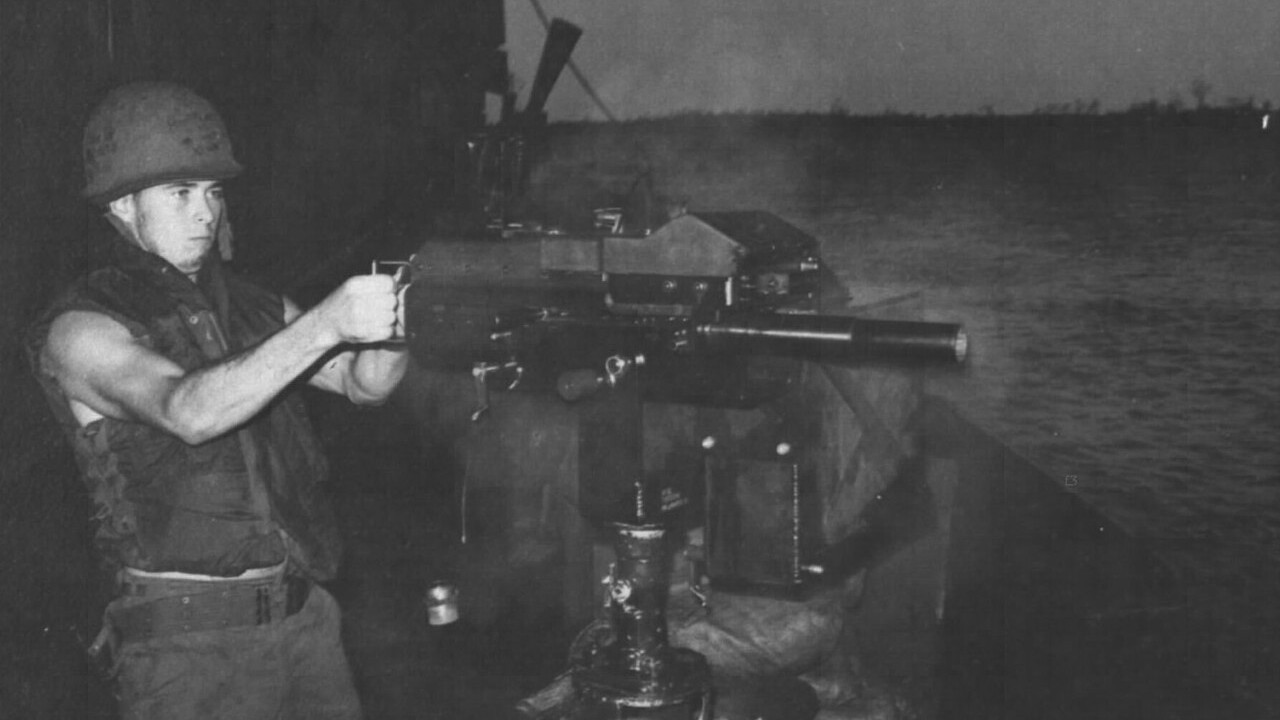
The Mk 19 is a belt-fed 40mm automatic grenade launcher, and it is the youngest gun on this list. It entered service in the late 1960s, during the Vietnam War. The U.S. military then fielded it widely through the 1970s. It is accurate out to about 1,500 meters against point targets and beyond 2 kilometers against area targets.
Today, it is a standard support weapon across the U.S. services. Crews mount it on many light and armored vehicles, and infantry set it on tripods for dismounted missions. Meanwhile, U.S. Special Operations Command uses a lighter alternative, the Mk 47, for some missions. Even so, the Mk 19 remains in widespread use with American forces and several NATO allies.
Its newest job may be its most surprising one yet. On November 18, 2025, the Department of War posted a notice on SAM.gov seeking programmable 40mm airburst rounds for it. The goal is to defeat small drones while keeping existing mounts and fire-control systems. Nearly six decades after its Vietnam debut, the Mk 19 is still getting new missions and new ammunition.