
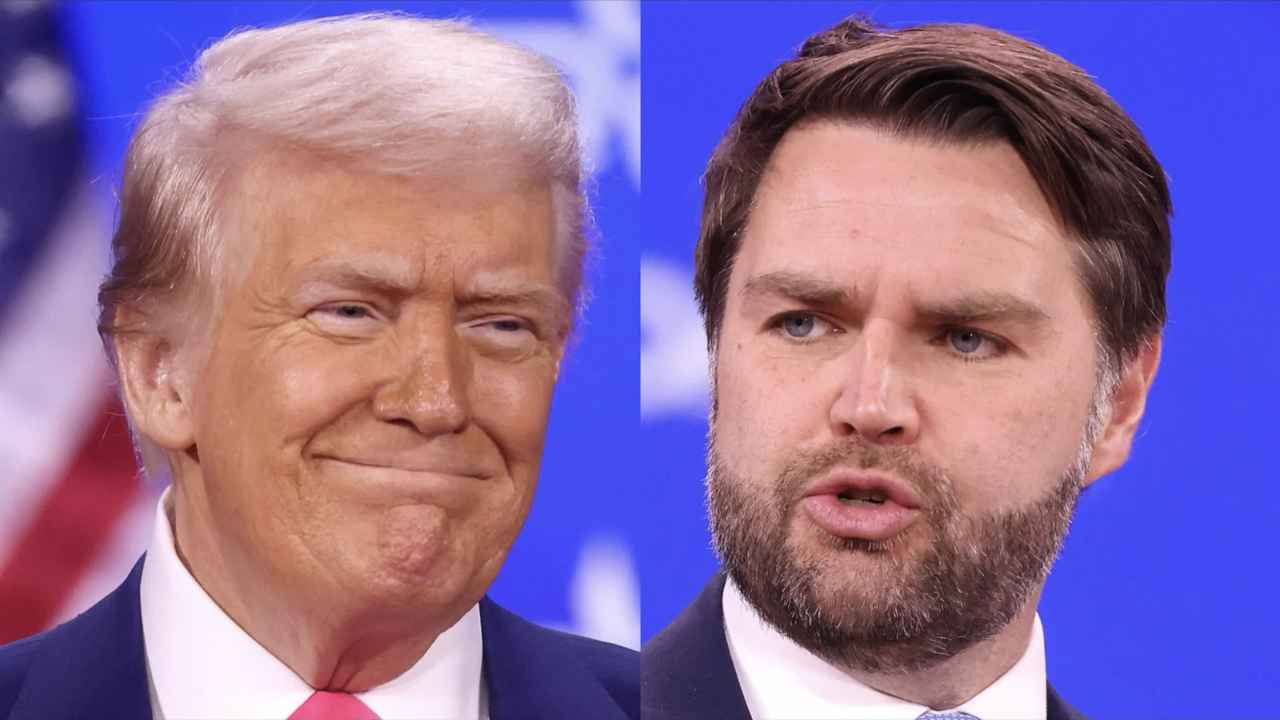
SHENZHEN, China — President Donald Trump criticized the Iran memorandum of understanding negotiated during Vice President JD Vance’s diplomatic efforts, calling the agreement a “waste of time” and saying it delayed his administration’s approach to Tehran, while denying that its failure prompted him to remove Vance from negotiations.
Trump made the remarks during a November 18 interview with Fox News correspondent Jacqui Heinrich in Shenzhen, China, as questions continued over Vance’s role in Iran diplomacy and his criticism of the war’s political consequences.
“I think a waste of time. I didn’t like doing it, but I listened to people,” Trump said, referring to the memorandum. “I have some very good people. And it could have worked out.”
Trump questioned the value of pursuing a preliminary understanding rather than negotiating a more definitive agreement.
“I never believe too much in memorandums. You go right to a contract, forget the memorandums,” he said.
When Heinrich asked whether the decision had been a mistake, Trump said the negotiations had delayed the administration but maintained that the process had helped him assess Iran’s intentions.
“It delayed things a little bit. And it wasn’t a mistake,” Trump said. “Actually, we got to know them very well during that period, and we got to know that they can’t be trusted.”
Heinrich then asked whether dissatisfaction with the memorandum was why Vance had been removed from the Iran negotiations.
“No. No. He’s doing a very good job,” Trump replied.
The exchange came less than a week after Trump publicly directed Vance to concentrate on domestic fraud and corruption investigations instead of continuing his leading role in negotiations with Iran.
The president’s comments also followed reports of growing disagreement between Trump and Vance over the war, particularly after the vice president blamed the conflict for Republican losses in the November 3 midterm elections.
What the June Iran Memorandum Proposed
The memorandum emerged from months of diplomatic efforts involving Vance, U.S. special envoys and regional mediators seeking to end the war between the United States and Iran.
The agreement was intended to establish an interim framework for ending hostilities, reopening the Strait of Hormuz and negotiating a longer-term settlement addressing Iran’s nuclear program and regional security.
On June 17, Reuters reported that the White House had provided Congress with a 14-point draft memorandum of understanding outlining the proposed terms.
The document called for an immediate cessation of military operations, commitments to respect national sovereignty and a negotiating period of up to 60 days to reach a permanent agreement.
It also addressed the U.S. naval blockade of Iranian ports, commercial shipping through the Strait of Hormuz, Iranian oil exports, sanctions relief and access to frozen Iranian assets.
Under the reported framework, Washington would begin lifting its naval blockade following the agreement and complete the process within 30 days, while Iran would facilitate commercial shipping through the strait without charging transit fees during the initial period.
The memorandum also contemplated negotiations over Iran’s enriched uranium stockpile and nuclear activities, with provisions for international monitoring and a subsequent agreement.
The Washington Post separately published the terms of the memorandum as relayed by a senior U.S. official, providing a detailed account of the diplomatic framework.
Those provisions demonstrate that the memorandum was intended to address more than a temporary pause in military operations. It also sought to establish the basis for negotiations over sanctions, maritime security and Iran’s nuclear program.
However, several major questions remained unresolved, including the timing of sanctions relief, the disposition of frozen Iranian funds and the terms of a permanent nuclear agreement.
Trump did not identify a specific provision of the memorandum that he considered responsible for its failure during his November 18 interview.
Instead, he criticized the decision to pursue a memorandum in the first place and argued that the negotiations ultimately demonstrated that Iran could not be trusted.
Agreement Collapsed Within Weeks
The June agreement temporarily reduced hostilities, but disputes over implementation and renewed military incidents undermined efforts to establish a lasting settlement.
On July 7, Trump declared the memorandum over following renewed attacks and disagreements involving shipping through the Strait of Hormuz.
According to Reuters’ August 12 reporting, the United States and Iran subsequently failed to make progress toward reviving the interim agreement.
Washington accused Tehran of failing to reopen the strait as required, while Iranian officials argued that the United States had violated its commitments by maintaining restrictions on Iranian shipping and withholding access to frozen assets.
Iran also disputed whether the agreement’s 60-day negotiating period had formally begun, arguing that U.S. actions prevented implementation of the arrangement.
The competing accounts are significant because Trump’s assertion that Iran could not be trusted reflects the administration’s interpretation of the agreement’s collapse. Iranian officials have separately accused Washington of failing to fulfill its obligations.
The United States subsequently reinstated its naval blockade of Iranian ports, restoring a central source of economic pressure on Tehran.
On November 18, the same day as Trump’s interview, Reuters reported that U.S. Central Command had expanded its blockade enforcement guidance to address ship-to-ship cargo transfers involving goods loaded at Iranian ports.
Under the advisory, vessels receiving cargo from ships associated with Iranian ports could face enforcement action even if the receiving vessels had not entered Iranian waters.
The measures reflected the administration’s continued reliance on economic and maritime pressure after the collapse of the June diplomatic arrangement.
Trump Redirected Vance Away From Iran Negotiations
Vance had played a central role in earlier diplomatic efforts to end the war, including negotiations with Iranian officials in Pakistan during the spring.
Those discussions helped produce the June memorandum, although other senior administration officials and regional mediators also participated in developing the agreement.
On November 12, Trump publicly directed the vice president to focus on domestic corruption investigations, raising questions about whether Vance would continue leading diplomatic efforts involving Iran.
In a November 12 Reuters report, Trump was quoted as saying the United States no longer needed an agreement with Tehran.
“We don’t need a deal with Iran. Those days have long since passed,” Trump wrote in a social media statement.
He also said he had asked Vance to devote his attention to alleged fraud and corruption in Democratic-led cities and states.
The directive followed reports that Vance had been considering additional diplomatic contact with Iranian officials in an effort to revive negotiations.
According to the Washington Post’s November 12 reporting, Vance had begun outreach intended to explore a negotiated settlement that could reopen the Strait of Hormuz and impose limits on Iran’s nuclear activities.
The report described Trump’s decision as a move away from Vance’s diplomatic efforts in favor of maintaining economic pressure through the blockade.
Trump’s November 18 denial therefore addressed a specific question about his motivation for reassigning Vance. It did not reverse the earlier directive or establish that the vice president had resumed leading negotiations.
Nor did Trump provide a detailed explanation of why the diplomatic portfolio had changed hands. He instead praised Vance’s performance before discussing their differing assessments of the war.
Vance Blamed Iran War for Republican Election Losses
The disagreement between Trump and Vance became public following the November 3 midterm elections, when Democrats gained control of both chambers of Congress.
On November 4, Vance argued that the war was a central reason Republicans lost their congressional majorities.
“The reason we lost is the war,” Vance wrote in a social media statement, according to CBS News’ contemporaneous report.
Vance argued that Republicans needed to acknowledge the war’s political consequences rather than dismissing the election results as unrelated to the administration’s foreign policy.
He identified opposition to the Iran war, concerns about the cost of living, demands for an America First foreign policy and dissatisfaction with the U.S. relationship with Israel as reasons some voters who supported Republicans in 2024 backed Democrats in 2026.
The vice president also defended the argument that pursuing a diplomatic resolution had been sound advice.
Trump, however, has continued to maintain that the military campaign was necessary to prevent Iran from obtaining a nuclear weapon and protect American national security interests.
During the Shenzhen interview, Trump appeared to address the disagreement directly after Heinrich asked whether Vance had been removed from negotiations because of the failed memorandum.
“He basically just left one thing out,” Trump said.
“If we had it to do again, would you do it again? And the answer is absolutely yes.”
“What we’re doing is the right thing. I think long term we’ll be judged very well,” the president added.
The president acknowledged that the conflict created political difficulties but said those concerns would not determine his decision-making.
His remarks illustrated a difference in emphasis between the two men: Vance had focused on the war’s electoral consequences, while Trump defended the original decision to use military force.
Trump did not explicitly accuse Vance of disloyalty during the interview, and his denial that the failed memorandum caused Vance’s reassignment should be distinguished from reports describing tensions between the president and vice president.
Trump Says Negotiations With Iran Are Continuing
Despite his criticism of the June memorandum, Trump said during the November 18 interview that Washington remained in contact with Tehran.
Asked whether negotiations were continuing, Trump said the administration was still communicating with Iranian officials and that Tehran wanted an agreement.
“Yeah, we talk to them. We talk to them,” Trump said.
He emphasized that any future agreement would need to remain effective beyond his presidency.
“They wanna make a deal, but we have to have a lasting deal,” Trump said.
The remarks represented a different emphasis from his November 12 statement that the United States no longer needed an agreement, although Trump did not announce a new negotiating framework or identify which officials would lead future talks.
The administration’s position has combined continued diplomatic contacts with military and economic pressure, including restrictions on Iranian oil exports and shipping.
Trump has also maintained that the United States is prepared to conduct additional military operations if negotiations fail or Iran takes actions Washington considers threatening.
In a November 18 Reuters analysis, the continuing uncertainty over the war’s end was reflected in differing assessments from American officials and regional governments about the prospects for a lasting settlement.
Iranian officials have continued to demand an end to the blockade and other measures they regard as violations of the earlier diplomatic framework.
Neither government has announced a comprehensive agreement resolving the conflict or replacing the June memorandum.
Trump’s criticism of the earlier negotiations therefore comes as the administration faces unresolved questions about the war’s duration, the future of the Strait of Hormuz and the conditions under which the United States and Iran could reach a lasting settlement.
While Trump defended Vance’s performance and denied that the failed memorandum was the reason for his removal from negotiations, he made clear that he remained dissatisfied with the agreement itself.
The president also reaffirmed that he would make the same decision to launch the military campaign despite the war’s political and economic consequences.