
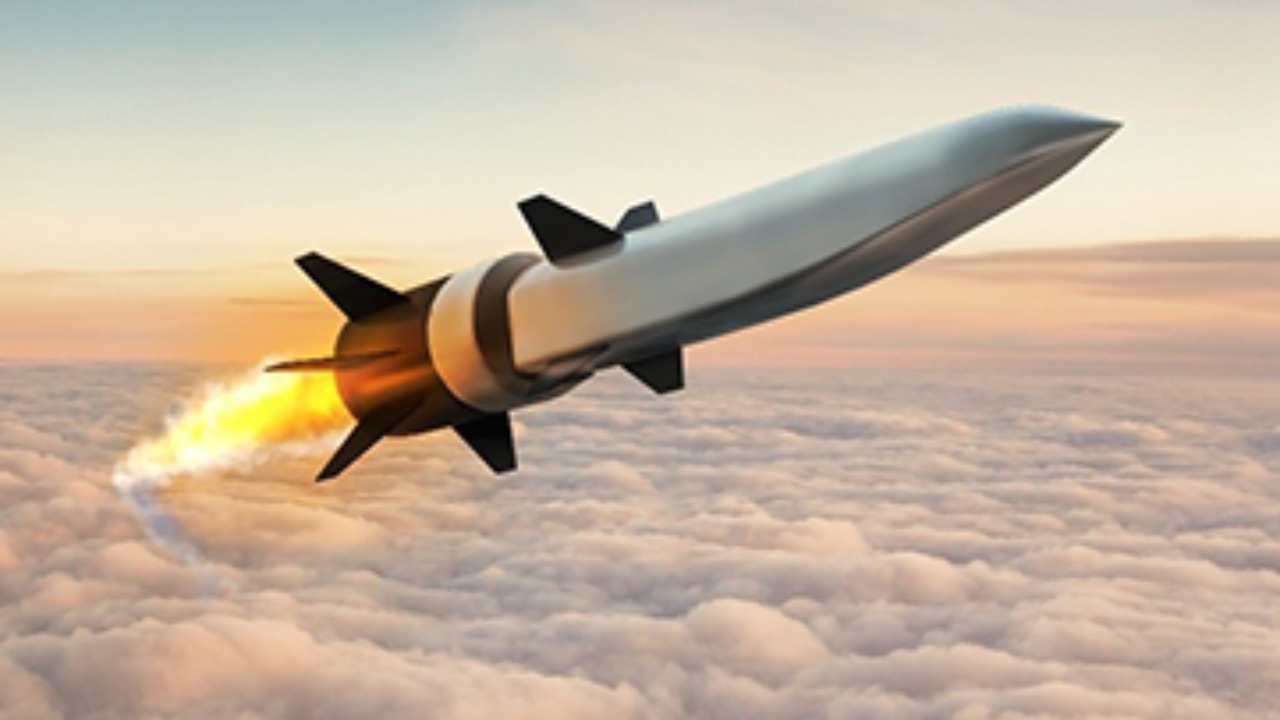
The technology race to field next-generation long-range strike is not a single sprint. It is a set of parallel competitions: hypersonic weapons alongside advanced stand-off cruise missiles, stealth platforms alongside magazine depth, and—most decisively—slow kill chains versus fast ones. Speed draws headlines, but operational advantage comes from whether a force can find, track, target, and strike high-value objectives at range before they move, hide, or respond. For the U.S. Air Force and, where missions overlap, the Navy, that push is unfolding alongside stealth bomber modernization and a broader effort to deliver effects at distance without depending on vulnerable forward bases.
In most public-facing U.S. planning, China and Russia set the pace for long-range strike modernization. That competition is expressed in less dramatic but more telling areas: research progress, flight-test cadence, production throughput, basing options, and the practical work of integrating weapons onto aircraft and ships. These lines of effort are not interchangeable. A weapon that performs well in a test program but cannot be produced in meaningful numbers—or cannot be targeted reliably in a contested electronic warfare and space environment—will struggle to deliver the leverage its advocates expect.
What’s driving the race
Long-range strike is about holding key targets at risk from outside an adversary’s most dangerous defensive zones. In practice, that means creating credible options to reach air defenses, command nodes, and logistics hubs without routinely flying into the heart of an integrated air defense system. In the Indo-Pacific and in Europe, distance and access constraints make that logic central to deterrence and war planning.
Just as important is tempo. Advanced air defenses, counter-space capabilities, and electronic warfare can disrupt the links between sensors and shooters. Long-range strike depends on those links holding long enough to build track quality, generate a firing solution, and authorize engagement. That is why the “race” increasingly comes down to sensing-to-shooting speed and resilience—not just the speed of the missile.
Hypersonics and advanced cruise missiles: different tools, not a binary choice
Public debate often treats the choice as hypersonics or cruise missiles. In practice, force design is trending toward a portfolio approach, with each category filling different niches. Hypersonic weapons are associated with rapid time-to-target and flight profiles intended to complicate defense. But successful tests are not the same as operational maturity, and effectiveness still depends on targeting, communications, and the ability to generate enough shots to matter in real plans.
Advanced stand-off cruise missiles, particularly those designed with low-observable characteristics, offer a different path to long-range effects. They can support larger stockpiles, enable massed salvo concepts, and create problems for defenses through routing and volume rather than raw speed. A force that pairs survivable launch platforms with stand-off weapons and resilient targeting networks may achieve many of the same operational outcomes while keeping unit cost and readiness burdens in view.
The platform layer: bombers, fighters, and ships
Next-generation long-range strike is not only a missile story; it is also an integration story. Stealth bomber modernization—often discussed publicly in the context of the B-21—reflects the broader direction: platforms designed to survive in contested environments while carrying advanced munitions. Even when a weapon’s range allows launch from outside the densest threat rings, the platform still has to survive to deliver, communicate, and potentially re-attack.
This is where timelines can slip. Fielding a capability at scale requires more than a weapon that flies: software integration, mission planning tools, secure communications, test and evaluation pipelines, and training that turns “tested” into “usable by operational units.” Where the Navy plays a role, maritime basing adds flexibility and different launch concepts, but it also brings distinct integration, sustainment, and planning demands.
Industry and the constraint that decides scale: capacity
Industry is an active part of this competition. Major primes—Lockheed Martin, Northrop Grumman, Raytheon/RTX, and Boeing—along with propulsion specialists, are central to maturing designs, improving manufacturability, and working through bottlenecks. But long-range strike is not a winner-take-all contest. It is a portfolio problem, and different companies can lead different segments of it.
Production scaling is where ambition meets physics, workforce realities, and supply chains. Even promising designs can be limited by test infrastructure, specialized materials, and propulsion components that cannot be surged quickly. For planners, readiness is tied to magazine depth and throughput—how many weapons can be produced, delivered, maintained, and replenished—rather than the performance of a single prototype.
Cost, stockpiles, and sustained operations
Budget pressure is not abstract in this space; it shapes how many weapons can be bought, how often they can be tested, and how quickly units can train. Many long-range strike concepts imply high expenditure rates early in a high-end conflict, especially if doctrine shifts toward massed salvos and dispersed operations instead of relying on a small number of exquisite shots. That puts unit cost and stockpile depth at the center of the debate.
There is also an opportunity-cost dynamic. Shifting resources toward long-range munitions and enabling networks can mean reduced funding elsewhere, creating friction across platforms and readiness accounts. A practical indicator to watch is whether budgets support the unglamorous foundation: test ranges, telemetry, modeling and simulation, and training pipelines that turn developmental capability into repeatable operational effect.
The enabling network: ISR, targeting, communications, and kill-chain resilience
Long-range strike depends on a functioning targeting architecture. Intelligence, surveillance, and reconnaissance; secure communications; and resilient command-and-control are not supporting details—they are essential to making long-range weapons useful in contested conditions. Against adversaries with sophisticated electronic warfare and counter-space capabilities, the ability to maintain track quality, pass targeting data, and authorize engagement can become the limiting factor.
This is also where the speed debate can mislead. A faster missile does not solve the problem of finding mobile targets, holding custody through deception, or validating targets in a time-sensitive window. In many scenarios, a less exotic munition tied to a more reliable kill chain can generate more usable combat power than a cutting-edge weapon that depends on fragile links.
Deterrence and escalation: conventional capability with strategic consequences
Long-range strike affects deterrence by changing what an adversary must defend and how far back the fight can reach. The ability to threaten air defenses, command nodes, and logistics hubs from outside contested zones can push an opponent to disperse, harden, and spend resources defensively. Those effects matter even in peacetime, shaping posture, exercises, and signaling.
Policy concerns also enter through ambiguity. Dual-capable platforms and uncertain payload assumptions can complicate escalation dynamics. Even when intent is conventional, an adversary may interpret certain platforms or strike patterns through a nuclear lens, depending on doctrine and warning timelines. That makes doctrine, messaging, and signaling part of the competition alongside hardware.
Allies and access: interoperability as a multiplier—and a constraint
Allied participation can turn long-range strike from a national capability into a broader theater problem. Basing access, shared stockpiles, and interoperability can increase launch options and add resilience if specific bases or nodes are threatened. In both the Indo-Pacific and NATO contexts, access and integration can be as valuable as any single marquee weapon.
At the same time, export controls and ITAR constraints influence who can field what, and how quickly partners can align on common weapons, data links, and concepts of operations. In practice, alliance long-range strike is as much about permissions, infrastructure, and shared operational planning as it is about the munition itself.
What to watch: milestones that will show who is pulling ahead
The next phase of this race will be defined by measurable progress. Flight-test cadence matters, but so does the transition from isolated demonstrations to repeatable testing that supports tactics, training, and operational planning. Production milestones will be just as telling—especially whether capacity expands to support stockpiles sized for sustained operations rather than limited contingencies.
Integration will be another clear signal: which aircraft or ships receive new weapons first, how quickly software and mission planning tools mature, and whether operational units can train at scale. Finally, basing and doctrine choices will indicate seriousness, particularly shifts toward dispersed operations and concepts built around salvo employment. The side that best pairs credible weapons with resilient targeting networks and sustainable production will shape the long-range strike balance—regardless of who claims the fastest missile.