
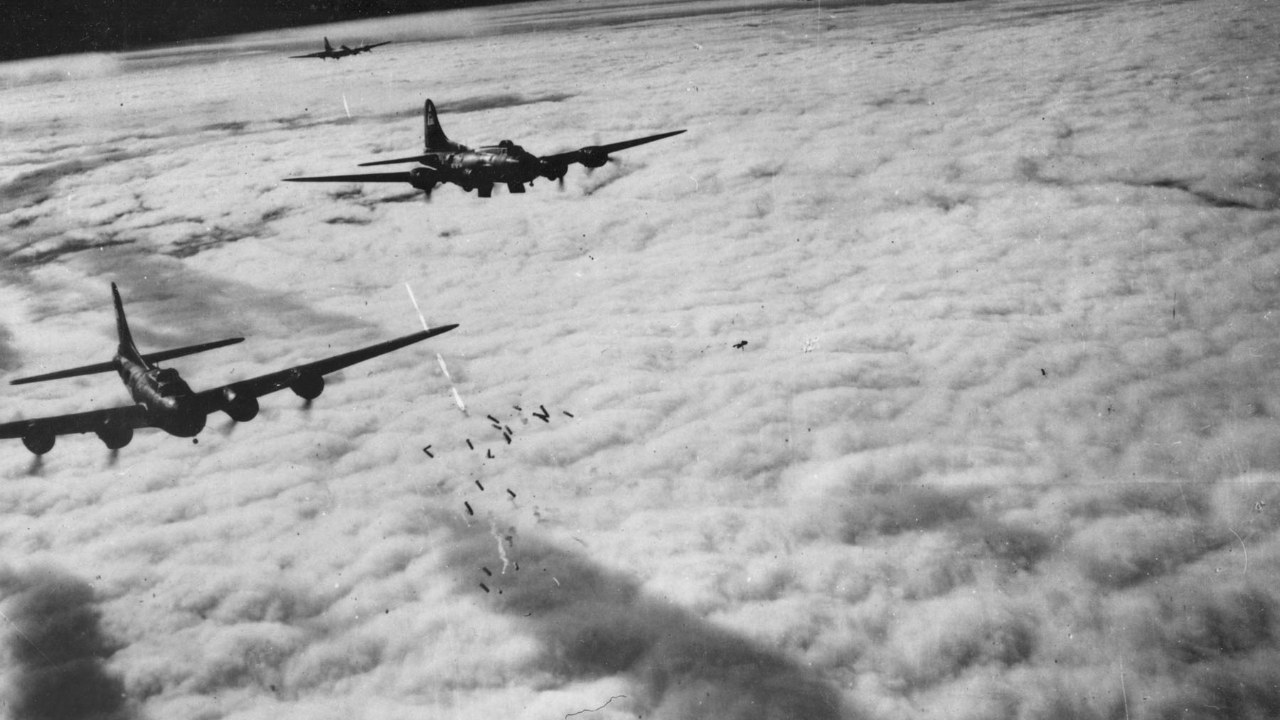
An Eighth Air Force surgeon decided in World War II to armor the men instead of the airplanes, and once his body armor was adopted it cut the rate of wounds suffered by bomber crews on missions by 60 percent, according to the Air Force Medical Service. Fliers called it a “flak vest” or “flak suit.”
The surgeon was Col. Malcom C. Grow. His first suits went to the Eighth Air Force for combat testing in March 1943, and within a year more than 13,000 had been produced.
The account comes from the AFMS history feature marking the 75th anniversary of the first body armor suits delivered to the Eighth Air Force, written by Kevin Hymel of the Air Force Medical Service History Office. It identifies “Col. Malcom C. Grow, the 8th Army Air Force surgeon who would go on to become the first U.S. Air Force Surgeon General.”
The problem Grow was solving
The threat was not usually a direct hit. According to the AFMS feature, low-velocity fragments from exploding shells caused the majority of bomber air and ground crew casualties during the war.
The National Museum of the U.S. Air Force puts a number on it. Its Bomber Crew Protection exhibit page says a 1942 study found that relatively low velocity projectiles “caused 70% of bomber crew wounds.”
Armoring the bombers was not the answer. “Adding protective armor to planes made them too heavy,” the AFMS history says. “Grow realized that armoring the flight crews themselves would add protection without overburdening the aircraft,” it continues.
Twelve suits, then 13,500
The first batch was small. In March 1943, according to the AFMS feature, Grow delivered twelve body armor suits “for testing in actual combat situations.” When the early tests went well, it says, “Lt. Gen. Carl ‘Tooey’ Spaatz, the 8th Air Force commander, approved procurement for testing.”
Production followed fast. “By Jan. 1, 1944, 13,500 suits had been produced,” according to AFMS.
The suit itself was a vest and an apron. Per AFMS, “the two-piece protective wear covered the chest, abdomen, groin, and back, at a weight of only 16 pounds.” “Pilots and copilots typically wore less armor than the rest of the crew,” the feature adds.
Getting out of it mattered as much as wearing it. “In an emergency, fliers could quickly discard the entire ensemble by pulling a single red-colored strap,” the AFMS history says. The Air Force museum’s exhibit page describes the same feature on the armor it displays: “It could be quickly removed during an emergency by pulling the red release strap.”
Steel squares sewn into cloth
The museum shows what was inside. “Bomber crew armor was filled with overlapping squares of 1 mm-thick manganese steel plates,” its exhibit page says, and the plates were sewn into the fabric, which “gave some flexibility to the armor.” The museum describes the typical armor for a seated bomber crewman in early 1944 as weighing about 13 pounds, worn over clothing and gear. That is a different configuration from the 16-pound two-piece suit AFMS describes, and the two records give their own figures.
The museum page credits “Dr. Malcolm Grow, Eighth Air Force surgeon general” with developing the body armor, spelling his first name differently from the AFMS history. It also covers the helmets that went with it, including the “Grow Helmet” produced by the British Wilkinson Sword Company, and says more than 80,000 M4 series helmets were made during the war.
What the numbers showed
The armor’s record is in two figures from the AFMS feature. “An 8th Air Force study found that body armor prevented approximately 74 percent of wounds in protected areas,” it says. And: “Once adopted in World War II, body armor reduced the rate of wounds sustained by aircrews on missions by 60 percent.”
The museum frames the result more broadly, saying body armor and helmets “saved thousands of bomber crewmen from injury or death.” The AFMS history adds the effect on the men wearing it: “Besides saving lives, body armor boosted aircrew morale during stressful missions over enemy territory.”
Grow’s later title is the landing fact. The colonel who sent twelve test suits to the Eighth Air Force in March 1943 went on to become the first Surgeon General of the U.S. Air Force, according to the service’s own medical history office.
Top image: Eighth Air Force B-17F Flying Fortresses bombing through cloud over Germany, November 1943. Image Credit: U.S. Army Air Forces — Public domain / Wikimedia Commons