
The U.S. Army now has a warrant officer specialty built around robotics. Military occupational specialty 390A, Robotics Technician, was activated Oct. 1, 2026, at the U.S. Army John F. Kennedy Special Warfare Center and School at Fort Bragg, North Carolina, and its first 10 warrant officers were set to be inducted the next day after a 19-week course.
Warrant officers are the Army’s technical specialists, ranked between enlisted soldiers and commissioned officers and expected to stay expert in one field. The new specialty starts inside Army special operations and gives commanders a dedicated advisor for drones, ground robots and the networks that tie them together.
The activation was announced in an Army article published Oct. 2, 2026, by Maj. George Wasickanin of the Special Operations Center of Excellence Public Affairs Office. It states: “These inaugural 10 warrant officers will be inducted during the 390A Activation and Induction Ceremony at the JFK Auditorium on Fort Bragg, North Carolina, Oct. 2, 2026.” According to the article, the specialty was first unveiled publicly at the Maneuver Warfighter Conference on Sept. 16, where Vice Chief of Staff of the Army Gen. Christopher C. LaNeve outlined the service’s modernization plans.
“Robotics is no longer a niche capability, it is becoming a core requirement for Army formations.” — Chief Warrant Officer 5 Gary Ostrander, Chief Warrant Officer of the Special Forces Branch at the U.S. Army John F. Kennedy Special Warfare Center and School
The Army article identifies Ostrander as a key architect of the new specialty.
Nineteen weeks at Bragg, Mackall and Alabama ranges
The 390A Warrant Officer Basic Course runs 19 weeks across Fort Bragg and Camp Mackall in North Carolina and Fort McClellan and Clark Range in Alabama, per the Army’s Oct. 2 article. Its curriculum “comprises 14 weeks of intensive technical training covering computing networks, edge artificial intelligence, computer-aided design, additive fabrication, and radio frequency systems followed by two weeks of operational mission planning and a three-week field maneuver exercise and culminating exercise.”
The course ends in what the Army calls a “Prototype Capstone,” in which students “design, 3D-print, and code a functional solution to a novel problem from scratch under tactical field conditions.” Students also learn to set up resilient tactical mesh networks, radio networks in which each node relays traffic so the loss of one link does not cut the whole system, and to train machine-learning models that let systems navigate on onboard sensors without GPS or radio links, the article says.
Maj. Gen. Jason Slider, the school’s commander, whose center added new courses in electromagnetic warfare, robotics, information warfare and signals intelligence, per an Association of the U.S. Army report of Oct. 31, 2025, described the role in the Army article: “The 390A Robotics Technician is designed to be that architect.” He added, “The 390A gives our Army a capability we need across our formations: warrant officers who can turn robotics and autonomy into real combat capability.”
Why a separate specialty
The Army’s account traces the decision to recent conflicts, where cheap commercial unmanned systems and electronic warfare exposed the limits of relying only on the soldiers who operate the systems. Chief Warrant Officer 5 Jerry Brown, command chief warrant officer of 1st Special Forces Command (Airborne), said the job “cannot be an additional task or an additional hat for someone on the ODA,” the Special Forces Operational Detachment-Alpha. “We determined an additional MOS with someone who could focus on that specific tech capability, whether it be ground, air, or just unmanned systems as a whole, is the better approach to infusing or integrating what will be required of us in the future fight,” Brown said, per the Army article.
Back at their units, the article says, 390As will plan and synchronize robotic and autonomous systems in missions, examine friendly systems for vulnerabilities, develop countermeasures to enemy electronic attack and rapidly prototype fixes to new threats.
The Army’s recruiting command lists the specialty on its warrant officer feeder page for 390A, describing the job as including “engineering and fabricating robotic and autonomous system solutions to tactical problems, managing attritable systems and their kinetic and sensor payloads.” The page says the specialty is open to enlisted soldiers, warrant officers and officers serving in U.S. Army Special Operations Command units, with enlisted applicants at specialist or above.
More 390A slots ahead
The specialty is part of a broader Army push on autonomy. In a separate Army release dated Oct. 2, 2026 announcing the U.S. Army Futures and Autonomous Systems Command, the service said it “will expand authorizations for 15X Tactical Unmanned Aircraft Systems Specialists and 390A Robotics Technicians across applicable units.” The same release says the Army will integrate autonomous capabilities into at least six formation areas: aviation, armor, fires, sustainment, engineer and training formations.
The first class did cross the stage. DefenseScoop reported on Oct. 2, 2026 that ten warrant officers graduated from the 390A course at Fort Bragg that Friday and are expected to advise commanders at the group and brigade levels. For now the specialty stays inside Army special operations; the Army’s autonomy directive is the next step that would carry 390A authorizations to other units.
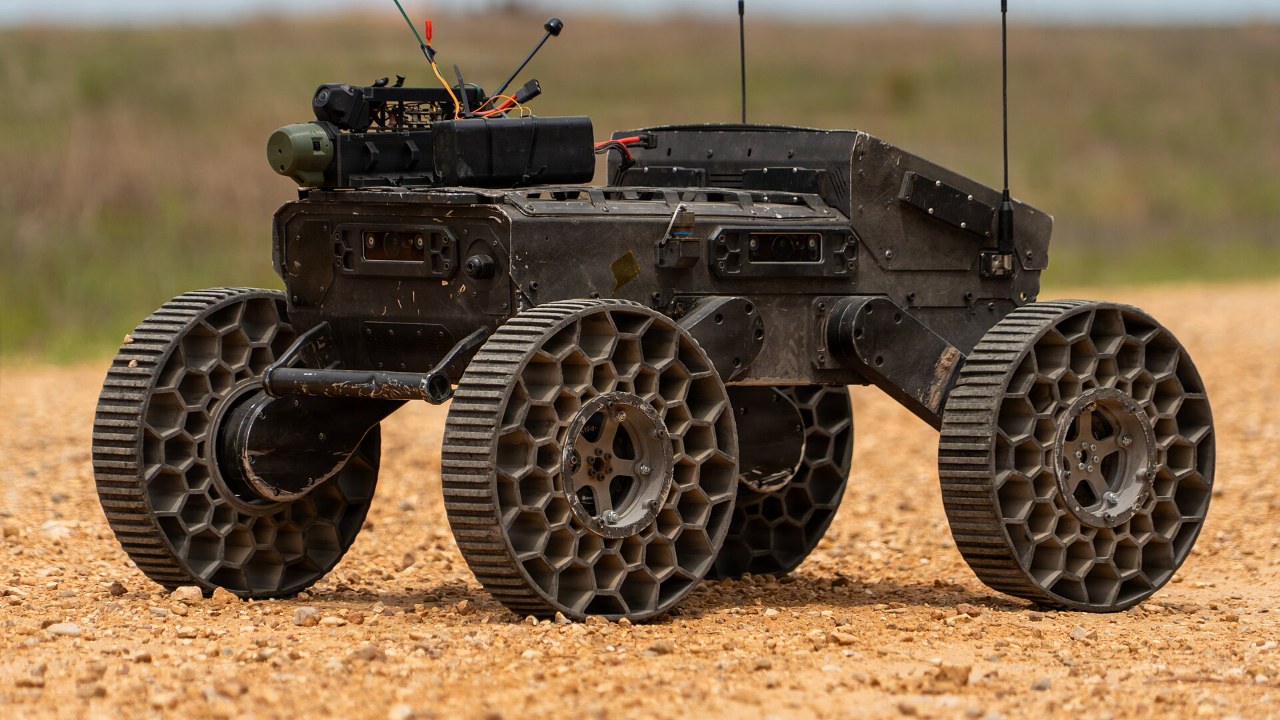
Top image: A FireAnt unmanned ground vehicle used in U.S. Army training. Not part of the 390A course. Image Credit: U.S. Army photo by Spc. Sandy Vera Vazquez — Public domain / Wikimedia Commons
This article was produced with the assistance of AI and reviewed by Combat Rated editors prior to publication.