
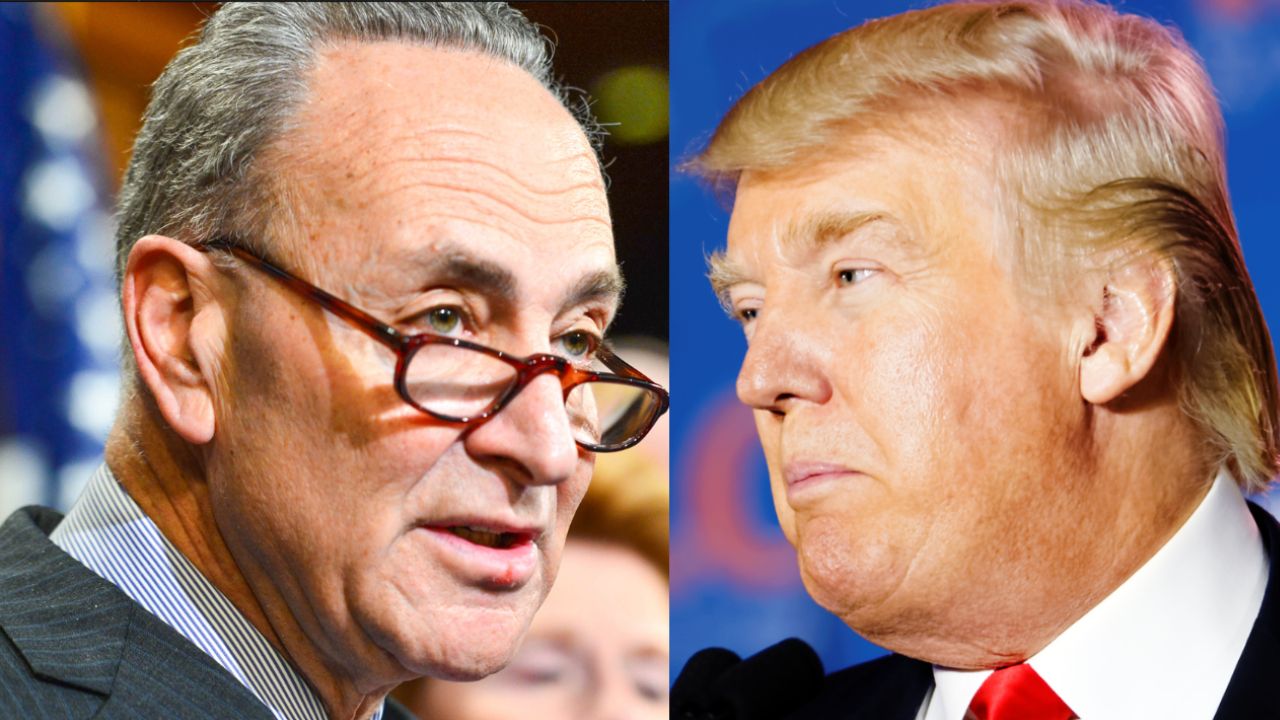
Schumer Responds to Whistleblower Report With Direct Accusation
Senate Minority Leader Chuck Schumer accused President Donald Trump of attempting to rig the 2026 midterm elections through the U.S. Postal Service, posting on X on Tuesday, September 1, 2026, in direct response to a New York Times report detailing a whistleblower’s warning about the agency’s new mail-ballot verification system. Schumer’s post read in its entirety:
“A whistleblower is warning of a ‘catastrophic failure’ in our mail-ballot system—all because Trump is turning USPS into a voter suppression machine. Vote-by-mail is safe and secure. Trump himself voted by mail just last month. He knows he’s failing the American people, so he’s doing everything he can to rig the midterms.”
The NYT Report That Triggered the Response
Schumer’s post came directly in reply to a New York Times article published the same morning, which reported that a U.S. Postal Service official had filed a whistleblower complaint alleging the agency was pushing forward with a “secretive, rushed” rollout of a new digital ballot-verification system despite an active court order blocking the plan. The whistleblower said the “risky and haphazard” implementation of Trump’s executive order could produce a “catastrophic failure” in the mail-ballot system ahead of the midterms, warning that “potentially millions of American voters may not receive their mail-in ballot this election cycle in a timely manner, or at all.”
Whistleblower Filed Complaint Through Blumenthal’s Office
The whistleblower report was filed with the office of Senator Richard Blumenthal, D-Conn., ranking member of the Permanent Subcommittee on Investigations of the Senate Homeland Security Committee, and was prepared with assistance from Whistleblower Aid, a nonprofit that represents individuals seeking to expose government or corporate wrongdoing. In an August 31 letter to Postmaster General David Steiner, Blumenthal wrote that the new verification process would allow USPS to “play a gatekeeping function and be in a position to refuse to mail ballots that state election officials have determined should be sent out,” and urged the agency to “abandon this ill-conceived, unconscionable plan and ensure that all Americans can exercise their constitutional right to vote, including by mail, without interference by USPS.”
“Designed a System to Disenfranchise Millions”
Speaking to reporters on a call Monday, Blumenthal said the whistleblower’s account revealed something more troubling than mere mismanagement. “The main takeaway for me is that the Postal Service has designed a system to disenfranchise millions of Americans,” he said. “One-third of all Americans cast their ballots by mail, and the U.S.P.S. puts all of their votes at risk.” He added that the situation left him “mind-boggling” as both an elected official and a citizen, saying the disclosure showed “the Postal Service has designed a system that is intended to fail.”
Technical Details of the Flawed System
According to the whistleblower’s disclosure, the new Federal Ballot Mail Portal was built under an unforgiving “zero-percent failure policy” for verifying ballot batches submitted by state election officials. Under the design, if even a single barcode on one ballot within a bulk mailing of thousands failed to scan properly during verification, the Postal Service would reject and return the entire batch rather than the individual ballot. The whistleblower stated that a system of this complexity should have taken roughly a year to build and test properly, but USPS attempted to complete it in about three months.
Testing Process Described as Chaotic Internally
Internal USPS staff reportedly described the final week of system testing using blunt language, with the term “sh*t show” surfacing repeatedly among personnel involved in the rollout, according to the whistleblower account. The complaint alleged that requirements for the system were “constantly changing” from the outset and were never clearly documented for the development team, and that USPS leadership dismissed staff concerns, insisting there was no time to formally record what was needed.
Court Order Allegedly Defied
The whistleblower further alleged that USPS continued building the system even after U.S. District Judge Indira Talwani issued a fresh order blocking the agency’s plan on August 27. Blumenthal’s letter specifically pressed Steiner to confirm whether development had, in fact, ceased in compliance with Talwani’s order, who had been working on the system if it had not, and what testing protocols, if any, USPS intended to run before any public rollout. Blumenthal gave the Postal Service until Friday to answer his questions and until the following Tuesday to turn over related records.
Origins of Trump’s Executive Order
The dispute traces back to an executive order Trump signed in March directing Homeland Security Secretary Markwayne Mullin to work with the Social Security Administration to compile a federal list of verified, voting-eligible U.S. citizens, and instructing USPS to withhold mail ballots from any voter not on that list. The order also imposed new barcode-tracking requirements on ballot envelopes. The move represented an unprecedented expansion of the Postal Service’s traditional role, which has historically been limited to transporting ballots between election officials and voters rather than verifying voter eligibility.
Legal Battle Escalates Across the Country
Trump’s order has triggered a wave of litigation, with 23 states and the District of Columbia suing the administration in an effort to block it. Judge Talwani issued multiple temporary blocks on the plan, finding that USPS’s approach appeared to exceed its legal authority and risked injecting chaos into the system just months before the election. The Supreme Court subsequently allowed the administration to proceed, ruling that the states’ lawsuit was premature since implementation had not yet begun — a reasoning Talwani later found undercut once USPS formally published its final rule on August 21.
Schumer’s Earlier Warnings on the Same Order
Tuesday’s post was not Schumer’s first public warning about the mail-ballot order. After Trump initially signed the directive, Schumer released a statement calling it “just the latest in a series of frantic efforts by Donald Trump to rig elections for Republicans,” adding, “Donald Trump and his MAGA cronies have done everything they can to deprive millions of Americans of their right to vote… But Senate Democrats have been united, held firm, and will continue to fight their baseless, extralegal attack on Americans’ right to vote. Make no mistake about it, just like his previous voter suppression attempts, this too will fail.”
Floor Remarks Highlighting Trump’s Own Mail Ballot
In July, after the Trump administration asked the Supreme Court to intervene and block mail-in ballots nationwide, Schumer took to the Senate floor to highlight what he characterized as the president’s hypocrisy. “Yesterday, Trump begged the Supreme Court to help him block mail-in ballots in every corner of the country,” Schumer said. “Hey Donald: did you also tell the Court that you yourself voted by mail just a few months ago? Everyone knows that mail-in voting is safe and secure, and apparently so do you. It’s absurd.” Trump voted by mail in a Florida special election, mailing his ballot from his Mar-a-Lago residence in Palm Beach County, according to county election records.
Senate Democrats’ Broader Election Protection Effort
Schumer’s response fits into a wider Senate Democratic campaign the party has framed as protecting the integrity of the midterms. Alongside Senator Alex Padilla of California, ranking member of the Senate Rules and Administration Committee, Schumer launched a first-of-its-kind Senate Election Observer Program earlier this year to train Senate staff to monitor for election interference. “Donald Trump is trying to poison trust in the 2026 elections before a single vote is cast — but Senate Democrats will not let him intimidate voters, threaten fair elections, or meddle with the will of the people,” Schumer said at the time. “Our elections are safe and secure, and voters deserve confidence that their voices will be heard and their votes will be counted.”
Republicans and USPS Remain Silent
As of Tuesday, the Postal Service had not responded on the record to requests for comment on the whistleblower’s allegations from multiple news organizations, and neither USPS nor the White House had responded to Blumenthal’s letter. Trump has for years promoted unsubstantiated claims that mail-in voting is vulnerable to widespread fraud, repeatedly describing the practice as “cheating,” “corrupt” and “horrible,” even as he has personally voted by mail in two elections during the current cycle.
Battleground States Most Exposed
Election analysts have flagged that any disruption to mail-ballot processing would fall hardest on states with heavy reliance on the method and competitive federal races this cycle. Michigan, where 37 percent of ballots were cast by mail in the 2022 midterms, features several contested House races along with statewide contests. California, which mails ballots automatically to all registered voters, is considered central to Democratic hopes of retaking the House majority, making any system-wide processing failure there especially consequential to control of Congress.
Path Forward as Midterms Approach
With mail-in voting for the midterms set to begin within days in several states, the fate of the Postal Service’s new verification system remains tied up in active litigation, and Blumenthal’s inquiry to Postmaster General Steiner is still pending a response. Schumer’s Tuesday post signals that Senate Democratic leadership intends to keep the whistleblower’s allegations in the public spotlight as a central argument in the party’s broader case that the Trump administration is working to suppress turnout ahead of November, when control of both chambers of Congress will be decided.