
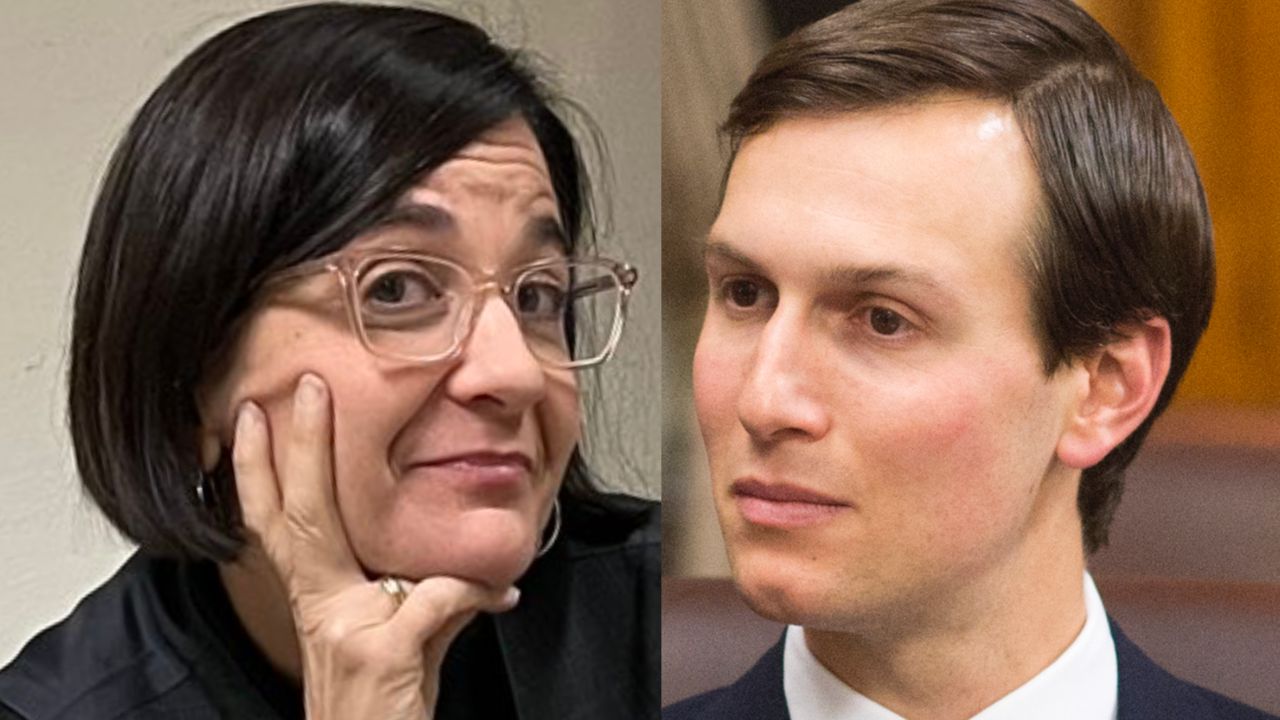
WASHINGTON — Rep. Becca Balint said Jared Kushner and Steve Witkoff “see a payday coming for themselves” while “people [are] losing their lives on the ground in Ukraine.”
The Vermont Democrat posted the lines on X on Oct. 4. She was quoting a post by New York Times reporter Anton Troianovski, who wrote that talks with Russia about ending the war in Ukraine “have expanded to include a multibillion-dollar oil deal that would benefit Middle Eastern business executives with ties to the main U.S. negotiators.” His post linked the paper’s Oct. 3 story. Balint’s post does not link a government document.
There are people losing their lives on the ground in Ukraine but Kushner and Witkoff see a payday coming for themselves.
Can these people do anything without injecting blatant corruption into it?
The story she is answering does not say the two men are paid by the deal. It says “there is no indication that Mr. Kushner and Mr. Witkoff themselves stand to profit.” It says the pending sale is of oil fields, refineries, and gas stations owned by Lukoil, and that the leading group includes American investor Todd Boehly, two Middle Eastern groups that have done business with Kushner or Witkoff’s family, and an arm of the U.S. government. It says President Vladimir Putin raised the sale with the two envoys at the Kremlin on Sept. 5, and that the deal is not final. No White House readout of that meeting names Lukoil.
The paper quoted a senior administration official saying Witkoff and Kushner helped negotiate the terms of a federal investment so the deal included “a substantial upfront payment and profits interest for the United States.” A spokeswoman for Witkoff, quoted in the same story, said he “has no conflict of interest and no financial stake in this matter.” A Development Finance Corporation official, also quoted there, said a potential Lukoil deal “would advance the Trump administration’s commitment to strengthen U.S. economic security, advance U.S. foreign policy and lower energy prices for everyday Americans.” Those lines are in the article. They are not on a department page. A Sept. 16 DFC release lists Ukraine telecom and battery projects. It does not name Lukoil.
What Treasury has published is the designation, and then a license that stops short of a sale. On Oct. 22, 2025, the department designated Lukoil and Rosneft under Executive Order 14024 for operating in Russia’s energy sector. Secretary Scott Bessent said, “Now is the time to stop the killing and for an immediate ceasefire,” and that the two companies “fund the Kremlin’s war machine.” Entities owned 50 percent or more by Lukoil were blocked even if not named.
The path for a buyer is in FAQ 1224, updated Sept. 18. General License 131J authorizes negotiations and contingent contracts for Lukoil International GmbH and its majority-owned subsidiaries, plus due diligence. It “does not authorize transactions to effectuate the actual sale.” Any contract must be contingent on a separate OFAC authorization. The license expires Oct. 22. OFAC says a future sale must completely sever the international unit from Lukoil, block funds owed to Lukoil until sanctions are lifted, and “not provide a windfall to Lukoil.” The same FAQ says the goal of the Russia sanctions “is to place pressure on Moscow to end its war.”
FAQ 1225, updated the same day, splits the licenses. General License 128C covers retail stations outside Russia and runs until Oct. 29. Both licenses bar transfers to a person or account in the Russian Federation. A Treasury spokeswoman told the Times that OFAC “implements foreign policy as determined by the White House.”
Balint’s post does not cite the designation, the license, the spokeswoman, or the paper’s line that the two envoys are not shown to profit. “Payday” and “blatant corruption” are her words. The report she quoted is about a sale tied to the talks, still contingent on a separate Treasury authorization, and not yet done.