
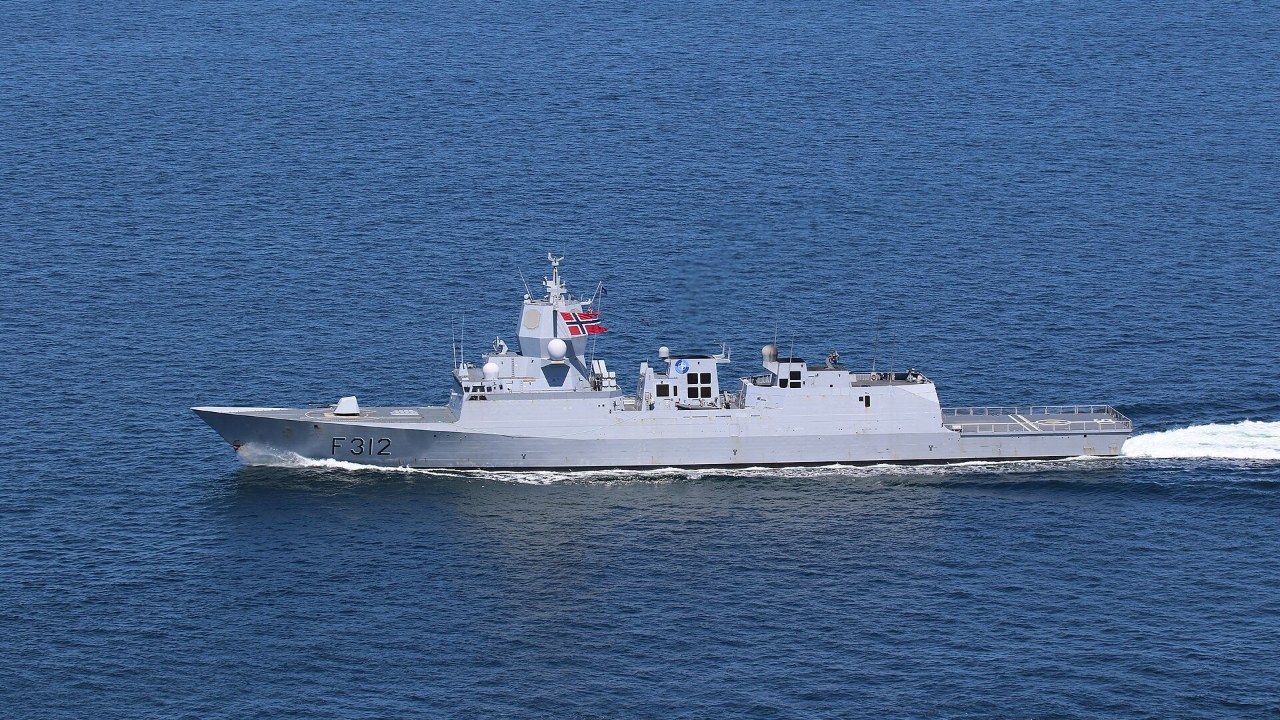
An Evolved SeaSparrow Missile Block 2 has flown from a Norwegian warship for the first time. The frigate KNM Otto Sverdrup fired the upgraded air-defense missile in late September 2026 off the coast of Andøya, in northern Norway, during a test campaign that included live shots against target drones. Norway’s defence materiel agency announced the result on Oct. 1, 2026.
The missile is built to defend ships against anti-ship cruise missiles and aircraft. Its published performance figures are a range of more than 50 kilometers and a top speed above Mach 4.
The announcement came from the Norwegian Defence Materiel Agency, known by its Norwegian initials FMA, and was reported by Naval News on Oct. 2, 2026. Naval News wrote that on Oct. 1 the FMA “announced the successful completion of the first live firing of the Evolved SeaSparrow Missile (ESSM) Block 2 from the Fridtjof Nansen-class frigate KNM Otto Sverdrup.” The firing was carried out off the coast of Andøya under Project P6192, a program managed by the FMA’s Maritime Capabilities division, according to the report.
The campaign “included both simulated launches and live firings against target drones,” Naval News reported. Its objectives included testing new Aegis combat system software, validating the missile’s communication features and active guidance, and confirming overall system performance. Data from the missile and the combat system were forwarded to the United States for analysis.
A multinational range off Andøya
The test team was international. Per the Naval News report, it drew personnel from the U.S. Navy, Andøya Space Defence, Lockheed Martin, the National Maritime Operations Centre and Royal Norwegian Navy Logistics Command. FMA project manager Cmdr. Tor Harald Monsen directed the exercise.
“This has been an excellent international collaboration, with professional execution by both the crew of KNM Otto Sverdrup and the test leadership at Range Control.” — Cmdr. Tor Harald Monsen, FMA project manager, as reported by Naval News
The Barents Observer reported the test on Sept. 30, 2026 and placed it “near Andøya, about 300 km north of the Arctic Circle.” The outlet said “the primary aim was to test new software in the Aegis combat system,” and that the firing “demonstrated that the ESSM Block 2 missile delivers the expected improved performance.”
What Block 2 adds over Block 1
The difference is in the seeker. RTX’s Raytheon, which builds the missile, describes ESSM Block 2 as having “an upgraded guidance system with a dual-mode active and semi-active radar seeker, increased maneuverability, and improved performance over its Block 1 predecessor,” in an Oct. 1, 2025 release marking delivery of the 500th Block 2 to the U.S. Navy.
Naval News explains what that changes at sea. Block 1 depends on continuous illumination from the ship’s radar; Block 2’s active seeker gives it autonomous guidance in the terminal phase, which allows multiple targets to be engaged at the same time. The missile still fits existing Mark 41 Vertical Launching Systems in quad-pack configurations, according to the report, which gives “the operational range of the ESSM Block 2” as “over 50 kilometers (27+ nautical miles), with a top speed exceeding Mach 4.”
Norway is one of 12 member nations of the NATO SeaSparrow Consortium, per the RTX release. The others are Australia, Belgium, Canada, Denmark, Germany, Greece, the Netherlands, Portugal, Spain, Türkiye and the United States.
The firing is a milestone, not an operational clearance. According to Naval News, the FMA’s Maritime Capabilities division will now work with the Royal Norwegian Navy on installing the system, integrating it across the fleet and certifying it for operational use.
Top image: The Norwegian frigate KNM Otto Sverdrup (F312) underway in the Baltic Sea, June 8, 2020. Image Credit: U.S. Navy photo courtesy of the German Navy — Public domain / Wikimedia Commons
This article was produced with the assistance of AI and reviewed by Combat Rated editors prior to publication.