
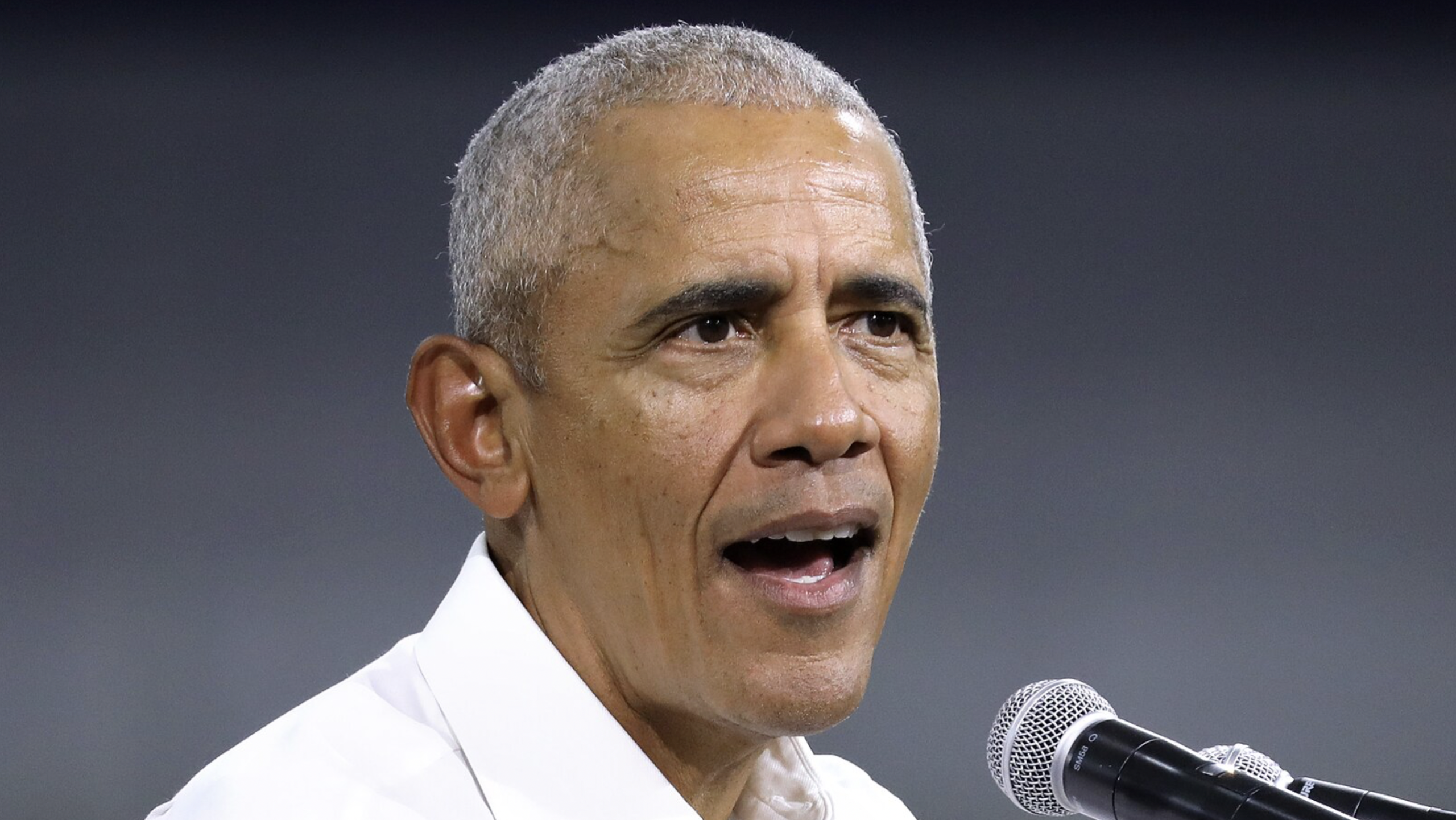
Former President Barack Obama marked the United States’ 250th Independence Day on Saturday with a pointed social media message calling on the current generation of Americans to carry forward the unfinished work of their predecessors — a post that, while framed in patriotic terms, arrived amid a period of escalating political tension between the 44th president and the current commander-in-chief, and reflected a pattern of criticism Obama has directed toward President Donald Trump’s administration throughout 2026.
A Message Tied to History — and the Present Moment
Obama wrote in his post on social media that “America is, and always has been, a constant work in progress,” urging future generations of Americans to continue moving the country forward and to honor the 250 years of progress thus far. The post, published at 8:30 a.m. on July 4, 2026, read in full: “America is a constant work in progress. Every generation must take up the unfinished work of the last and carry it further — protecting what’s right, fixing what’s wrong, and making our union a little more perfect. 250 years later, that’s more important than ever.”
The phrase “more important than ever” stood out to observers as more than a ceremonial nod to the nation’s founding. Obama did not mention Trump by name, but the declaration landed against a backdrop of months of escalating conflict between the two men, with the former president increasingly vocal about what he has described as threats to the democratic institutions the country was built upon.
Four Former Presidents, One Shared Message
Obama was not alone in using the semiquincentennial to deliver what many interpreted as a veiled rebuke of the current administration. Former Presidents Joe Biden, George W. Bush, and Bill Clinton also marked the nation’s 250th birthday with messages reflecting on both U.S. history and the future of the country, with their sentiments striking a common theme: that the United States has prospered since its founding in 1776 because generations of Americans have worked to fight for democracy.
One of the most prominent critiques came from Clinton, who took aim at “the people in charge,” referencing the current administration. “Today, we celebrate this milestone amid another period of deep division, renewed questions about America’s future and role in the world, and serious threats to our own institutions and to our democracy itself,” Clinton said in his statement. Clinton also called out the Trump administration’s immigration tactics and its handling of the ongoing Iran conflict.
Without naming Trump directly, Clinton accused those in power of weaponizing the government and judicial system while attempting to “rewrite history,” though he remained optimistic that the country would overcome its divisions.
Obama Presidential Center: The Democracy Argument Already Made
Obama’s Fourth of July message echoed themes he had put on prominent display just weeks earlier. At the opening of the Obama Presidential Center in Chicago on June 18, 2026, Obama explained that the exhibits focused “not just on policies but on the shared values that make democracy possible,” including “a belief in the intrinsic dignity and worth of all people, and that no one is above the law or beneath its protection, a belief in checks and balances in our government and an accountability that comes with an independent judiciary and a robust, free press.”
He also stressed that those values extended to the nation’s armed forces, stating his belief “that our military and law enforcement owe allegiance not to any president or political party but to the people and our Constitution.” The remarks were widely noted for their emphasis on military and institutional loyalty — a pointed theme for a defense-conscious audience at a moment when questions about the politicization of the U.S. military have become a recurring subject of national debate.
Obama emphasized that the values he outlined were not partisan, stating that “every President here today, as different as we are, has tried our best to uphold” them, and adding that his Republican opponents in the 2008 and 2012 presidential elections, John McCain and Mitt Romney, believed in them “no less than I did.” President Donald Trump was not invited to attend the event.
A Warning Against Cynicism and Despair
At the Presidential Center opening, Obama also turned his attention to those who might be tempted to abandon democratic engagement altogether. He warned that “when we stop believing that voting matters, that citizenship matters, that our collective voices matter, that how we treat each other no longer matters … we open the door to the most ruthless or the most careless or the most fearful among us who see some groups and some people as more equal than others and see government as nothing more than a way to divvy up the spoils and punish enemies and keep those who are different in their place.”
The stakes, in Obama’s framing, were not abstract. “For us to give up, for us to give in now, after all this country has been through, to cynicism and division, would be a betrayal of our founding ideas, a betrayal of our faith,” he told the assembled crowd. That same thread ran through his Independence Day post Saturday — that the work is urgent, and the current generation cannot afford to abandon it.
Escalating Tensions With Trump
Obama’s Independence Day message came after months of intensifying friction with the Trump White House. In a late-night burst of 55 social media posts on May 11–12, 2026, Trump accused Obama of serious misconduct without evidence, including resharing a message that described him as a “traitor” and called for his arrest.
Earlier in the year, on February 5–6, 2026, Trump shared an AI-generated video on his Truth Social platform that depicted Barack and Michelle Obama as apes, drawing widespread criticism across the political spectrum before the post was taken down. Obama later described the episode as “deeply troubling.”
Obama, for his part, has addressed the ongoing attacks with notable restraint in terms of tone — though not in terms of substance. During a podcast interview released June 24, 2026, Obama said Trump’s repeated references to him reflected an “obsession” and described the focus as “a strange thing” that signaled misplaced priorities in government. The White House responded sharply, with spokesman Davis Ingle calling Obama “one of the most dishonest, divisive, and destructive Presidents in history.”
Stepping Up Criticism Amid a Democratic Leadership Void
Obama’s increasingly outspoken posture in 2026 has been noted within both parties. Obama has stepped up his criticisms of the Trump administration, weighing in more forcefully and frequently than he did at the start of the president’s second term — an intensification that Democrats have welcomed at a moment when they lack party leadership.
Earlier in 2025, Obama had warned that the United States was “dangerously close” to slipping into autocracy. “Democracy is not self-executing. It requires people, judges, people in the Justice Department, and people throughout the government who take an oath to uphold the Constitution,” he said at the time. “It requires them to take that oath seriously. When that isn’t happening, we start drifting into something that is not consistent with American democracy. It is consistent with autocracies.”
Obama has also warned about the “rising wave of authoritarianism sweeping the globe,” even in countries once believed unsusceptible to an erosion of liberties, stating that “we’re seeing politicians target civil society, undermine freedom of the press, weaponize the justice system” and that “no one is being spared.”
America at 250: Progress and Pessimism
The backdrop against which Obama delivered his Independence Day message was itself historically significant. As the country marked 250 years since its founding, recent polling has shown declines in patriotism and growing pessimism about the state of American democracy, with fewer Americans viewing democracy as central to U.S. identity and majorities expressing dissatisfaction with the way current democratic processes are functioning.
Obama’s post — brief, precise, and deliberate — was a direct response to that pessimism. The call to protect what is right, fix what is wrong, and make the union more perfect was not a celebration of arrival. It was a declaration that the mission remains unfinished, and that in Obama’s view, the urgency of that mission has never been greater.