
Prokhorovka is still billed as the largest tank battle in history, and the figure usually attached to it, anywhere from 1,200 to 2,000 tanks, does not survive a recount. The Tank Museum counts about 1,299 German and Soviet tanks there on July 12, 1943, even on a broad reading of who took part. By the museum’s numbers, a 1941 battle around Brody and Dubno was bigger, with up to 3,500 Soviet tanks.
The disagreement is not about whether Prokhorovka was a hard fight inside the Battle of Kursk. It is about the scale, and about where the famous numbers came from.
The museum laid out its case in “Prokhorovka and the Myth of the Largest Tank Battle,” an article by Ian Hudson published July 18, 2017. It says the battle “is often reported to have involved anywhere from 1200 to 2000 tanks,” resulting in “the destruction of up to 1200 vehicles.” Of those large figures, the museum says: “They can be traced back to Soviet propaganda.”
How the Tank Museum gets to 1,299
The main combatants were the German II SS Panzer Corps and part of the Soviet 5th Guards Tank Army, according to the museum. Counting only those forces, it puts “the actual number of tanks used at Prokhorovka” at around 910: 294 German and 616 Soviet.
Widening the count to take in neighbouring units raises the total. “Expanding to neighbouring units raises this to 429 German and 870 Soviet for a total of 1299 vehicles,” the article says. That is the museum’s top-end figure, and it is close to the low end of the range usually repeated for the battle.
The museum credits its revised counts to two studies: Niklas Zetterling and Anders Frankson’s Kursk 1943: A Statistical Analysis and Valeriy Zamulin’s Demolishing the Myth.
Losses on July 12
The loss figures in the museum’s article are also far from the “up to 1200 vehicles” of the popular story. It says “the 5th Guards Tank Army lost 359 tanks and assault guns on the 12th.” German records show 193 tanks and assault guns for II SS and III Panzer Corps, “with just 20 completely lost,” according to the museum, which notes that differing definitions of “lost” make direct comparison difficult.
Where the bigger numbers came from
The museum points to Gen. Pavel Rotmistrov, commander of the 5th Guards Tank Army during the battle. His memoirs, it says, “suggested 700-800 tanks had fought on each side and that the Germans had lost over 400.” The museum adds that “the Soviets knew they had taken heavy losses during the fighting.”
The larger framing remains in circulation. An English-language “This day in history” page on the website of Russia’s Presidential Library is titled “The largest tank battle in history near Prokhorovka station in the course of Kursk battle began,” dates the battle to July 12, 1943, and says “up to 1200 tanks and self-propelled artillery units were involved from the both sides.”
Brody-Dubno, 1941
The museum’s candidate for a larger tank battle is the fighting around Brody and Dubno in 1941. “It involved up to 3500 Soviet and 750 German tanks,” the article says.
The museum’s article dates that fighting to “the 26th and 29th July 1941.” Other histories place the battle a month earlier. Christopher A. Lawrence of The Dupuy Institute dates the Battle of Brody to June 23-30, 1941, in a post first published April 3, 2017, and estimates it “pitted between 750 to 1,000 German tanks against 3,500 to 5,000 Soviet tanks.” Lawrence notes that “only 3,000 Soviet tanks made it to the battlefield according to Glantz.”
Lawrence draws one more line that keeps the comparison honest. Brody “may well be a larger tank battle than the Battle of Prokhorovka,” he writes, but measured against the whole German offensive in the south at Kursk, which he counts at 4,482 or 4,727 tanks, “obviously, the Battle of Kursk was a larger tank battle than the Battle of Brody.”
On the Tank Museum’s count, then, the clash at Prokhorovka on July 12, 1943, involved about 1,299 tanks at most, well short of the up to 3,500 Soviet tanks alone that the museum puts at Brody-Dubno, a battle The Dupuy Institute dates to late June 1941.
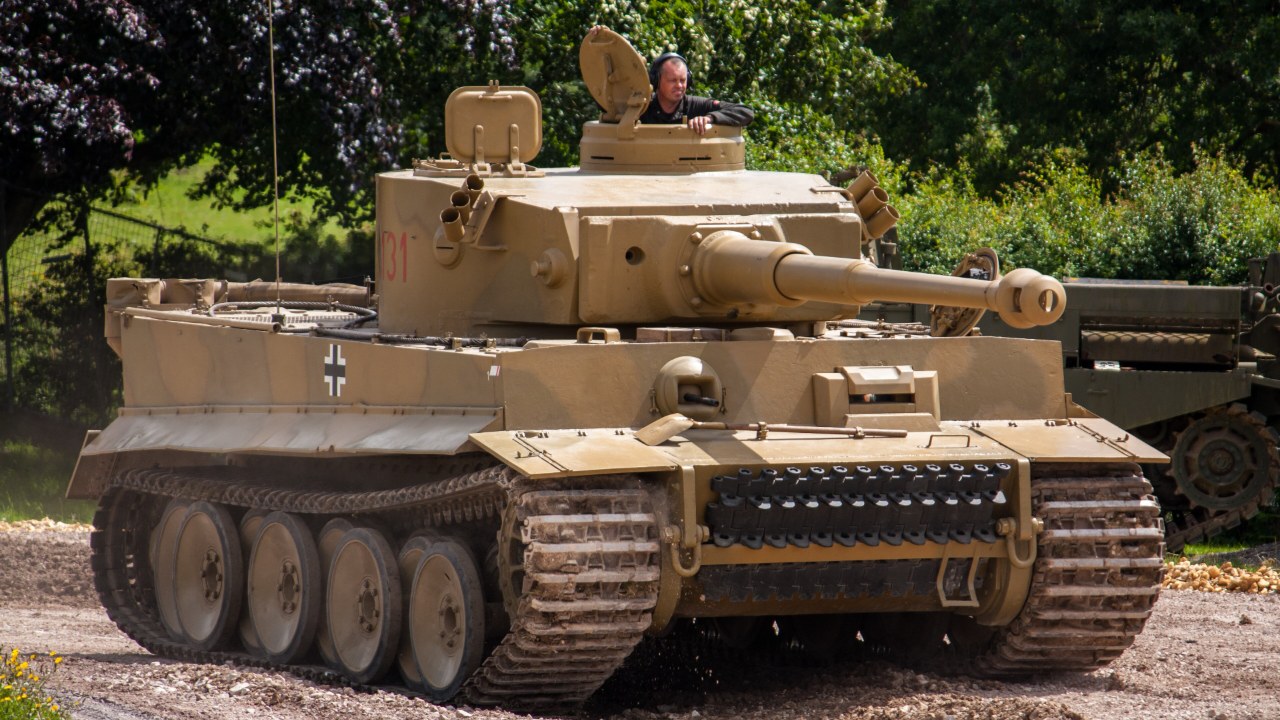
Top image: Tiger 131, the Tank Museum’s running Tiger I, at Bovington in 2012. Image Credit: Simon Q — CC BY 2.0 / Wikimedia Commons
This article was produced with the assistance of AI and reviewed by Combat Rated editors prior to publication.