
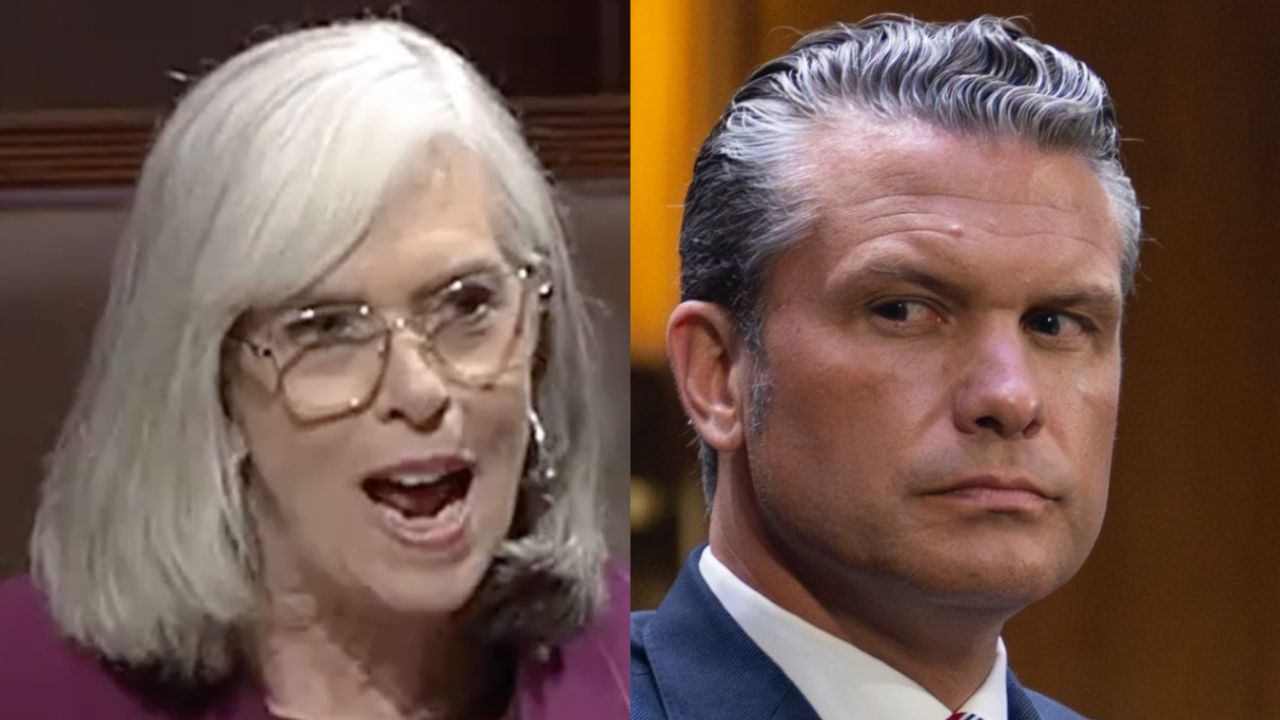
House Democratic Whip Katherine Clark on Friday called for Defense Secretary Pete Hegseth to be fired, accusing him of dishonoring fallen American service members after a Washington Post investigation found the Pentagon has concealed at least four combat deaths from its public casualty database since the start of the Iran war. Clark’s statement, posted to X, came hours after the Post’s report detailed how the Defense Department’s official tally undercounts the war’s true human cost.
“Nothing could be more disrespectful to a service member’s sacrifice than pretending it never happened. Pete Hegseth is a disgrace and must be fired,” Clark wrote in the post, published at 4:31 p.m. on September 18, 2026.
The Report That Prompted Clark’s Statement
Clark’s post was a direct response to Washington Post reporting published Friday afternoon, which cited six U.S. officials familiar with the Pentagon’s internal casualty accounting. Five of those officials said at least 22 U.S. service members have died in the Middle East since the Iran war began on February 28, 2026 — four more than the 18 fatalities listed in the Defense Department’s public database, the Defense Casualty Analysis System, or DCAS. A sixth official put the toll at 23, and said three American contractors based in the region have also died since combat operations began.
The Post reported that officials familiar with the discrepancy expressed frustration that the additional deaths are not reflected in the Pentagon’s public portal, and that details surrounding the undisclosed fatalities — including the identities of those killed and the circumstances of their deaths — remain unclear. The Pentagon declined to address questions about the accounting gap.
A Recurring Target for the Whip
Clark’s Friday statement extends a pattern of public criticism she has directed at Hegseth throughout his tenure. In March 2025, Clark issued a formal press release calling for his removal following a separate security controversy, stating at the time that Hegseth had “directly compromised the security of the United States and endangered the lives of American servicemembers” and had “proven that he lacks the competence, discipline, and sober judgment this position demands.” She concluded that statement by saying that if Hegseth “fails to summon the dignity to resign, he should be fired” — language that foreshadowed the more direct demand she issued Friday.
Hegseth’s Denial
Hegseth responded to the Post’s report Friday by denying its findings outright. In a post on his own X account, the defense secretary called the article “DISGUSTING and FAKE.” He separately told reporters the story was a “complete lie,” rejecting the officials’ account of an undercounted casualty tally.
The denial came the same day Hegseth appeared alongside Joint Chiefs Chairman Gen. Dan Caine at the Pentagon’s annual POW/MIA Recognition Day ceremony, where the two pledged to continue efforts to recover and identify missing American service members.
A History of Casualty-Reporting Controversy
Friday’s report is not the first time the Pentagon’s handling of Iran war casualties has drawn scrutiny. Earlier this year, the names of four U.S. troops killed as a result of the conflict were briefly excluded from the department’s official tally after officials reclassified renewed hostilities with Iran as falling under a category called Overseas Operations rather than Operation Epic Fury, the administration’s name for the war. That reclassification occurred as U.S. negotiators struggled to broker a lasting peace deal with Tehran following a July ceasefire that later collapsed.
As of Friday, the DCAS database listed 14 fatalities under Operation Epic Fury and four more under Overseas Operations. Separately, the Pentagon has acknowledged that two additional service members — Sgt. Devin Seibel, who died in a training accident in Irbil, Iraq, on May 31, and Maj. Sorffly Davius, who died of an unspecified medical emergency in Kuwait on March 6 — are not reflected by name in the Iran war tally, though both died at bases that have come under Iranian attack.
The Stakes Behind the Numbers
The accuracy of the Pentagon’s casualty accounting carries consequences beyond public transparency. Whenever a service member dies, the military conducts a line-of-duty investigation to determine whether the death occurred in the performance of official duties — a finding that directly affects the survivor benefits available to the fallen service member’s family. More than 820 U.S. troops have been wounded in action since the war began, according to the public database, many suffering traumatic brain injuries from Iranian counterstrikes on American bases across the region.
The war has also strained the U.S. military’s stockpiles of precision munitions and inflicted damage on American bases throughout the Persian Gulf. A document reviewed by the Post estimated that U.S. Central Command has spent roughly $43.6 billion on the conflict through early September, including $28 billion in munitions — a figure that does not account for base repair costs.
Congress Moves on Multiple Fronts
Clark’s demand for Hegseth’s firing lands amid a broader congressional push to hold the defense secretary accountable. Rep. Thomas Massie, a Kentucky Republican, moved this week to force a House vote on impeaching Hegseth, alleging he violated the War Powers Resolution of 1973 by pursuing hostilities without congressional authorization. On Friday, Reps. Pat Ryan of New York, Jason Crow of Colorado, and ten other House Democrats — all military veterans — said they were pursuing legislation to prevent the Pentagon from manipulating troop casualty data, mirroring a bill Sen. Tammy Duckworth of Illinois introduced with 17 Senate Democratic colleagues last month.
On Tuesday, a record seven Republican lawmakers joined House Democrats to pass a largely symbolic war powers resolution aimed at ending the conflict, the latest in a string of such measures to advance in Congress this year. Senate Democrats have said they would investigate the Pentagon’s casualty-notification practices if they retake the majority after November’s midterm elections.
A Political Liability Heading Into the Midterms
The Iran war has become an increasingly heavy political burden for President Trump and Republicans ahead of the midterms. A September Reuters-Ipsos poll found that just 28 percent of Americans approve of Trump’s handling of the conflict, while 62 percent disapprove. The war has also strained global energy markets after Iran closed the Strait of Hormuz, a critical corridor for oil and fertilizer shipments.
Clark’s Friday statement adds a prominent voice from House Democratic leadership to a chorus of lawmakers, veterans and Pentagon watchers who have accused Hegseth of mismanaging the war and its human toll. As the fourth-ranking House Democrat and the party’s chief vote-counter, Clark’s public call for Hegseth’s ouster signals continued pressure from the party’s leadership ranks as the casualty-accounting controversy unfolds alongside separate congressional efforts to legislate against future data manipulation and to hold Hegseth accountable through impeachment proceedings.