
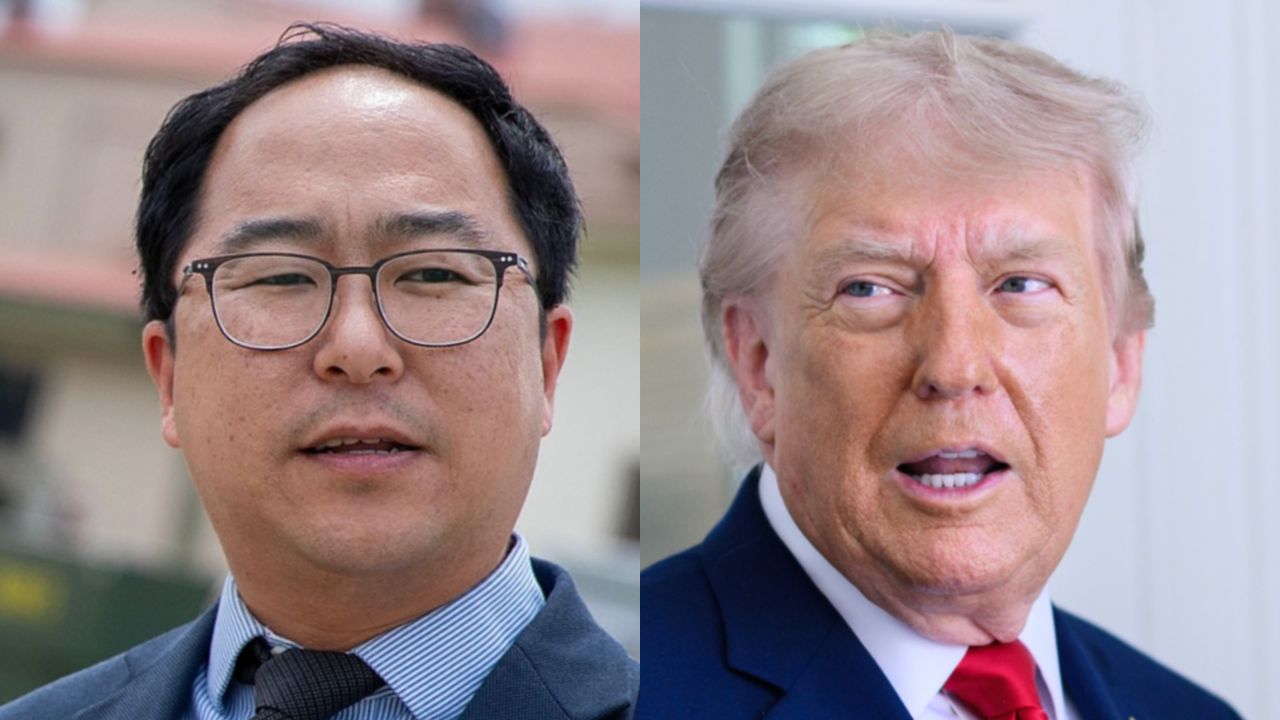
Sen. Andy Kim (D-N.J.) is warning that President Donald Trump’s administration is preparing to make congressional investigations and government accountability more difficult, accusing the White House of using executive authority to discourage federal contractors from cooperating with Congress. His warning came November 21, one day after Trump signed an executive order requiring federal contractors and subcontractors to notify the White House and contracting agencies before responding to congressional requests involving their federal work. Kim specifically named Immigration and Customs Enforcement (ICE) and private detention company GEO Group, saying both owe Congress answers as questions continue over immigration detention practices and federal oversight.
Kim published his response on X on November 21, sharing the POLITICO article titled “New Trump executive order seeks to block federal contractors from talking to Congress.” The article detailed the November 20 executive order, its potential legal challenges, and the administration’s preparations for investigations by Democrats after they take control of the House of Representatives in January. Kim’s post connected the order to what he described as a broader effort by the Trump administration to resist congressional accountability.
Kim’s full statement:
“This is how it starts. The Trump administration will fight accountability and Congressional oversight at every turn — this is only one example of what we’re starting to see.
Agencies like ICE and federal contractors like GEO Group owe us answers. We won’t back down from fighting for them.”
November 21, 2026 — 4:18 p.m.
Trump’s executive order places new conditions on congressional inquiries
The executive order, titled “Protecting the Executive’s Privileges and Enhancing Efficiencies in Federal Contracting,” is numbered Executive Order 14438 and was signed November 20. It establishes new requirements for federal contractors and subcontractors that receive congressional requests concerning their communications or work with the executive branch.
Under Section 2, contractors must immediately notify the White House and the relevant contracting agencies of any pending or future congressional request involving their federal work. They must also follow instructions from the White House and contracting agencies concerning the withholding of communications those officials have determined are protected by executive privilege.
The order further directs federal agencies to coordinate with the White House and contractors on responses to congressional inquiries, including decisions about asserting executive privilege. Its requirements extend beyond companies holding federal contracts directly, applying to subcontractors as well. Agencies are instructed to inform contractors of the new obligations and ensure compliance throughout their contracting arrangements.
The enforcement provisions are particularly significant. Section 4 directs contracting agencies to consider appropriate actions against contractors or subcontractors that fail to comply, including contract termination or cancellation, suspension, and debarment. Debarment can prevent a company from receiving future federal contracts. The Office of Management and Budget is also directed to develop guidance for agencies on monitoring compliance.
The administration’s stated justification is that federal contractors sometimes possess sensitive executive-branch information and that unauthorized disclosures could interfere with government operations. The order argues that Congress cannot obtain privileged information before the executive branch has an opportunity to assert applicable protections. It also characterizes uncoordinated responses to congressional inquiries as potentially duplicative, inefficient, and costly to taxpayers.
However, the order does not establish that every congressional request is automatically prohibited or that every communication involving a contractor is protected by executive privilege. Its application depends on the administration’s instructions and the legal status of the information involved. The legality of imposing these requirements, particularly on existing contracts and information sought for legitimate congressional investigations, remains an unresolved question.
Reuters reported on November 20 that Trump had signed the order requiring contractors to notify the White House about congressional requests involving their executive-branch work. The development comes as Democrats prepare to take control of both chambers of Congress in January and pursue investigations into the administration. The legal dispute centers in part on the extent to which the executive branch can invoke privilege to restrict information held by outside companies.
Existing whistleblower protections raise additional questions
The executive order also raises questions about existing federal protections for employees of government contractors. Federal law, including 41 U.S.C. § 4705, prohibits contractors from retaliating against employees who disclose certain information about substantial violations of law involving federal contracts to members of Congress or authorized government officials.
Federal Acquisition Regulation Subpart 3.9 further identifies protected disclosures involving gross mismanagement of federal contracts, waste of federal funds, abuse of authority, threats to public safety, and violations of law. It specifically recognizes disclosures to members of Congress and congressional committee representatives. The regulation also prohibits retaliation even when requested by an executive-branch official, subject to a limited exception for qualifying nondiscretionary directives within that official’s authority.
Those protections are relevant because the new order requires contractors to notify the administration about congressional requests and follow instructions concerning communications deemed privileged. The relationship between those requirements, protected whistleblower disclosures, and Congress’s investigative authority could become a point of legal conflict. The order itself states that implementation must remain consistent with applicable law.
The White House is preparing for a wave of congressional investigations
The timing of the executive order is central to the dispute. Democrats are preparing to assume control of the House in January after securing a majority in the November 4 midterm elections. Incoming Democratic committee leaders have already indicated that they intend to investigate multiple aspects of Trump’s administration, including federal contracting, immigration enforcement, the handling of government records, and alleged conflicts of interest.
White House counsel Will Scharf has also taken steps to restrict how executive agencies respond to congressional requests. A separate directive issued to federal personnel instructed agencies to obtain White House approval before allowing employees to testify before Congress. Scharf also sent a letter to incoming House Oversight Committee Chairman Robert Garcia disputing the legitimacy of anticipated Democratic investigations and warning of possible criminal scrutiny of lawmakers’ actions.
The contractor order adds another layer to those restrictions by extending the administration’s coordination requirements to private companies working with the federal government. Incoming House Oversight leadership has characterized the actions as an attack on Congress’s constitutional investigative authority. The dispute is expected to intensify as lawmakers begin issuing subpoenas, requesting documents, and investigating federal agencies and contractors.
Kim’s record on congressional oversight and ICE investigations
Kim’s warning follows months of direct involvement in congressional oversight of immigration detention facilities. As a member of the Senate Homeland Security and Governmental Affairs Committee, he has repeatedly argued that Congress must be able to inspect facilities, question federal officials, examine government contracts, and investigate allegations of misconduct. His opposition to restrictions on congressional access was particularly explicit on May 19, 2026, when he introduced an amendment addressing congressional inspections of immigration detention facilities. Kim argued that recent Department of Homeland Security policies had attempted to restrict or delay unannounced congressional visits, despite Congress’s constitutional oversight authority. He said taxpayers had a right to know how public money was being spent and whether it was being used improperly. That position directly relates to the new executive order’s requirements for contractors receiving congressional inquiries.
Kim has also used oversight visits and formal correspondence to investigate ICE and GEO Group specifically. On May 29, he led members of New Jersey’s congressional delegation in sending a letter to Homeland Security Secretary Markwayne Mullin and Acting Attorney General Todd Blanche demanding action over alleged brutality and detention conditions at Delaney Hall, a privately operated facility run by GEO Group. The lawmakers called for accountability following reports of detainee mistreatment, retaliatory actions, and a hunger and labor strike. On June 6, Kim said ICE officials had prevented him from speaking directly with detainees during his third oversight visit to the facility in one week. He publicly questioned why the agency was restricting his access and raised concerns about the relationship between ICE leadership and GEO Group, including the appointment of former GEO executive David Venturella to lead ICE.
His efforts continued through the summer. On August 20, Kim conducted another oversight visit to Delaney Hall, speaking directly with detainees and medical staff amid reports of medical emergencies and detainee deaths. He questioned the adequacy of medical staffing at a facility housing more than 800 people and criticized what he described as a lack of transparency from ICE and GEO Group. He again called for the facility to be shut down. The visit reinforced his longstanding position that congressional oversight must extend beyond written responses from federal agencies and include direct access to the people and facilities being investigated.
Kim has also pursued investigations into the financial and contracting relationships surrounding ICE. On March 31, 2026, he joined other Senate Homeland Security and Governmental Affairs Committee Democrats in sending letters to DHS and federal contractors, including GEO Group and Salus Worldwide Solutions, seeking answers about allegations that former DHS adviser Corey Lewandowski solicited personal payments from companies seeking government contracts. The correspondence raised concerns about potential violations of federal bribery and ethics laws and examined allegations involving GEO Group’s government contracts. The allegations were subjects of congressional inquiry, not established findings of criminal wrongdoing. Kim’s involvement demonstrates that his scrutiny of GEO Group has extended beyond detention conditions to questions about contracting, financial relationships, and potential conflicts of interest.
Kim’s latest legislation targets ICE transparency and contractor accountability
Just two days before his November 21 statement, Kim introduced the Death in Detention Transparency Act on November 19. The legislation would require ICE and Customs and Border Protection to notify Congress within 72 hours when someone dies in custody or in circumstances covered by the bill. It would also require detailed incident reports within 30 days, including information about the circumstances of deaths and relevant body-worn camera footage and autopsy findings. Importantly, the proposal includes consequences for detention contractors that fail to meet reporting requirements, including potential contract cancellations, unannounced inspections, and five-year suspensions for entities that repeatedly violate the requirements. It would also require federal detention contracts to include provisions obligating contractors to comply with death-reporting rules. The legislation directly addresses the kind of transparency and accountability Kim says ICE and GEO Group owe Congress.
His earlier legislative efforts have followed the same direction. In February 2026, Kim introduced the ICE Funding Accountability Act, the Private Detention Accountability Act, and the End Warehouse Detention Act alongside related efforts with Sen. Cory Booker (D-N.J.). The proposals sought to restrict federal funding for warehouse detention, increase transparency over ICE spending, and strengthen accountability for private detention operators. In May and June, Kim introduced additional amendments seeking inspections of Delaney Hall, improved medical care, limits on large-scale immigration enforcement operations, and mandatory de-escalation training for ICE personnel. He also sought audits of GEO Group’s operations and demanded that the company address documented concerns before receiving additional taxpayer funding.
A broader pattern of opposition to Trump’s administration
Kim’s criticism of the executive order also fits into his broader opposition to the Trump administration’s handling of federal agencies and government accountability. In February 2026, he questioned Treasury Secretary Scott Bessent during a Senate Banking Committee hearing about alleged conflicts of interest involving Trump’s family, government decisions, and private business relationships. In March, Kim argued that accountability for DHS failures should extend beyond individual personnel changes, identifying other senior administration officials whom he believed should face scrutiny. His public statements and committee activity have consistently focused on conflicts of interest, transparency, government spending, and the authority of Congress to investigate executive-branch conduct.
Kim’s November 21 statement therefore brings together two areas of oversight he has pursued throughout 2026: the administration’s restrictions on congressional investigations and his efforts to obtain information from ICE and private detention contractors. His reference to GEO Group is particularly relevant because the company operates facilities under federal contracts and has been the subject of Kim’s previous oversight visits, congressional letters, and proposed investigations. The new executive order applies to federal contractors generally rather than naming GEO Group specifically, but its requirements could affect how companies like GEO respond to congressional inquiries concerning their government work.
The central question now is whether the White House can require private contractors to coordinate with the executive branch before responding to Congress without interfering with lawmakers’ investigative authority and existing legal protections for disclosures of government waste, fraud, and abuse. Kim’s record indicates that he intends to continue pursuing answers from ICE and GEO Group, including through direct inspections, legislation, and formal congressional investigations. His warning that the administration’s actions are only the beginning signals that he views the executive order as part of a larger confrontation over congressional oversight ahead of the next Congress.