
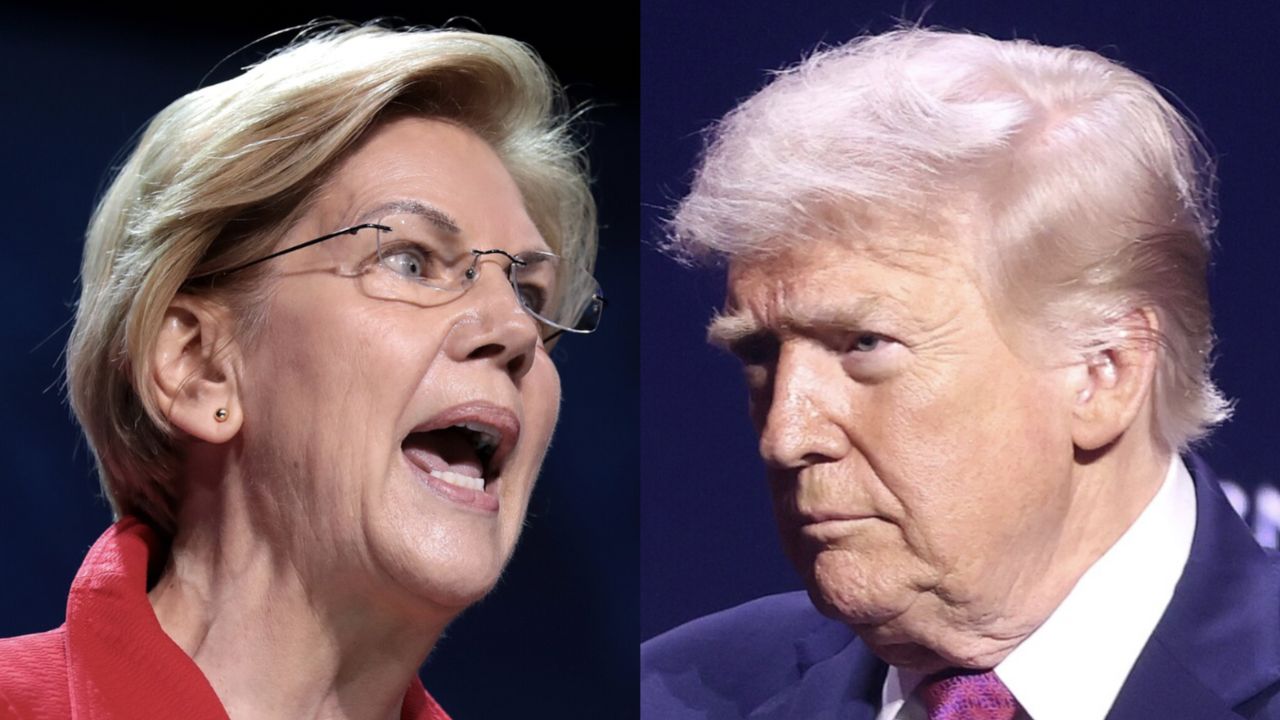
WASHINGTON — Sen. Elizabeth Warren (D-Mass.) on Friday condemned President Donald Trump’s decision to temporarily lift U.S. sanctions on Russian diesel, calling the announcement “a disgrace” and saying the president could lower fuel prices by “ending his illegal war with Iran” rather than helping “fund Putin’s war machine.”
Warren’s Full Post
Warren, the ranking member of the Senate Banking, Housing, and Urban Affairs Committee, published the message on X at 5:22 PM on Friday, October 9, 2026, in direct response to a Treasury Department announcement made earlier that day. Her full post read:
“This announcement is a disgrace.
You know how Trump could bring down gas and diesel prices? By ending his illegal war with Iran.
Instead, he’s going to help fund Putin’s war machine.”
The Treasury Announcement
The announcement Warren was answering came at 1:49 PM, when the U.S. Treasury posted on X that “at President Trump’s direction, the Office of Foreign Assets Control (OFAC) is immediately issuing a temporary general license to allow the supply of Russian diesel to the global market.” The license, designated General License No. 135 and signed by OFAC Director Bradley T. Smith, authorizes transactions related to the sale, delivery, offloading and importation of diesel fuel of Russian Federation origin, including importation into the United States, through 12:01 a.m. eastern daylight time on April 7, 2027. It does not authorize any debit to accounts of the Central Bank of the Russian Federation, the National Wealth Fund or the Ministry of Finance.
The move followed what Trump described on social media as a “highly successful” discussion with Russian President Vladimir Putin, in which the two agreed that Russia would immediately supply more than 300,000 metric tons of diesel, about 2.25 million barrels, to U.S. and global markets, according to Reuters. Trump said Russia would provide another 500,000 tons in November and a further 1 million tons “immediately thereafter,” with more to follow depending on the condition of Russian refineries damaged by Ukrainian attacks. After the call, Putin envoy Kirill Dmitriev praised U.S.-Russian cooperation in a post on X. The United States imposed sanctions on Russian oil companies in October 2025 over Moscow’s war in Ukraine, and the diesel exports could provide the Kremlin with billions of dollars in revenue.
Warren was not the only critic. Ukrainian President Volodymyr Zelenskiy, whose delegation was in Washington to discuss ways to end the war when the deal was announced, called it a “weak decision on the part of strong partners” and said “Gifts to Putin will not bring peace or any benefit to the civilized world.” Rep. Don Bacon (R-Neb.) said it was time to use sanctions Congress recently passed “to squeeze Putin’s war machine, not reward a dictator by putting more money in his hands while he continues targeting and killing Ukrainian civilians.” Analysts questioned whether the deal would do much for prices: Wood Mackenzie analyst Jim Mitchell described it as “not a fix, but another stream to aid a very tight diesel market.” Diesel is up 70% since the U.S. and Israel launched the war with Iran on February 28, with the national average at $6.28 a gallon on Thursday. Diesel futures fell almost 5% after the announcement.
Warren’s Record on the Iran War
Warren’s description of the Iran conflict as “illegal” reflects months of statements. The first Senate vote on a war powers resolution came on March 4, days after the war began, and Republicans plus one Democrat voted it down. On March 20, Warren wrote to Treasury Secretary Scott Bessent, National Economic Council Director Kevin Hassett and Acting Council of Economic Advisers Chair Pierre Yared, warning that the war had “effectively halted all shipping through the Strait of Hormuz, removing roughly one-fifth of the world’s oil and gas supply from the market,” and that the burden would “fall hardest on low- and middle-class families.”
On April 7, Warren released a video condemning Trump’s threat that Iran’s “whole civilization will die tonight” and called on Senate Majority Leader John Thune to bring the Senate back into session. “It is the constitutional responsibility of Congress to not only declare war, but to end war,” she said in the transcript. She added: “Every Republican who refuses to speak out, every Republican who ducks a question, every Republican who votes to let this war continue bears a portion of the responsibility for what is happening in Trump’s war.” Her office’s release was titled “This is Deranged…Congress Must Pull the Emergency Brake Now.”
Fuel costs have been a steady theme. On April 13, Warren wrote on X that “Since Trump started his illegal war with Iran, Americans have paid $8.4 billion more at the gas pump.” Later that month, she and Sen. Martin Heinrich (D-N.M.) wrote to White House Chief of Staff Susie Wiles, noting the national gas average had reached $4.39 per gallon, more than $1.25 above the level when Trump took office, and that Trump had dismissed rising costs on April 16 as “fake inflation.” They asked for answers by May 14.
The war powers fight has continued since. A resolution failed 47-52 on April 15, and in May the Senate advanced a measure led by Sen. Tim Kaine (D-Va.) after seven failed attempts. On June 23, the Senate adopted a House-passed Iran war powers resolution 50-48, a rare rebuke. A post shared through Warren’s official account ahead of a fifth Senate vote asked whether Republicans would “exercise their constitutional responsibility.” In September, Kaine said Trump had “ignored” the June measure, and the House passed a third resolution 220-204 with seven Republicans joining Democrats.
Warren’s Record on Russia and Ukraine
Warren’s position on Russia predates the Iran war. After Russia’s 2022 invasion, she said “Vladimir Putin bears full responsibility for Russia’s unjustifiable war against Ukraine” and backed “significant sanctions on Russia’s economy, military, and its corrupt oligarchs.” In a statement marking three years of the full-scale war, she said Trump was “bullying and negotiating around Kyiv” and warned that Congress “should oppose irresponsible attempts to unwind measures that keep the pressure on Russia.”
In September 2025, Warren wrote to Secretary of State Marco Rubio urging sanctions on those supplying revenue and inputs to Russia’s war effort, including the Arctic LNG 2 project. The State Department replied on November 21, 2025 that it was reviewing the information and would “give careful consideration to imposing sanctions,” adding that President Trump’s priority was a negotiated settlement.
After the Iran war began, the Treasury issued General License 134, which removed sanctions risk for purchases of Russian oil loaded on vessels as of March 12. Warren joined Sen. Jeanne Shaheen (D-N.H.) and Senate Democratic Leader Chuck Schumer in condemning its extension, writing that “Putin has been one of the biggest beneficiaries of President Trump’s war against Iran, as Russia saw oil revenues nearly double in March.” On May 18, Warren and Shaheen called another extension “a dangerous and indefensible gift to Vladimir Putin,” writing that “Every additional dollar the Kremlin earns from this license helps Putin finance his illegal war against Ukraine.” Ahead of the June 17 expiration of General License 134C, they urged the administration not to renew it, saying that “if President Trump is interested in a peace deal, he should be increasing pressure on Putin.”
In mid-August, Warren and Sen. Chris Coons (D-Del.) wrote to Rubio and Bessent asking why, if sanctions were paused for peace talks that have since stalled, the administration had not resumed “routine and frequent U.S. sanctions.”
What Comes Next
The diesel decision arrives with fuel prices a political liability for Republicans ahead of the November 3 congressional elections that will determine control of Congress. Three industry sources told Reuters that Trump is expected to direct department heads in the coming days to find ways to control diesel prices, possibly through a presidential memo that would use the Cold War-era Defense Production Act to increase fuel output and bypass state and local regulations.
The Russian diesel license runs until April 7, 2027, and the White House has not said whether it will seek further extensions. In announcing the deal, Trump said, “Lower prices for Americans, especially our Great Farmers, Ranchers, and Truckers, is my Greatest Priority.” Warren’s post, which names ending the war as the alternative, frames the dispute as a choice between easing fuel costs through Moscow or through ending the conflict with Iran.