
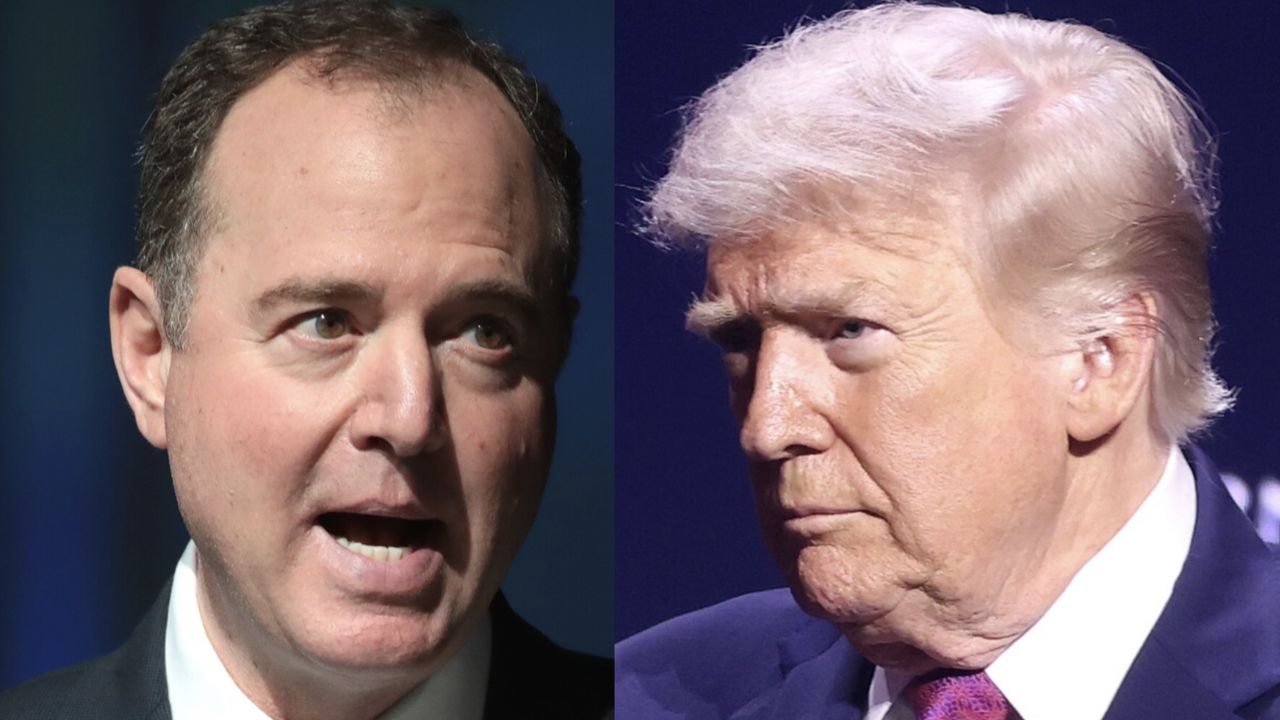
U.S. Sen. Adam Schiff (D-Calif.) accused President Donald Trump on Friday of funding Vladimir Putin’s war in Ukraine, hours after Trump announced a deal with the Russian president to bring millions of tons of Russian diesel to U.S. and global markets. Schiff said Trump chose to buy Russian fuel instead of ending his war in Iran, and that the United States, which once held autocrats to account, has now struck a deal to bankroll one. The senator laid out the charge in a four-sentence post on X that evening.
The Post
Schiff published the post at 7:54 p.m. on Friday, October 9, 2026. In full, it reads:
“We went from sanctioning Russian oil to buying it in three weeks.
Instead of ending his disastrous war in Iran, Trump is now funding Russia’s war in Ukraine.
We used to hold dictators and autocrats accountable.
Now our president negotiated a deal to fund Putin’s unjust war.”
The Deal Behind the Post
Earlier Friday, Trump said Russia would supply more than 4 million tons of diesel to the global market under an agreement he reached with Putin during a phone call. In a Truth Social post, Trump laid out a delivery schedule: more than 300,000 tons immediately, 500,000 tons in November and 1 million tons immediately after that. Moscow would then deliver another 3 million tons, depending on the condition of Russia’s refineries, as CNBC reported. The outlet’s coverage of the announcement was attached to Schiff’s post.
A Sanctions Waiver Through April 2027
The Treasury Department’s Office of Foreign Assets Control issued General License No. 135 on Friday, signed by Director Bradley T. Smith. It authorizes transactions otherwise prohibited under the Russian Harmful Foreign Activities Sanctions Regulations and the Ukraine-/Russia-Related Sanctions Regulations that relate to the sale, delivery, offloading or importation of Russian-origin diesel fuel, including importation into the United States. The authorization runs through 12:01 a.m. eastern daylight time on April 7, 2027. The license does not authorize any debit to an account on the books of a U.S. financial institution of the Central Bank of the Russian Federation, the National Wealth Fund or the Ministry of Finance.
Zelenskyy Condemns the Agreement
Ukrainian President Volodymyr Zelenskyy condemned the diesel deal immediately and warned that easing sanctions without a Russian commitment to de-escalate will only prolong the war. “Gifts to Putin will not bring peace or any benefit to the civilized world,” Zelenskyy said in a social media post. He added that Russia would “repay” the diesel with further terror and that allowing Russia to sell petroleum products is an investment in a war that must be ended, not prolonged.
Why Diesel, and Why Now
Diesel prices have surged worldwide as Ukraine has struck Russian refineries, which forced Moscow to ban diesel exports to the global market. Iran and its Houthi allies have also attacked refineries in the Middle East, tightening supplies further. Trump faces mounting political pressure to lower fuel prices before the November midterm elections, with Republicans in competitive races in conservative strongholds such as Iowa, where farmers are feeling the pinch. The president has few options given the damage to global refining capacity from the wars in Eastern Europe and the Middle East. Trump flirted with a diesel export ban last month but relented after the oil industry and big business warned it would raise gasoline prices. Earlier this week he signed an executive order letting truckers use tax-exempt off-road diesel on highways without federal penalties, though the order only defers the tax obligation.
Not the First Russian Oil Waiver
The diesel license follows a series of Treasury waivers on Russian oil during the Iran war. The department issued a 30-day license in March covering Russian oil already loaded on tankers, then extended it in April on a Friday, two days after Treasury Secretary Scott Bessent said the department would not renew it. Treasury reissued a similar license in May. Sens. Jeanne Shaheen (D-N.H.) and Elizabeth Warren (D-Mass.) urged Treasury not to reissue the waiver, warning it was “lining Putin’s coffers.” Other senators called the April reversal “shameful” and said Putin had been “one of the biggest beneficiaries” of the Iran war, noting Russian oil revenues nearly doubled in March.
Schiff’s Record on Ukraine and Putin
Schiff’s post fits a long line of statements on Russia and Ukraine. On February 19, 2025, he issued a statement accusing Trump of “appeasement of the Kremlin dictator” and of leaving Ukraine out of negotiations over its own future. On March 4, 2025, he said Trump had abandoned an ally and “emboldened Vladimir Putin,” and called on Congress to press the White House to resume support for Ukraine.
Putin and Trump: “Putin Has Trump’s Number”
In an April 2025 interview that Schiff’s office posted on his Senate website, he said Trump was only “feigning indignation” with Putin. He added that “Putin has Trump’s number” and that Putin views Trump as “a child who can be easily controlled and manipulated.” On November 22, 2025, Schiff called the administration’s Russia-Ukraine peace plan “a Russian proposal” and a “non-starter,” saying it would force Ukraine to shrink its military and end the flow of western lethal aid. He called it “a betrayal to Ukraine by the U.S.”
The Iran War Schiff Wants Ended
The war Schiff references began February 28, 2026, when the United States and Israel launched strikes on Iran. On March 16, as gas prices climbed, Schiff posted on X, “The American people want to know when this war will end.” He has pushed repeatedly for a congressional check on it. On April 29, with the war at the 60-day mark under the War Powers Resolution of 1973, he and Senate Democratic Leader Chuck Schumer announced a floor vote on Schiff’s resolution to end what the release called “Trump’s illegal Iran war.” The release said it was the sixth time Democrats had forced such a vote.
Votes, Gas Prices and the Iran “Deal”
On May 19, the Senate voted 50-47 to discharge the resolution from committee, with four Republicans joining most Democrats, the first time the chamber advanced it. “Finally, Senate Republicans are starting to listen to their constituents,” Schiff wrote on X. Gas prices averaged $4.04 a gallon at the two-month mark, up from $3.15 a year earlier. In June, Schiff said on CNN that American families were “paying the price in higher gas and higher food prices.” He also criticized the administration’s Iran agreement, writing on X on June 15, “Trump’s war of choice has been an enormous strategic loss for our country and only emboldens Iran.”
The Senate Approves the War Powers Resolution
On June 23, Schiff released a statement after the Senate voted to approve the War Powers Resolution to remove U.S. forces from hostilities with Iran. He said the administration “pursued this illegal war without making the case to Congress or the American people.” The release said Schiff, Sen. Tim Kaine (D-Va.) and Schumer had forced numerous votes, and that Schiff had led 37 Senate Democrats in disputing the administration’s claim that hostilities had “terminated.”
Congress and Russia Sanctions
Congress has moved toward tougher Russia sanctions even as the White House eased them on diesel. On August 7, the Senate passed the Lindsey O. Graham Sanctioning Russia and Iran Act of 2026 by 86-11. The bill would impose sanctions on Russian leaders, the energy sector and the so-called shadow fleet, and would allow tariffs on top buyers of Russian oil and gas. It now awaits House action, and Trump has signaled he would sign it. Because the bill allows the president to waive sanctions in the national interest, the diesel license sits alongside the legislation.
What Comes Next
Schiff’s post frames the diesel deal as a choice between ending the Iran war and financing Russia’s war in Ukraine. The Treasury license is set to run through April 2027, well past the November midterms. Zelenskyy’s objection and Schiff’s accusation now enter a campaign season in which fuel prices are a central issue.