
Ask a crowd to name a WWII fighter, and you will hear Spitfire, Mustang and Zero within seconds. Almost nobody says Brewster Buffalo. Yet in Finnish hands, that tubby American fighter built one of the most lopsided combat records of the war.
Fame in aviation is rarely fair. Production numbers, Hollywood films and the winning side all shape which airplanes people remember. Meanwhile, some excellent designs served in smaller air forces, arrived late or fought on fronts that Western audiences seldom read about.
These are Combat Rated’s picks for eight WWII fighters that deserved more attention than they got. We favored fighters that proved themselves in combat, not paper projects or one-off prototypes. The verdicts are our opinion. However, every number behind them comes from museum records and historical sources.
1. Brewster Buffalo (B-239)
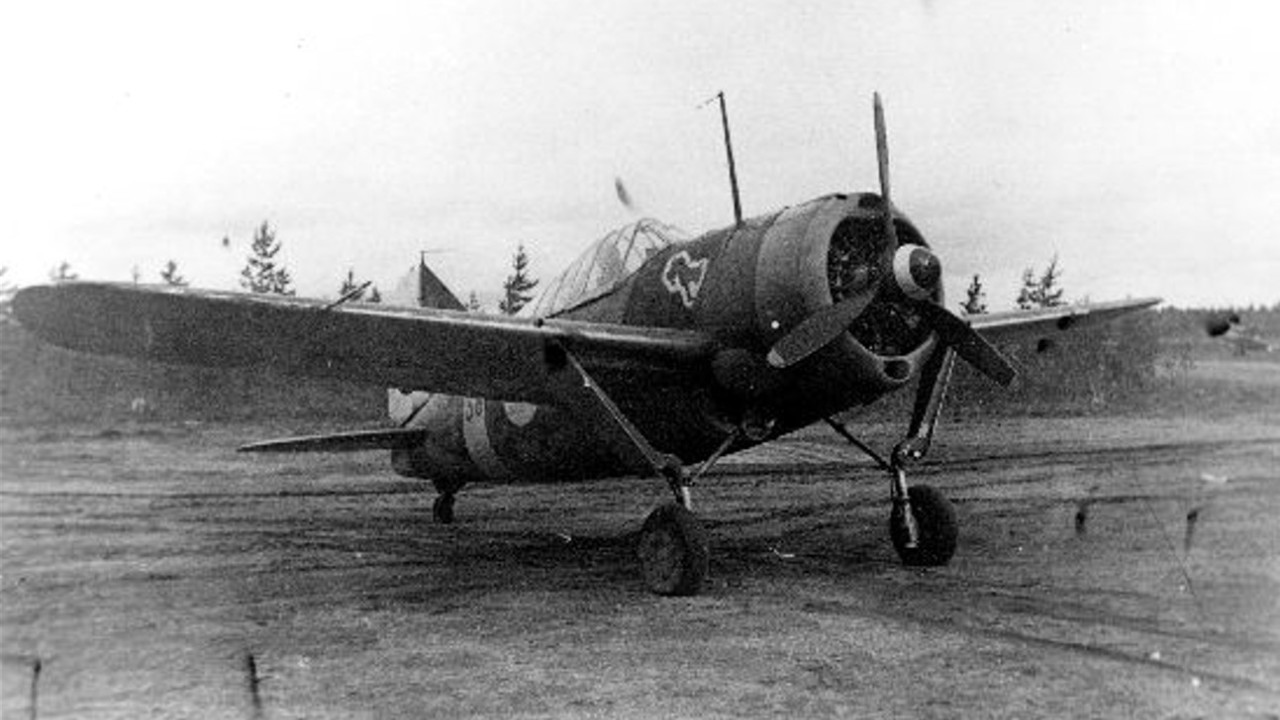
In the English-speaking world, the Brewster Buffalo is mostly remembered as a disappointment. Finland tells a very different story. In mid-December 1939, Finland bought 44 Brewster F2A-1s that had not yet gone to the US Navy. Renamed Model 239, the first arrived in early March 1940, too late for the Winter War.
Once they reached Finnish squadrons, the Brewsters came into their own. According to the Finnish Air Force Museum, they destroyed 480 enemy aircraft and achieved a kill ratio of 1:32. In our view, skilled pilots and a fighter that suited their tactics made a formidable combination.
In our view, no WWII fighter shows more clearly how much context matters. The same airplane that struggled elsewhere became an ace-maker in Karelia. One survivor tells the tale. Brewster BW-372 ditched in Lake Iso-Kolejärvi on 25 June 1942 after severe battle damage. A Finnish, Russian and American team lifted it out in August 1998. Now owned by the National Naval Aviation Museum, it has been on loan to the Finnish Air Force Museum since 2009. It is believed to be the last surviving Brewster fighter in the world.
2. Macchi C.202 Folgore
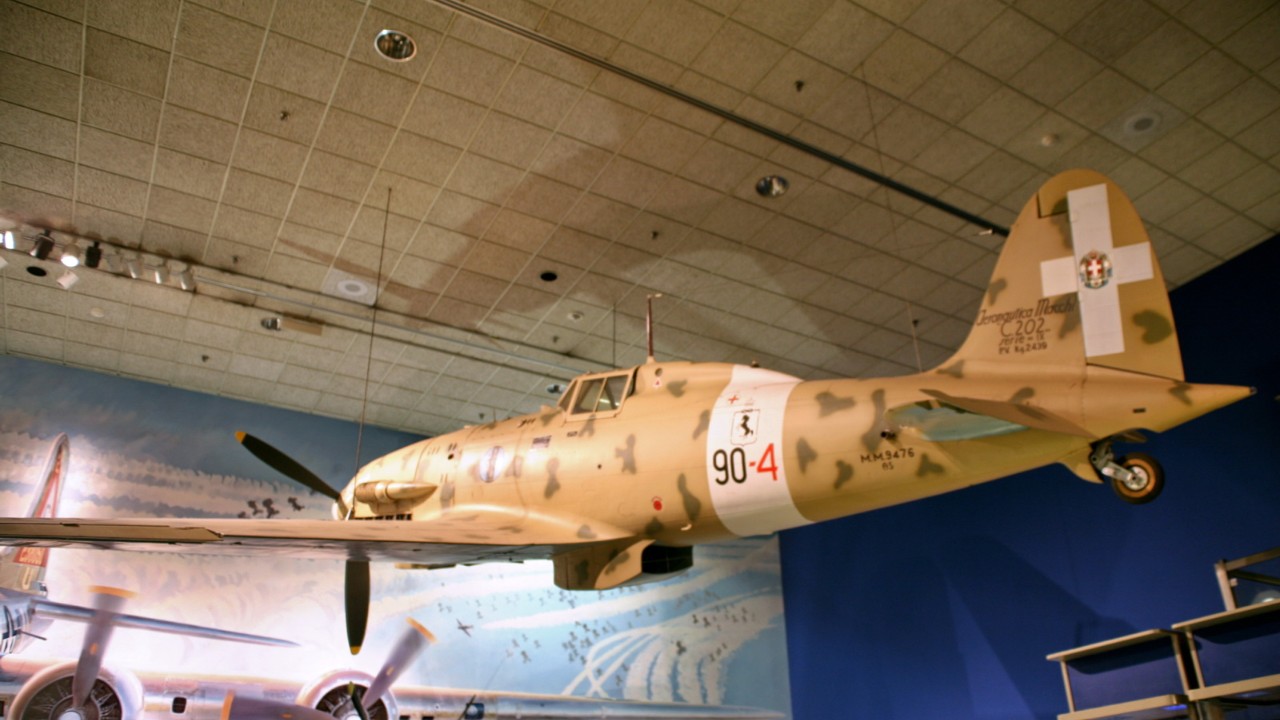
Italian fighters rarely get credit in English-language histories, which is a shame, because the Macchi C.202 Folgore was a genuinely good airplane. Macchi paired a refined airframe with the German Daimler-Benz DB 601 engine, imported in early 1940. The result flew in August 1940 and was almost 60 mph faster than the earlier C.200 Saetta. When German engine supplies ran short, Alfa Romeo built the DB 601 under license.
The Smithsonian’s National Air and Space Museum calls it “the best fighter aircraft fielded in significant numbers” by Italy’s Regia Aeronautica. It reportedly outperformed the P-40 and the Hurricane. Among its opponents, only the Spitfire and the P-51 clearly surpassed it, and pilots praised its handling and agility.
About 1,500 were built between 1941 and 1943, and by late 1942 Folgores outnumbered every other Italian fighter type. Still, we think the Folgore suffered from arriving in Libya too late, in late 1941, to change the desert war. Today, the Smithsonian’s example is one of only two survivors. It wears the markings of a 4º Stormo fighter that flew in Libya in 1942.
3. Bell P-39 Airacobra (in Soviet service)
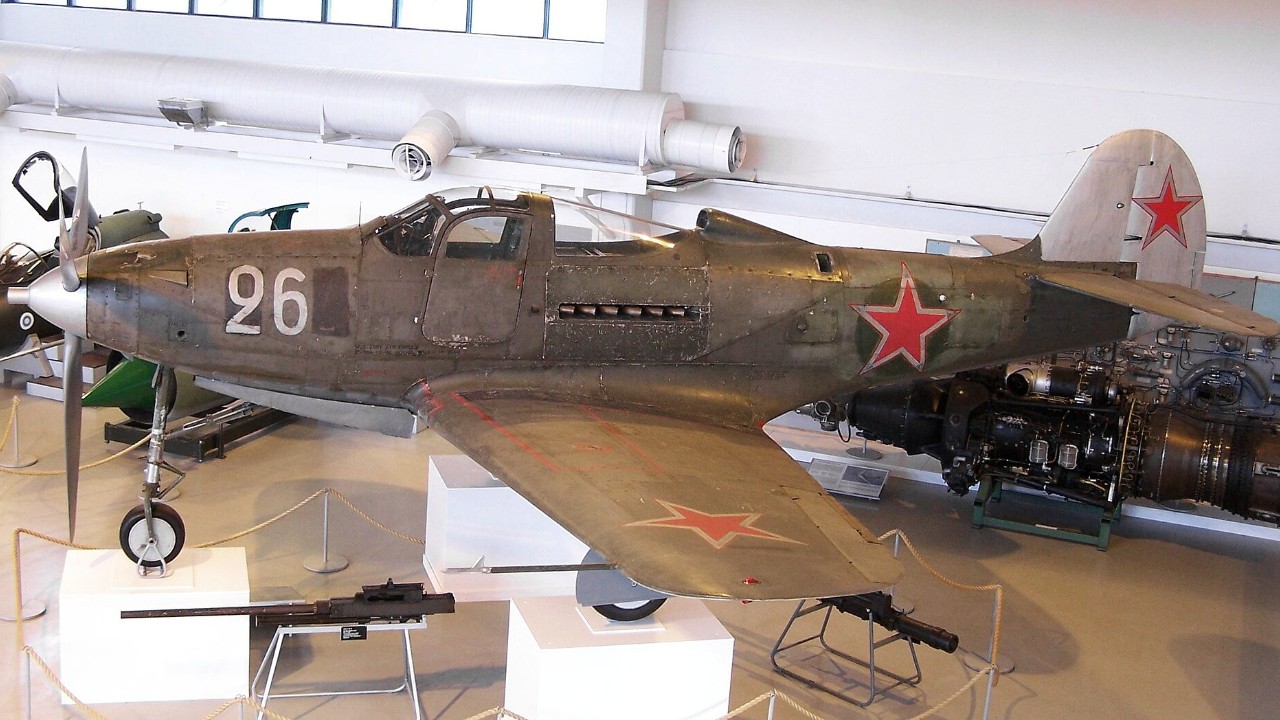
In the West, the P-39 Airacobra is mostly treated as a footnote. The Soviet Union saw it very differently. Nearly 5,000 Airacobras reached the USSR, and almost all of them came from the United States.
The Eastern Front suited the airplane perfectly. Most fighting there was low-level, close-support work, so Soviet P-39s rarely needed to climb above 15,000 feet. In that band, Russian tests credited the Airacobra I with 363 mph at 13,800 feet, comparable to the Yak-3 and MiG-3. As a result, Soviet aces thrived in it. Aleksandr Pokryshkin, the second-ranking Soviet ace, scored 48 of his 59 victories in the Airacobra. Grigorii Rechkalov, ranked third, scored most of his in the P-39 as well.
Moreover, whole regiments made their names in it, from Arctic convoy protection units in the north to Guards regiments in the south. The 9th Guards Fighter Regiment, for example, claimed 558 victories while flying the type from August 1943 to July 1944. That is why historyofwar.org calls the P-39 “the most successful of all lend-lease aircraft sent to Russia.” In our view, it is the most misjudged American fighter of the war.
4. Yakovlev Yak-3
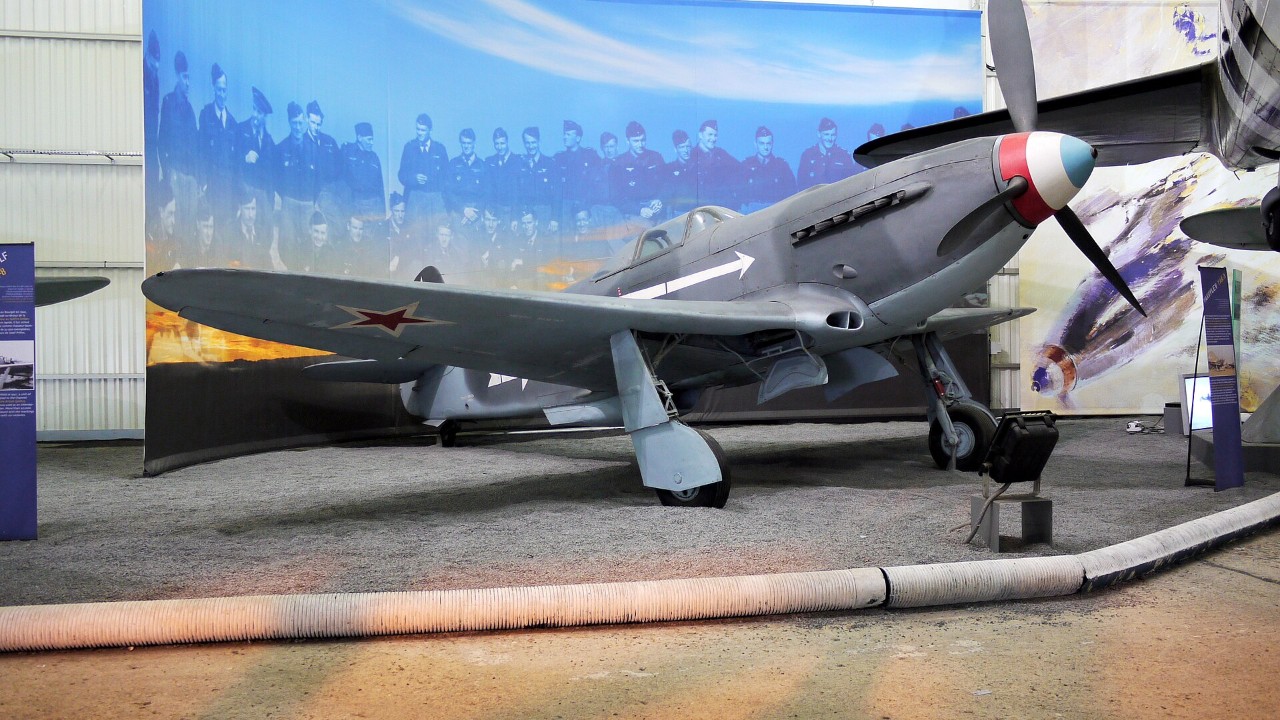
The Yakovlev Yak-3 was small, light and fierce at low altitude. It entered service in July 1943, and the Soviet Union built 4,848 of them during the war. According to the Military Aviation Museum in Virginia Beach, it outperformed both the Fw 190 and the Bf 109G below 16,000 feet.
The Germans noticed. The Luftwaffe saw the Yak-3 as a serious threat and advised its pilots to avoid fighting it at low altitude. Few Allied fighters earned that kind of respect from the enemy. Its empty weight was only 4,641 pounds, which helps explain its agility.
The Yak-3 also has a remarkable Western connection. The Free French Normandie-Niemen regiment flew Yaks with the Soviet 1st Air Army, one of only three Western Allied units to serve on the Eastern Front. After the war, each of its pilots was allowed to fly his Yak home to France. In our view, a fighter that won both the enemy’s caution and an ally’s affection deserves a bigger place in the story. Fittingly, the museum’s own Yak-3M is a postwar new-build from original tooling, fitted with an American Allison engine.
5. Hawker Tempest V
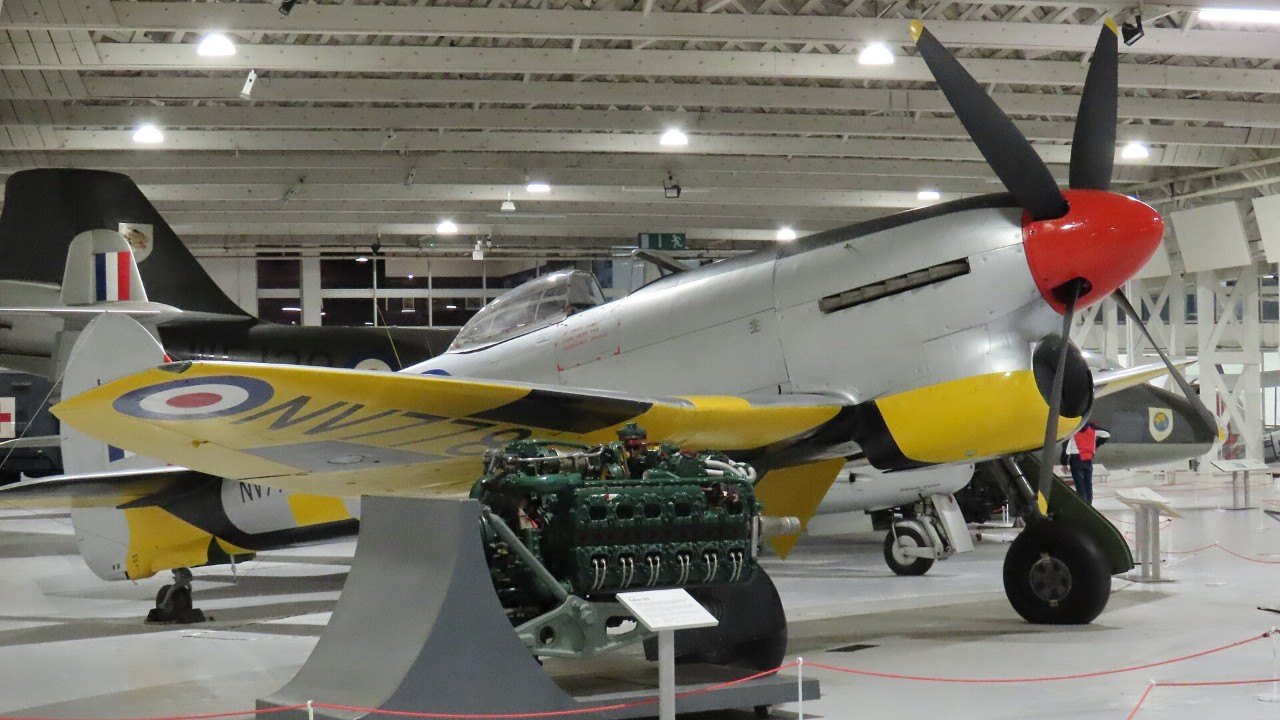
The Spitfire gets the statues, but the Hawker Tempest V may have been the most effective RAF fighter of 1944 and 1945. It entered service in January 1944 with No. 486 Squadron, RNZAF. Sources quote its top speed at between 432 and 442 mph, a serious figure for a piston fighter.
That speed made it Britain’s best weapon against the V-1 flying bomb. Tempests shot down 638 of the 1,846 V-1s destroyed by Allied fighters, roughly a third of the total. Later, over Germany, Tempest pilots claimed 20 Me 262 jet fighters by the end of the war in Europe.
Only 1,702 Tempests of all variants were built, a modest total for a frontline RAF fighter. We think that small number, plus its late arrival, kept the Tempest in the shadows. Its record against the V-1 alone should have made it famous. The type’s first aerial victory came on 8 June 1944, two days after D-Day, scored by No. 3 Squadron. The Royal Air Force Museum in London displays a surviving Tempest V, so you can judge its brutal lines for yourself.
6. Lavochkin La-7
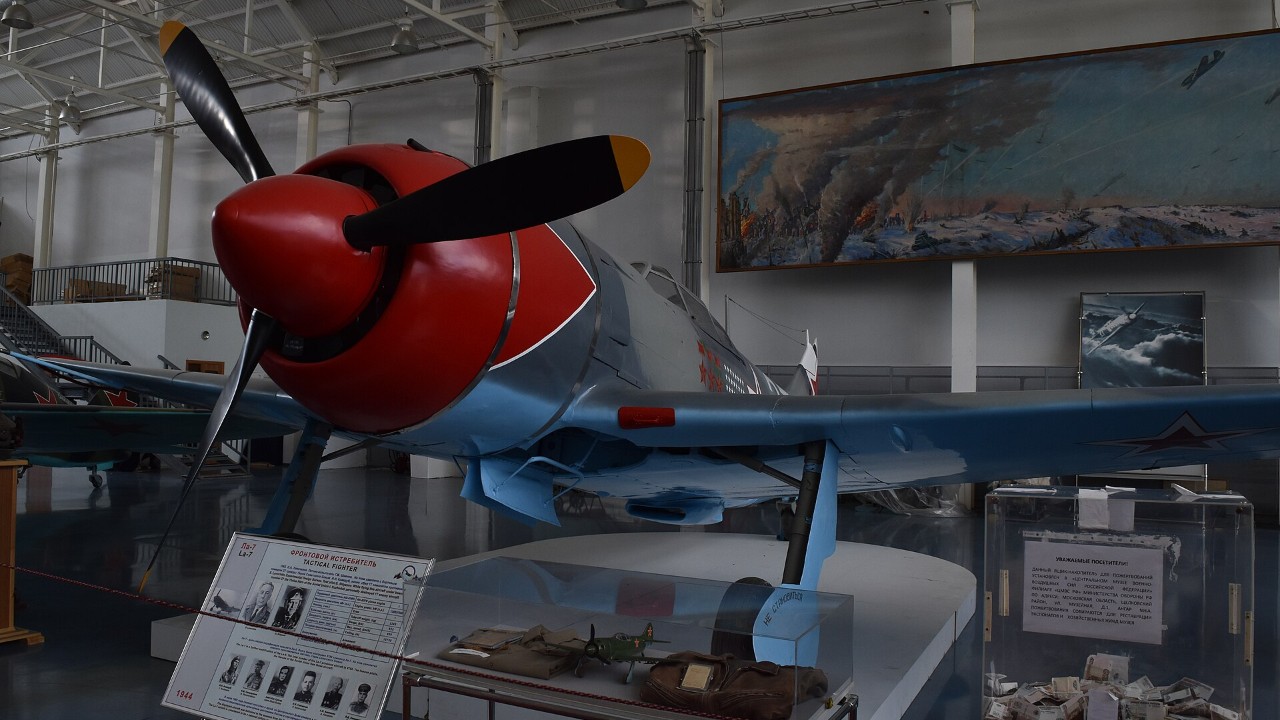
The Lavochkin La-7 was the Soviet Union’s answer to the best German piston fighters, and it was a very good answer. It reached the front in late 1944. With a 1,850 hp M-82FNV radial, it could reach 423 mph at about 21,000 feet.
Crucially, it ended the Bf 109G’s advantage in vertical maneuvering. It was also fast enough at low level to catch Fw 190 fighter-bombers, which the Yak-3 and Yak-9U could not overtake. Its armament was heavy too, with three 20mm or 23mm cannon. According to one history, only 115 La-7s were lost in air combat, about half the Yak-3’s losses.
The type’s greatest pilot proves the point. Ivan Kozhedub, the top Soviet ace, scored all 62 of his victories in Lavochkin fighters. One of them was an Me 262 jet, shot down over Frankfurt an der Oder on 15 February 1945. He scored his last 17 victories in La-7 No. 27, which is now preserved at the Central Air Force Museum at Monino. In our view, a fighter flown by the Soviet Union’s highest scorer deserves to be a household name.
7. Nakajima Ki-84 Hayate
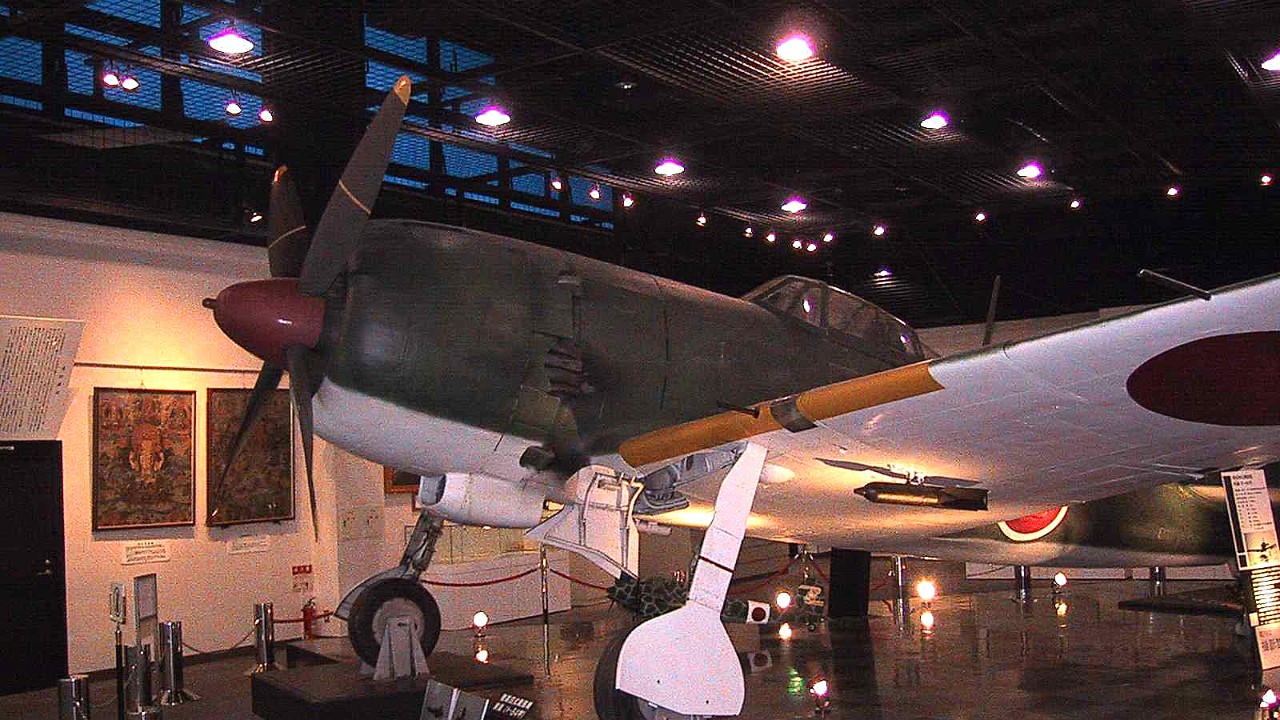
The Nakajima Ki-84 Hayate, code-named “Frank” by the Allies, was arguably Japan’s best army fighter. It first flew in April 1943, and the 22nd Sentai began re-equipping with it in March 1944. Nakajima built 3,514 of them, so this was no rare prototype. Power came from the 18-cylinder Homare radial, rated at about 2,000 hp for takeoff with water injection. When it was well maintained, it was Japan’s fastest fighter.
According to Project Airframe’s history of the type, its performance matched that of any single-engine Allied fighter it faced. That qualifier, “well maintained,” matters. In our view, a late-war Japan struggled to keep any complex fighter at its best, and the Hayate paid for it.
We rank it here because the gap between the Ki-84’s potential and its reputation is so wide. Western readers know the Zero by heart, yet few could pick out a Hayate. We think its timing, not the airplane, is why it remains so overlooked. A fighter that could match Allied designs deserved a better stage. Today, the only surviving Ki-84 is displayed at the Chiran Peace Museum in Kagoshima Prefecture. American forces captured it at Clark Field in the Philippines in 1945.
8. Kawanishi N1K2-J Shiden-Kai
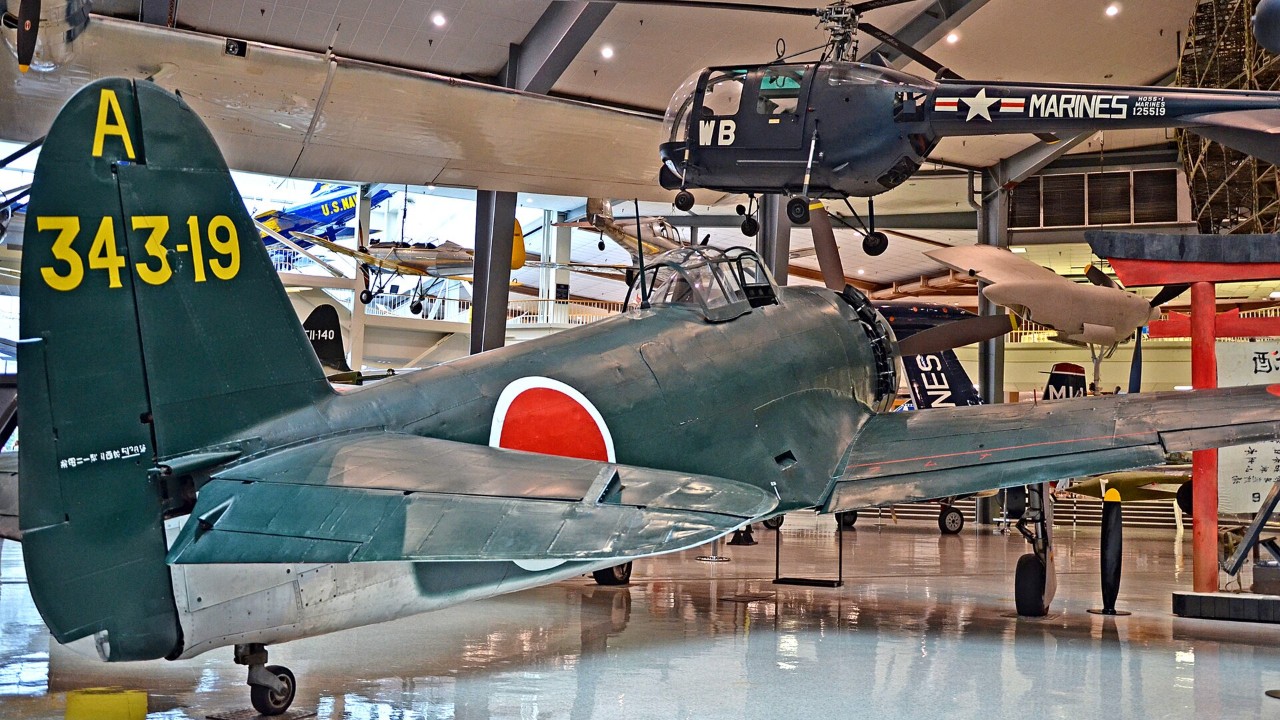
The Kawanishi N1K2-J Shiden-Kai began life, remarkably, as a floatplane. In December 1941, Kawanishi’s team saw that its N1K1 floatplane fighter could become a land-based fighter. The improved N1K2-J flew in December 1943 with a lowered wing, a redesigned fuselage and four 20mm cannon.
It became the mount of an elite unit. The 343rd Kokutai, led by Captain Minoru Genda, gathered experienced Japanese aces to fly it. In February 1945, Warrant Officer Kinsuke Muto attacked 12 F6F Hellcats alone. He shot down four and forced the rest to break contact, according to the National Naval Aviation Museum. The Allies code-named it “George” and regarded it as a worthy adversary.
Only 1,435 were built before the war ended, as B-29 raids on aircraft and engine plants choked production. We think that small number is the main reason it is not better known. The prototype first flew on 27 December 1942, so the design went from floats to frontline fighter remarkably fast. Just four survive today. One of them, a former 343rd Kokutai aircraft, is displayed in Pensacola with a haiku from an unknown Japanese pilot inscribed on its fuselage.