
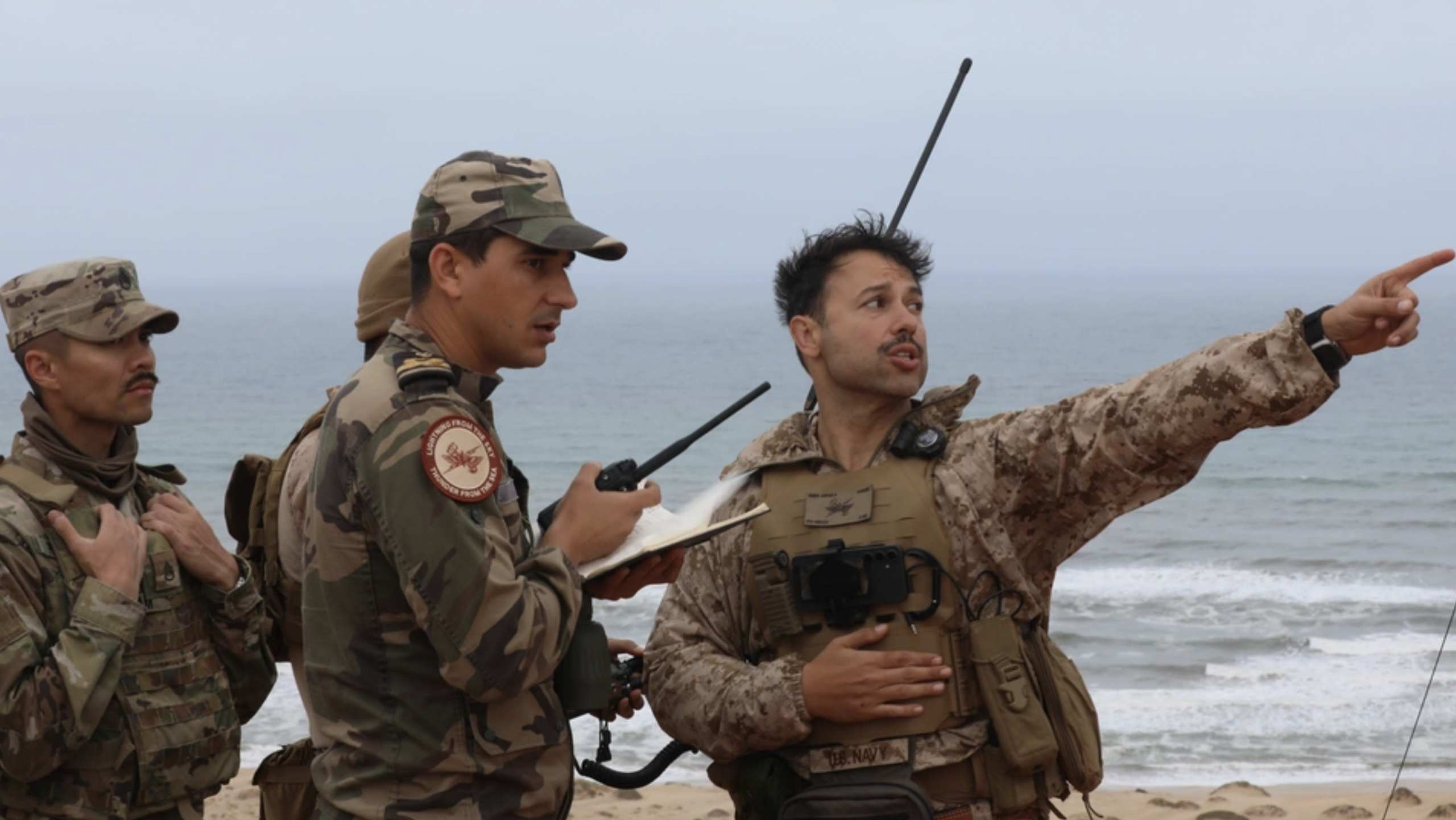
Two U.S. Army soldiers participating in a major multinational military exercise in Morocco are missing after they are believed to have fallen from a cliff into the ocean, prompting an extensive search and rescue operation involving American and Moroccan forces. The incident occurred on May 2, 2026, near the Cap Draa Training Area close to the city of Tan Tan during Exercise African Lion 2026, U.S. Africa Command’s largest annual joint training event.
U.S. Africa Command confirmed that the two service members were reported missing while taking part in activities associated with the exercise. Officials emphasized that search and rescue operations began immediately, drawing on coordinated assets from the United States, Morocco, and other participating nations. Ground teams, aircraft, and maritime units have been deployed in a sustained effort to locate the soldiers.
A U.S. official told ABC News that the soldiers were on a hike when the incident is believed to have taken place, with evidence pointing to a fall from a cliff into the ocean. There is no indication of foul play, according to the official. The rugged coastal terrain around Cap Draa presents significant challenges for search operations, heightening concerns over the soldiers’ safety in what remains an active rescue mission.
African Lion 2026 involves roughly 5,000 troops and personnel from approximately 40 countries, including the United States, Morocco, Ghana, Senegal, and Tunisia. The exercise, which runs from April 20 to May 8, focuses on strengthening interoperability among partner forces and building readiness to respond to crises across Africa and beyond. It features a full spectrum of activities, including command post exercises, field training, live-fire demonstrations, and humanitarian civic assistance programs.
U.S. Air Force Airmen have played a notable role in African Lion 2026, with participation from active duty, Air National Guard, and Air Force Reserve units. Approximately 100 Air Force personnel are supporting operations across multiple locations in Morocco, Ghana, Senegal, and Tunisia. These include air control squadrons, combat air operations teams, contingency response units, and aerial port specialists working alongside Marine Corps and Moroccan forces.
The exercise underscores U.S. Africa Command’s emphasis on joint, all-domain operations that span land, air, maritime, space, and cyberspace. By integrating more than 4,500 participants from over 20 nations, including NATO contingents, African Lion aims to enhance collective capabilities to counter regional threats and promote stability. This year’s iteration marks a continued expansion of multinational defense cooperation on the African continent.
Search efforts for the missing soldiers have mobilized a wide array of specialized resources. In addition to U.S. and Moroccan helicopters and drones, naval vessels are conducting maritime searches while Moroccan mountaineers and divers assist in challenging coastal and underwater operations. The scale of the response reflects the high priority placed on personnel recovery during such exercises.
U.S. Africa Command has stated that the incident remains under investigation even as the search continues. The command’s primary focus is on the two service members and their families, with updates to be provided as more information becomes available. Questions regarding the operation have been directed to the U.S. Army Southern European Task Force, Africa public affairs office.
The loss of personnel during a training exercise highlights the inherent risks faced by U.S. forces engaged in forward-deployed activities across Africa. Even routine movements, such as hikes in training areas, can encounter hazardous terrain, particularly along Morocco’s Atlantic coastline near Tan Tan. Military leaders continually stress the importance of safety protocols, yet incidents like this serve as sobering reminders of operational dangers.
African Lion has grown into a cornerstone of U.S. defense engagement in Africa since its inception two decades ago. The exercise not only hones warfighting skills but also fosters critical partnerships essential for addressing shared security challenges, from counterterrorism to humanitarian response. Participation by diverse African and international forces demonstrates a commitment to collaborative readiness in a strategically important region.
As the search enters its next phases, defense officials are weighing environmental factors, including ocean currents and the steep cliffs characteristic of the Cap Draa area. Recovery operations in such environments demand precise coordination between air, sea, and ground elements, testing the very interoperability that African Lion seeks to build.
The ongoing efforts to locate the two soldiers remain a top priority for U.S. Africa Command and its partners. Military cooperation during this crisis exemplifies the strength of alliances forged through exercises like African Lion, even as the defense community awaits further developments with hope for a positive resolution.