
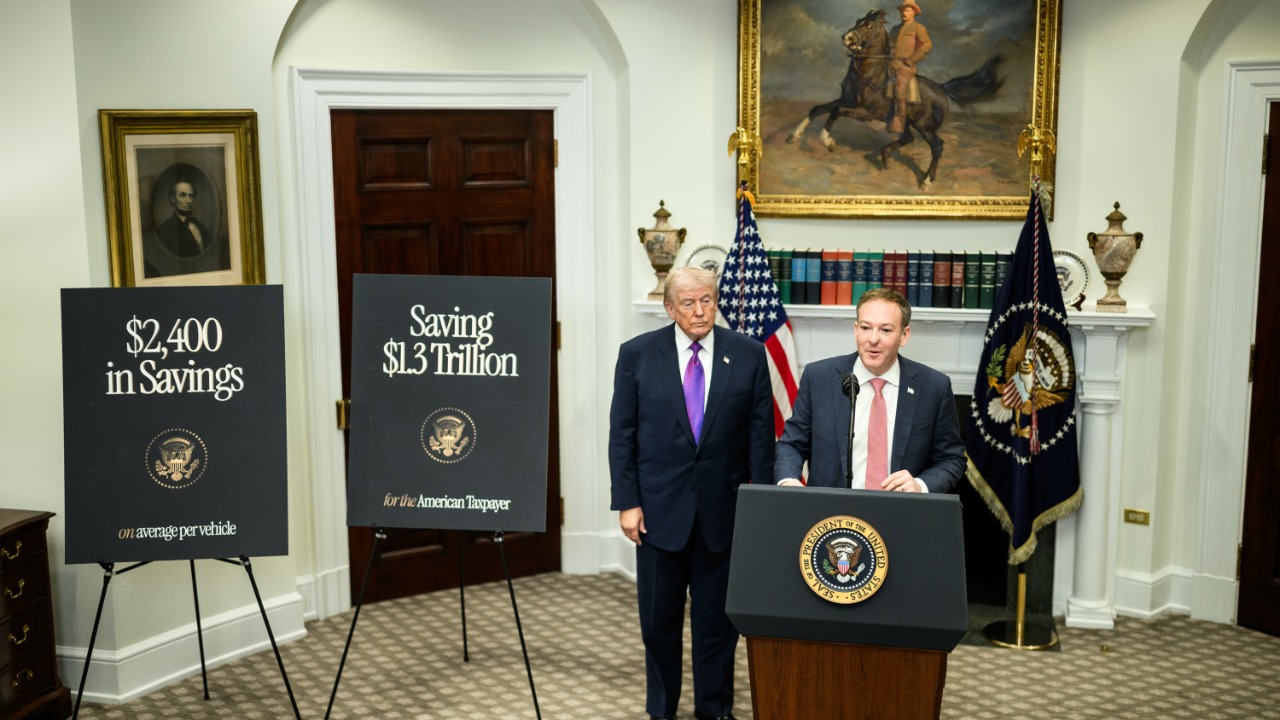
President Donald Trump has moved to rescind the Environmental Protection Agency’s core finding that greenhouse gases endanger public health and welfare, while also rolling back federal limits on auto emissions. The decision removes the scientific and legal foundation that has guided United States climate policy for nearly two decades and resets how the federal government treats carbon pollution from vehicles. Supporters hail the shift as the biggest regulatory relief in modern history, while critics describe it as a direct threat to climate goals and public health protections.
The move reaches far beyond technical rulemaking. By stripping away the 2009 greenhouse gas endangerment finding and the associated tailpipe standards, the administration is attempting to redefine the federal role in managing climate risk, consumer costs, and the future of the auto industry. The result is a clash between those who see climate rules as economic shackles and those who view them as a basic safeguard against rising temperatures and harmful air pollution.
From endangerment finding to rescission
The Environmental Protection Agency has now finalized what it describes as a sweeping reversal of its own climate authority. In a formal Rule Summary, the agency explains that it has rescinded the 2009 Greenhouse Gas Endangerment finding that previously concluded that carbon dioxide and other greenhouse gases pose a danger to public health and welfare. That earlier determination had been the legal trigger for federal regulation of climate pollution from vehicles and power plants. By declaring that the earlier science and legal reasoning no longer justify such a finding, the Environmental Protection Agency has effectively withdrawn its own rationale for treating greenhouse gases as a regulated pollutant under the Clean Air Act.
Because the endangerment finding served as the backbone for federal tailpipe rules, its removal immediately reverberates through auto and transportation policy. The same Rule Summary notes that the Environmental Protection Agency has therefore also finalized the repeal of federal greenhouse gas emission standards for new motor vehicles. As a result, future federal climate rules for cars and light trucks will no longer rest on the previous conclusion that their emissions endanger the public, a shift that opens the door to looser standards and a very different trajectory for transportation emissions.
White House framing of “historic” deregulation
At the White House, President Donald Trump and Environmental Protection Agency Administrator Zeldin have presented the move as a signature achievement. In a public event described as the President Trump and officials cast the rollback as correcting what they see as regulatory overreach that followed earlier Supreme Court litigation, such as West Virginia v. EPA. The Trump Administration portrays the change as restoring limits on federal agencies and giving elected leaders, rather than career regulators, the final word on how far climate policy should reach into the economy.
The administration’s messaging has leaned heavily on consumer savings and relief from what it calls burdensome mandates. The Environmental Protection Agency states that the final rule will save $1.3 trillion by removing requirements to measure, report, certify, and comply with greenhouse gas standards, arguing that these resources will instead flow to more affordable vehicles and other household needs. A separate White House account describes how President Trump delivers a narrative that fits into a broader push to pare back what the administration views as costly environmental rules. Supporters such as American Free Enterprise Chamber of Commerce CEO Gentry Collins have echoed that argument, saying the Trump Administration is removing a foundation of regulation that, in their view, raised prices and made the United States more dependent on China for energy and technology supply chains.
Auto rules rolled back and consumer claims
Alongside the endangerment finding, the Environmental Protection Agency has moved directly against federal greenhouse gas limits for vehicles. Legal and policy analyses describe how the EPA repeals vehicle in a coordinated action that strips away requirements for automakers to cut carbon emissions from new cars and trucks. At a White House event with President Donald Trump, Environmental Protection Agency Administrator Zeldin framed this as a response to complaints from drivers about features that were introduced to meet prior standards, including the so-called universally hated start-stop feature that automatically shuts off engines at red lights to save fuel.
Officials have linked the vehicle rule to the same projected savings that they cite for the endangerment finding. The Environmental Protection Agency has said that Americans will avoid more than $1.3 trillion in compliance costs as automakers no longer need to design and certify vehicles to meet the previous greenhouse gas limits. Administration allies argue that this will give buyers more choices, including larger vehicles and higher-performance models that had become harder to justify under strict emissions rules. They also claim that by relaxing standards, the government will reduce pressure on manufacturers to source batteries and critical minerals from abroad, a theme that appears in White House arguments about making us dependent on clean energy supply chains.
Climate, legal, and political fallout
Climate advocates and many legal experts view the rescission as a direct attack on the scientific consensus that greenhouse gases are warming the planet and harming public health. One detailed legal analysis describes how the Key Takeaways from this move include a Historic reversal in which the EPA dismantles the Endangerment Finding that has anchored federal climate regulation for years. Environmental groups warn that without this underpinning, future efforts to limit power plant emissions, industrial carbon pollution, or methane leaks will face steep legal hurdles. They also argue that transportation emissions, already a leading source of United States greenhouse gases, are likely to rise if automakers slow or reverse their shift toward cleaner fleets.