
Strategic bombers occupy a peculiar space in modern warfare: everyone knows they exist, everyone plans around them, and yet much of their value lies in shaping choices before a fight starts. They are the most visible and politically legible part of long-range strike—aircraft that can be moved, photographed, tracked, and deliberately “noticed.” In an era dominated by missiles, space, and cyber competition, bombers still matter because they combine reach, payload, and signaling in a way few other systems can.
This is not only nostalgia for Cold War icons. Major bomber operators—the U.S. Air Force’s Global Strike Command, Russia’s Long-Range Aviation, and China’s PLA Air Force—treat bomber forces as tools of nuclear deterrence and conventional power projection. The result is a mix of aging airframes that remain in service, specialized aircraft built to operate in contested airspace, and emerging next-generation designs whose most important details are classified or unconfirmed.
Bombers as a flexible “signal” in deterrence
Unlike fixed missile silos or submarines intended to remain hidden, bombers can be deployed forward, surged for exercises, and flown on routes designed to be noticed. That visibility gives leaders options to signal resolve without immediately crossing thresholds that are harder to reverse. It also has a practical side: bomber task force-style deployments and long-range training missions rehearse the real requirements of crisis response—crews, tankers, bases, and command-and-control working together under time pressure.
Over the last decade, these missions have increasingly been framed around two questions: what can a bomber hold at risk without relying on vulnerable forward basing, and how does it remain relevant against modern air defenses? In Europe, Arctic approaches, and the Indo-Pacific, the issue is often less about raw distance and more about access, survivability, and the ability to generate credible strike options during a fast-moving crisis.
Why certain bombers became “feared”—and why that depends on context
The reputation of strategic bombers comes from a combination of attributes: large payloads, endurance (often enabled by tanker support), and—most importantly—their place in nuclear planning. A bomber force can be associated with nuclear gravity bombs or cruise missiles, and the same aircraft may also deliver conventional precision weapons at scale. That dual-role character can complicate real-time interpretation of intent, reinforcing deterrence while also creating escalation-management risks.
At the same time, “most feared” is not a permanent label. The threat a bomber poses depends on basing access, tanker availability, escort and electronic warfare support, intelligence and targeting, and the quality of the integrated air defenses it must face. Even stealth is not a guarantee of safety; reduced observability can make detection and engagement more difficult, but it does not eliminate risk as sensors, networking, and tactics evolve.
The United States: legacy strength and a shift toward survivable stealth
The U.S. bomber force illustrates why a mixed fleet persists. The B‑52 is closely associated with endurance and payload, while the B‑1 and B‑2 reflect different approaches to speed, survivability, and conventional strike in contested environments. In practice, this mix supports a core strategic advantage: bombers can generate effects at long range without the same dependence on nearby bases that shorter-range aircraft often require.
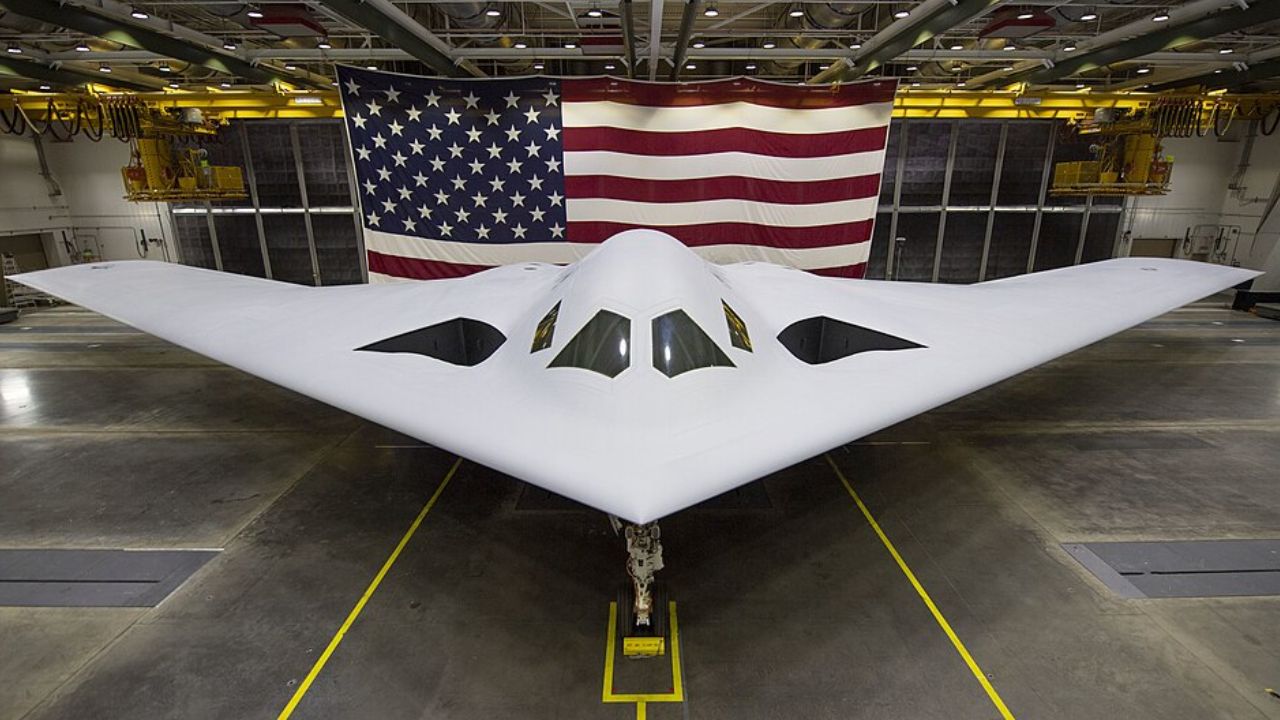
The modernization direction is centered on the B‑21 Raider, intended to sustain a credible long-range strike option in the face of modern air defenses. Many of its details remain limited in public view, but the strategic aim is clear: preserve options when standoff weapons alone may be insufficient, and when access to forward bases is uncertain or politically constrained.
Behind the public imagery is an operational constraint that shapes deterrence in quieter ways: readiness. Aging fleets require parts, depot time, and specialized labor, while high-end stealth aircraft bring their own sustainment demands. If aircraft cannot generate sorties, deploy on short notice, or sustain operations, the deterrent message weakens regardless of design intent.
Russia: long-range aviation, theater reach, and nuclear signaling
Russia’s bomber force carries strong Cold War heritage and psychological weight, anchored by platforms such as the Tu‑95 and Tu‑160. These aircraft remain central to Moscow’s long-range aviation identity and, by virtue of their role, to nuclear deterrence signaling. In a crisis, their value is not only what they can launch but also how they can be postured—placed on alert, dispersed, or flown in visible patterns that complicate an adversary’s planning.
Where modernization occurs, it is often described as an effort to extend relevance rather than replace the concept. Public reporting frequently references Tu‑160M upgrades, but details beyond broad modernization themes are difficult to confirm from official statements alone. Strategically, the point of upgrades—whether focused on avionics, weapons integration, or reliability—is to keep legacy aircraft credible against improving defenses and counter-air capabilities.
Russia’s bomber operations also emphasize the standoff-versus-penetration trade. In heavily defended environments, bombers may prioritize launching weapons from outside the densest air-defense coverage rather than attempting deep penetration. That can still produce significant strategic effects, but it underscores a central reality: the bomber’s impact is inseparable from the weapons available and the survivability of the broader strike system that supports it.
China: an expanding long-range strike narrative and an opaque next step
China’s PLA Air Force is increasingly viewed through the lens of long-range operations and regional deterrence, with the H‑6 often described as the backbone of its bomber force. Operationally, this points to a growing emphasis on holding targets at risk at distance, shaping maritime and regional calculations, and complicating an adversary’s defense planning. In that role, bomber activity—especially alongside other capabilities—can function as strategic messaging without necessarily escalating into direct conflict.
The larger question is what comes next. China’s next-generation bomber is frequently discussed in open-source circles as the “H‑20,” but official clarity is limited and key details remain unconfirmed. The strategic significance of an emerging bomber program is less about any specific reported specification and more about what it could represent: movement toward a more survivable and flexible long-range strike option that could alter regional deterrence assumptions and drive air-defense, dispersal, and basing decisions by others.
Stealth, standoff, and the air-defense problem
Across all three bomber forces, the core technical challenge is staying useful against modern integrated air defenses. One approach is stealth and penetration, associated with low-observable designs that reduce detection opportunities and broaden routing choices. Another is standoff strike, where the bomber serves primarily as a long-range launch platform, relying on missiles to avoid the highest-risk airspace.
Put simply, this is a question of where the risk is carried. Penetration concentrates risk on the aircraft and crew but may preserve options against hardened or time-sensitive targets. Standoff places more weight on the weapon’s ability to reach and survive, and it can be limited by inventories, cost, and the need to sustain stockpiles during extended operations.
What changes next: modernization, posture, and escalation management
In the coming years, the most visible shifts will come from modernization timelines and the posture that follows. For the United States, the B‑21 Raider represents a move toward a future force designed for contested operations, while legacy fleets continue to carry routine workload and day-to-day signaling. For Russia, modernization efforts discussed in public reporting—such as the Tu‑160M—reflect an intention to keep long-range aviation relevant as part of broader deterrence posture.
For China, the most consequential change may be the arrival—if and when it occurs—of a next-generation bomber whose characteristics remain opaque. Even without confirmed details, the direction of travel matters: it can influence regional investment in air defenses and dispersal, and it can shape how alliances think about basing and tanker support in the Indo-Pacific.
Across the board, bombers sit at the intersection of capability and communication. They can deliver conventional effects, but they are also linked to nuclear deterrence architectures that demand careful signaling and clear control. That combination is why the strategic bombers that shaped global deterrence—legacy icons and newer stealth designs alike—remain central to crisis calculations: not because they are invulnerable, but because they are adaptable, visible, and difficult to ignore.