

Instructors in every high‑risk discipline, from firearms to motorcycles to historical fencing, tend to agree on one thing: the wrong gear choice can turn a routine training day into a life‑changing emergency. The most experienced voices do not just recommend what to buy, they warn bluntly about what to avoid, because certain helmets, holsters, and even dashboard gadgets can quietly undermine safety. Understanding those red‑flag items is as important as any technique lesson on the range or the road.
The gear that raises concern often looks impressive at first glance. Tactical costumes, flashy motorcycle lids, and futuristic vehicle controls all promise performance, yet instructors repeatedly see how they distract students, encourage bad habits, or simply fail when it matters most. The patterns that emerge from their warnings point to a simple rule: if equipment prioritizes style, convenience, or social media aesthetics over clear function, it probably does not belong in serious training.
When “tactical” clothing turns into a costume
Firearms instructors increasingly flag a category of gear that has little to do with shooting performance: the full tactical outfit worn as a costume. Instead of focusing on fit, retention, and safe access, some students arrive in plate carriers, drop‑leg holsters, and overloaded belts that mimic special operations units but do not match the realities of their daily carry. Experienced trainers describe how Some instructors themselves lean on this look to project authority, using tactical clothing and accessories to build a persona rather than to solve real training problems, which can mislead new shooters about what matters most in a fight.
The risk is not just aesthetic. Overbuilt rigs can snag on cover, slow down draws, and encourage students to practice manipulations they will never use outside a class. Instructors who prioritize performance over image urge civilians to train in the clothes and holsters they actually wear, and to treat any piece of gear that exists mainly for social media photos as suspect. When Apr commentary on firearms training culture highlights that Some trainers use gear as a costume instead of a tool, it reinforces a core safety principle: equipment should be selected to support consistent, repeatable gun handling, not to signal belonging to a tactical subculture.
Minimal or mismatched protective gear in close‑contact training
Across combatives and weapon‑based martial arts, instructors are blunt about one mistake: treating protective gear as optional. In historical fencing and similar disciplines, even soft or rubber training weapons can generate concussive force, especially when adrenaline spikes. Experienced practitioners insist that You should wear a fencing mask at a minimum, even when using rubber trainers, because the face and eyes are uniquely vulnerable and a single misjudged thrust can cause permanent damage. When students skip that baseline protection, they are not just accepting personal risk, they are forcing partners into an ethical dilemma about how hard they can safely train.
The same logic applies to other impact zones. Instructors who run knife or stick scenarios typically require throat, hand, and groin protection once speed increases, because those areas are both exposed and hard to shield reflexively. They warn against improvised or fashion‑driven substitutes, such as thin street gloves in place of padded hand protection, which can give a false sense of security without actually absorbing force. The consistent message from seasoned coaches is that any gear choice that trades proven protection for comfort or appearance, especially around the head and neck, is a red flag that should be corrected before training continues.
Motorcycle gear that fights the wind instead of the crash
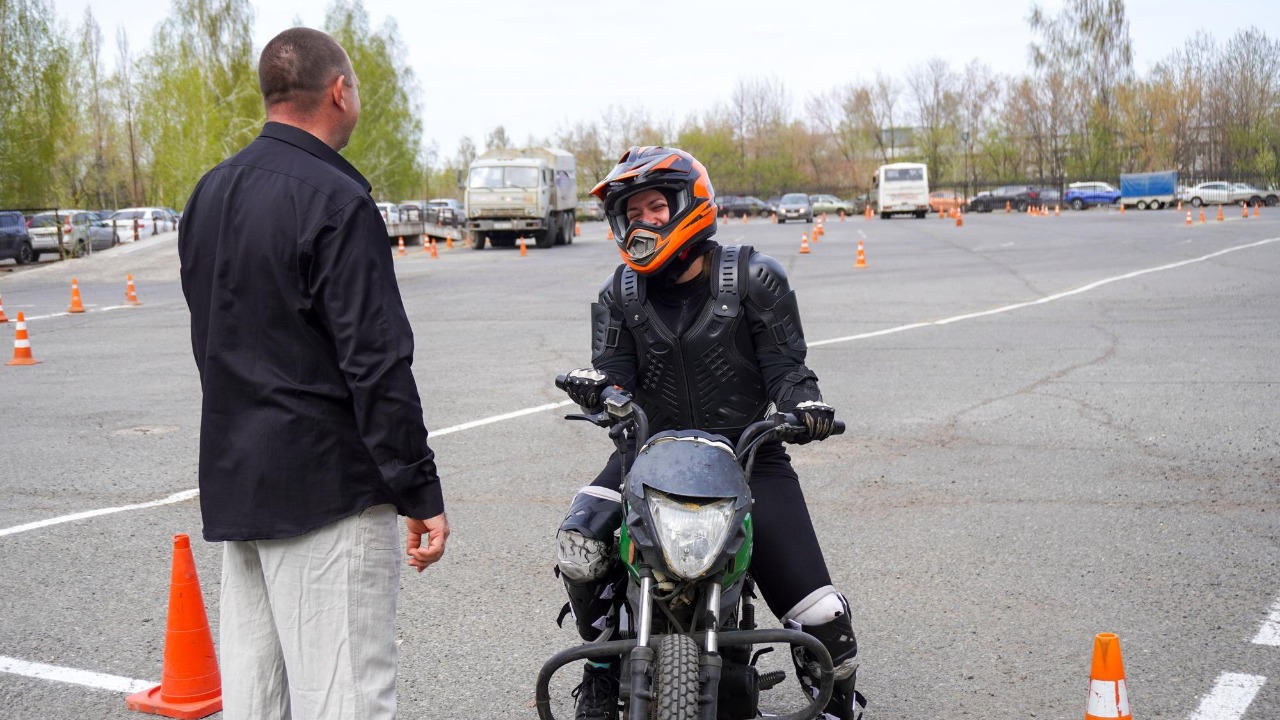
Motorcycle instructors routinely see new riders arrive in gear that looks aggressive but behaves badly at speed. One recurring example is the use of off‑road or motocross helmets on the highway, often paired with casual clothing. Instructors point out that a large peak Visor on a dirt helmet can catch wind at highway speeds, tugging the rider’s head and increasing fatigue, which in turn degrades reaction time and situational awareness. What works in low‑speed dirt environments becomes a liability on the freeway, where smooth aerodynamics and a stable field of view matter more than ventilation or style.
Coaches also warn against treating any leather or textile jacket as “good enough” without checking abrasion resistance, armor placement, and fit. A simple, sturdy leather jacket can offer solid protection if it is built for impact and stays in place during a slide, but fashion leather with thin seams and loose cuffs can burst open when it hits the pavement. Instructors who debrief real‑world crashes emphasize that mismatched gear choices, such as sneakers instead of boots or casual jeans instead of reinforced pants, often turn survivable falls into serious injuries. Their guidance is consistent: gear should be selected for the crash the rider cannot predict, not the short commute they expect.
Instructors who normalize riding or training with no safety gear
Perhaps the most alarming warnings from the training community involve instructors who actively discourage safety equipment. In structured motorcycle licensing courses, some students report being told that full protective gear is unnecessary for certain sessions, even when they are still learning basic control. When a coach in Europe and other regions suggests that new riders skip jackets, gloves, or proper boots, it directly contradicts the broader safety culture that treats head‑to‑toe protection as non‑negotiable. Such advice can normalize minimal gear habits that follow riders onto public roads, where the consequences of a low‑speed mistake are far more severe.
Firearms and combatives instructors see similar patterns when peers downplay eye and ear protection or allow students to spar at high intensity without helmets or mouthguards. The problem is not just the immediate risk of injury, but the message it sends about acceptable shortcuts. When authority figures model casual attitudes toward gear, students may assume that safety rules are flexible everywhere, including unsupervised practice. Seasoned professionals argue that any instructor who recommends against basic protective equipment is signaling a deeper disregard for risk management, and that students should treat such guidance as a cue to seek training elsewhere.
Confusing vehicle controls and “smart” aids that dull awareness
Not all problematic gear is worn on the body. Instructors who teach defensive and tactical driving increasingly highlight how certain vehicle interface designs can undermine basic safety habits. One widely discussed example involves unconventional electronic shifters that replace traditional PRNDL levers with toggles or buttons. By Consumer Reports testing has documented that some of these new gear shift layouts are so unintuitive that drivers can exit their vehicles believing they are in Park when they are not, which has contributed to roll‑away incidents and injuries. In response, Consumer Reports now deducts points for cars that use confusing shifters, signaling that poor interface design is not just an annoyance but a measurable safety deficit.
Even when the hardware is clear, instructors caution against overreliance on “smart” aids that tell drivers when to shift or how to accelerate. Modern gearshift indicators, which prompt drivers to upshift for fuel economy, can be helpful in normal conditions, but they are not infallible. Technical analyses of these systems show that a dashboard prompt might suggest an upshift that feels counterintuitive, such as jumping from fourth to sixth at low speed, which can lug the engine and reduce responsiveness if the driver obeys blindly. Instructors who teach performance and emergency maneuvers stress that drivers must understand engine behavior and vehicle dynamics first, then treat indicators as advisory rather than authoritative. Any gadget that encourages drivers to outsource judgment, whether it is a shift light or a lane‑keeping nudge, becomes a subtle form of bad gear when it erodes the skills needed to handle a crisis.