
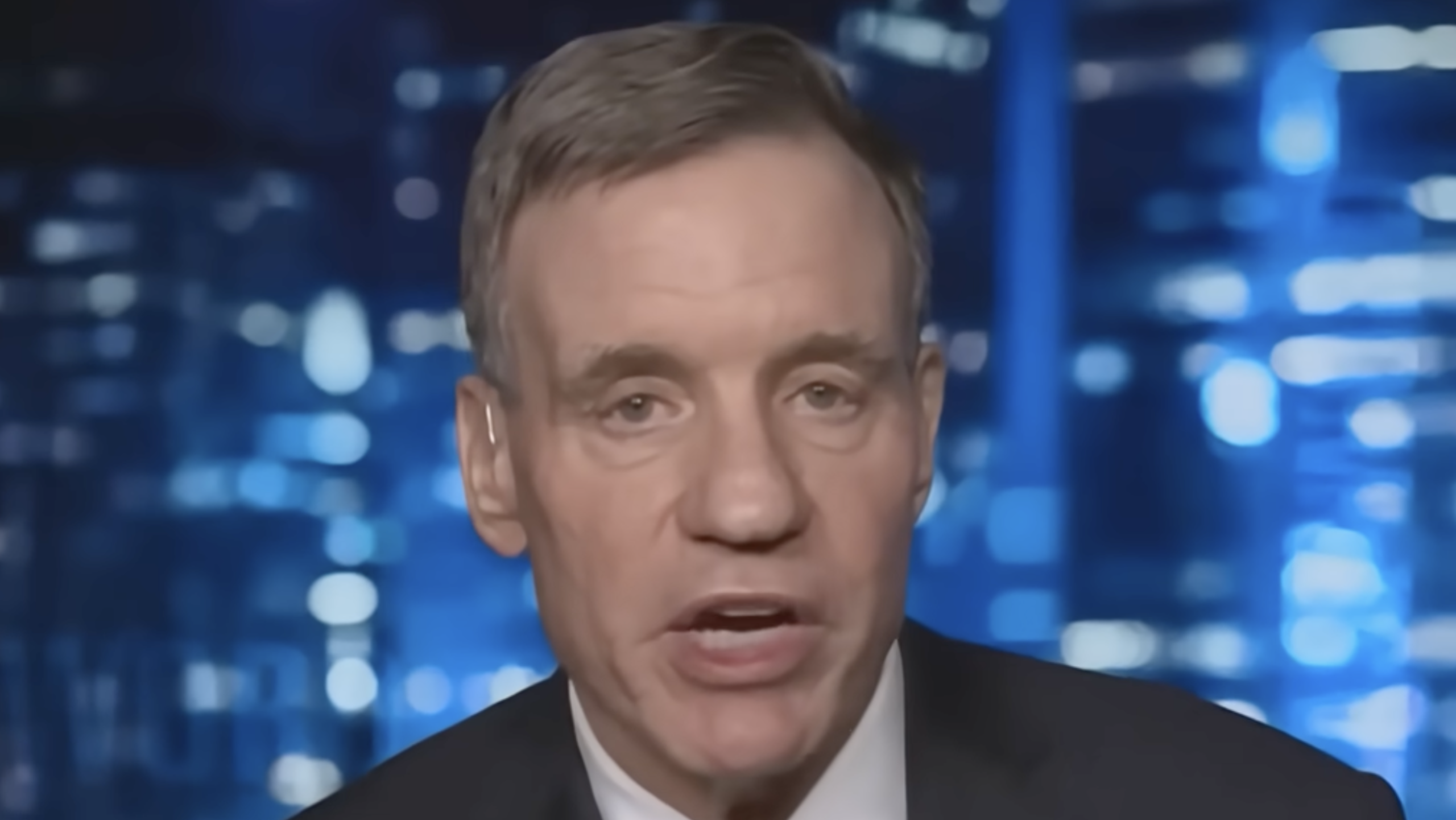
Sen. Mark Warner of Virginia, a senior Democratic lawmaker on the Senate Intelligence Committee, used an X post on May 4, 2026, to challenge claims that the U.S. conflict with Iran is nearing an end, stating that the United States remains deeply engaged in what he characterized as an ongoing war. His comments come amid continued uncertainty over cease-fire diplomacy, stalled negotiations, and mixed messaging from the Trump administration regarding the status of the conflict.
In his full post on X, Warner wrote: “Trump can call this war over all he wants… Americans know the truth. It’s way easier to get into a war in the Middle East than it is to get out of one. We’re still deep in this one.” The message directly pushed back on the idea that the conflict has been resolved or meaningfully de-escalated, instead emphasizing that the United States remains entrenched in sustained military and political engagement two months after the war began.
Warner’s statement signals skepticism toward repeated suggestions from President Donald Trump that the fighting is winding down or can be quickly concluded through negotiations. His wording that “we’re still deep in this one” frames the situation as unresolved and ongoing, despite public messaging from the administration suggesting progress toward a settlement or cease-fire agreement.
The post comes at a moment when the administration has continued to describe efforts to negotiate with Iran while also acknowledging that key disagreements remain unresolved. The gap between public optimism and on-the-ground diplomatic progress has become a central feature of the political debate surrounding the conflict.
Reporting from The New York Times described the cease-fire between the United States and Iran as remaining “in limbo” after President Trump said he was reviewing Iran’s latest proposal but could not imagine it being acceptable. Trump had also recently said he was “not satisfied” with Iran’s offer and later clarified he had only been briefed on the “concept of the deal,” not the full details.
In those reports, Trump also indicated that Iran had “not yet paid a big enough price” in the conflict and suggested the United States was weighing whether to continue negotiations or escalate military pressure. Iranian officials, meanwhile, said the United States must decide between diplomacy or continued confrontation, underscoring the lack of agreement on a path forward.
Another report similarly described Iranian proposals and U.S. responses as failing to produce a breakthrough. The reporting noted that while Iran had adjusted its negotiating positions on issues such as the Strait of Hormuz and sequencing of talks, core disputes over Iran’s nuclear program and sanctions relief remained unresolved, contributing to continued instability in cease-fire efforts.
Within this broader context, Warner’s remarks align with his long-standing public position on military engagement and oversight. As Vice Chair of the Senate Intelligence Committee, he has consistently argued that U.S. military action requires clear objectives, defined limits, and congressional authorization. He has also previously described the 2026 Iran conflict as a “war of choice,” raising concerns that it began without an imminent threat to the United States.
Warner has further emphasized that the administration has not presented a clear exit strategy or coherent end-state for the conflict. His criticism has focused on the risk of prolonged military entanglement, particularly in the absence of clearly defined diplomatic or military benchmarks for ending hostilities.
He has also stressed the constitutional role of Congress in authorizing major military action, arguing that decisions involving sustained conflict should not be made unilaterally by the executive branch without legislative approval. That position has placed him among lawmakers calling for increased oversight of the Iran operation.
The May 4 post reflects continuity with those concerns, framing the conflict not as a concluded episode but as an ongoing engagement with uncertain duration. His use of the phrase “way easier to get into a war… than it is to get out of one” underscores concerns about escalation dynamics and the difficulty of de-escalating once military operations are underway.
Taken together with stalled diplomatic reporting and continued disagreement between U.S. and Iranian officials over the terms of any agreement, Warner’s statement adds to growing political scrutiny over whether the conflict is stabilizing or simply entering a prolonged phase of low- or mid-level confrontation.
As negotiations continue without a finalized settlement and with both sides maintaining conflicting public positions, Warner’s remarks highlight a central tension in the current policy debate: whether the war is nearing resolution or, as he asserts, remains deeply ongoing with no clear endpoint in sight.