
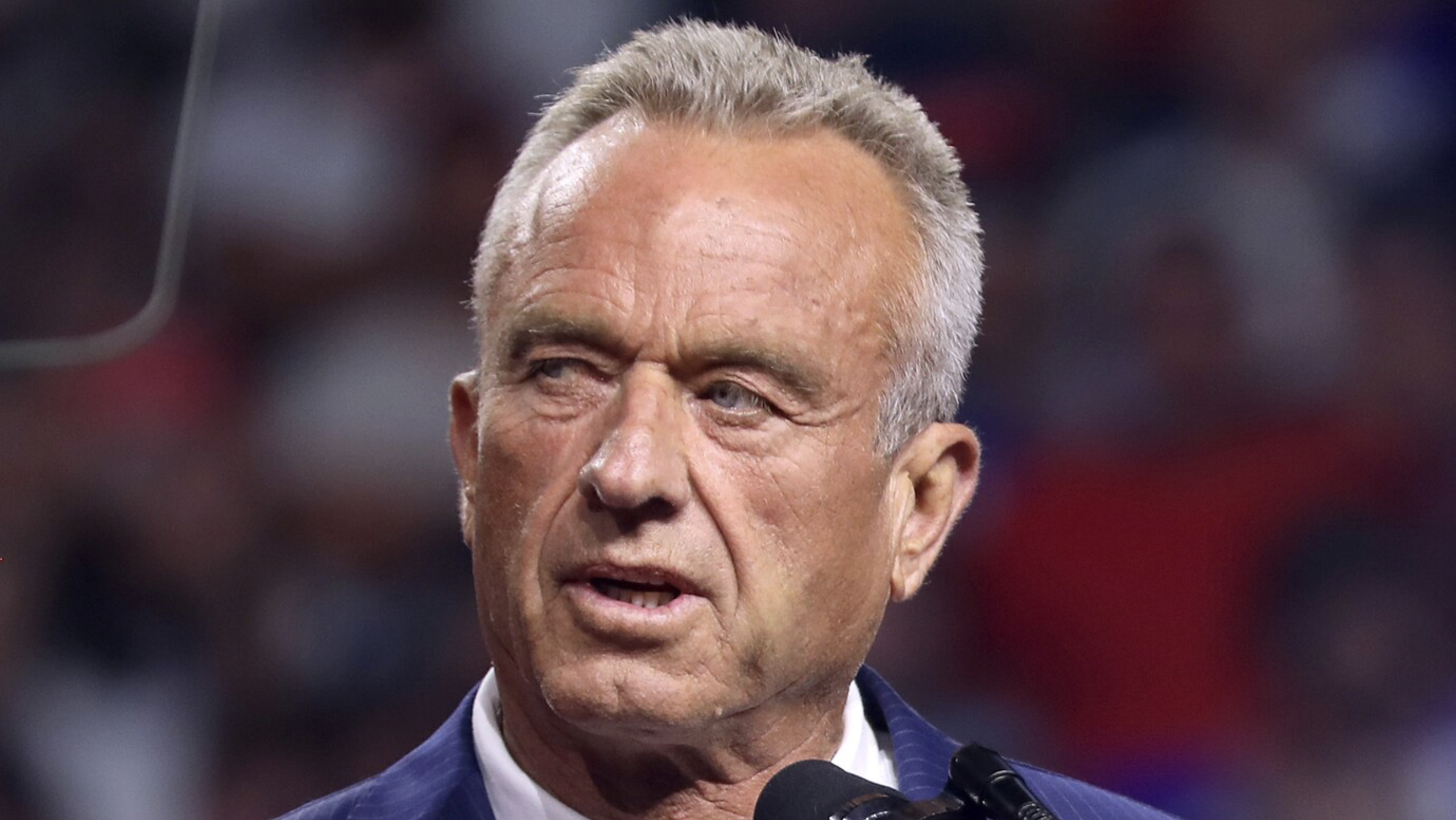
Health and Human Services Secretary Robert F. Kennedy Jr. dropped a striking national security warning Monday while announcing what he called one of the most consequential overhauls in the history of American medical education — declaring that the deteriorating health of the nation’s youth has left the country’s military pipeline in jeopardy at one of the most precarious moments in modern American history.
A Landmark Announcement on Nutrition
Kennedy convened a press conference Monday to announce a sweeping set of reforms designed to put nutrition at the center of how American physicians are trained. Nine of the nation’s leading medical accreditation, certification, testing, and educational bodies have committed to concrete action, Kennedy said, including revisions to the United States Medical Licensing Examination that will, for the first time, give nutrition science a meaningful presence across all three steps of the exam. “Nutrition will no longer sit at the margins of medical education,” Kennedy said. “It will shape what students learn, what physicians master, what licensing boards assess, and ultimately how patients receive care.”
The Nutrition Education Pledge
Kennedy also announced that 19 additional medical schools have signed the Trump administration’s nutrition education pledge, committing to provide at least 40 hours of nutrition instruction for every future physician they train beginning this autumn. That brings the total number of schools that have joined the pledge to 73 — a figure Kennedy described not as symbolic, but structural. “Education drives practice. Practice drives outcomes, and outcomes determine the health of a nation,” he said. To accelerate the effort, HHS announced a $2.1 million NIH challenge grant to identify and scale the most effective approaches for integrating nutrition into medical and nursing school curricula, with winning curricula to be made publicly available nationwide. Kennedy said the initiative is the first phase of a $5 million NIH-led program.
The National Security Warning
It was Kennedy’s framing of the broader public health crisis, however, that produced the most striking moment of the announcement. Rattling off a series of statistics about the state of American health — more than 70% of adults overweight or obese, one-third of teenagers with diabetes or pre-diabetes — Kennedy pivoted sharply. “This is not only a public health challenge, it’s a national security issue,” he said. “About 77 percent of American children can now no longer qualify for military service. That’s something that should get everybody’s attention.”
The Numbers Behind the Warning
Kennedy’s 77% figure aligns directly with the Pentagon’s own findings. The Pentagon’s 2020 Qualified Military Available Study found that 77% of Americans between the ages of 17 and 24 would be ineligible for military service without a waiver — a figure that represented a 6% increase from 2017, when 71% of young Americans were found ineligible. The largest increases in disqualification between 2013 and 2020 were recorded for mental health and overweight conditions. Among those disqualified for a single reason, obesity led at 11%, followed by drug and alcohol abuse at 8%, and medical or physical issues at 7%. The majority of ineligible youth — 44% — were disqualified for multiple reasons simultaneously.
Timing: A Nation at War, a Draft on the Horizon
Kennedy’s warning landed with acute significance given the current national moment. The United States and Israel launched strikes against Iran on February 28, 2026, drawing the U.S. into active hostilities. In December 2025, President Trump signed the National Defense Authorization Act for fiscal year 2026, which authorized the Selective Service System to automatically register young men for a potential military draft. Beginning December 18, 2026, the longstanding requirement for male U.S. residents between 18 and 25 to register themselves with the Selective Service will be replaced with a requirement for the Selective Service System to register them automatically, drawing on existing federal government databases — the most significant transformation of the Selective Service System in over four decades.
An Old Problem, Newly Urgent
The military readiness gap Kennedy described is not new, but the urgency has grown sharply. According to 2017 Pentagon data, over 24 million of the 34 million Americans between the ages of 17 and 24 could not join the armed forces — even if they wanted to. Lawmakers have raised alarms for years. Sen. Thom Tillis, then the ranking member of the Senate Armed Services Committee personnel panel, said during a 2022 hearing that widespread ineligibility threatened the long-term viability of the all-volunteer force. “To put it bluntly, I am worried we are now in the early days of a long-term threat to the all-volunteer force,” Tillis said at the time.
The Federal Spending Argument
Kennedy also made a fiscal case for the nutrition overhaul, describing a healthcare system that consumes nearly half of every federal tax dollar while overwhelmingly treating preventable, diet-linked conditions. “If you include the VA and the Pentagon and the Social Security office and my agency, we spend today about 48 cents out of every federal dollar that Americans pay in taxes now goes to healthcare,” he said, “and 90% of that goes to chronic disease, most of which are linked to our food.”
A Problem Decades in the Making
Kennedy was emphatic that the absence of nutrition training in medical education is not a recent failure. “The lack of nutrition training in medical schools is a decade old problem first identified by the American Medical Association in the 1960s when my uncle was president,” he said, referring to President John F. Kennedy. “Successive administrations have recognized and acknowledged that problem. The Trump administration finally did something about it.” Kennedy credited President Trump directly, saying Trump directed the overhaul as part of his Make America Healthy Again agenda — an initiative focused on food quality, chronic disease prevention, and reducing healthcare costs.
Voluntary Commitments, Cross-Partisan Action
Kennedy took pains to emphasize that none of the institutions that signed onto Monday’s commitments did so under government pressure. “I want to make clear that all of these organizations came forward voluntarily. There was no coercion or pressure from my agency. We acted as a catalyst here,” he said. He also noted that many of the participating organizations and medical schools disagree with the Trump administration on a wide range of policies — and praised them for setting partisanship aside. “There are no such thing as Republican children or Democratic children,” Kennedy said. “All of us want healthy kids and this is a first critical step to making sure that the next generation of children are going to be much healthier than previous ones.”
A Call for Common Ground
Kennedy used the moment to speak to the broader state of political polarization in the country, drawing on his family’s history and his own upbringing during the turbulent 1960s. He recalled his uncle, the late Sen. Ted Kennedy, regularly hosting ideological opponents — including Sen. Orrin Hatch — at his home on weekends, forging friendships across the aisle that Kennedy credited with making Ted Kennedy the most legislatively prolific senator in American history. “We need to start learning to talk to each other again, even with people with whom we disagree,” Robert Kennedy said Monday, “and we need to be able to come together on issues on which we can find common ground.”
Looking Forward
Kennedy closed his remarks expressing confidence that Monday’s announcements would be remembered as a genuine turning point. “I’m confident that years from now, we’ll look back at this moment as a turning point in how we educate doctors, how we practice medicine, how we confront chronic disease in this country,” he said, “and also maybe a precedent for getting along with people and finding common ground on issues on which we otherwise disagree.” Kennedy then handed the podium to CMS Administrator Dr. Oz, whom he called his “partner and friend,” to speak to additional nutrition-in-medicine efforts underway across the federal government.
What Comes Next
The NIH challenge grant announced Monday is the first phase of a broader $5 million initiative, and Kennedy indicated the administration has no intention of slowing the pace of reform. With 73 medical schools now committed to the nutrition education pledge, automatic draft registration set to take effect by December 2026, and a nation actively engaged in overseas hostilities, the intersection of American health and American military readiness — a concern long discussed in policy circles — has now been placed squarely and publicly at the center of the administration’s domestic agenda.