
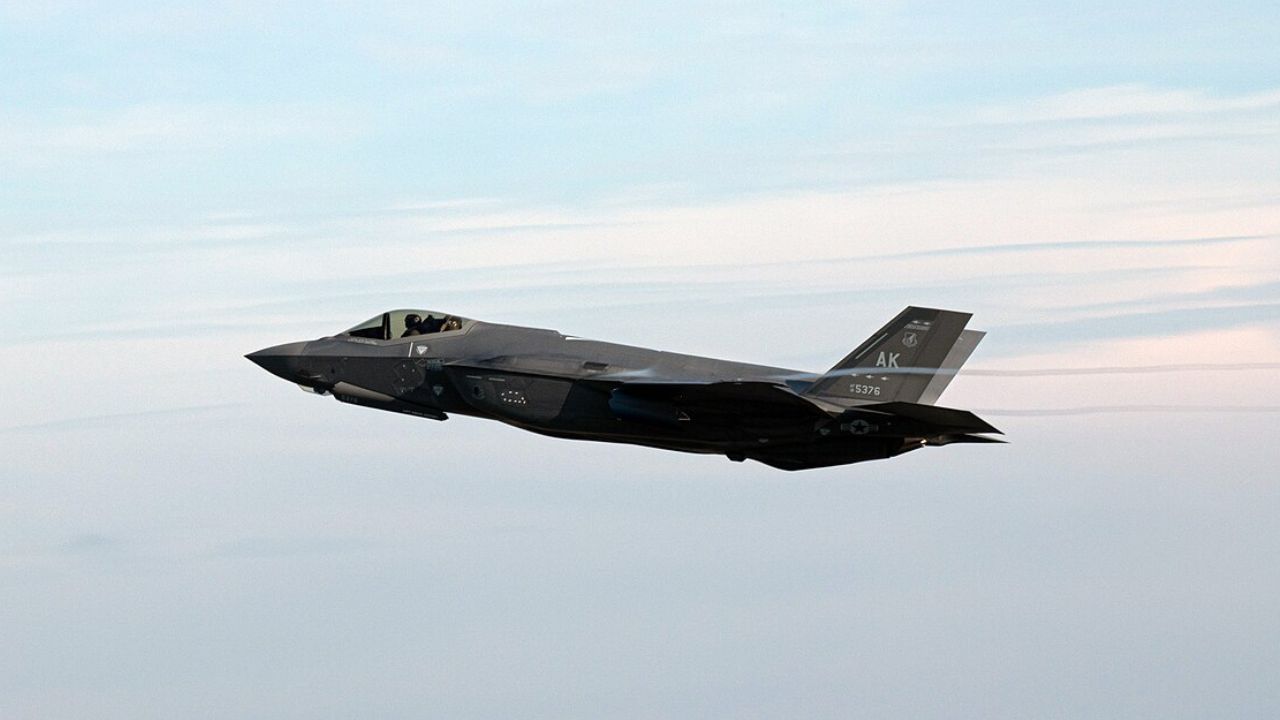
The F-35, touted as one of the most advanced fighter jets in the world, is facing significant operational challenges. A recent report reveals that only 25% of these aircraft meet full mission-capable standards, raising concerns about their readiness and effectiveness in combat scenarios.
Overview of the F-35 Program
The F-35 Lightning II program was initiated in the early 1990s with the goal of creating a versatile, stealthy, and technologically advanced multi-role fighter jet. Developed by Lockheed Martin, the F-35 was designed to replace several aging fleet aircraft within the U.S. military and allied forces, including the F-16 and A-10. It comes in three variants—F-35A (conventional takeoff and landing), F-35B (short takeoff and vertical landing), and F-35C (carrier-based)—each tailored to meet specific operational needs.
One of the primary capabilities of the F-35 is its advanced sensor fusion technology, which allows pilots to collect and synthesize data from various sources, providing unparalleled situational awareness. The jet is also designed to engage in both air-to-air and air-to-ground combat, making it a critical asset in modern warfare. However, the program has faced substantial budgetary implications, with costs ballooning to over $1.7 trillion for the entire lifecycle, raising questions about its affordability relative to its operational effectiveness.
Recent Findings from GAO Report
A recent report from the Government Accountability Office (GAO) revealed alarming statistics regarding the F-35’s mission-capable rates. The report highlighted that only 25% of the F-35 fleet is fully mission-capable, meaning that these aircraft can perform all required tasks without any limitations. This performance metric is significantly lower than other military aircraft, raising red flags about the F-35’s readiness for combat. For instance, aircraft like the F-15 and F-16 often maintain mission-capable rates exceeding 70%.
The implications of these findings are profound. With only a quarter of its fleet ready for full operational deployment, the U.S. military may find itself at a strategic disadvantage. The readiness disparity could affect military strategy and operations, potentially leading to re-evaluations of how air power is projected in various global hotspots. As noted by military analysts, the F-35’s inability to meet expected performance levels could prompt a reevaluation of the United States’ air superiority doctrine.
Factors Affecting Mission Capability
Several factors contribute to the F-35’s low mission-capable rates, primarily rooted in technical issues and maintenance challenges. The aircraft’s complex systems and advanced technology require specialized maintenance practices, which are not always available. As a result, aircraft can be grounded due to minor technical issues, leading to a backlog of necessary repairs and inspections. In turn, this hampers the aircraft’s overall readiness.
Additionally, supply chain problems have emerged as a significant hurdle in maintaining operational readiness. The procurement of spare parts has often been delayed, resulting in extended downtimes for aircraft. This situation is exacerbated by the reliance on a limited number of suppliers for critical components, which can create bottlenecks. Furthermore, ongoing software and systems integration hurdles continue to plague the F-35 program, with updates and patches often rolling out later than anticipated, further complicating maintenance efforts.
Operational Impact on Military Readiness
The low mission-capable rates of the F-35 have considerable implications for military readiness. With only 25% of the fleet operational, the ability of the U.S. military to respond effectively to crises could be compromised. For example, during a recent joint exercise, a significant number of F-35s were unavailable due to maintenance and repair issues, demonstrating the potential operational gaps that could arise in a real-world scenario.
Moreover, case studies, such as the F-35’s performance during NATO exercises, reveal that limited aircraft availability can diminish overall mission effectiveness. If the U.S. cannot deploy sufficient numbers of F-35s, it may have to rely on older aircraft, which could be less capable in advanced combat environments. This could lead to strategic miscalculations and a diminished deterrent effect against potential adversaries, affecting U.S. military operations on a global scale.
Responses from Military and Industry Leaders
Military officials have expressed concerns regarding the findings of the GAO report. High-ranking members of the U.S. Air Force have acknowledged the challenges in achieving optimal readiness rates and emphasized the need for immediate action to address the issues. They have pointed out that the F-35 is a critical component of the U.S. military’s air capabilities, and its operational readiness is essential for maintaining national security.
In response, Lockheed Martin and other contractors involved in the F-35 program have outlined ongoing efforts to improve readiness rates. These include enhancing maintenance protocols, increasing the availability of spare parts, and expediting software updates. Additionally, Lockheed Martin has committed to investing in new technologies aimed at streamlining maintenance processes and improving the overall efficiency of the F-35 fleet. The collaboration between military and industry stakeholders is crucial to overcoming the challenges currently faced by the program.
Future of the F-35 Program
Despite the challenges surrounding the F-35 program, there are plans for upgrades and modifications that aim to improve its performance and readiness. The U.S. Department of Defense is working on several initiatives to enhance the aircraft’s capabilities, including improved avionics, better weapon systems, and advanced maintenance technologies. These upgrades are intended to bolster the F-35’s effectiveness in a rapidly evolving threat landscape.
Looking ahead, the long-term vision for the F-35 within the U.S. Air Force and NATO involves integrating the jet into a broader network of allied forces. The ability to share data and coordinate operations with other aircraft will be essential for effective air combat. However, ongoing performance issues could necessitate shifts in military strategy, particularly if the F-35 does not achieve the expected readiness levels. As the military considers future defense procurements, the F-35’s capabilities will undoubtedly influence decisions regarding new aircraft investments.
Public and Political Reactions
The findings from the GAO report have sparked significant public and political reactions concerning military spending and readiness. Advocacy groups and think tanks have raised concerns about the implications of investing heavily in a program that is not delivering expected operational results. Public sentiment appears increasingly skeptical about the efficiency and effectiveness of defense spending, particularly in light of the F-35’s performance issues.
Political debates surrounding the F-35 program have intensified, with some lawmakers calling for greater oversight and accountability in defense procurement. Discussions about the allocation of defense budgets are increasingly focused on ensuring that taxpayer money is spent effectively. As a result, the F-35’s readiness challenges may force a reevaluation of military priorities and funding allocations, impacting future defense strategies.
Recommendations for Improvement
To enhance F-35 readiness rates, several strategic recommendations have been proposed. First, increasing investment in maintenance and training is crucial. Ensuring that maintenance personnel are adequately trained and equipped to handle the complexities of the F-35 will improve turnaround times and operational availability.
Second, there is a pressing need for collaboration between military leaders, industry partners, and government agencies. By fostering open communication and a unified approach to addressing the challenges facing the F-35 program, stakeholders can work together to develop innovative solutions. This collaborative effort should also focus on streamlining the supply chain to ensure that spare parts are readily available, preventing delays in aircraft maintenance.
Ultimately, the path forward for the F-35 program will require a concerted effort from all parties involved. The continuous improvement of readiness rates is essential not only for the success of the F-35 but also for maintaining the United States’ strategic advantage in air power on the global stage. For more detailed insights into the F-35’s mission-capable rates and operational challenges, I recommend visiting resources such as the Air & Space Forces Association and the National Security Journal.