
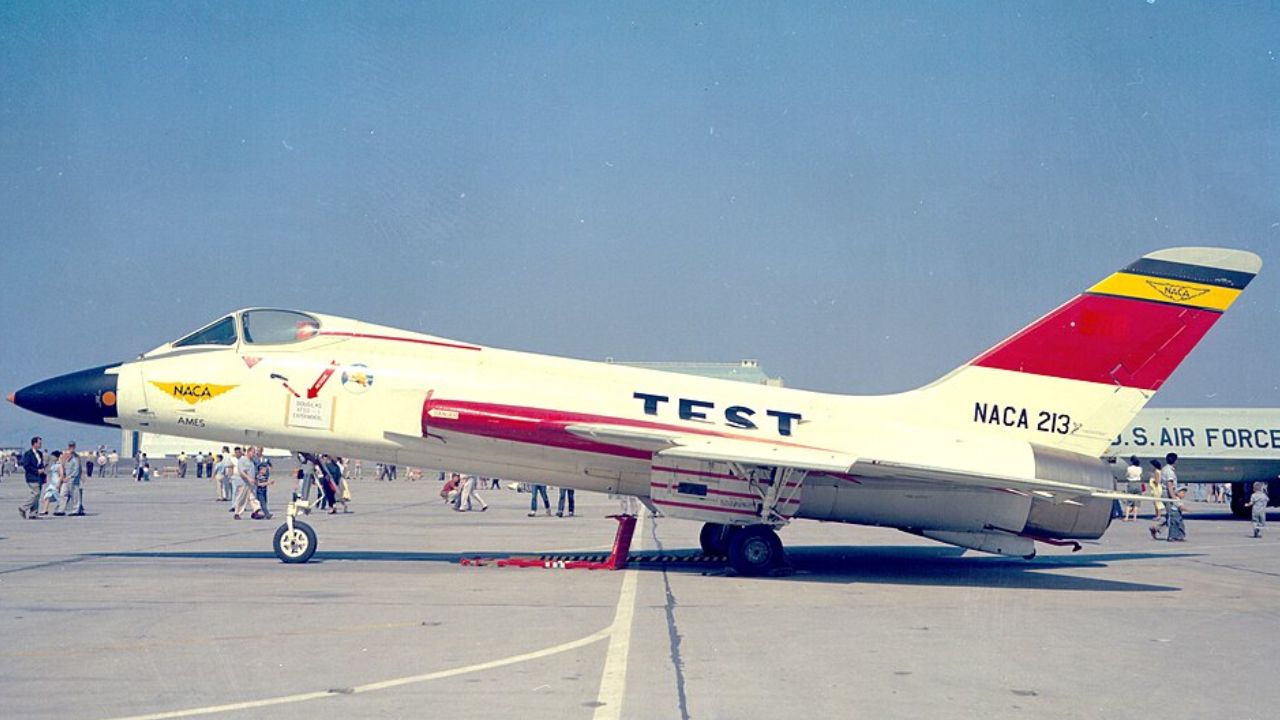
Modern passenger jets are shaped by airline economics and consumer demand. But many of the aerodynamic, structural, and propulsion foundations behind today’s efficiency, noise performance, and safety were strengthened during the Cold War, when the United States and the Soviet Union invested heavily in defense aviation research—and in the wind tunnels, flight-test ranges, propulsion labs, and engineering talent that made that research usable. Over time, that capability flowed into civil programs through NASA/NACA research, contractor engineering teams, and shared industrial supply chains.
This history matters for two reasons. It helps explain why some countries built durable advantages in commercial aircraft design and export. And it frames a current policy question: what happens to long-term civil competitiveness and safety margins if foundational aeronautics research capacity shrinks when budgets tighten and priorities shift?
Defense questions that forced answers civil aviation could use
Cold War military aircraft were asked to do difficult things: fly higher, faster, farther, and more reliably, often in punishing environments. Those demands drove progress in aerodynamics, structures, propulsion, and flight testing—the same disciplines that govern passenger jets, even if the mission goals differ. A bomber’s range requirement is not an airline route plan, but both are constrained by drag, fuel burn, structural weight, and engine efficiency.
The transfer to civil aviation rarely looked like a clean pipeline from “military program X” to “airliner feature Y.” More often, ideas matured through NASA/NACA studies and broader industry practice, then showed up as validated design guidance, better test methods, improved certification knowledge, and manufacturing know-how. Commercial competition, airlines, and regulators also drove major advances; Cold War defense investment often supplied the enabling infrastructure and technical bench that reduced risk when civil programs adopted new approaches.
Wind tunnels, flight research, and more predictable aerodynamic design
One of the most enduring spillovers was improved ability to predict aircraft behavior before metal is cut. Cold War budgets supported wind-tunnel capability, instrumentation, and flight research that deepened understanding of stability, control, and high-speed aerodynamics. Those tools supported fighters and bombers—but they also helped airliners become more efficient at cruise while maintaining benign handling across a wide operating envelope.
Just as important was the feedback loop between theory, testing, and real flight data. As methods improved, manufacturers could pursue ambitious wing shaping and higher overall efficiency with more confidence in the results. For passengers, the benefit is largely invisible: fewer surprises in flight test, clearer margins during certification, and more predictable in-service behavior.
Wing shaping and high-lift systems: efficiency with everyday operability
Work on transonic aerodynamics—understanding how drag rises and how shocks behave near cruise speeds—was sustained for decades under Cold War priorities. That body of research helped normalize more refined wing shaping approaches, including themes often associated with “supercritical” sections, in ways that supported efficient cruise without demanding unusual operating techniques.
Equally consequential, if less celebrated, was progress in high-lift systems and the discipline around validating them. Airliners need wings optimized for cruise yet must take off and land safely on practical runway lengths. That pushes designs toward complex flaps, slats, and leading-edge devices that must work reliably thousands of times. Military and NASA research into stability, control, and icing behavior helped strengthen the testing and evaluation culture behind those systems and the standards used to demonstrate safe performance.
Engines: from defense-driven progress to civil fuel burn and noise gains
Cold War aviation accelerated jet propulsion development, and that ecosystem benefited civil transports. Engine makers such as Pratt & Whitney, GE, and Rolls‑Royce advanced core technology, materials, and test methods within military-driven programs and timelines. While fighter engines prioritize thrust-to-weight and responsiveness, the underlying knowledge and industrial capability also supports the long-life, high-reliability engines airlines require.
As turbofan technology evolved, including the shift toward higher-bypass designs in civil service, airlines gained major improvements in fuel burn and noise performance. Those gains affect everything from operating costs and route economics to emissions. They also reflect a broader industrial reality: an engine base with deep test experience, production capacity, and sustainment capability can support both military and civil demand as requirements and supply chains change.
Structures, fatigue, and pressurization: turning hard experience into safer design
Airliner safety is not only procedures and regulation; it is also materials science, stress analysis, and understanding how cracks initiate and grow over time. Cold War military aviation imposed high loads and demanding operating cycles, driving deeper work on fatigue, fracture mechanics, and structural testing methods. Civil programs benefited as those lessons were adapted into more rigorous approaches for designing, inspecting, and certifying pressurized structures meant to endure repeated cycles over decades.
These practices did not transfer automatically. They were integrated through evolving standards, certification expectations, and design culture. The result is not only fewer structural failures, but more disciplined life prediction, inspection planning, and damage-tolerance thinking—improving safety while also enabling manufacturers and airlines to manage weight, maintenance, and cost with fewer unknowns.
Materials, manufacturing, and the industrial base: dual-use in practice
Cold War aerospace also pushed materials and manufacturing capability forward, including improved alloys, production techniques, and quality assurance. Defense programs demanded performance at scale, helping sustain specialized suppliers, tooling, and process discipline that civil programs could draw on. In practice, this dual-use advantage often looked mundane: shared talent pipelines, common manufacturing standards, and facilities capable of demanding test and production work.
For commercial airliners, the payoff is consistency—repeatable quality, predictable structural behavior, and manageable sustainment over long service lives. For governments, it is resilience: a broader supplier ecosystem and a workforce able to move between military and civil priorities. That linkage matters strategically because a healthy civil export position can help sustain the engineering depth and manufacturing throughput needed for defense modernization.
Eastern parallels: shared physics, different systems
On the Soviet side, the same basic dynamics applied. State research institutes and design bureaus such as Tupolev and Ilyushin operated within a different incentive structure, but military priorities still drove work in aerodynamics, structures, and propulsion that civil transports could use. The physics of drag, fatigue, and engine efficiency does not change based on whether the tail carries a national insignia or an airline logo.
It is worth avoiding simplistic one-to-one claims about specific features being “copied” from specific aircraft. A more reliable description is ecosystem-level: when a country maintains mature tools, facilities, and experienced teams for defense aviation, civil programs can often move faster and take on more demanding performance targets because technical uncertainty is lower and testing capacity is available.
Why it matters now: competitiveness, resilience, and the next spillover cycle
The Cold War spillover story is ultimately about leverage. Governments funded foundational aeronautics research to meet national security needs, and the benefits propagated into the civilian economy through stronger companies, better design methods, and durable export positions. In practical terms, defense-driven investment helped pay for expensive, hard-to-replace infrastructure—wind tunnels, propulsion labs, flight research centers—and the specialized workforce that makes world-class airliners possible.
That has direct relevance to today’s budget and industrial-policy debates. When long-horizon research is reduced, the immediate impact may be subtle; existing aircraft programs continue and production lines keep moving. The longer-term cost shows up later as fewer validated concepts, less test capacity, and a thinner pool of experienced engineers and suppliers—conditions that can increase redesign risk, slow adoption of efficiency and safety improvements, and weaken competitiveness over time.
The next spillover cycle is already being shaped by contemporary work on advanced materials, new computational methods, sustainable aviation fuels, and high-speed research. The Cold War lesson is not that military programs automatically produce better airliners. It is that sustained, well-governed public investment in foundational aeronautics can create dual-use advantages that take years to mature—and that can be difficult to rebuild once allowed to fade.