
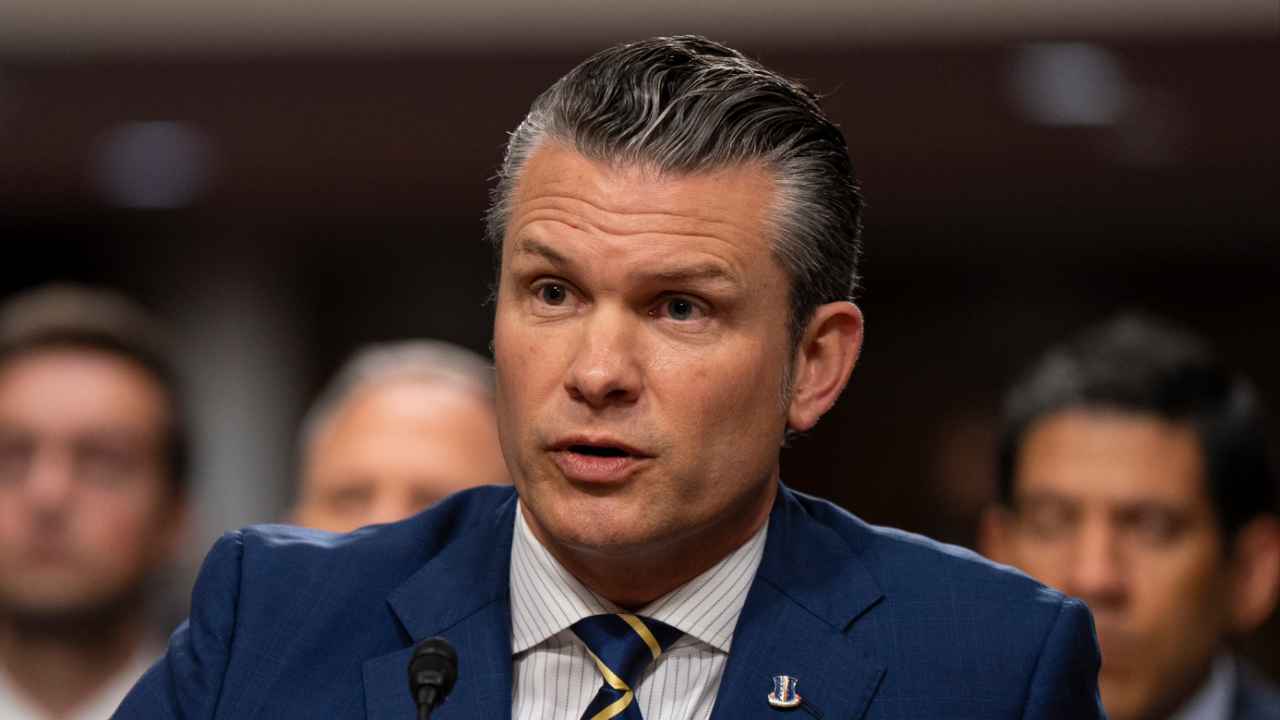
Assistant Secretary of War for Special Operations and Low-Intensity Conflict Derrick Anderson said Friday that Defense Secretary Pete Hegseth’s directive to strengthen oversight of U.S. Special Operations Forces will provide $45 million in annual funding and 100 additional civilian and military positions to the Special Operations Secretariat.
In a November 20 statement on X, Anderson described the directive as a major investment in the Pentagon’s institutional support for special operations personnel, highlighting the additional resources and staffing assigned to the office responsible for civilian oversight of the force.
“@SecWar’s OSS memo delivers a historic investment in America’s Special Operations Forces, adding 75 civilian billets, 25 joint qualified military billets, and $45 million annually to strengthen the Special Operations Secretariat,” Anderson wrote.
“These resources provide America’s Special Operators with equal advocacy and the institutional support they need to outpace our adversaries, protect American lives, and defend our Nation.”
Anderson’s announcement followed a November 2 memorandum signed by Hegseth directing changes to the organization, staffing and resources of the Office of the Assistant Secretary of War for Special Operations and Low-Intensity Conflict. The memorandum was publicly announced earlier in November.
Under the directive, the Pentagon is to allocate 75 civilian positions to the Special Operations Secretariat, including at least five Senior Executive Service positions. The memorandum also calls for 25 joint-qualified military billets to support the office’s responsibilities across the armed services.
The directive provides for at least $45 million annually in operations and maintenance funding to be reallocated to the office, with civilian labor costs accounted for separately. The funding represents a redistribution of departmental resources rather than a confirmed increase of $45 million in overall Pentagon spending.
The additional civilian and military positions are intended to expand the secretariat’s capacity to oversee special operations policy, evaluate requirements and advocate for resources within the department. The memorandum also directs organizational changes intended to give special operations leadership greater access to senior Pentagon decision-makers.
Hegseth’s memorandum elevates the assistant secretary’s position within the department’s internal leadership structure and calls for consolidated office space to support the expanded organization. It also directs officials to prepare proposed legislation establishing an Under Secretary of Strategic Services, a change that would require congressional action.
The memorandum permits the office to use the historical Office of Strategic Services designation as a secondary name. The original Office of Strategic Services was a U.S. intelligence and special operations organization established during World War II and was a predecessor to the Central Intelligence Agency.
The proposed reorganization concerns the Pentagon’s civilian oversight and policy structure for special operations, rather than the creation of a new combatant command or a separate military service. U.S. Special Operations Command remains responsible for organizing, training and equipping special operations forces across the military services.
The assistant secretary’s office serves as a principal civilian adviser on special operations and low-intensity conflict, with responsibilities that include policy oversight, resource advocacy and coordination of special operations requirements. Congress has previously expanded the office’s responsibilities to strengthen civilian oversight of the special operations enterprise.
In March testimony before the House Armed Services Committee, Anderson and U.S. Special Operations Command commander Adm. Frank Bradley discussed the demands placed on the force and the resources available to support its missions.
At that hearing, Pentagon officials said special operations forces accounted for approximately 3% of the joint force and 2% of the department’s budget, despite their responsibilities across multiple regions and missions.
Anderson also outlined his priorities for the special operations enterprise during Special Operations Forces Week in May, emphasizing personnel, policy, technology, partnerships and resource management. He said the department needed to reduce bureaucratic obstacles and improve its ability to develop and deploy capabilities in response to emerging threats.
The Pentagon’s fiscal year 2026 budget materials identify artificial intelligence, machine learning, electronic warfare and aircraft modernization among the areas receiving investment to support special operations requirements. The new directive, however, focuses specifically on strengthening the leadership and oversight organization rather than announcing funding for individual weapons or equipment programs.
The changes also follow earlier statements by Hegseth calling for additional support for special operations forces. During a June 2025 congressional hearing, he said the demand for special operations missions had increased and that departmental resources needed to reflect the force’s operational responsibilities.
Anderson’s November 20 statement did not provide a separate implementation update detailing how many of the newly authorized positions had been filled or how much of the annual funding had already been transferred.
The memorandum establishes the Pentagon’s planned staffing, funding and organizational changes, while the proposed creation of an Under Secretary of Strategic Services remains dependent on congressional authorization.