
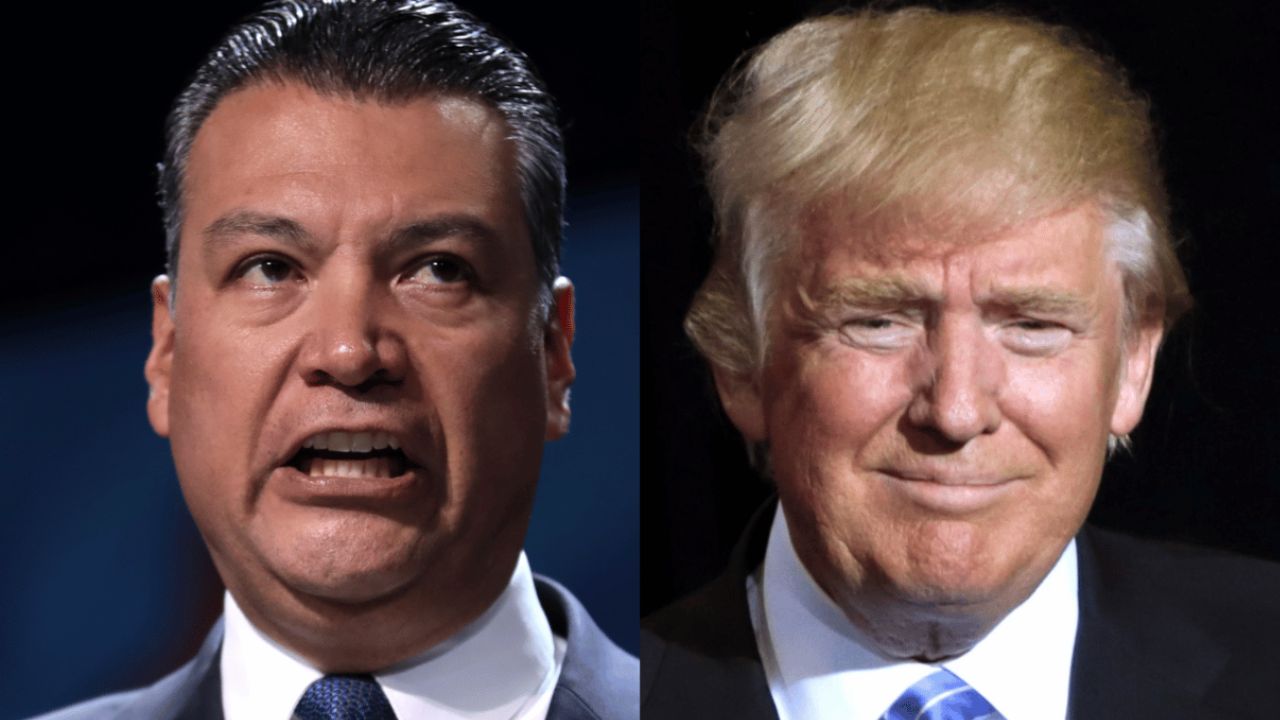
Sen. Alex Padilla (D-Calif.) is accusing congressional Republicans of failing to deliver on their promises to lower costs, arguing that their record over the past two years instead includes healthcare and food assistance cuts, tax benefits for wealthy Americans, increased immigration enforcement funding, and an unauthorized war with Iran. In a lengthy Election Day message, Padilla laid out nine specific allegations against Republicans, connecting the party’s congressional agenda to rising household expenses, presidential financial gains and what he described as a lack of accountability.
Padilla published the statement on November 2, the eve of the November 3 midterm elections, as voters prepare to decide whether Republicans retain control of Congress. His message concluded with a direct challenge to the party’s economic record: “They said they would lower costs but this is what they’ve actually done.” The senator’s post reflects a broader Democratic campaign argument that Republican policies under President Donald Trump have worsened affordability rather than improved it.
Padilla’s full statement:
“NEVER FORGET Republicans’ record for controlling Congress the last two years:
- Cut healthcare, food assistance, and education for millions.
- Handed the ultra-wealthy another tax break, the largest in history.
- Gave billions of dollars to ICE — funding used to terrorize our communities and kill American citizens with zero accountability.
- Wasted millions of our tax dollars on vanity projects.
- Helped Trump make billions of dollars profiting off of the presidency.
- Blocked efforts to ban congressional stock trading and engaged in record breaking trading themselves.
- Allowed an illegal war in Iran that is making our bills skyrocket.
- Gut environmental protections for clean air and water.
- Tried to make it harder for you to vote and hold them accountable.
They said they would lower costs but this is what they’ve actually done.”
Padilla’s first two allegations concern healthcare, food assistance and education funding, alongside tax benefits for wealthy Americans. The senator has repeatedly criticized Republican budget legislation for reducing federal support for social programs while extending or expanding tax advantages. His argument is that families facing higher healthcare premiums, grocery bills and education expenses are being asked to absorb the consequences of policies that favor wealthier households. The claims refer to the distributional effects of congressional legislation, although the precise effects vary by program and household.
The third point focuses on Immigration and Customs Enforcement, or ICE, and billions of dollars in federal funding. Padilla has been particularly outspoken about immigration enforcement operations in California. His Senate office has documented oversight visits to ICE facilities and demands for answers over enforcement incidents involving U.S. citizens. In a statement opposing additional ICE and Customs and Border Protection funding, Padilla said he would vote against further funding unless accountability measures were included. His characterization of enforcement as terrorizing communities is his political assessment; the underlying funding and oversight disputes are matters of congressional policy.
Padilla’s fourth allegation targets what he calls Republican spending on “vanity projects.” The phrase refers to expenditures he considers politically motivated or unnecessary, rather than a formal government budget category. His criticism fits into a wider Democratic argument that the administration has prioritized projects associated with Trump’s political image while claiming that spending reductions are necessary for other federal programs. Evaluating the allegation requires distinguishing between specific appropriations, administrative spending and the senator’s characterization of their purpose.
The fifth allegation concerns Trump’s personal financial gains while serving as president. Forbes estimated Trump’s net worth at approximately $7 billion in September 2026, about $2.7 billion more than when he won the 2024 election. Forbes attributed the increase substantially to cryptocurrency ventures and overseas business deals. Its estimate provides a documented basis for examining the increase in Trump’s wealth, although net-worth growth does not by itself establish that every gain resulted directly from presidential decisions. Padilla’s criticism centers on the potential conflicts of interest created when a sitting president’s business interests overlap with government policy.
Padilla’s sixth point accuses Republicans of blocking congressional stock-trading restrictions while lawmakers themselves engage in extensive trading. The senator has also pursued legislation targeting presidential financial conflicts, including a proposal to prohibit Trump from selling early access to presidential announcements that could move financial markets. His position reflects a broader Democratic push for restrictions intended to prevent elected officials from using public office or privileged information for private financial gain. The allegations of record-breaking congressional trading are separate from any determination that an individual lawmaker violated existing law.
The seventh accusation concerns the U.S. war with Iran. Padilla has consistently challenged Trump’s decision to launch military strikes without congressional authorization. In February 2026, he argued that the strikes contradicted Trump’s promises to avoid foreign wars and warned that the conflict could place American lives at risk while increasing costs for households. In March, Padilla co-sponsored a war powers resolution intended to limit U.S. military involvement unless Congress explicitly authorized it. He has also criticized Senate Republicans for blocking such efforts.
Padilla has continued to press the issue as the conflict has persisted. In an August 28 statement marking six months of war, he described the conflict as unauthorized and argued that American families were paying for it through rising costs and taxpayer-funded military operations. His repeated opposition is centered on constitutional authority, military casualties, spending and economic consequences. Trump and his administration have offered their own justifications for the military campaign, making the legality and strategic rationale of the war central points of political dispute.
The eighth point concerns environmental protections. Padilla has opposed administration efforts to weaken federal environmental rules, particularly protections affecting air quality, water quality and climate policy. His criticism also connects environmental policy to household costs, arguing that energy decisions and the rollback of clean-energy measures can affect electricity bills. Democrats generally argue that environmental safeguards protect public health, while the Trump administration and congressional Republicans have defended deregulation as a way to reduce costs and ease restrictions on businesses.
The ninth allegation concerns voting rights and election accountability. Padilla, who serves as a senior Democratic member of the Senate Rules and Administration Committee, has focused extensively on election administration and access to voting. His office has opposed Republican proposals that Democrats argue could make registration and voting more difficult. Padilla’s election-related record includes efforts to protect ballot counting and challenge federal actions he views as interfering with state election administration. Republicans supporting stricter election rules have generally argued that their proposals are necessary to improve election security.
The timing of Padilla’s statement is significant because the November 3 midterm elections will determine the composition of the House and Senate for the remainder of Trump’s term. Reuters reported on Election Day that Democrats were favored to gain the House, while the Senate remained less certain. The elections are being shaped in large part by voter concerns over affordability, the Iran war and Trump’s economic policies. Padilla’s message seeks to tie those issues directly to Republican control of Congress.
If Democrats win control of one or both chambers, they could gain the ability to block or reshape future legislation, launch investigations and exercise greater oversight of the administration. A Democratic House could also change committee leadership and influence spending legislation, while a Democratic Senate could alter the confirmation process and legislative agenda. However, a change in congressional control would not automatically repeal existing laws or end the Iran war; those outcomes would depend on legislation, executive action, votes and negotiations.
Padilla’s post ultimately presents the election as a referendum on the Republican-controlled Congress’s record. His nine allegations span healthcare, taxation, immigration enforcement, presidential financial conflicts, congressional trading, military authority, environmental policy and voting access. By linking those issues to the promise of lower costs, the senator is arguing that voters should judge Republicans not by their campaign pledges but by the policies enacted and supported during the previous two years.