
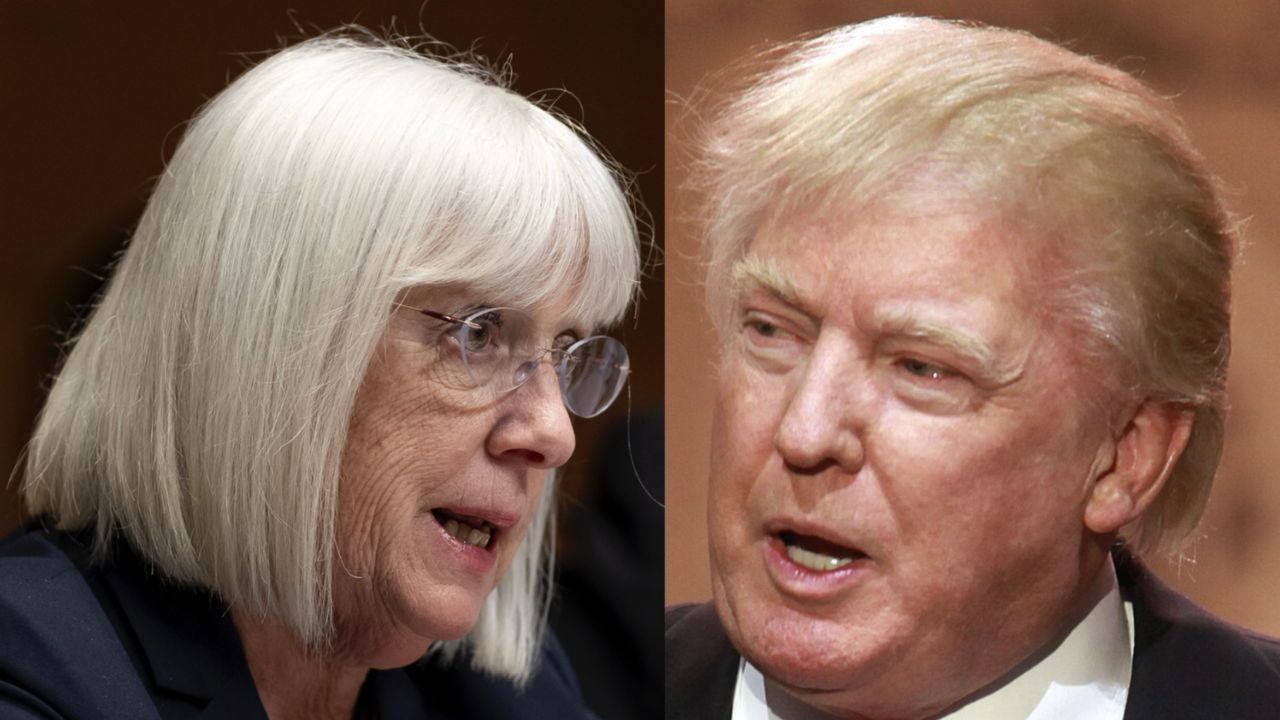
Sen. Patty Murray (D-Wash.) is accusing President Donald Trump of driving up the cost of everyday necessities, arguing that gas, groceries and healthcare have become more expensive under his administration. In a November 2 campaign message, Murray promised that Democrats would fight to lower costs, making affordability a central focus of her final appeal to voters ahead of the November 3 midterm elections.
Murray’s statement was brief but direct, linking the rising cost of household necessities to Trump’s policies while urging voters to support Democrats. Her message comes as economic concerns have become a major factor in the congressional elections, with voters deciding whether Republicans retain control of the House and Senate. Murray has repeatedly criticized the administration’s economic agenda, particularly its approach to healthcare, tariffs and federal spending.
Murray’s full statement:
Gas, groceries, health care—everything costs more thanks to Trump.
Democrats will fight to actually lower costs. VOTE!
The first part of Murray’s message focuses on gasoline prices. The senator has repeatedly argued that Trump’s policies have contributed to higher energy costs, particularly through the war with Iran. In a September 22, 2026, Senate floor speech, Murray said that gasoline prices had risen as a result of the conflict, describing the war as a contributor to the economic pressure facing American households. Her criticism connects the administration’s military decisions to the cost of fuel and the broader affordability debate.
Murray’s grocery-cost criticism also reflects her opposition to Trump’s tariff policy. She has argued that tariffs can raise prices on imported goods and increase costs for consumers and businesses. In her September Senate speech, Murray specifically criticized the administration’s trade wars, arguing that they were contributing to higher prices across a range of goods. The effect of tariffs varies by product and supply chain, but the senator’s position is that the administration’s trade policy has added to the cost burden on working families.
Healthcare is another central component of Murray’s criticism. The Washington senator has opposed Republican efforts to reduce federal healthcare spending and has consistently defended programs that help Americans obtain coverage. Her criticism of Trump’s healthcare agenda has focused on the potential consequences of federal policy changes for insurance costs, coverage access and household budgets. Murray has argued that families should not face additional healthcare expenses while the administration prioritizes tax and spending policies she opposes.
Murray’s broader economic position has been expressed repeatedly during Trump’s second term. In September 2026, she delivered a Senate floor speech addressing what she described as the president’s out-of-touch comments on the economy. She argued that rising healthcare costs, child care expenses, grocery prices and fuel bills were affecting households across the country. Her remarks show that the November campaign message was consistent with her earlier public criticism rather than a newly adopted position.
The senator’s opposition to Trump’s tax and spending agenda has also been a recurring feature of her congressional work. Murray has criticized legislation that she believes provides disproportionate benefits to wealthy Americans while reducing support for federal programs. Democrats have argued that cuts to healthcare and other assistance can shift more costs onto families. Republicans have defended their fiscal policies as efforts to reduce government spending, extend tax relief and encourage economic growth.
Murray’s pledge that Democrats will “actually lower costs” is a political commitment rather than a specific legislative proposal. Reducing gas prices, grocery costs and healthcare expenses would involve different policy mechanisms. Gas prices are influenced by global oil markets, domestic production, refining capacity and geopolitical events. Grocery prices reflect supply chains, labor and transportation costs, tariffs and other factors. Healthcare costs are affected by insurance markets, prescription drug pricing, provider expenses and federal policy.
The senator’s election message is part of a broader Democratic effort to make affordability a central issue in the midterms. Reuters reported on November 2 that voters were heading to the polls in a sour economic mood, with rising prices a major concern. A Reuters/Ipsos survey published in October found that a substantial majority of respondents blamed at least some of the increase in living costs on Trump’s policies. The findings highlight the political significance of the issue, although voters differ on the causes of inflation and the policies most likely to address it.
Murray’s call to vote also comes as prediction markets have placed Democrats in a favorable position in the Senate race for control of Congress. Polymarket’s 2026 Senate market showed approximately a 77% probability of Democratic control on Election Day, with the market price changing as traders responded to campaign developments and race-level expectations. The figure reflects market sentiment rather than a guaranteed election result or a conventional polling forecast.
The Senate control question is especially consequential because the chamber plays a central role in confirming presidential nominees, approving legislation and conducting oversight. Democrats would need to secure a majority of seats to control the Senate, while Republicans could retain control even if Democrats gain seats. The outcome could affect the administration’s ability to advance its legislative priorities and determine which party directs Senate committees.
If Democrats win the Senate, Murray and other Democratic lawmakers could gain greater influence over legislative negotiations, spending priorities and oversight of the Trump administration. A Democratic majority could pursue proposals related to healthcare costs, consumer prices and economic assistance. However, lowering costs would require legislation, negotiations and implementation, and a change in Senate control alone would not immediately reduce prices at grocery stores or gas stations.
Murray’s statement ultimately presents the midterm election as a referendum on Trump’s economic record. By emphasizing gasoline, groceries and healthcare, she is focusing on expenses that directly affect household budgets. Her promise that Democrats will fight to lower costs reflects a consistent theme in her public criticism of the administration, particularly its trade, healthcare and foreign-policy decisions. With voters casting ballots on November 3, Murray is urging them to use the election to change the direction of Congress and give Democrats greater leverage over the nation’s economic agenda.