
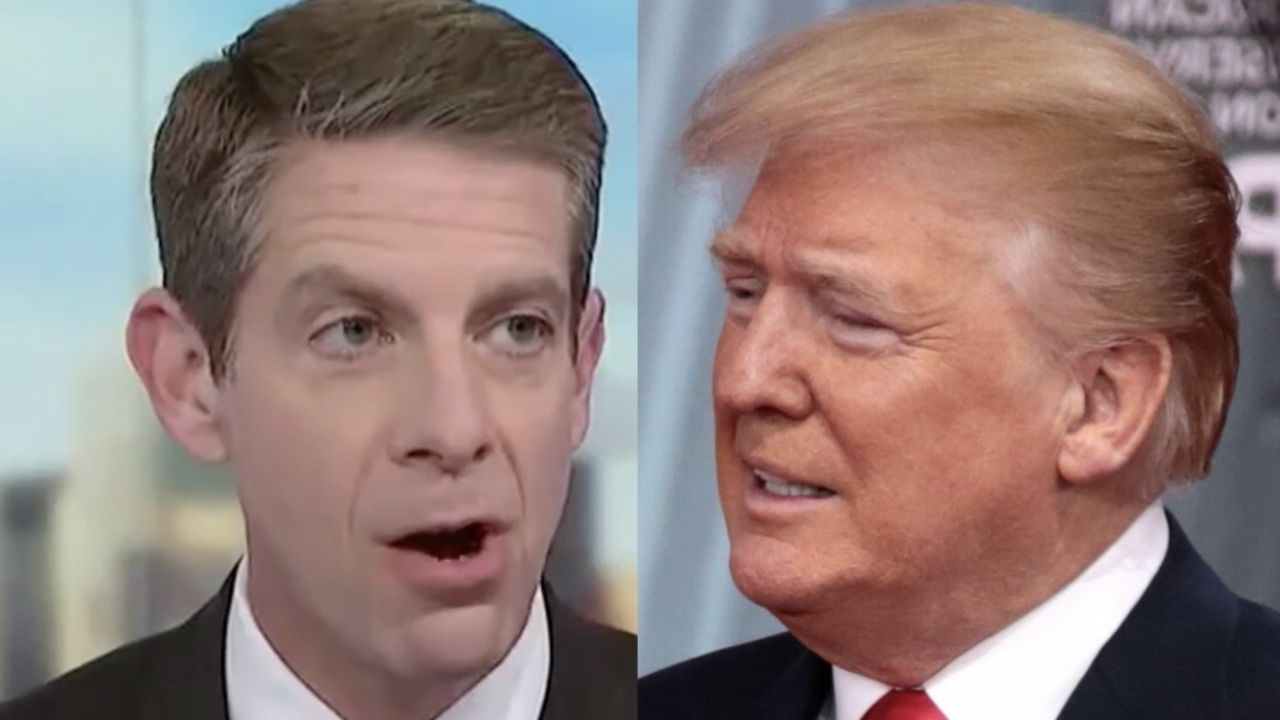
Rep. Mike Levin (D-Calif.) accused President Donald Trump and Republican leadership on Wednesday night of spending billions of taxpayer dollars on military operations against Iran without congressional authorization. He then told voters they can “help put an end to it” in six days, a reference to the Nov. 3 midterm elections. The post came as new Pentagon figures put the cost of the war at more than $47 billion.
Levin, who represents California’s 49th District, published the statement on X at 9:01 p.m. on Oct. 28, 2026. It reads in full:
“Daily reminder that Trump and Republican leadership are spending billions of your tax dollars on military operations against Iran that Congress never authorized, expanding Stephen Miller’s mass deportation agenda, and funding the president’s own vanity projects, while doing nothing to lower your grocery bill or make your life more affordable.
In 6 days, you can help put an end to it.”
What the Post Asserts
The post makes several distinct claims. It says Republican leaders are spending “billions” on Iran operations. It says Congress never authorized those operations. It ties spending to immigration enforcement and to what Levin calls the president’s “vanity projects.” And it says leadership has done nothing on grocery prices or affordability. This report examines the first two claims, which concern the Iran war, and Levin’s documented record on them.
The Cost
The “billions” claim rests on figures that surfaced the same day. Pentagon data obtained by Reuters shows the U.S. military has spent more than $47 billion on the Iran war. That is over 25 percent above the Defense Department’s July estimate of $37.5 billion. The Pentagon also projected more than $29 billion to replace munitions expended in the conflict.
The estimate has climbed steadily. Defense Department officials first told senators the opening six days cost more than $11.3 billion. A Pentagon official told the House Armed Services Committee in late April that the total had reached about $25 billion, mostly for munitions. By May 12 the figure was about $29 billion. Reuters reported that the latest estimate does not clearly account for the expected expense of repairing U.S. bases damaged in Iranian missile and drone attacks.
Levin’s Record: From Day One
Levin’s position on the war is documented on his official House website. On Feb. 28, 2026, the day Trump announced “major combat operations” against Iran, Levin said the language described sustained warfare rather than a limited strike. He argued that an open-ended campaign requires congressional authorization and demanded that “a prompt War Powers vote” be held. He also said he would oppose a sustained war when that vote came.
On March 5, Levin voted for a War Powers Resolution that would require the president to withdraw U.S. forces from Iran unless Congress authorizes the conflict through a declaration of war or a specific authorization for the use of military force. In his statement he said he voted to reassert that “no one person decides when this nation goes to war.” He noted that he represents Marines and Sailors at Camp Pendleton and said service members deserve a Commander-in-Chief and a Congress that take that responsibility seriously.
Levin’s statements have not rejected the underlying security goal. In both his February and March statements he called preventing Iranian nuclear proliferation “a serious objective,” described the Iranian government as a threat to U.S. national security since 1979, and said he supports Iranians’ struggle for a democratic future. His objection, he said, is to what he called an open-ended, unauthorized regional war that the administration cannot coherently explain.
His constitutional argument predates the current war. After the June 2025 U.S. strikes on Iranian nuclear sites, Levin said the strikes had significantly disrupted Iran’s nuclear program and commended the service members involved. He also said the War Powers Resolution is “not a suggestion—it is the law” and that the strikes lacked congressional consultation. In January 2020, after the killing of Qasem Soleimani, he cosponsored a War Powers Resolution and voted for defense authorization language that would have barred federal funds for military action.
The 60-Day Dispute
Under the 1973 War Powers Resolution, a president must end hostilities after 60 days unless Congress authorizes them, with a possible 30-day extension for withdrawal. As the deadline approached around May 1, Defense Secretary Pete Hegseth told the Senate Armed Services Committee that “the 60-day clock pauses or stops in a ceasefire.” The White House likewise said the war was over because of the ceasefire. That argument would allow the administration to proceed without seeking congressional approval.
Levin disputed that reading. A post in his public X feed said he would keep demanding a vote under the War Powers Act, as he had since the war began. He also reposted messages arguing that the 60-day clock had run out and that Hegseth’s interpretation was wrong.
On May 21, Republican leaders postponed a House War Powers vote on Iran. Levin said on X that members of both parties were ready to reassert Congress’s authority and accused GOP leadership of “running from” the vote.
Congress Votes
Congress has since voted on the issue several times. The Senate voted on June 23 to limit Trump’s authority to continue military operations against Iran. The House has passed similar measures on multiple occasions, most recently on Sept. 15 by a vote of 220-204, when seven Republicans joined Democrats. The legal effect of such resolutions remains contested: Democrats argue that a concurrent resolution adopted by both chambers binds the president, while others have cautioned that its practical effect may be limited.
The Political Backdrop
Reuters reported that the war’s impact on global energy costs has weighed on support for Republican candidates and hurt Trump’s approval ratings. It also reported that Republicans are wrestling with the political fallout of an unpopular conflict ahead of the Nov. 3 election, which will determine control of Congress for the next two years. Levin’s post links the war’s expense to household costs and frames the election as the point at which voters can change course.
The post does not say how voters would “put an end to it.” Levin’s earlier statements have centered on forcing congressional votes under the War Powers Resolution, which the House would need to schedule and pass. Control of the chamber is among the outcomes at stake on Nov. 3.