
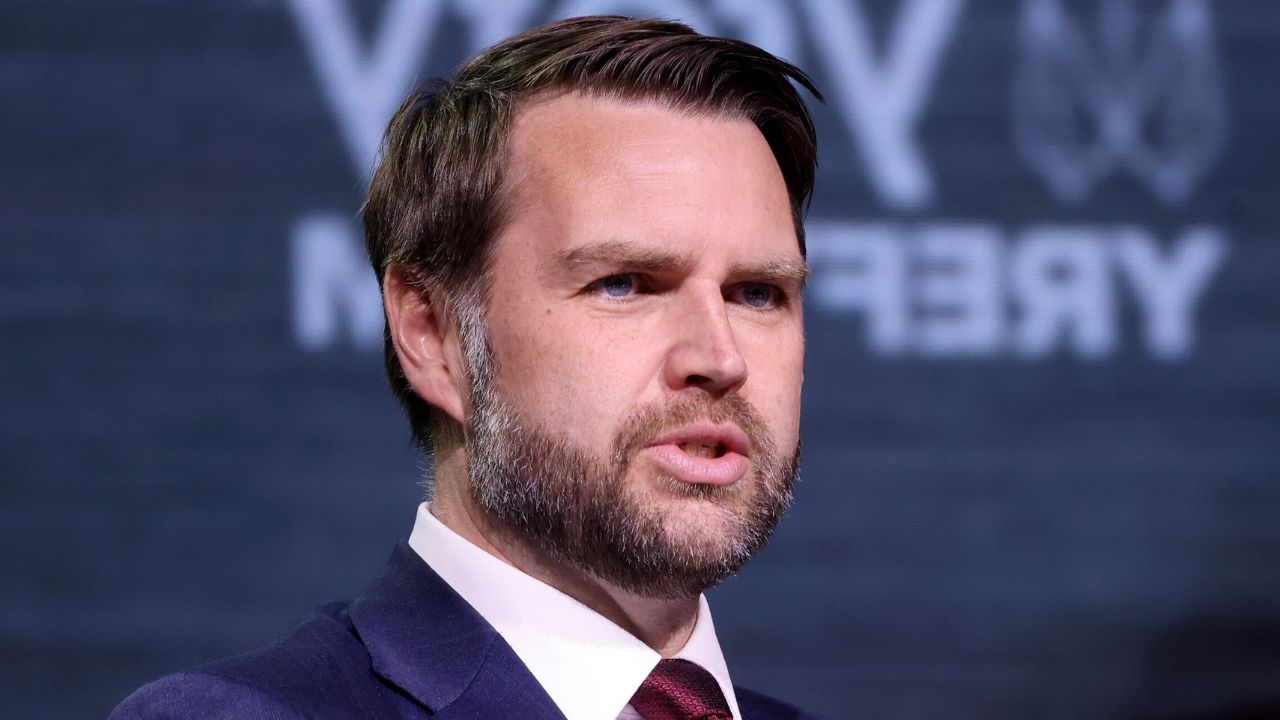
Vice President JD Vance delivered an unusually direct assessment of Republicans’ devastating November 3 midterm election losses Wednesday, arguing that President Donald Trump’s war with Iran was the central reason the party lost control of Congress. In a lengthy November 4 statement on X, Vance said Republican voters largely showed up at the polls but that many Americans who supported the Trump-Vance ticket in 2024 switched sides in 2026, driven by frustration over the war, inflation, America’s foreign policy priorities and the country’s relationship with Israel. He also acknowledged that voters who had warned Republicans about the consequences of the conflict were right, urged the party to reconsider its direction and said he remained hopeful about America’s future.
The remarks came after Democrats secured control of both the House of Representatives and the Senate in an election that delivered sweeping defeats for Republicans, including victories in traditionally Republican states and districts. The results represented a major political setback for Trump, who had encouraged voters to treat the midterms as a referendum on his presidency. Reuters reported that Democrats made substantial gains in Republican strongholds, with voter dissatisfaction over high prices, the direction of the country and the Iran conflict contributing to the Republican defeat.
Vance’s complete November 4 statement, published at approximately 9:38 a.m. Eastern time, laid out his assessment of what happened inside the Republican electorate and what he believes the party must do next. Rather than simply acknowledging the election results, the vice president described conversations with political data analysts and pollsters, identified four issues he said motivated former Republican voters to switch parties, defended calls for a diplomatic resolution to the Iran conflict and rejected suggestions that immigration amnesty would help Republicans recover.
Vance’s full statement:
One of the things the data analysts on our side obsessed over was “composition”—whether the electorate looked close enough to 2024 for Republicans to win. And despite polls that showed a Democrat blowout, the data kept on telling us the same story: in some states turnout was merely OK, in other states it was downright amazing, and in no state was it catastrophic. There was a genuine sense of optimism on our team: our people were showing up.
So, I asked the smartest data guy I know, does that mean we’re going to shock the world? “No,” he told me. “We might do better than the polls suggest. But the data is telling us that a lot of Trump/Vance 2024 voters are pissed and planning to vote for the other guys. Our voters are turning out, but they may not vote for us.”
Well, that looks prophetic now. Our voters did show up. In Florida, for example, the electorate was 9 points more Republican than Democrat, just a couple points worse than 2024. Undoubtedly there were places we could have done better on turnout. But the main problem is not turnout. The main problem is that many people who voted for Trump/Vance in 2024 voted for Democrats in 2026.
There will be a lot of infighting and arguing over what happened and why that is. One of the pollsters I really respect told me that our economic messaging wasn’t sharp enough down the stretch. I’m sure that’s true.
But the real reason we lost is obvious to almost everyone.
Another pollster—one of the smartest people I know in politics, told me yesterday we’d lose the generic ballot by 13 points. I felt negative going into Tuesday, but even I was shocked by this. In his polling, he saw that a lot of Trump 2024 voters were angry and planning to vote for Democrats. He asked those voters who had abandoned us what would cause them to come back on our team. The top four answers, accounting for nearly all of the responses were:
- End the war
- Focus on cost of living/inflation
- Put America First
- Change our relationship to Israel
Our voters showed up. And the above four reasons are why many of them voted for Democrats. This is according to a pollster who nailed the results. While many spent Monday attacking Rachel Campos Duffy for calling for a diplomatic resolution to the conflict, it turns out her political advice was sound. (She’s also a great person.)
In the next few months, there’s going to be a lot of gaslighting. Expect to hear any number of establishment politicians say the solution to our woes is amnesty. I’m open to the idea that we should change enforcement—by focusing more on businesses that hire illegal labor, for instance. But anyone pushing amnesty is lying to you.
The reason we lost is the war. The president himself said so last night.
If you’d like to argue it was worth it, that losing the Senate for the next 6 years was worth it, then do so. Argue it was a worthwhile cost to pay. Agree or disagree, that’s at least honest.
But everyone knows why we lost. And any honest conversation about where we go from here must start there.
I remain hopeful about our country. To the people who are pissed off and want to say, “I told you so”: you’re right, you did tell us so. Take that energy into electing Republicans who share your worldview. To the people who are just pissed at the results, you should be. Let’s take that anger and get back to the work of saving our country.
Vance Says Republicans Had a Turnout Problem — But a Much Bigger Problem With Their Own Voters
One of the first issues Vance addressed was the Republican Party’s understanding of voter turnout. He explained that campaign data analysts had been examining the composition of the electorate, specifically whether the voters participating in 2026 resembled the coalition that helped Trump and Vance win the 2024 presidential election. According to Vance, the internal data initially gave Republicans reason for optimism because turnout was not collapsing in the states they were monitoring. He specifically cited Florida, claiming the electorate was nine percentage points more Republican than Democratic, only slightly worse than the state’s 2024 composition. His argument was that Republicans had incorrectly assumed that strong participation from their supporters would automatically translate into Republican votes.
Vance said an analyst had warned him before the election that many Trump-Vance voters from 2024 were angry and considering voting for Democrats instead. The vice president now says that warning accurately predicted what happened. His distinction between turnout and voter loyalty is central to his explanation: he believes Republicans were not defeated primarily because their supporters stayed home, but because some of the people who previously supported them actively chose Democratic candidates. Reuters’ post-election analysis independently documented a significant decline in Republican support across the country, reporting that Republicans lost ground in 99% of approximately 2,200 counties where most votes had been counted by Wednesday morning. Reuters also found that the Republican share of the vote fell approximately eight percentage points across those counties compared with Trump’s 2024 performance.
Four Issues Vance Says Drove Former Trump Voters to Democrats
The most consequential portion of Vance’s statement concerned four answers he said emerged when a pollster asked former Trump supporters what would convince them to return to the Republican Party. Those answers were ending the war, addressing the cost of living and inflation, putting America first and changing the United States’ relationship with Israel. Vance emphasized that these were not simply four issues Republicans needed to discuss more frequently. He presented them as the principal reasons many previous Republican voters had abandoned the party in the midterms. The polling he described was attributed to an unnamed pollster, and Vance did not publish the underlying survey, sample size or methodology.
The first issue, ending the war, became the foundation of his entire explanation for the Republican defeat. Vance argued that the conflict had alienated voters who had supported Trump’s political promise to prioritize American interests rather than become entangled in prolonged foreign military commitments. His own public record includes earlier skepticism about extended military interventions. In February 2026, Vance told The Washington Post that he remained a skeptic of foreign military interventions and preferred a diplomatic solution with Iran. However, he also defended the administration’s ability to conduct limited military operations without becoming involved in a prolonged conflict. His November statement represents a much more direct acknowledgment of the political consequences of the war, particularly because he now identifies it as the decisive reason Republicans lost Congress.
The second issue was the economy, particularly the cost of living and inflation. Vance acknowledged that Republican economic messaging had not been sharp enough during the closing weeks of the campaign, saying he believed the pollster’s criticism was probably correct. His comments came as economic dissatisfaction emerged as a major factor in the election. Reuters reported that nearly nine in 10 voters identified the cost of living as a crucial or major factor in their decisions, while nearly two-thirds blamed Trump for high prices. The findings suggest that economic frustration extended beyond traditional partisan divisions and affected voters who had previously supported the president. Vance’s acknowledgment is significant because he is identifying economic dissatisfaction as a specific reason former Republican voters switched parties rather than treating the defeat exclusively as a turnout or campaign-messaging problem.
The third issue, putting America first, reflects Vance’s argument that Republicans must demonstrate that American interests are taking priority in foreign policy decisions. This position is consistent with his earlier criticism of open-ended overseas commitments and his opposition to certain large foreign assistance packages while serving in the Senate. In April 2024, Vance voted against advancing the $95 billion national security supplemental package, which included funding for Israel, Ukraine and other priorities. His position on the package was part of a broader argument within the Republican Party over foreign spending, national security and whether American resources should be directed toward domestic priorities. In his latest statement, Vance is presenting the America First message as something voters expected from the administration and believe Republicans have not sufficiently delivered.
The fourth issue was the United States’ relationship with Israel. Vance did not specify exactly what policy changes he believes should be made, but he included the issue among the leading reasons former Trump voters allegedly switched to Democrats. His comments place the relationship between Washington and Jerusalem directly into the Republican Party’s post-election debate. Vance’s Senate record demonstrates that his position on Israeli assistance has included support for certain forms of direct aid. In November 2023, he co-sponsored a proposed supplemental appropriations bill with Senator Roger Marshall that would have provided emergency assistance to Israel. He also voted against a motion to table legislation advancing that proposal. However, he later opposed advancing the broader 2024 national security supplemental package. Those distinctions are important: his latest call to change the relationship with Israel does not, by itself, establish that he is advocating an end to American support for Israel. He has not yet specified the changes he wants.
Vance Defends Calls for a Diplomatic Resolution to the Iran Conflict
Vance also specifically addressed the criticism directed at Rachel Campos-Duffy after she called for a diplomatic resolution to the Iran conflict. He said that people who attacked her for advocating diplomacy had been wrong and that her political advice had ultimately proved sound. By including her comments in his assessment, Vance was reinforcing his argument that ending the conflict should have been a priority before the election. He also praised her personally, describing her as a great person. His remarks indicate that he wants Republicans to recognize that calls for negotiations and an end to the fighting were not necessarily politically damaging positions, despite criticism from some supporters of the military campaign.
The vice president’s comments also carry significance because he had previously been involved in the administration’s diplomatic efforts concerning Iran. Reuters reported that Vance had increasingly focused on negotiations with Tehran in the weeks preceding his November 4 statement, even as the possibility of renewed American military operations remained under consideration. The conflict began in February, and an April ceasefire failed to produce a lasting peace agreement. Vance’s position now places the question of ending the war at the center of the administration’s political challenges. Reuters also reported that Trump acknowledged the conflict had been a major factor in the election losses, although the president continued defending the military campaign and said he would have made the same decision again.
Vance Rejects Amnesty but Signals Possible Changes to Immigration Enforcement
Vance also addressed the possibility that Republican politicians might respond to the election losses by advocating changes to immigration policy. He predicted that establishment Republicans would attempt to present amnesty for undocumented immigrants as a solution to the party’s political problems. He rejected that approach outright, saying that anyone pushing amnesty was lying to voters. However, he made an important distinction by acknowledging that he was open to changing immigration enforcement priorities. Specifically, he suggested focusing more heavily on businesses that hire undocumented workers rather than concentrating enforcement exclusively on other targets. The proposal does not amount to an endorsement of amnesty or a broader legalization program. Instead, it signals that Vance believes enforcement methods can be reconsidered without abandoning the administration’s opposition to amnesty.
His comments are consistent with his previously expressed opposition to immigration amnesty. During a May 2026 White House press briefing, Vance was asked about proposed legislation that would provide immigration relief and work authorization to certain undocumented immigrants. He responded, “I don’t like giving amnesty to anybody.” His November statement reiterates that position while introducing a possible adjustment to how immigration laws are enforced. The distinction could become important as Republicans debate whether immigration enforcement practices contributed to the loss of voters who supported Trump in 2024.
Vance Says the Iran War Cost Republicans Control of the Senate
The strongest language in the statement came when Vance directly connected the war to the loss of congressional power. “The reason we lost is the war,” he wrote, adding that Trump himself had acknowledged the conflict’s role in the election outcome. Vance then challenged Republicans who believe the military campaign was worth the political consequences to make that argument openly. His reference to losing the Senate for the next six years underscored the seriousness of the setback he believes the war helped produce. Rather than suggesting the party should simply move past the election, he argued that any meaningful discussion of its future must begin with an honest assessment of the conflict and the voters it alienated.
Reuters reported that Trump agreed with Vance’s assessment that the Iran war was a major factor in Republican losses, although the president was less willing to identify it as the sole explanation. Trump continued defending the military campaign, saying the United States had prevented Iran from obtaining a nuclear weapon. The difference in emphasis between the two Republicans is notable: Vance presented the war as the central reason for the defeat, while Trump acknowledged its political impact but maintained that the operation was justified. Reuters also reported that the election outcome could complicate decisions about whether to resume major combat operations against Iran, which remained under consideration by U.S. officials.
Vance Tells Republicans Who Warned Them: “You’re Right”
Vance ended his statement by addressing two groups of Republican voters: those who had warned the party about the consequences of the war and those who were simply angry about the election results. To the first group, he offered an unusually direct acknowledgment, writing, “you’re right, you did tell us so.” He encouraged those voters to use their frustration to elect Republicans who share their political worldview. His message was that the party should listen to people who had raised concerns before the election instead of dismissing them or treating their criticism as disloyalty. He also told voters who were angry about the results that they had every reason to be upset.
Despite his criticism of the party’s decisions, Vance said he remained hopeful about the country. His closing appeal was for Republicans to turn their anger into renewed political action rather than allow the defeat to produce endless internal fighting. “Let’s take that anger and get back to the work of saving our country,” he wrote. The statement therefore serves both as an explanation for the Republican defeat and as a call for the party to reconsider its priorities, reconnect with voters who abandoned it and rebuild its political coalition. Vance’s central message is that Republicans cannot simply blame turnout, polling errors or internal disagreements. In his view, the party must first confront the Iran war and the broader policy concerns that drove some of its own supporters to vote against it.