
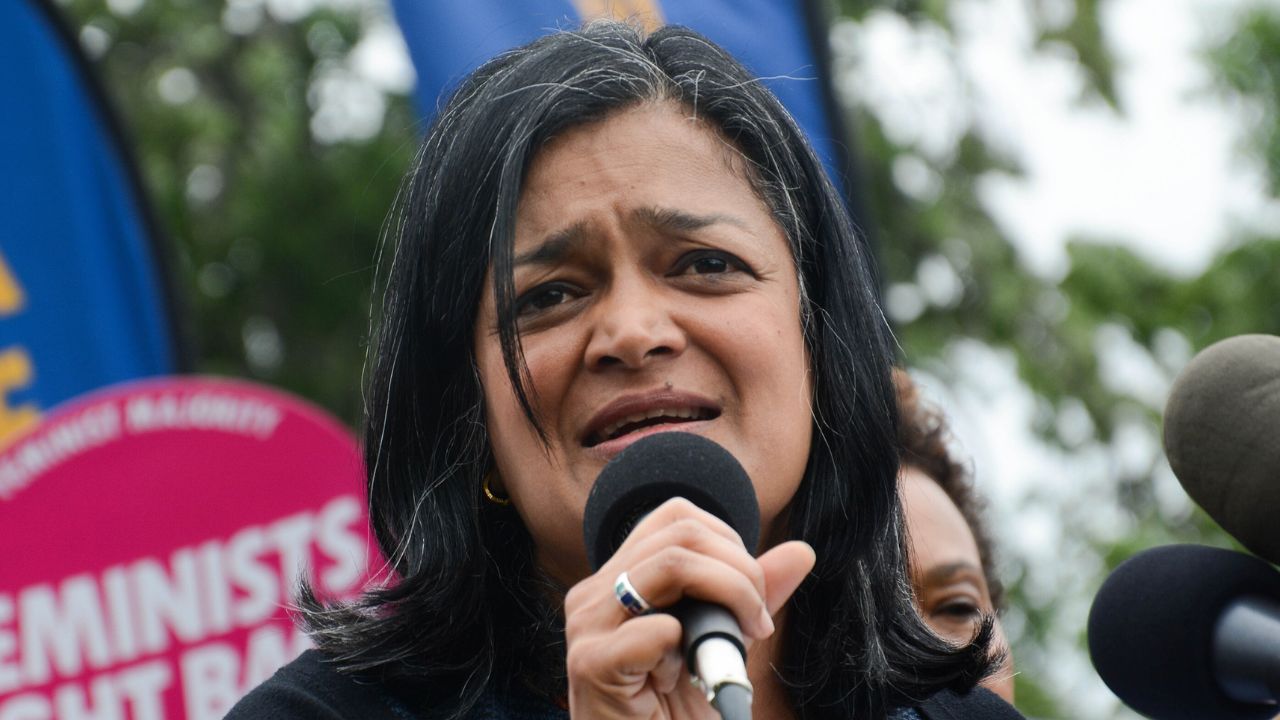
Rep. Pramila Jayapal is raising the alarm over another death in Immigration and Customs Enforcement custody, identifying it as the 62nd death under President Donald Trump’s administration and arguing that voters have the opportunity to hold the agency accountable in the November 3 midterm elections. The Washington Democrat’s statement comes amid growing congressional scrutiny of detention conditions, medical care and the conduct of federal immigration enforcement officers.
Jayapal published the following statement on X at 9:13 a.m. Eastern time:
“I’ve been notified of another death in ICE custody — the 62nd under this administration.
Today, WE have the power to stop this cruelty and hold ICE accountable.”
The statement makes two central points. Jayapal is highlighting the reported number of people who have died in ICE custody during Trump’s second administration, and she is connecting the issue to the political power voters hold on Election Day. Her reference to the 62nd death is her characterization of the administration-wide count; the individual death she is discussing was separately confirmed in an ICE news release.
ICE identified the individual as Fran Gregory Portillo-Zapata, a 53-year-old Venezuelan national who died on October 29, 2026, at North Central Baptist Hospital in San Antonio, Texas. According to the agency, Portillo-Zapata had been detained at the Karnes County Immigration Processing Center and was admitted to the hospital on September 30.
ICE said he suffered from severe sepsis, acute pancreatitis and end-stage kidney disease. The agency stated that the official cause of death remained pending further medical examination at the time of its announcement. The release did not establish that his death resulted from mistreatment or negligence by detention personnel.
The agency also provided a timeline of Portillo-Zapata’s immigration history. ICE said he was first encountered by U.S. Border Patrol in June 2023 and removed to Mexico. After attempting to enter the country again in July 2023, he was released on an order of recognizance and issued a notice to appear before an immigration judge. ICE said it took him into custody following an enforcement action in San Antonio on August 30, 2026, while he was awaiting removal proceedings.
ICE said it completed the required notifications to the Department of Homeland Security, the agency’s inspector general and its Office of Professional Responsibility. It also said Portillo-Zapata’s next of kin and the Venezuelan Embassy were notified. The agency maintained that people in its custody receive medical screenings, health assessments, medical appointments and emergency care.
Jayapal’s criticism is part of a longer campaign focused on deaths and medical conditions inside immigration detention facilities. As the ranking member of the House Judiciary immigration oversight subcommittee, she has repeatedly called for greater transparency from ICE and the Department of Homeland Security. In January 2026, she led 70 members of Congress in demanding information about detention-center deaths and the circumstances surrounding several controversial cases.
In the January 28 letter, Jayapal and the other lawmakers highlighted the deaths of Geraldo Lunas Campos and Chaofeng Ge. They said ICE had described both deaths as suicides, while subsequent witness accounts and medical findings raised serious questions about those explanations. The medical examiner ruled Lunas Campos’ death a homicide, while an autopsy in Ge’s case raised questions about the circumstances surrounding his death.
Jayapal argued that deaths in custody, conflicting accounts and reports of inadequate medical care demonstrated systemic problems requiring immediate attention. The lawmakers also criticized the administration for restricting congressional oversight of detention facilities, arguing that families and the public deserved more transparency.
Jayapal has also pursued legislative changes. In December 2025, she and Rep. Adam Smith introduced the Dignity for Detained Immigrants Act, a proposal intended to establish additional protections and oversight requirements for immigration detention. The legislation included provisions to repeal mandatory detention, prohibit family detention, establish stronger protections for vulnerable detainees and phase out private detention facilities and jails over three years.
The legislation also sought stronger detention standards and additional safeguards against inadequate medical care and unsafe living conditions. Jayapal argued that people held in immigration detention should not lose their basic civil and human rights, regardless of their immigration status. The proposal represents a direct legislative effort to change the detention system rather than relying exclusively on investigations after deaths or other incidents occur.
Her opposition to ICE funding has also become increasingly explicit. On March 27, 2026, Jayapal announced that she voted against a Republican Department of Homeland Security funding measure, saying she would not provide additional funding to ICE or Customs and Border Protection without major reforms. She argued that the agencies needed meaningful accountability measures and criticized Republicans for failing to agree to the changes Democrats had demanded.
Jayapal’s statement also distinguished between immigration enforcement funding and other essential homeland security functions. She supported funding for agencies such as the Transportation Security Administration, FEMA and the Coast Guard while opposing the approach Republicans had taken toward ICE and CBP funding. Her position was that Congress should continue funding necessary services without providing additional money to immigration enforcement agencies that she believed were operating without sufficient safeguards.
Her concerns have not been limited to detention facilities. On October 29, Jayapal and Rep. Jamie Raskin demanded answers from DHS about shootings involving federal immigration and border enforcement officers. Their letter cited information about officers involved in shootings, including allegations of misconduct and questions about their actions before and after using lethal force.
The lawmakers said DHS agents had shot at least 25 people and killed six since Trump took office in January 2025, including three U.S. citizens. They raised questions about several incidents, including the shootings of Julio Cesar Sosa-Celis, Marimar Martinez, Johan Sebastián Guerrero and Oscar Bengal. The lawmakers requested information about the agents involved, their employment histories and any disciplinary actions taken by DHS.
Independent reporting has also examined the increase in deaths inside immigration detention during Trump’s second administration. A June 17 Reuters investigation found that the death rate in ICE detention centers had more than doubled under Trump. Experts who reviewed detention records and autopsies raised concerns about medical care and supervision as the detained population increased.
The distinction between the total number of deaths and the death rate is important. The number of deaths reflects the total people who died while detained, while the death rate accounts for the size of the detained population. Both measures are relevant to evaluating detention conditions, particularly as the number of people held in ICE facilities has increased.
Jayapal’s November 3 message places these issues directly into the midterm election debate. Her argument is that voters can influence which lawmakers control congressional oversight, federal appropriations and the legislative response to immigration enforcement. A Democratic majority in the House could provide new opportunities for hearings, investigations and demands for information about ICE detention conditions and federal officers’ conduct.
Democrats are also seeking control of the Senate, which would change committee leadership and the chamber’s role in federal funding and legislation. Taking both chambers would give Democrats substantially greater authority to investigate the administration and challenge its policies, although any legislative changes would still face the normal congressional process and presidential veto authority.
Jayapal’s call to stop what she describes as cruelty is therefore connected to a specific record of congressional opposition: demanding transparency over detention deaths, introducing legislation to change detention standards, voting against DHS funding measures without reforms and investigating shootings involving federal immigration officers.
Her statement does not establish that Portillo-Zapata’s death was caused by misconduct, and ICE has said the official cause remained pending. But Jayapal is using the latest reported death to renew her broader demand for accountability and to argue that the election offers voters an opportunity to change the political leadership responsible for overseeing the immigration enforcement system.