
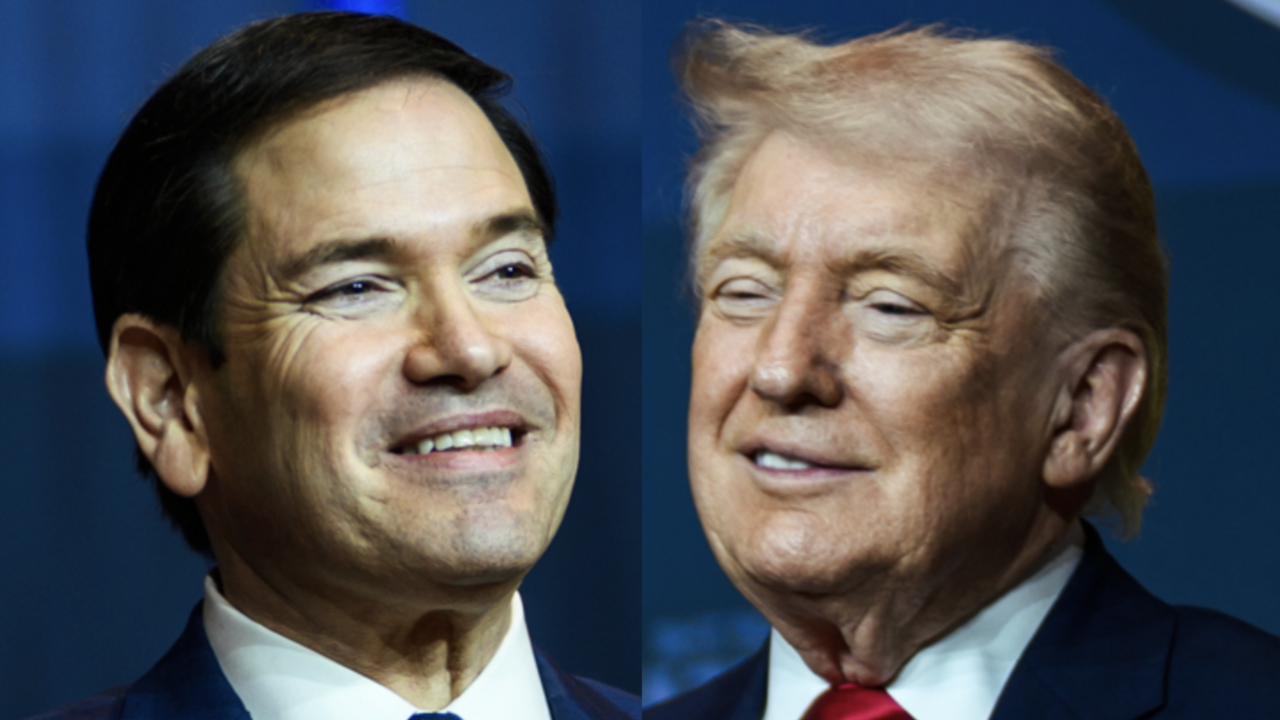
The State Department said Tuesday, citing a New York Post report, that President Donald Trump and Secretary of State Marco Rubio have prioritized as many as 20 nations across the Americas to curb threats, secure supply chains, and stop illicit drugs and migration under what the Post calls the “Donroe Doctrine,” a policy a White House spokeswoman said aims “to restore American preeminence in the Western Hemisphere.”
“NEW YORK POST: Trump and Secretary of State Marco Rubio have prioritized as many as 20 nations across the Americas to curb threats, secure supply chains, and stop the flow of illicit drugs and migration, according to a senior administration official,” the department wrote in a State Department post linking the Post story.
The Nov. 3 New York Post report, by Josh Christenson, says Trump’s “Donroe Doctrine” has solidified a U.S. grip over almost two-thirds of the Western Hemisphere through deals with pro-America governments, pressure on cartels, and steps to reduce Chinese influence. The Post coined the “Donroe Doctrine” label in a Jan. 8, 2025, front-page article, the story says.
A senior administration official told the Post that “the president first and foremost is a dealmaker, but he doesn’t put up with freeloading,” and that “China’s on the back foot” and “forced to compete fairly and grapple with the fact that this is our hemisphere.” White House National Security Council spokeswoman Anna Kelly, quoted in the same report, said that “after years of neglect, President Trump established the ‘Donroe Doctrine’ to restore American preeminence in the Western Hemisphere,” and that “our southern border is secure, Latin American countries are working with us to defeat the cartels, and illegitimate dictator Nicolas Maduro is facing justice in the Southern District of New York.”
The Post writes that Trump “didn’t annex Greenland” and that a pressure campaign extracted a defense pact granting U.S. military access to strategic Arctic bases, while Panama pulled out of Beijing’s Belt and Road Initiative. The White House published the September 22 Greenland trilateral text that reaffirms Danish sovereignty and expands U.S. defense rights on the island.
On Venezuela, the Post recounts the January 2026 U.S. operation that captured Nicolás Maduro and Cilia Flores and says Trump negotiated a large oil-reserve pact with an interim government. “To the victor belong the spoils, right?” Trump told supporters in Corpus Christi, Texas, according to the Post, touting an initial shipment of Venezuelan crude to U.S. refineries. At the United Nations, the Post says, Trump boasted that combining U.S. and Venezuelan reserves gives the alliance control over “more than 60% of the oil in the world.”
The Post also quotes Jonathan Schanzer of the Foundation for Defense of Democracies saying the administration “sees China as the number one adversary and is positioning the United States for a fierce competition over the coming decades,” and Andrew Leonard of the Quincy Institute for Responsible Statecraft saying the White House is treating regional neighbors “as active participants in security.”
Challenges remain in the Post’s own account: Luiz Inácio Lula da Silva won re-election in Brazil; Canadian Prime Minister Mark Carney remains in a trade dispute with Washington; Mexico cooperates on drugs and migration while facing tariff fights; and Russia and China retain ties and investments in parts of the region. A senior official told the Post the Iran war is “a temporary sort of conflict” and that “we ran the entire Venezuela project while Iran was ongoing.”
The Post further says bilateral trade deals followed with El Salvador, Guatemala, Ecuador, and Argentina, with Buenos Aires granting U.S. access to lithium and rare earth minerals, and that El Salvador’s Nayib Bukele partnered with the State Department to house deported gang members. On the Panama Canal, a senior official told the Post, “We built that thing. Americans died for that thing,” and that Trump put “more of a military presence down there” after a Chinese company was “kicked out,” in the Post’s account.
Conservative and center-right leaders have won elections in Bolivia, Chile, Ecuador, Honduras, Costa Rica, and Colombia, the Post reports, joining Argentine President Javier Milei and Bukele in a pro-U.S. bloc on the paper’s telling. Trump, the Post adds, has quipped that U.S. forces returning from the Middle East might “stop by” Cuba on the way home.
The Associated Press projected that Democrats won both the House and the Senate in the Nov. 3 midterms, reshaping the domestic politics around foreign policy for Trump’s final two years. The State Department’s decision to amplify the Post story puts an official seal on the “Donroe” framing the Post coined and on the claim of a 20-nation priority list attributed to a senior official.
State Department amplification of the Post story came on Election Day, Nov. 3, and now sits in the post-election argument over Trump’s Western Hemisphere record—Greenland pact, Venezuela operation, and cartel coalitions named in the Post. The department’s post quotes the Post’s 20-nation framing and links the Christenson story.
What is verified is the State Department’s Tuesday post quoting and linking the New York Post story, the Post’s own reporting of the senior official’s “dealmaker” and China lines, Kelly’s NSC quotes in that story, the White House Greenland agreement text, and the AP midterms projection; the “Donroe Doctrine” label is the Post’s coinage, the 20-nation priority figure comes from an unnamed senior official in the Post account, and several regional claims in the story rest on that official or on the Post’s narrative rather than on separately published government texts quoted here.