

Israel has quietly become a behind‑the‑scenes partner in one of Taiwan’s most ambitious defense projects, the T‑Dome missile shield. Modeled on Israel’s Iron Dome, the system is emerging as the centerpiece of Taipei’s effort to blunt a potential Chinese assault while deepening ties with a country that has turned missile defense into a national specialty. The cooperation is unfolding in secrecy and deniability, but its strategic implications are already rippling across Asia and beyond.
From Iron Dome to T‑Dome: a template for survival
Taiwan’s decision to build T‑Dome reflects a hardening consensus in Taipei that missile defense is no longer optional but existential. The island’s leaders have openly described Israel as a “valuable model” for how a small, vulnerable territory can survive under constant threat, and they have now translated that admiration into a concrete project that mirrors the layered logic of Iron Dome. T‑Dome is designed to sit on top of Taiwan’s existing missile and radar network, knitting together disparate sensors and interceptors into a single web that can track and engage incoming threats before they reach critical infrastructure or population centers, a concept that closely echoes Israel’s own air defense architecture.
Public presentations of T‑Dome in Taipei have emphasized that the system is “modeled on Israel’s Iron Dome,” with officials stressing that it will integrate with current early‑warning radars and surface‑to‑air missiles rather than replace them. The shield is intended to manage everything from short‑range rockets to more sophisticated missiles by improving how different systems work together, a multi‑layered approach that Taiwanese planners see as essential against a Chinese arsenal that is both large and diverse. In parallel, Taiwan Unveils T‑Dome Air Defence Shield Amid Rising Tensions has been framed domestically as part of a broader push to expand defence capabilities in response to China’s growing military pressure, signaling that T‑Dome is not a vanity project but a core element of national strategy.
Secret visits and quiet transfers
The most sensitive element of T‑Dome is not its existence but who helped make it possible. According to multiple accounts, Israel is quietly assisting Taiwan in developing its T‑Dome missile defense system, with the collaboration modeled on the Iron Dome and spurred on by the United States. Reports describe a pattern of discreet contacts, including a secret visit to Israel by Taiwan’s deputy defense minister, who sought expertise on missile interception and command‑and‑control systems. Intelligence Online has been cited as the origin of some of these revelations, detailing how Taiwanese officials approached Israel to learn from its experience in building and operating Iron Dome under real combat conditions.
These covert exchanges have been complemented by a broader uptick in security cooperation between Israel and Taiwan. News about expanding security cooperation between Israel and Taiwan has highlighted visits by the Deputy Minister of Nation and other senior figures, suggesting that the relationship is no longer limited to quiet technical talks but is evolving into a more structured dialogue on defense. Separate reporting indicates that Israel secretly transfers Iron Dome technology to Taiwan, with the strategic collaboration framed as a response to growing Taiwanese concerns over Chinese military escalation. While the exact scope of technology transfer remains opaque, sources describe Israeli systems as a cornerstone of its own air defense, capable of detecting and intercepting ballistic and cruise missiles, and suggest that elements of this know‑how are being adapted for T‑Dome. Any details beyond these descriptions are unverified based on available sources.
Money, architecture and the scale of Taiwan’s bet
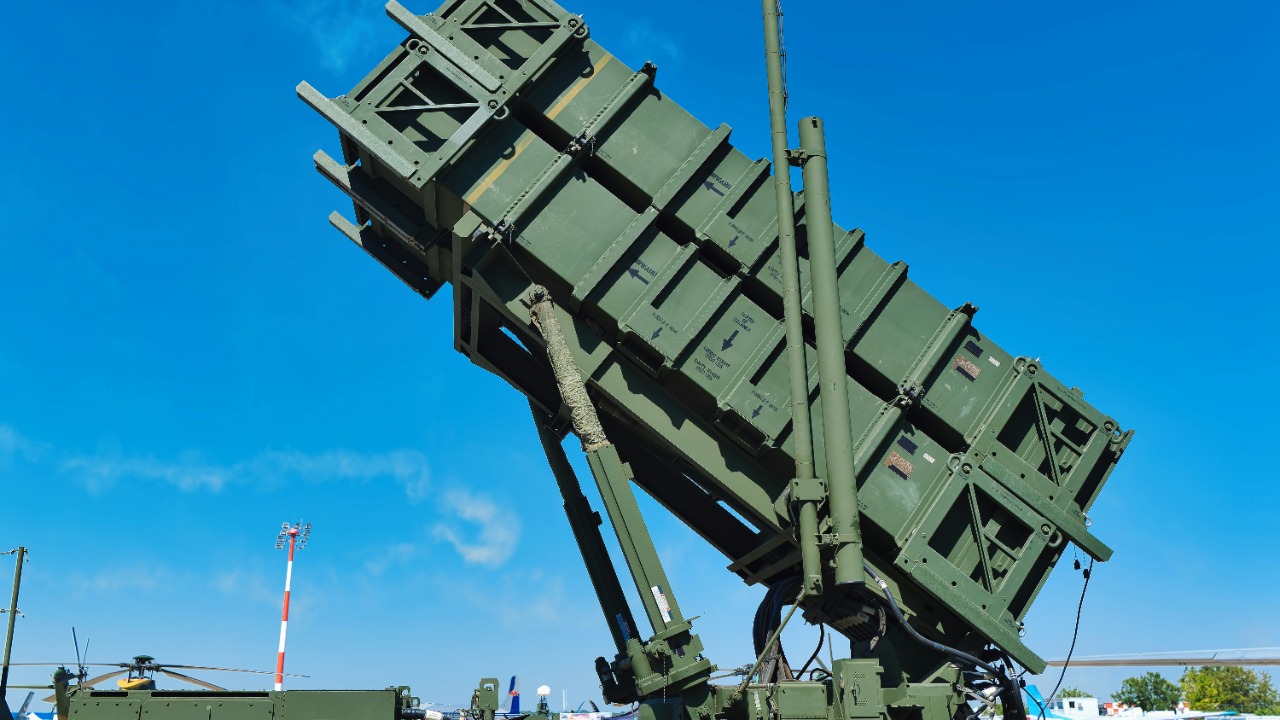
T‑Dome is not a standalone gadget but the centerpiece of a sweeping overhaul of Taiwan’s air defenses, backed by significant new money. Taiwan’s government has proposed $40 billion in extra defense spending over several years, with a focus on developing a multi‑layered air shield that can cope with saturation attacks and evolving missile threats. Within that package, T‑Dome is presented as the integrative layer that will connect ground‑based radars, existing Patriot batteries, indigenous missile systems and future interceptors into a single, coordinated network. The ambition is to move from a patchwork of platforms to a coherent “defence web” that can prioritize targets, allocate interceptors and avoid wasting shots on decoys.
Inside Taiwan’s T‑Dome, planners envision a system that can manage both the volume and complexity of a modern missile barrage, something they have watched Israel do repeatedly with Iron Dome. Public briefings describe T‑Dome as a multi‑layered air shield, with overlapping engagement zones and a central battle management system that fuses data from multiple sensors. Taiwan Unveils T‑Dome Air Defence Shield Amid Rising Tensions underscores that the project is explicitly framed as an answer to China’s growing military pressure, not as a generic modernization effort. By tying T‑Dome to a $40 billion spending push, Taipei is signaling that it is willing to absorb significant costs to reduce its vulnerability, even if no missile defense can ever be fully leak‑proof.
Diplomatic backlash and China’s warnings
Beijing has reacted sharply to reports of Israeli Aid to Taiwan’s T‑DOME Missile Shield Sparks Sharp Rebuke, treating the cooperation as a direct challenge to its claim over the island. Chinese intelligence assessments cited in public commentary accuse Israel of undermining “bilateral relations” with China by helping Taiwan harden its defenses, and official statements have warned that such moves could have consequences for broader ties. The criticism has focused in particular on the idea that Israel is exporting Iron Dome‑related technology, which Chinese officials argue crosses a red line by altering the military balance in the Taiwan Strait.
The backlash is not limited to rhetoric. Chinese commentary has framed the Israeli Aid, Taiwan, DOME, Missile Shield Sparks Sharp Rebuke as part of a wider pattern of foreign powers “internationalizing” the Taiwan issue, grouping Israel alongside the United States and other partners that have expanded security cooperation with Taipei. Reports from Chinese sources claim that the collaboration unfolded between September and November 2025, a period that also saw Taiwan unveil T‑Dome and step up its public messaging about missile defense. While there is no public evidence of concrete retaliation against Israel beyond diplomatic protests, Beijing’s warnings underline the risk that even quiet transfers can reverberate loudly in a region already on edge.
A new axis of quiet security ties
For both Israel and Taiwan, the T‑Dome partnership fits into a broader pattern of discreet but deepening ties. Taiwan Steps Up Defense Ties, Deputy FM Makes Secret Visit to Israel describes how Taiwan’s deputy foreign minister traveled to Israel for talks that included security cooperation and lessons from the war in Gaza, signaling that the relationship now spans both technology and operational experience. Editorial commentary on Security cooperation with Israel argues that news about expanding security cooperation between Israel and Taiwan should not come as a shock, given Taipei’s long‑standing interest in Israeli defense innovation and Israel’s search for new partners in Asia. These contacts remain largely out of public view, but they are gradually building a foundation of trust and shared interests.
Taiwanese leaders have been unusually open about the intellectual debt they owe to Israel’s defense model. President Lai Ching‑te has cited Israel as a model for Taiwan’s defence, referencing how a smaller state can leverage technology, layered missile defense and civil preparedness to deter larger adversaries. Social media posts amplifying these remarks have noted that Taiwan received secret support from Israel, with the Deputy traveling to Tel Aviv with approval from Washington, although the precise details of that trip are unverified based on available sources. At the same time, other reports that Israel is quietly assisting Taiwan in developing its T‑Dome missile defense system, modeled after the Iron Dome and spurred on by the US, suggest that Washington sees value in this emerging axis, even if it prefers to keep its own role in the background.
The result is a triangular dynamic in which Taiwan, Israel and the United States each bring different strengths to a shared project of missile defense and deterrence. Taiwan Unveils T‑Dome Air Defence Shield Amid Rising Tensions with China, Expanding Defence Capabilities, According to Reuters, captures how Taipei is using T‑Dome to signal resolve to both domestic and foreign audiences, while Israel leverages its Iron Dome legacy to gain a foothold in a strategically vital theater. For China, the collaboration is another sign that its pressure campaign is driving its rivals closer together rather than prying them apart. For the rest of the region, T‑Dome is an early glimpse of how smaller states may increasingly look to each other, and to Israel’s experience in particular, as they scramble to survive in an era of precision missiles and contested skies.