
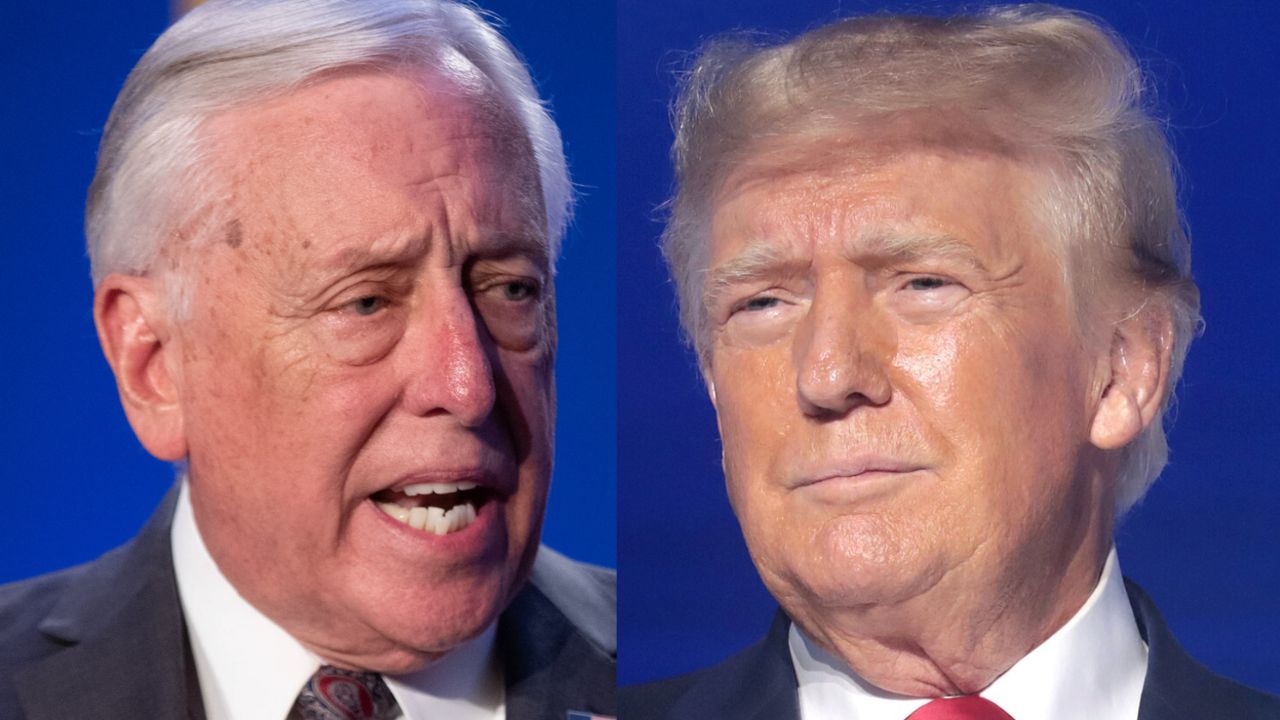
Representative Steny Hoyer said it is outrageous for President Donald Trump to purchase tons of diesel from Russia after signing legislation that imposed the toughest sanctions on Russian oil and gas, and that the move would fuel the war in Ukraine the sanctions were meant to stop. The Treasury action on the record is a license authorizing Russian diesel transactions. It does not state a U.S. purchase or a volume.
“It is outrageous for the President to purchase tons of diesel from Russia when he recently signed legislation that imposed the toughest sanctions on its oil and gas. Congress must take action against this action to fuel the very war of aggression in Ukraine that our sanctions are meant to stop,” Hoyer, a Maryland Democrat who represents the Fifth District, wrote Saturday. He linked a statement on his office site.
That statement, dated the day of the license, goes further. It said Trump announced a 180-day suspension of sanctions on Russian diesel and indicated the United States may purchase large quantities. It called the move “a sudden and mendacious shift” from sanctions pressure to “actively aiding and abetting the war effort of Russia against Ukraine,” and “an infusion of economic assistance to Russia.” It said this bails out Putin’s war effort and economy, and bails out Trump from “the consequences of a war of choice in Iran: exorbitant fuel costs for Americans.” It called the action duplicitous because Trump is helping Russia while asking allies to shoulder more support for Ukraine. Those characterizations are Hoyer’s. The release does not quote a presidential purchase order.
The law he named is real, and the timing matches. A White House notice said that on Sept. 18 the president signed H.R. 5334, the Lindsey O. Graham Sanctioning Russia and Iran Act of 2026, which “authorizes and expands statutory sanctions, tariffs, and prohibitions on Russia and extends existing sanctions on Iran.” That is three weeks before the Oct. 9 license. The notice does not include a signing statement. The House had agreed to the Senate amendments on Sept. 16 by 262 to 159, and the bill became Public Law 119-111. A Congressional Research Service summary says the act requires the president to impose blocking sanctions on specified Russian persons, including the Russian president, and to raise duties up to 100 percent on goods from countries among the five largest importers of Russian crude or natural gas that make new purchases. Hoyer said the diesel move is the opposite of that intent. The White House notice does not address diesel.
The license is narrower than a purchase. The Office of Foreign Assets Control issued General License No. 135 on Oct. 9. The license text authorizes transactions otherwise prohibited by the Russian Harmful Foreign Activities Sanctions Regulations and the Ukraine-/Russia-Related Sanctions Regulations that relate to the sale, delivery, offloading, or importation, including into the United States, of diesel fuel of Russian origin, through 12:01 a.m. eastern daylight time on April 7, 2027. That window is about six months, which matches the 180 days in Hoyer’s release. The license does not state a tonnage, name the United States as a buyer, or mention Ukraine or Iran. It does not cite the September act.
An older statute sets a different bar he did not invoke. Public Law 117-109, the Ending Importation of Russian Oil Act, bans importation of Russian products under chapter 27 of the tariff schedule and lets the president terminate the ban only after certifying that Russia has agreed to withdraw from Ukraine, poses no threat to a NATO member, and recognizes Ukraine’s government. No such certification is on a congressional or White House page. The Oct. 9 license does not cite that act. Hoyer rests on the September law, not the 2022 one.
The Iran connection is his. He said the diesel move answers fuel costs from a war of choice in Iran. A March 12 White House release set Operation Epic Fury’s objectives as destroying Iran’s missiles, annihilating its navy, preventing a nuclear weapon, and stopping it from arming forces outside its borders. It did not describe the operation as a war for fuel prices. An Oct. 5 fact sheet cited the Russia-Ukraine war and a lack of refining capacity as drivers of tight diesel supply, and described a European reserve release of 100 million barrels and a dyed-diesel tax deferral. It did not mention a Russian purchase or a sanctions waiver.
His demand is specific and unmet on the page. He said Congress must act, drawing on the bipartisan support for the sanctions law, to prevent a penny of American funds from being used to purchase Russian petroleum products. He has not posted a bill number. “Outrageous,” “mendacious,” “aiding and abetting,” and “war of choice” are his. The September signing notice, the Oct. 9 license, and the absence of a 2022 certification are the documents. The gap is between a member saying the president is buying tons of Russian diesel and a license that authorizes transactions without stating a buyer or a quantity.