
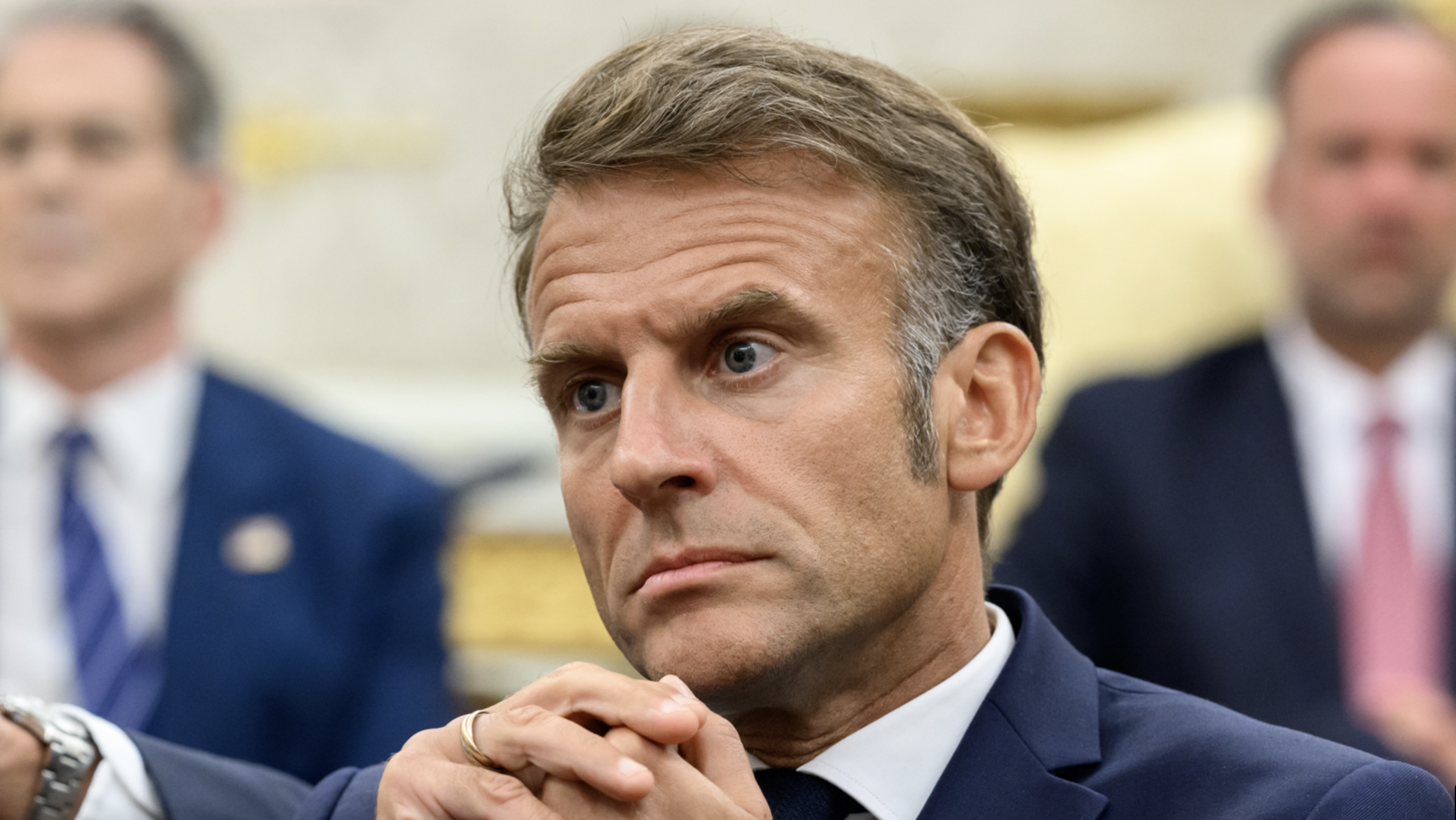
PARIS — French President Emmanuel Macron on Sunday welcomed a peace agreement reached between the United States and Iran, calling for its swift and complete implementation and pledging that France is prepared to take an active role in the broader diplomatic effort to stabilize the Middle East. Macron’s statement, posted on X at 5:46 p.m. on June 14, 2026, came as Pakistani Prime Minister Shehbaz Sharif announced the deal had been finalized, with a formal signing ceremony set for June 19 in Switzerland — a development that caps months of grinding conflict that shut down one of the world’s most critical maritime corridors.
Macron’s Full Statement
In his post, Macron laid out France’s position in full:
“I welcome the agreement reached between the United States and Iran, the result of a diplomatic effort to which several partners have contributed. I call for its rapid and complete implementation by all belligerents.
This agreement must enable the urgent and unconditional reopening of the Strait of Hormuz, which the international mission established with the United Kingdom is ready to support. The resources are in place and ready to be deployed. The resumption of maritime traffic, without restriction or toll, is an indispensable condition for regional stability and the global economy.
This agreement also paves the way for comprehensive negotiations in service of peace and security for all in the Middle East. These must address concerns related to Iran’s nuclear and ballistic programs, as well as its policy of regional destabilization. This is how we will be able to build a solid and lasting peace. France is prepared to play its full part, alongside its partners.
It will also continue to provide its full support to the determined efforts of the Lebanese authorities to restore the sovereignty of the State, which alone can ensure Lebanon’s stability and territorial integrity and meet the needs of its populations. A robust and lasting ceasefire is indispensable for this purpose.”
The Deal and What It Entails
The agreement announced Sunday represents the culmination of a conflict that erupted on February 28, 2026, when the United States and Israel conducted airstrikes on Iranian military targets. Iran responded by closing the Strait of Hormuz — the narrow waterway through which roughly a fifth of the world’s seaborne oil supply and a significant share of global liquefied natural gas passes — triggering a global energy crisis and a U.S. naval blockade of Iranian ports beginning in April.
Pakistani Prime Minister Shehbaz Sharif, who played a key role as a mediating party alongside Qatar, announced on social media early Monday that the pact calls for “the immediate and permanent termination of military operations on all fronts, including in Lebanon.” President Donald Trump confirmed the deal shortly after on his Truth Social platform, writing, “The Deal with the Islamic Republic of Iran is now complete.” Trump also confirmed the Strait would be open “toll free” and that the U.S. naval blockade would end, declaring, “Ships of the World, start your engines. Let the oil flow!”
France and the UK Had Already Positioned Forces
Macron’s confidence that the maritime mission is “ready to support” the reopening of the Strait is grounded in months of preparation. As early as March 2026, France began organizing a European naval response, with Macron announcing the formation of a coalition aimed at escorting commercial vessels through the waterway. By late March, France’s military chief had held talks with around 35 countries seeking partners for a post-conflict mission to reopen the strait.
In April, France and the United Kingdom jointly convened a summit of 51 countries to coordinate what was formally branded the Strait of Hormuz Maritime Freedom of Navigation Initiative. At that summit, Macron and British Prime Minister Keir Starmer made clear that the mission would be strictly defensive, limited to non-belligerent countries, and deployed only once hostilities had subsided. France deployed its aircraft carrier strike group to the eastern Mediterranean and positioned two helicopter carriers and eight warships to the region in preparation. Sunday’s X post confirmed those resources remain in place and ready to deploy.
Nuclear and Ballistic Programs Still Unresolved
While Macron celebrated the agreement, his statement made equally clear that the deal is a beginning, not an end. He specifically called for comprehensive negotiations addressing “concerns related to Iran’s nuclear and ballistic programs, as well as its policy of regional destabilization” — language that reflects the deal’s known limitations. According to multiple sources who previously spoke to Reuters, the draft agreement leaves Iran’s nuclear program to be addressed during a 60-day window of additional talks. A senior Iranian official told Reuters that under the draft terms, Iran agreed not to produce or acquire nuclear weapons and to maintain the nuclear status quo — including no uranium enrichment or expansion of nuclear facilities — until a final agreement is reached.
Macron has consistently pressed for those issues to be part of any durable settlement. In April, he told Iranian President Massoud Pezeshkian and U.S. President Trump directly that any ceasefire deal must address Iran’s nuclear and ballistic missile programs, as well as its regional policy, for it to be credible and lasting. Sunday’s post reiterated that position as negotiations move into their next phase.
Lebanon Remains a Flashpoint
The agreement was reached despite significant turbulence in Lebanon on Sunday. Israeli strikes on Beirut’s southern suburbs — which Israel said targeted Iranian-backed Hezbollah militants — drew condemnation from both Iran and President Trump, who wrote on Truth Social that the attack “should not have happened, particularly on a special day when we are so close to a Peace Deal with Iran.” Iran’s foreign ministry held the United States responsible for the strike and warned of a “strong response,” with its top joint military command declaring the “finger (is) on the trigger.”
Macron’s statement directly addressed Lebanon, calling for a “robust and lasting ceasefire” and reaffirming France’s support for the Lebanese authorities’ efforts to restore state sovereignty. Paris has long maintained a special interest in Lebanon’s stability, and France has been in close contact with Lebanese President Joseph Aoun and Prime Minister Nawaf Salam throughout the conflict. Macron met with Salam at the Élysée Palace in April, and France has consistently condemned Israeli strikes on Lebanese territory as threats to any durable ceasefire.
A G7 Backdrop
Macron’s Sunday post landed as world leaders were beginning to converge for the G7 summit in Evian-les-Bains, France — a gathering where the Iran deal, Hormuz reopening, and Lebanon’s future were already expected to dominate the agenda. In a video posted to Instagram on Sunday, Macron said the summit’s aim would be to “see the consequences of this agreement, support for Lebanon, the lasting reopening of Hormuz and of course the conclusion of an accord on nuclear and ballistic activities in Iran.” Macron is scheduled to hold a private meeting with Trump on Monday, with a formal welcome dinner to follow — setting up a direct conversation between the two leaders on the shape of what comes next.
France’s Broader Role
Macron’s declaration that France is “prepared to play its full part” reflects a sustained effort by Paris to position itself as an indispensable diplomatic actor in a conflict where France was not a belligerent. Macron has repeatedly distanced France from the original U.S.-Israeli strikes — noting publicly that France was not consulted in advance — while simultaneously working to shape the post-conflict order. That strategy, which included building a coalition of nearly 50 countries around the maritime mission and engaging directly with regional leaders including Saudi Crown Prince Mohammed bin Salman, Emirati President Mohammed bin Zayed, Omani Sultan Haitham bin Tariq, and Egyptian President Abdel Fattah al-Sisi, has placed Paris at the center of the diplomatic architecture surrounding the deal.
Whether France’s role in implementing that architecture — from maritime security in the Strait to nuclear negotiations to Lebanon — will prove decisive remains to be seen. The formal signing ceremony in Switzerland on June 19 will mark the beginning of what Macron himself described as the harder task: building not just a ceasefire, but what he called “a solid and lasting peace.”