
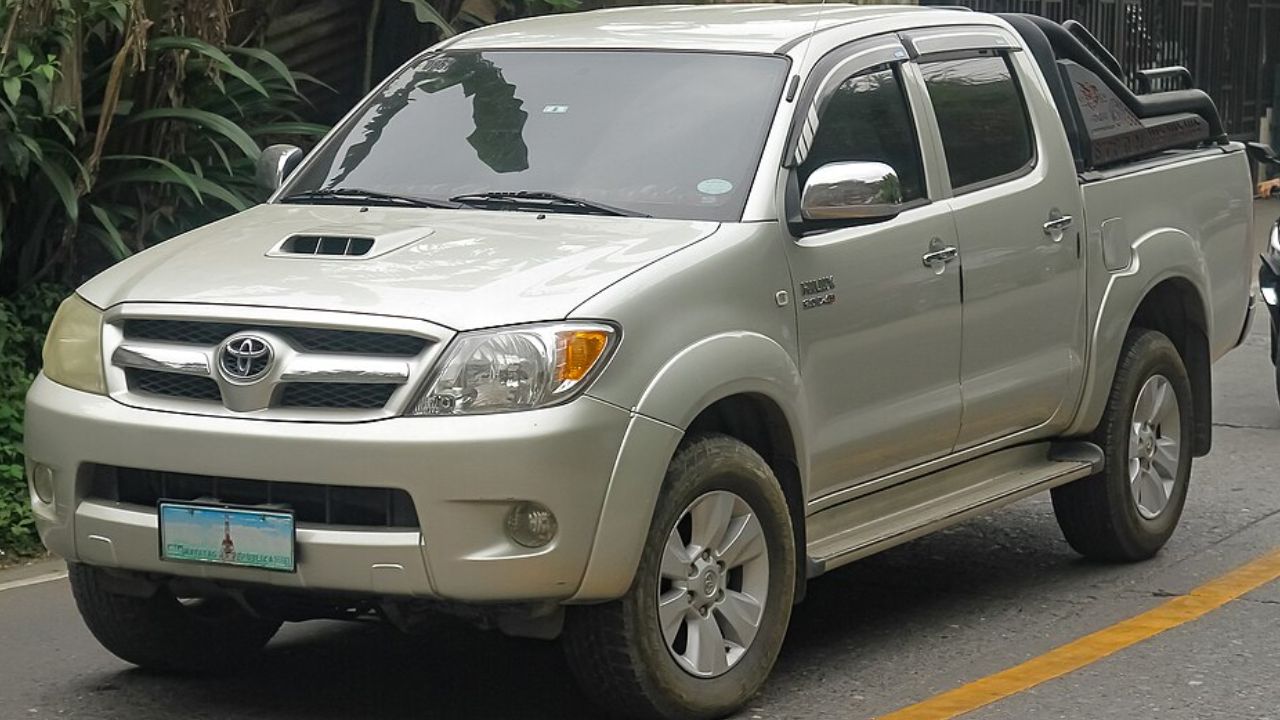
Ask almost anyone to name a pickup that refuses to quit, and odds are the Toyota Hilux will come up fast. It’s one of those vehicles that’s become more than a model name; it’s a shorthand for “it’ll probably still run tomorrow.” Even in a world of flashy new trucks with giant screens and mood lighting, the Hilux keeps its reputation for getting the job done without drama.
That reputation didn’t appear out of thin air. Decade after decade, the Hilux has built a kind of quiet credibility—on farms, construction sites, mines, deserts, and city streets that look suspiciously like pothole obstacle courses. People buy it because they need it, and then they keep buying it because it simply doesn’t give them many reasons not to.
A legend built on real-world punishment
The Hilux is famous for surviving the kind of treatment that would make most vehicles file a complaint. Owners talk about it the way you talk about a reliable old tool: not glamorous, but always there when it matters. The stories are everywhere—high-mileage workhorses, rough trails, heavy loads, and engines that just keep turning over.
Pop culture helped cement the myth, too. The truck has been “tested” in ways that feel almost unfair, and the joke is that the Hilux takes it personally when you try to break it. But the bigger point is this: plenty of vehicles can survive a stunt. The Hilux wins loyalty by surviving the everyday grind, where the real wear and tear happens.
What “tough” actually means in 2026
Toughness used to mean thick steel, a simple drivetrain, and not much else. These days, “tough” has to include safety tech, emissions compliance, and the ability to live with modern traffic without feeling like a tractor in sneakers. The Hilux has had to evolve, and it has—without losing the no-nonsense personality that made it popular in the first place.
Modern versions balance durability with comfort better than older models ever did. You can drive one all day and not feel like you’ve gone ten rounds with a stiff suspension. Yet under the friendlier surface, it’s still designed to handle payloads, towing, and rough roads with a straight face.
Under the skin: the stuff owners care about
When people call the Hilux tough, they’re usually talking about more than one thing. They mean an engine and transmission that can take high mileage, a chassis that doesn’t complain under load, and a suspension tuned for abuse rather than applause. They also mean practical engineering—components laid out in a way that can be serviced without turning every repair into a treasure hunt.
Depending on the market, Hilux powertrains vary, but the theme stays consistent: torque where it counts and a bias toward longevity. It’s not always the quickest truck off the line, and it doesn’t need to be. For many buyers, the best performance metric is boring reliability—starting every morning, hauling what it’s supposed to haul, and not lighting up the dashboard like a Christmas tree.
Why fleets and trades still swear by it
Spend time around fleet managers, and you’ll hear a different kind of praise than you get from weekend off-roaders. Fleets care about downtime, parts availability, predictable servicing, and resale value. The Hilux tends to score well in that unromantic but deeply important category called “total cost of ownership.”
Tradespeople like that it’s straightforward. It’s a truck you can load up with tools, bounce down a job site, then rinse off and take to dinner without feeling out of place. And when it comes time to sell, Hilux demand is often strong, which softens the hit of buying in the first place.
The off-road reputation isn’t an accident
The Hilux has long been a favorite for people who actually use four-wheel drive, not just the badge. Ground clearance, traction systems (in newer models), and a robust drivetrain give it genuine capability. It’s the kind of truck that makes you feel like the terrain is negotiating with you, not the other way around.
But the real off-road secret is consistency. Many vehicles can do something impressive on the right day, with the right tires, on the right trail. Hilux fans love that it tends to be predictable: it climbs, crawls, and carries on without demanding constant attention or delicate handling.
Comfort and tech: better than before, still not the point
No, the Hilux isn’t trying to be a luxury SUV in a pickup costume. Still, it’s not stuck in the past, either. Newer cabins are quieter, seats are more supportive, and the tech is more in line with what drivers expect—smartphone connectivity, driver assists, and the basics that make daily driving less tiring.
That said, Hilux buyers usually don’t want the truck to feel precious. It should be comfortable, sure, but also wipe-clean practical. If you’ve ever climbed into a vehicle wearing muddy boots and felt guilty, the Hilux mindset is refreshingly simple: it’s a truck, relax.
Competition is fierce, but the Hilux has “trust” on its side
The pickup market has never been more crowded. Rivals offer strong engines, bold styling, and impressive features, and some are genuinely excellent. Yet the Hilux keeps a special edge: a long-earned belief that it’ll still be running when newer, more complicated trucks start developing expensive personalities.
That trust matters even more now, when vehicles are packed with sensors and software. More tech can be great, but it can also mean more things to diagnose. The Hilux doesn’t avoid modern systems, but it tends to approach them with the same philosophy as everything else—make it durable, make it dependable, don’t overcomplicate the mission.
A global icon with local loyalty
Part of what makes the Hilux story so interesting is how global it is. In some places it’s a work truck first and last. In others, it’s an all-rounder—family transport during the week, adventure machine on the weekend, and occasional moving van whenever a friend “just needs help for an hour.”
That flexibility keeps the Hilux relevant. It’s not only for hardcore off-roaders or only for job sites. It’s for people who want one vehicle that can adapt, take knocks, and keep going without turning ownership into a hobby.
So why does the toughness label stick?
Because it’s been earned in slow motion, over millions of miles and countless hard days. The Hilux doesn’t trade on hype as much as it trades on experience—other people’s, and often the buyer’s own history with the badge. It’s the kind of vehicle where the compliments sound understated, which is usually the most believable kind.
Even today, when the automotive world is changing fast, the Hilux remains a familiar answer to a simple question: what can you rely on? For a lot of drivers, it’s still the truck they’d pick if the plan is unclear, the road is questionable, and failure isn’t an option. And honestly, that’s a pretty good definition of tough.