
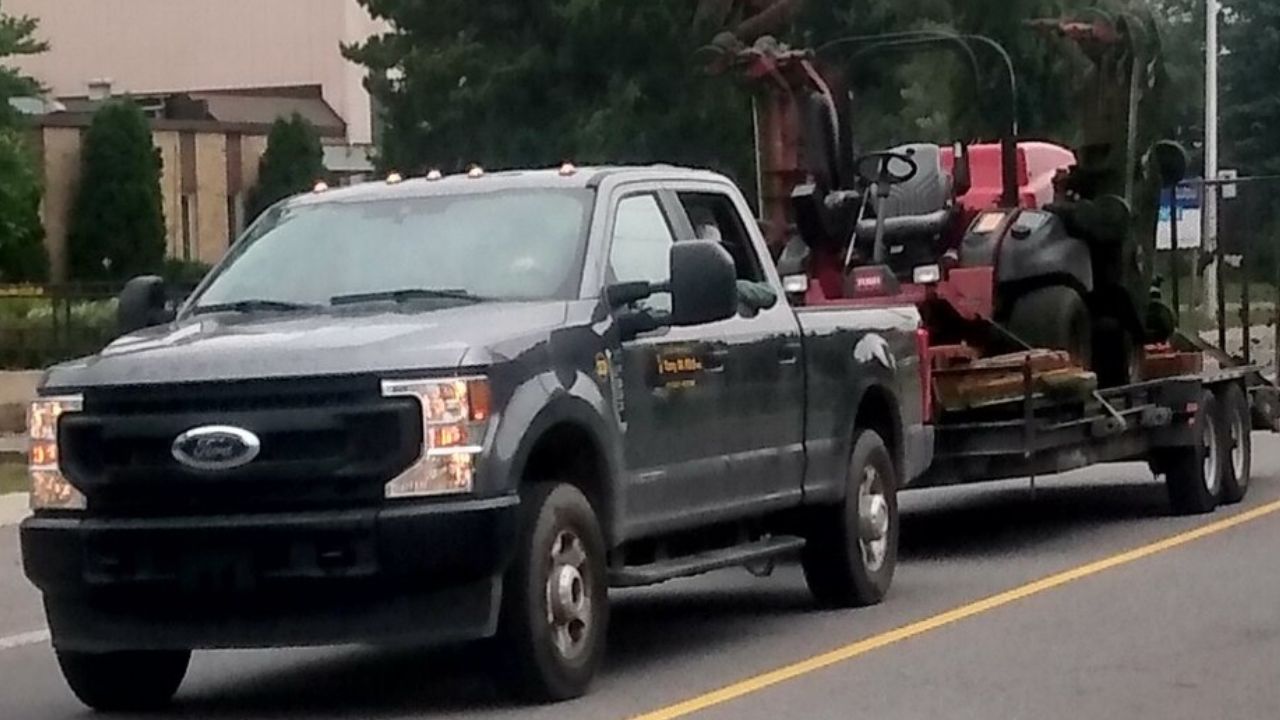
Spend a little time around any busy construction site, rural supply yard, or municipal lot and you’ll spot a familiar shape: a Ford Super Duty wearing a thin layer of honest dust. It’s the kind of truck that looks better with a few scuffs, like it’s been earning its keep. For decades, Super Duty models have built a reputation as the “show up early, stay late” option for people who measure reliability in paychecks and deadlines.
The story isn’t just about horsepower bragging rights or shiny trims. It’s about a truck line engineered around the unglamorous stuff—towing, hauling, idling in heat, crawling through mud, and doing it again tomorrow. In short, it’s about why the Ford Super Duty became a jobsite staple.
A truck line born from heavy-duty expectations
Ford has offered heavy-duty pickups for generations, but the “Super Duty” identity became a clear signal that these trucks were built for work first. The name itself is a promise: bigger components, tougher underpinnings, and higher capacities than a typical half-ton. Contractors and fleet managers didn’t need a long explanation—they just needed a truck that wouldn’t flinch when the trailer got heavy.
Over time, that promise turned into something close to muscle memory in the trades. When a crew lead says, “Bring the Super Duty,” nobody asks which one. They’re expecting a truck that can tow the equipment, carry the tools, and still be steady enough to feel safe on the highway.
What “designed for hard work” looks like in real life
Hard work in the real world isn’t one big dramatic event; it’s repetition. It’s hitching up every morning, squeezing through tight access roads, and dealing with uneven loads that don’t always behave. Super Duty trucks have historically leaned into that reality with heavy-duty frames, robust suspensions, and powertrains meant to live under strain.
Even if you’re not reading spec sheets over breakfast, you feel the design choices behind the wheel. The truck’s stance, stability with a load, and the way it handles rough surfaces all add up to less fatigue by the end of the day. And on a jobsite, reducing fatigue is basically a productivity hack—just with steel and torque instead of an app.
Towing and hauling: the jobsite currency
If there’s a single reason heavy-duty pickups earn their keep, it’s towing and payload. A jobsite doesn’t care how nice your infotainment screen looks if your truck can’t pull the trailer or carry the materials. Super Duty models built their name by being the truck you pick when the load isn’t a “maybe,” it’s a schedule.
Modern iterations of the Super Duty lineup have chased ever-higher capabilities, but the day-to-day value is simpler: confidence. Confidence that the truck can merge without drama, brake without panic, and stay composed when crosswinds hit a tall trailer. Ask anyone who tows regularly—calm is the real luxury.
Powertrain choices that match different kinds of work
Part of the Super Duty appeal is that it doesn’t assume every buyer has the same job. Some people need diesel torque for heavy towing and long highway pulls, while others want a gas engine for simpler maintenance routines or different duty cycles. Ford’s approach has typically been to offer options, letting buyers fit the truck to the work instead of forcing the work to fit the truck.
That flexibility matters for fleets, too. A municipality, for example, might prioritize predictable service schedules and broad drivability across many drivers. A hotshot hauler might prioritize pulling power and efficiency under load. The Super Duty’s menu of configurations helps it show up in both worlds without feeling out of place.
Work-ready tech that solves annoying problems
Tech in a work truck is only useful if it removes friction from the day. That’s why towing aids, trailer backup guidance, integrated brake controllers, and camera systems have become such a big deal. They don’t just look cool in a demo—they save time, reduce mistakes, and help less-experienced drivers handle bigger rigs with fewer white-knuckle moments.
And yes, convenience features matter more than people admit. When you’re climbing in and out of the cab fifty times a day, small things like smart storage, easy-to-clean surfaces, and logical switch placement become surprisingly important. Nobody wants to go digging for a control with gloves on while the rest of the crew is waiting.
Why fleets love it: uptime, parts, and familiarity
Fleet buyers tend to be brutally practical, and that’s a compliment. They care about uptime, serviceability, and how quickly a truck can get back to work after normal wear and tear. The Super Duty’s widespread use means parts availability and mechanic familiarity are often strong, which can shorten downtime and keep costs predictable.
There’s also the human factor: drivers know what they’re getting. If you rotate employees between vehicles, a familiar platform reduces training time and helps avoid the little mistakes that happen when controls are unfamiliar. When a truck line becomes common across trades, it becomes a kind of shared language.
The jobsite image that actually means something
Some vehicles have an “image” because they look a certain way. The Super Duty’s image comes from being seen in the same places, doing the same tasks, year after year. It’s a truck that shows up with ladder racks, toolboxes, plows, service bodies, and company decals that have faded in the sun—basically, the working wardrobe of North America.
That visibility reinforces trust. If you’ve watched Super Duty trucks haul skid steers, pull dump trailers, or run snow routes every winter, it’s easier to believe the hype when it’s time to buy. The reputation isn’t built in ads; it’s built in parking lots at 6 a.m.
Comfort got better, but capability stayed the headline
One of the biggest shifts over the years is that heavy-duty trucks have become easier to live with. Cab comfort, quieter interiors, and more refined ride quality mean the Super Duty can be a daily driver without feeling like you’re commuting in farm equipment. That’s a big deal for owners who use one truck for work Monday through Friday and family life on the weekend.
Still, the heart of the Super Duty pitch hasn’t changed much: it’s built to do the heavy lifting. The comfort is more like a bonus that keeps you from feeling beat up after a long day. Think of it as work boots that are finally comfortable enough to wear all day—without getting any less tough.
What keeps the Super Duty on the shortlist
Competition in the heavy-duty world is no joke, and buyers cross-shop hard. But the Super Duty continues to land on shortlists because it checks the boxes that matter most: capability, configuration options, and a long-established presence in the places where trucks earn their reputation. It’s not always about having the most everything; it’s about having what you need, consistently.
That’s ultimately why the Ford Super Duty became a jobsite staple. It’s designed for hard work in the most literal sense—built around the reality of heavy loads, tight schedules, and real-world wear. And if you ever doubt it, just follow the dust trail to the nearest jobsite. Chances are, one’s already there.