
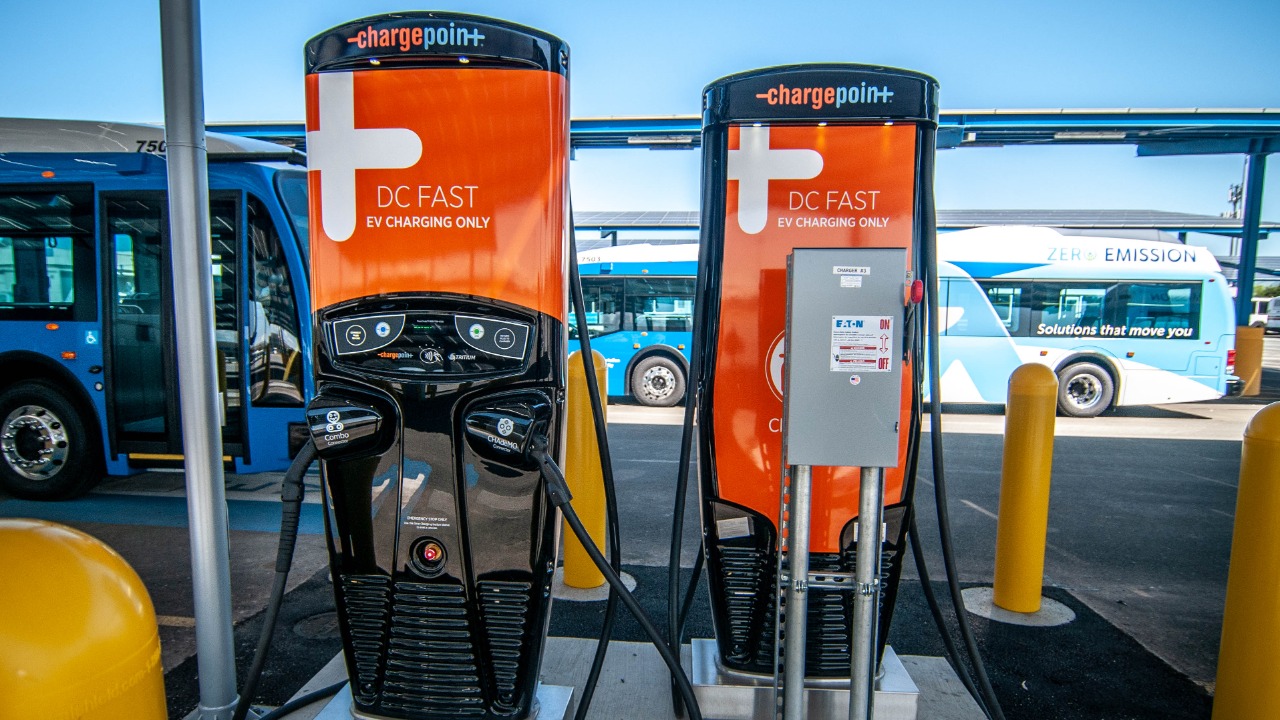
Electric vehicle charging is expanding into everyday travel locations, with rental car lots emerging as key sites. By opening high-capacity chargers to all drivers, ChargePoint is converting fleet infrastructure into public charging hubs that support regional EV adoption.
The strategy promises to reshape how drivers think about refueling, especially in airport and neighborhood corridors where rental branches already control valuable real estate. Instead of isolated plugs hidden behind counters and key boxes, the same stalls that serve rental fleets are being reimagined as shared assets for road trippers, commuters, and local businesses.
Rental car lots become mixed-use charging real estate
ChargePoint is positioning rental car facilities as multiuse charging campuses, where the same rows of stalls can cycle between fleet vehicles and the general public throughout the day. ChargePoint operates a networked charging platform that uses hardware and software to manage access, pricing, and utilization across many locations. By applying that platform to rental car real estate, ChargePoint can turn what used to be idle overnight parking into revenue-generating infrastructure that also fills critical gaps in public charging coverage.
The first wave of this approach is visible at rental branches where public stalls sit alongside fleet-only spaces, with clear signage and software controls determining who can plug in and when. Reports note that ChargePoint is adding public EV chargers at rental car locations and configuring them for adapter-free access by any driver. The result is a hybrid environment where rental customers, ride-hail drivers, and private owners share the same high-powered equipment, increasing throughput and making better use of expensive grid connections that might otherwise sit underused.
Midwestern Wheels shows how a rental partner can anchor local access
The partnership with Midwestern Wheels illustrates how this model can scale beyond airports into regional markets that have struggled to attract large charging investments. At branches in Wisconsin, ChargePoint has added new public EV charging stations that serve both the rental fleet and any driver who pulls into the lot. Midwestern Wheels gains the ability to charge its own electric rentals efficiently while also attracting outside traffic that might never have visited a traditional rental counter, effectively turning the business into a neighborhood energy hub.
The Wisconsin deployment also underscores how technical choices can make or break public usability. The same release notes that ChargePoint’s configuration at Midwestern Wheels avoids locking stalls to specific plug standards, which means drivers of vehicles like the Tesla Model 3, Ford F-150 Lightning, or Hyundai Ioniq 5 can all use the site without worrying about proprietary connectors. That flexibility aligns with broader coverage describing how ChargePoint is expanding public EV charging at mixed-use sites where rental operations share infrastructure with general access. For local drivers, the effect is straightforward: a familiar rental lot becomes one of the most reliable fast-charging stops in town.
Fast-charging technology raises the stakes for rental hubs
ChargePoint’s decision to lean on rental car real estate coincides with a major upgrade in its fast-charging technology, which will determine how attractive these hubs are for time-pressed travelers. Chief executive and president Rick Wilmer has said the company plans to introduce DC fast chargers in 2026 that can deliver a roughly 10-minute charging experience at new ChargePoint Express Grid locations, with deployments expected in the second half of that year. If even a portion of those units are sited at rental facilities, the lots could evolve from convenient charging stops into essential nodes on long-distance corridors, where drivers can refuel in the time it takes to drop keys or sign a contract.
Wilmer has also emphasized that the new hardware will dramatically reduce the size of chargers for the amount of power they deliver, a shift that lowers installation costs and makes it easier to fit high-output equipment into crowded parking layouts. That matters for rental partners that may control valuable frontage but have limited room for bulky cabinets or new utility gear. By shrinking the footprint while increasing power, ChargePoint can pack more stalls into the same lot, turning a handful of spaces behind a counter into a dense cluster of fast chargers that serve both fleet turnover and public demand.
Corporate strategy and industry implications
The rental lot initiative fits into a broader corporate strategy that ChargePoint has been outlining to investors and partners. In a company announcement from CAMPBELL, Calif, distributed via BUSINESS WIRE, ChargePoint described itself as a global leader in electric vehicle charging and highlighted its listing on the NYSE under the ticker CHPT, while also naming Rick Wilmer as CEO at ChargePoint. Framing rental car partnerships within that context signals that these are not one-off pilots but part of a deliberate push to control key charging locations where drivers already expect to interact with vehicles and mobility services.
For the wider industry, the move pressures competitors and rental firms alike to rethink how they use their parking assets. Coverage by Michelle Lewis in Jan, which noted that ChargePoint is adding public EV chargers at rental car locations and enabling access without adapters, shows how quickly expectations are shifting for what a modern rental facility should provide. As more branches follow the example of Midwestern Wheels and other early adopters, rental car lots could become some of the most visible and heavily used charging hubs in North America, quietly turning a once-niche amenity into a standard part of the travel landscape.