
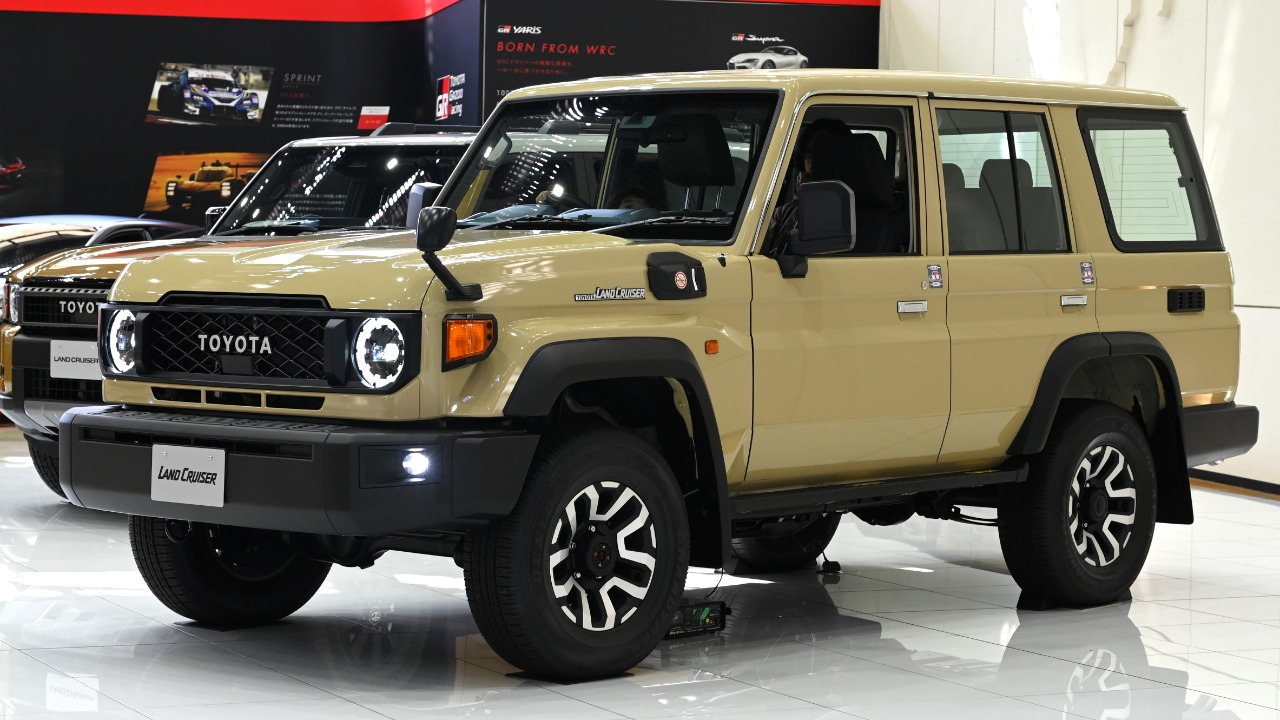
If you ask people what makes the Toyota Land Cruiser special, you’ll hear a lot of the same words: dependable, tough, and somehow always ready for one more mile. It’s the kind of vehicle that gets talked about the way folks talk about a trusted tool—less “look at me” and more “it’ll get the job done.” That reputation didn’t appear overnight, and it wasn’t built on flashy gimmicks.
Over decades and across continents, the Land Cruiser became a familiar sight in places where breakdowns aren’t just inconvenient—they’re dangerous. It’s earned respect in deserts, mountains, jungles, and crowded cities alike. And it’s done it by leaning hard into durability, simple engineering choices that work, and a steady approach to improvement rather than reinvention.
A reputation that traveled farther than the brochure
The Land Cruiser’s story is tied to the idea of going where roads end and still getting back home. From early models designed with utility in mind to later generations that blended comfort with capability, the core promise stayed the same. Owners didn’t just buy transportation; they bought confidence.
That confidence spread person to person, not just market to market. Aid organizations, field researchers, miners, farmers, and families going off the beaten path all started relying on the same basic truth: when conditions get rough, a Land Cruiser tends to keep moving. It’s not romantic, exactly—but it’s the kind of practical legend that sticks.
Why durability became the Land Cruiser’s calling card
Durability isn’t one magic part; it’s a mindset built into hundreds of decisions. Traditional body-on-frame construction, stout drivetrains, and conservative tuning have often favored longevity over squeezing out every last ounce of performance. In other words, Toyota typically chose “strong and proven” instead of “new and complicated.”
That approach matters most in the real world, where maintenance schedules aren’t always perfect and roads aren’t always paved. Components that can handle heat, dust, heavy loads, and long hours tend to last longer—and inspire more loyalty. The Land Cruiser became the vehicle people recommend when they don’t want to gamble.
Engineering that prefers strong basics over drama
Part of the Land Cruiser’s appeal is that it’s rarely trying to impress you in the driveway. It’s more interested in being calm and predictable when traction disappears or the terrain turns ugly. Four-wheel drive systems, low-range gearing, and generous ground clearance have long been part of the package, giving it a reputation for real capability rather than “SUV vibes.”
Even when technology increased—think advanced traction systems and smarter off-road electronics—the goal generally stayed the same: make hard situations easier without making the vehicle fragile. The best Land Cruisers feel like they were designed by people who’ve actually been stuck in mud before. There’s a quiet confidence in that.
From workhorse to family hauler, without losing its backbone
Over time, the Land Cruiser evolved into different flavors depending on the region. Some markets leaned toward rugged, utilitarian versions that could take a beating day after day. Others favored more comfort, more sound insulation, and more features—because it turns out people like air conditioning even when they’re adventuring.
What’s surprising is how well the model’s identity survived those shifts. Even the more luxurious versions tend to keep the sturdy underpinnings and heavy-duty attitude. It’s one of the few vehicles that can feel equally at home outside a hotel and halfway up a rocky trail, which is a weird combination—yet it works.
Global trust, earned in the harshest classrooms
The Land Cruiser’s worldwide respect comes from being tested in places that don’t forgive mistakes. In remote regions, a vehicle isn’t just a purchase; it’s a lifeline. When you’re hours—or days—from help, the ability to start reliably, run cool, and survive punishment stops being a nice feature and becomes the whole point.
This is also why the Land Cruiser became a favorite among humanitarian groups and expedition teams. It’s not because it’s the most exciting option; it’s because it’s predictable, serviceable, and tough. If you’re building a plan around a vehicle, you want the one least likely to become the plan’s problem.
The simple magic of parts, service, and community know-how
Another factor behind the Land Cruiser’s status is something people don’t always consider at first: support. In many places, there’s a deep bench of mechanics familiar with Toyota trucks and SUVs, plus supply chains that make parts easier to find. When a vehicle is common in tough environments, the knowledge network around it grows fast.
That creates a feedback loop. More Land Cruisers on the road means more expertise, which makes ownership easier, which keeps more of them running, which builds the legend further. It’s not glamorous, but it’s exactly how durable vehicles become cultural fixtures.
Resale value that tells its own story
If you’ve ever looked at used Land Cruiser prices and blinked a few times to make sure you read it right, you’re not alone. Strong resale value is often the market’s way of saying, “People actually trust this thing.” Buyers aren’t just paying for a badge; they’re paying for a history of reliability and long service life.
That value also reflects a certain scarcity in some regions, where the Land Cruiser has been limited or repositioned over the years. When demand stays high and supply stays tight, prices climb. But underneath the economics is a simple truth: folks believe it’s built to last.
A name that became shorthand for “it’ll make it”
The Land Cruiser’s biggest achievement might be that it turned into a kind of universal reference point. People compare other SUVs to it when they want to praise toughness or criticize fragility. When a vehicle’s name becomes an adjective—“Land Cruiser reliable”—that’s a level of respect money can’t really buy.
None of this means every Land Cruiser is indestructible, of course. Any machine can break, and maintenance still matters, even for legends. But across generations, climates, and use cases, the Toyota Land Cruiser has built a rare kind of credibility: the sense that when the situation gets real, it won’t flinch.