
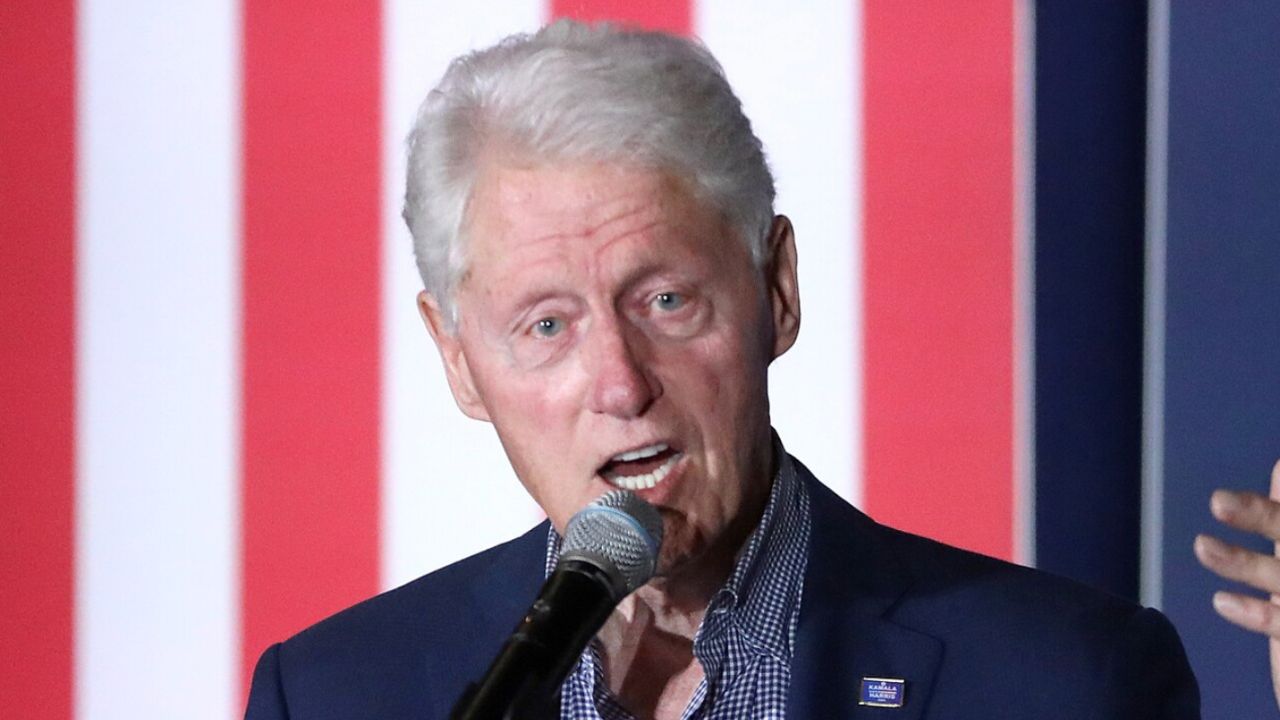
Former President Bill Clinton is urging Americans to vote for Democrats in the November 3 midterm elections, promising that the party will pursue lower costs, protect health care coverage, end what he describes as senseless wars and reverse tariffs that make everyday goods more expensive. His message is a direct criticism of President Donald Trump’s second-term agenda, particularly its economic and foreign-policy consequences. Clinton’s remarks are especially significant because they come from a former president who has increasingly returned to the campaign trail to help Democratic candidates challenge Republicans for control of Congress.
In a November 3 post on X, Clinton wrote:
You deserve a government that works as hard for you as you do for your family. Democrats will lower costs, protect health care, end senseless wars, and stop tariffs that make life more expensive. If you haven’t already, I hope you vote today. It’s high time we put people first again!
Clinton’s statement contains several distinct arguments. He begins by presenting government as something that should serve working families rather than political interests. He then identifies four priorities he says Democrats will pursue: reducing household expenses, protecting health care, ending unnecessary military conflicts and stopping tariffs that increase consumer costs. He concludes by asking Americans to vote, making the message an explicit appeal for Democratic support during an election that will determine control of Congress.
Clinton’s criticism of Trump’s economic policies
The opening sentence, that Americans deserve a government that works as hard for them as they work for their families, establishes the broader argument behind Clinton’s message. Rather than focusing exclusively on individual policies, he is contrasting what he considers the responsibilities of government with the economic pressures facing ordinary households. His reference to putting people first again is also a criticism of what he views as misplaced priorities within the current administration.
Clinton has expanded on that argument during his recent campaign appearances. On October 30, he traveled to Tupelo, Mississippi, to campaign for Democratic Senate candidate Scott Colom, who is challenging Republican Sen. Cindy Hyde-Smith. During the appearance, Clinton criticized the Trump administration’s priorities and argued that Colom would focus on the economic concerns facing Mississippi residents.
One of the most specific issues Clinton raised was tariffs. His argument is that tariffs do not simply impose costs on foreign governments or businesses, because American companies importing goods pay the duties and those costs can ultimately be passed along to consumers. He has directly challenged Trump’s explanation of tariffs, arguing that American households and businesses are the ones who bear much of the financial burden.
Clinton discussed the issue during his Mississippi appearance, recalling a conversation with Trump approximately 24 years earlier, when the two men had played golf. Clinton said Trump had already advocated imposing tariffs on other countries and suggested that the revenue could replace domestic taxes. Clinton recalled explaining that foreign companies would not simply absorb those costs but would charge the people purchasing their products. He summarized his argument by saying: “So we pay the tariffs.”
His criticism comes amid a broader economic debate over Trump’s trade policies. Reuters has reported that the administration’s sweeping tariffs, combined with the war against Iran, have contributed to rising cost-of-living concerns ahead of the midterms. Clinton’s position is that reversing tariffs would help address one of the pressures facing American consumers, particularly households purchasing imported products and businesses that depend on international supply chains.
His promise to protect health care
Clinton’s second major policy commitment is protecting health care. During his Mississippi campaign appearance, he criticized the Republican-backed legislation signed by Trump in 2025, commonly known as the One Big Beautiful Bill Act, arguing that its changes to Medicaid financing could threaten coverage and place additional pressure on rural hospitals. He specifically raised concerns about the effects on Mississippi communities and families who rely on public health coverage.
Clinton also discussed the expiration of enhanced Affordable Care Act marketplace subsidies and the resulting concerns about higher insurance premiums for people who previously received additional assistance. His argument was that families should not have to choose between paying for health insurance and covering necessities such as groceries and gasoline. These concerns formed a substantial part of his explanation for why Democrats should regain congressional power.
The health care argument is particularly relevant to the midterm campaign because control of Congress could determine whether lawmakers attempt to restore or modify provisions affecting federal health programs. Clinton is effectively presenting the election as a choice between continuing the Republican administration’s approach and pursuing a Democratic agenda centered on maintaining coverage and reducing costs. His statement does not provide a specific legislative proposal, but his Mississippi remarks make clear that Medicaid, marketplace insurance and rural hospital funding are among the issues informing his position.
Clinton’s criticism of the Iran war
Perhaps the most consequential foreign-policy statement in Clinton’s post is his promise that Democrats will work to end “senseless wars.” Although he does not identify a particular conflict in the X post, his recent remarks make clear that the war against Iran is a major target of his criticism. During his Mississippi appearance, he connected the conflict to higher gasoline prices and questioned the administration’s decision to launch military action without a sufficiently clear strategy for bringing the fighting to an end.
Clinton argued that the United States should not enter a war without understanding how it will conclude. During the speech, he said: “You don’t start killing people unless you know how you’re going to stop.” He also acknowledged that preventing Iran from acquiring nuclear weapons would be desirable, while arguing that military action carries serious consequences when there is no clear plan for what follows.
Clinton’s position should not be interpreted as a blanket opposition to American military intervention. During his own presidency, he authorized and defended NATO military action against Serbian forces during the Kosovo conflict in 1999. At the time, he argued that military action was necessary to prevent further atrocities and contain a conflict that threatened regional stability. His historical record therefore shows that he has supported military force under circumstances he considered justified, while his current criticism focuses on the objectives, consequences and apparent lack of an adequate endgame in Trump’s Iran campaign.
The connection between foreign policy and household expenses is another important part of Clinton’s argument. He has specifically blamed the Iran conflict for higher gasoline prices, while criticizing tariffs for increasing the cost of imported goods. Reuters has also documented how the Iran war and the administration’s trade policies have become major economic issues in the midterm campaign, with voters increasingly concerned about the financial consequences of decisions made by the White House.
A former president campaigning against Trump’s agenda
Clinton’s decision to explicitly urge voters to support Democrats is significant because he is not merely commenting on the election as a former president. He has actively participated in the campaign, appearing for Democratic candidates and criticizing the Republican administration’s positions on economic and foreign-policy issues. His October 30 appearance for Scott Colom placed him directly in a competitive Senate campaign where Democratic control of Congress is at stake.
The political stakes extend beyond individual Senate races. Republicans entered Election Day controlling both the House and Senate, while Democrats are seeking the seats necessary to regain majorities. A Democratic victory could give the party greater authority over legislation, congressional investigations and oversight of Trump’s administration. Clinton’s appeal to voters is therefore also an argument about whether the president should continue governing with Republican congressional support or face a divided government.
Clinton’s closing statement, “It’s high time we put people first again,” brings his economic, health care and foreign-policy criticisms together. He is presenting the election as an opportunity to change the direction of the federal government and make affordability, access to health care and the consequences of military decisions central considerations. His post does not simply encourage Americans to vote; it makes a direct case that electing Democrats is the way to pursue the changes he has outlined.