
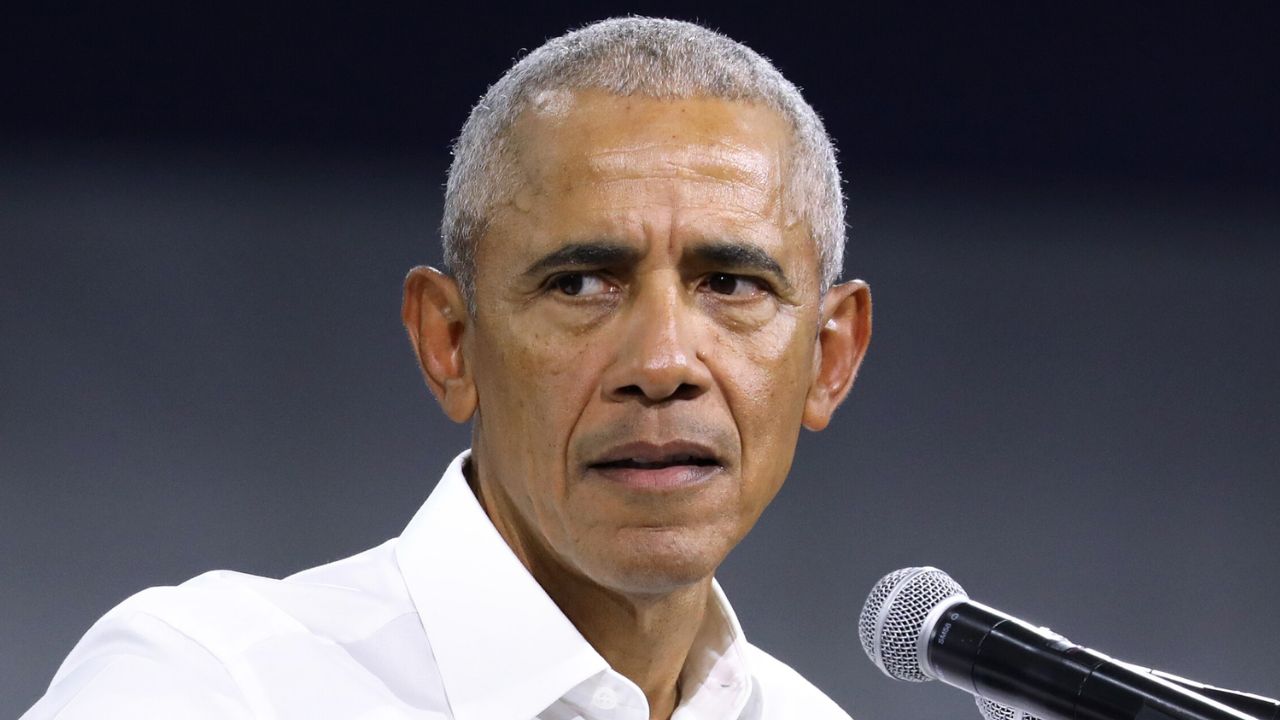
Former President Barack Obama is urging Americans across the country to vote in the November 3 midterm elections, telling voters they have the power to change the nation’s direction but can only exercise that power by participating in the election. In a message published Tuesday, Obama encouraged Americans to locate their polling places, contact relatives and friends, and make sure the people around them also cast ballots. His appeal comes as Republicans defend their congressional majorities under President Donald Trump and Democrats attempt to regain control of Congress.
Obama published the message on his official X account on Election Day, emphasizing that voting is the mechanism through which Americans can influence the country’s political direction. His complete statement reads:
This Election Day, you have the power to change the direction of this country, but only if you vote.
Find your polling location at https://IWillVote.com
Reach out to your family and friends to make sure they vote today, too.
The opening sentence carries the central message of Obama’s appeal. By telling Americans they have the power to change the direction of the country, the former president is emphasizing that political outcomes are not determined exclusively by the people holding elected office. Voters themselves have an opportunity to influence which candidates and political priorities receive support. However, his qualification that this power exists only if Americans vote makes participation the central condition of his argument.
The statement also places particular emphasis on the November 3 election as an opportunity for Americans to express their views about the country’s current political leadership. Although Obama does not explicitly mention Trump, Republicans or Democrats in the post, the timing is significant. Trump is currently president, Republicans control both chambers of Congress, and the midterm elections will determine whether that arrangement continues or changes.
Control of Congress is particularly important because the House and Senate have substantial authority over legislation, federal spending, investigations and oversight of the executive branch. A change in congressional control could therefore alter how much support Trump’s administration receives from lawmakers and how aggressively Congress scrutinizes its decisions.
Reuters reported November 2 that Republicans entered Election Day with a 53-47 majority in the Senate. Democrats need a net gain of four seats to secure a Senate majority. The races have become increasingly competitive amid voter concerns about Trump’s approval, the war with Iran and rising prices. The House is also being contested, making the election an important test of the president’s political standing less than two years into his second term.
Obama urges Americans to bring others to the polls
The second part of Obama’s message goes beyond encouraging individuals to vote themselves. By specifically asking Americans to reach out to family members and friends, he is encouraging voters to take an active role in increasing participation within their own communities.
That distinction is important because Obama’s message is directed not only at people who are already politically engaged but also at those who might otherwise overlook Election Day or decide not to participate. His appeal encourages Americans to make voting a shared responsibility by reminding people around them that their participation matters.
His recommendation to use IWillVote.com also gives the message a practical component. Rather than simply telling people to vote, Obama directs them to a resource where they can find information about their polling locations. The website is intended to help voters navigate the process of participating in the election.
The Election Day message follows a more extensive campaign effort by Obama on behalf of Democratic candidates. On October 24, he appeared in Detroit alongside Michigan Democratic gubernatorial nominee Jocelyn Benson and Senate nominee Abdul El-Sayed. The event was part of his effort to help Democrats ahead of the November elections, with Obama publicly encouraging voters to support the party’s candidates.
Reuters reported that Obama had endorsed El-Sayed, who is challenging Republican Mike Rogers for a Senate seat currently held by retiring Democratic Senator Gary Peters. The Michigan contest is among the races that could help determine whether Democrats secure the four additional Senate seats needed to take control of the chamber.
Obama has directly criticized Trump’s policies
Although Tuesday’s X post does not identify Trump by name, Obama’s recent public appearances have made his opposition to several administration policies considerably more explicit.
During his October 24 Detroit appearance, Obama criticized Trump’s handling of the war with Iran, arguing that the military campaign had produced significant costs without achieving the administration’s stated objectives. He also criticized the administration’s tariff policies, saying American consumers ultimately bear the costs of tariffs and arguing that they have contributed to higher prices.
Obama connected those issues to the economic concerns facing American households, particularly the cost of everyday goods and the financial pressures affecting working families. His criticism also extended to immigration enforcement and what he described as the administration’s treatment of American communities.
These comments provide important context for his Election Day appeal. While he does not repeat those criticisms in Tuesday’s short message, his recent campaign appearances show that he has been encouraging Americans to view the election as an opportunity to respond to the administration’s policies through the ballot box.
Obama’s criticism of the Iran war also reflects a longstanding foreign-policy disagreement between the former president and Trump. During Obama’s presidency, his administration negotiated the Joint Comprehensive Plan of Action, commonly known as the Iran nuclear agreement, alongside other international powers. The agreement placed restrictions and monitoring requirements on Iran’s nuclear program in exchange for sanctions relief. Trump withdrew the United States from the agreement in 2018, reversing a major foreign-policy achievement of the Obama administration.
The disagreement over Iran has consequently been part of the broader political conflict between the two presidents. In his recent remarks, Obama contrasted the diplomatic approach taken during his administration with Trump’s military approach, arguing that the earlier agreement had constrained Iran’s nuclear program without requiring the United States to launch a military campaign.
Tariffs represent another area where Obama has increasingly challenged Trump’s economic agenda. During the Detroit rally, he argued that tariffs can raise costs for American consumers and businesses that depend on international supply chains. He specifically highlighted Michigan’s automotive industry, where vehicles and components can involve manufacturing and supply operations across multiple countries.
His comments were particularly relevant to the state’s manufacturing workforce and the economic concerns that have become central to the 2026 elections. By connecting tariffs to vehicle production and consumer prices, Obama framed the issue as one affecting household budgets and American businesses rather than simply an international trade dispute.
A longstanding political conflict with Trump
Obama’s opposition to Trump also has a history extending back well before the current administration. Trump became nationally prominent through his promotion of the false birther conspiracy questioning whether Obama was born in the United States and was constitutionally eligible to serve as president. Obama publicly addressed the controversy in 2011, releasing his long-form birth certificate after years of questions and political attacks.
The two men subsequently became increasingly direct political opponents. Obama criticized Trump during the 2016 presidential campaign, publicly questioning his qualifications and warning voters about the consequences of electing him. Trump, meanwhile, campaigned against Obama’s record and repeatedly promised to reverse major policies established during his presidency, including the Iran nuclear agreement.
Their disagreements continued after Trump entered the White House in 2017, particularly over immigration, international agreements and the direction of American foreign policy. Trump’s withdrawal from the Iran agreement became one of the most prominent reversals of Obama’s diplomatic legacy.
Obama’s broader Election Day message
Obama’s latest statement does not explicitly instruct Americans to vote for Democratic candidates, nor does it identify individual races or candidates. Nevertheless, his recent endorsements, campaign appearances and criticism of Trump’s policies establish a clear political context for the message.
His October appearance in Michigan, his support for Democratic candidates and his public criticism of the administration demonstrate that his involvement in the 2026 elections extends beyond a general appeal for civic participation. He has actively campaigned for Democrats seeking offices that could influence the direction of state and federal government.
Ultimately, Obama’s Election Day message returns to one central argument: Americans cannot influence the country’s political future if they do not participate in choosing their representatives. By urging voters to find their polling locations and encourage others to vote, the former president is making a final public appeal for participation at a moment when control of Congress and the political direction of Trump’s administration are being decided at the ballot box.