
Walk the deck of USS Missouri at Pearl Harbor and the scale hits you first. Nine 16-inch guns sit in three turrets, and her turret faces carry 17 inches of armor. Nobody builds anything like her today.
That is not nostalgia talking. Britain sent its last battleship to the breakers in 1960, and the U.S. Navy decommissioned Missouri in 1992. Since then, carriers, submarines and missiles have handled the jobs the big-gun ship once did. In our view, the world will not see their like again.
These are Combat Rated’s picks: ten battleships that were completed, commissioned and sent to sea, from the ship that won Tsushima to the one that hosted Japan’s surrender. Several still survive as museums. Every one of them shows what the battleship era built at its best.
1. Mikasa
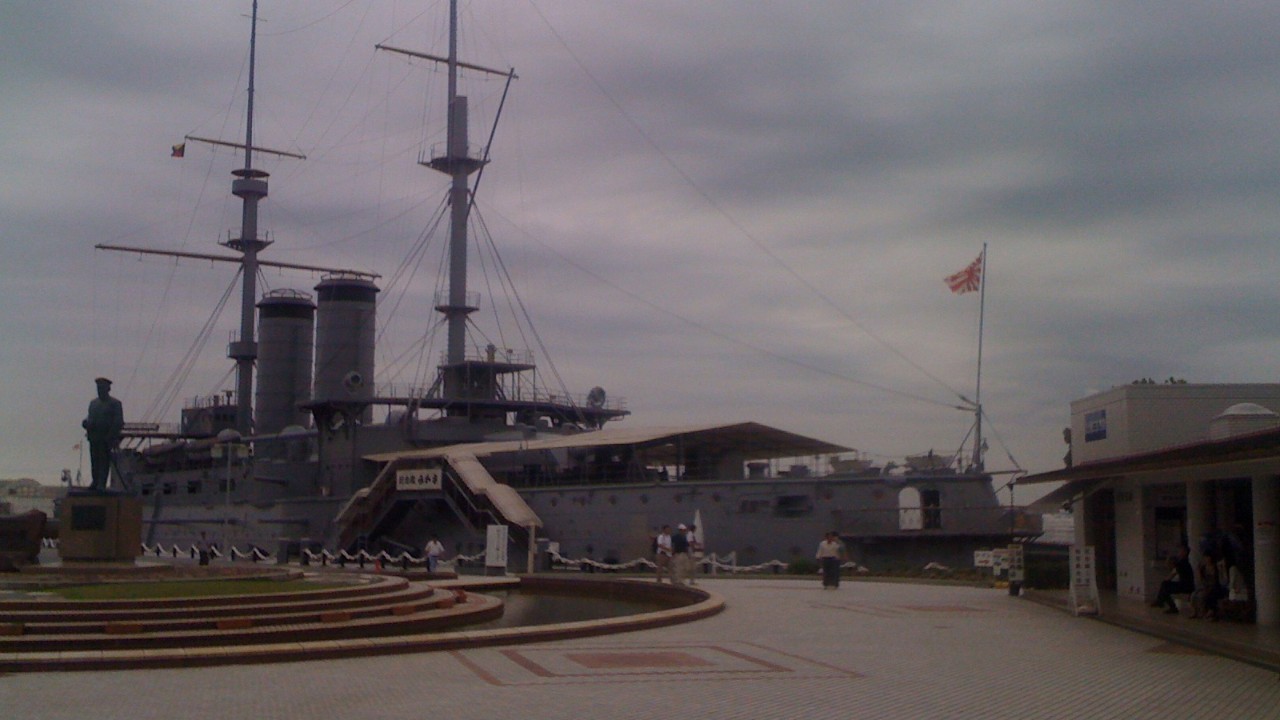
Mikasa is the oldest ship on this list and one of the most important. Vickers built her at Barrow in Britain, a common arrangement for the Japanese navy of that era. She was laid down in January 1899 and completed in March 1902, a British-built ship for a rising Asian navy.
Three years later, she made history. Admiral Heihachiro Togo flew his flag in Mikasa at the Battle of Tsushima on May 27 and 28, 1905, where Japan defeated the Russian fleet. Soon after the war, a magazine explosion sank her at Sasebo. Remarkably, Japan raised her about a year later and returned her to service as a flagship, coastal defense ship and training ship.
The 1922 Washington Naval Treaty should have finished her. Instead, the signatories excluded her, and Japan declared her a national relic. After World War II, her condition declined badly. Then a restoration began in October 1959, backed by the Mikasa Preservation Association and goodwill from the U.S. Navy, including Fleet Admiral Chester Nimitz, as Proceedings recounts. She reopened on May 27, 1961, and today sits set in concrete at Yokosuka.
2. HMS Dreadnought
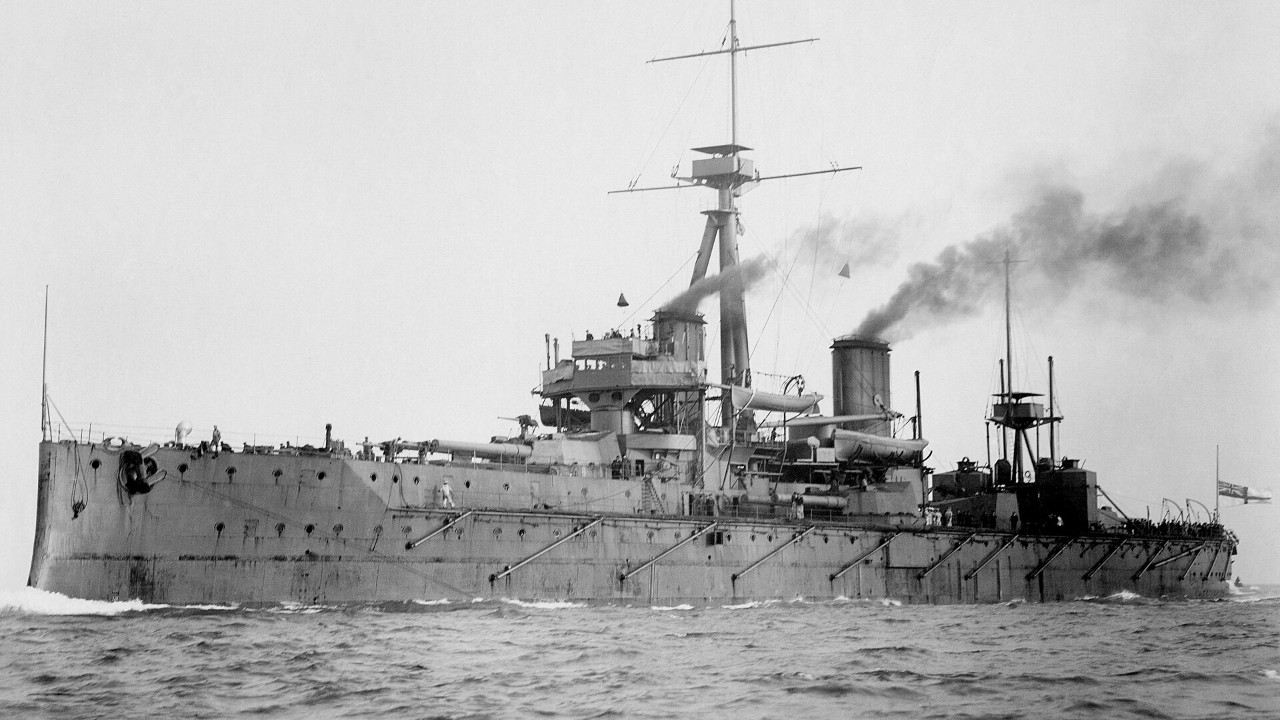
Some ships improve on the past. HMS Dreadnought erased it. Admiral Sir John “Jackie” Fisher, who became First Sea Lord in 1904, drove her design. She took her name from a 98-gun ship that fought at Trafalgar. When she was completed in 1906, she was the best-armed and fastest battleship in the world.
The numbers explain why. Most battleships of the era carried four big guns, but Dreadnought mounted ten 12-inch guns. She also used new steam turbines instead of piston engines. As a result, she could reach 21 knots, about three knots faster than piston-engined rivals. Overnight, her name became the label for an entire generation of battleships, according to Royal Museums Greenwich.
Ironically, her most famous kill was not another battleship. On March 29, 1915, she rammed and sank the German submarine U-29. That makes her, in the museum’s words, “the only battleship ever to sink a submarine.” In our view, no single warship changed naval history faster. Every battleship that followed on this list was, in some sense, a dreadnought. Her ten-gun broadside set the template that navies chased for the next four decades.
3. USS Texas (BB-35)
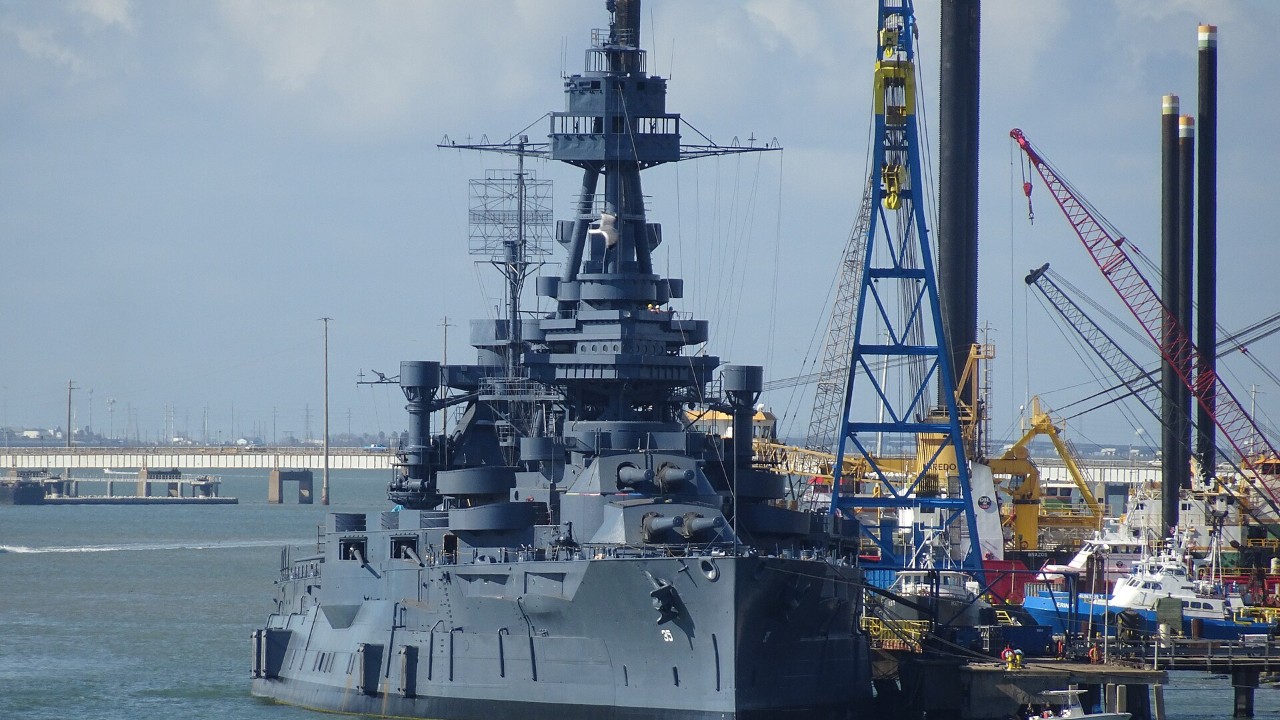
Texas is America’s last surviving battleship to serve in both world wars. Newport News Shipbuilding laid her down in 1912, and she commissioned at Norfolk Navy Yard on March 12, 1914. She was the first American battleship armed with 14-inch/45 guns, and she carried ten of them.
Her list of firsts runs long. On March 10, 1919, a Sopwith Camel flew off a ramp on her No. 2 turret, making her the first American battleship to launch an aircraft. In 1939, she received experimental air-search radar. Meanwhile, her combat record stretched from the North Sea in 1918 to Okinawa in 1945. On D-Day, she fired 255 of her 14-inch shells at Pointe du Hoc in 34 minutes, then supported the Omaha Beach landings.
Remarkably, she lost only one crew member to enemy fire in her entire career. That happened at Cherbourg on June 25, 1944, according to the Battleship Texas Foundation. Texas arrived at the San Jacinto Battleground near Houston on April 21, 1948, as a museum and memorial. In 2022, she went to a Galveston shipyard for a major hull rebuild, and her foundation plans to berth her at Pier 15 in Galveston.
4. HMS Warspite
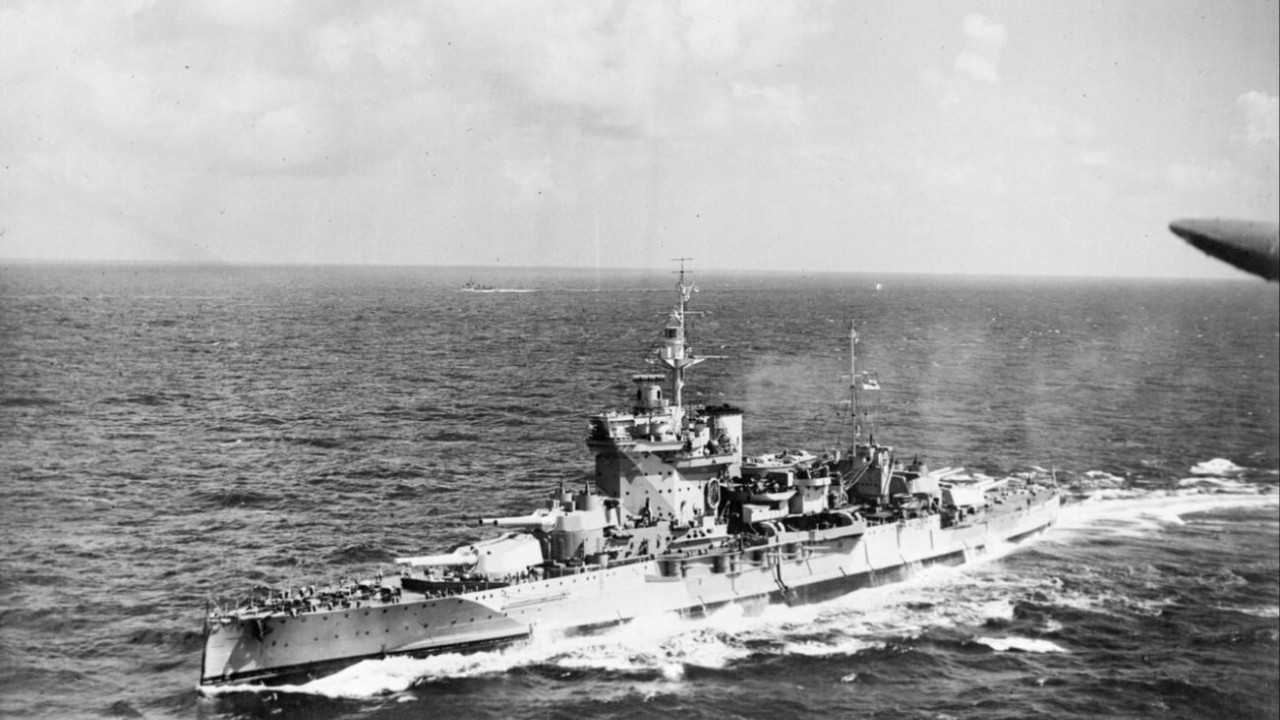
If one battleship earned the title of greatest fighting ship in Royal Navy history, it is Warspite. Devonport Dockyard launched her on November 26, 1913, and she commissioned on March 8, 1915. She carried eight 15-inch guns in four twin turrets and could make 24 knots as built.
Her record is hard to match. At Jutland in 1916, her steering jammed and she circled twice under fire, yet she survived 15 hits. In 1940, at Calabria, she hit the Italian battleship Giulio Cesare at roughly 24 kilometers, one of the longest-range hits ever scored at sea. She also fought at Narvik and Matapan. Later, at Salerno in 1943, a guided bomb crippled her, but she came back. On D-Day, she was the first ship to open fire.
Admiral Andrew Cunningham once signaled that when “the old lady lifts her skirts she can run,” and the Grand Old Lady nickname stuck. In total, she earned 15 battle honours, the most ever awarded to a single Royal Navy ship. Even her end was defiant. In 1947, under tow to the breakers, she was driven onto the rocks at Prussia Cove, Cornwall, where workers finally took her apart.
5. Bismarck
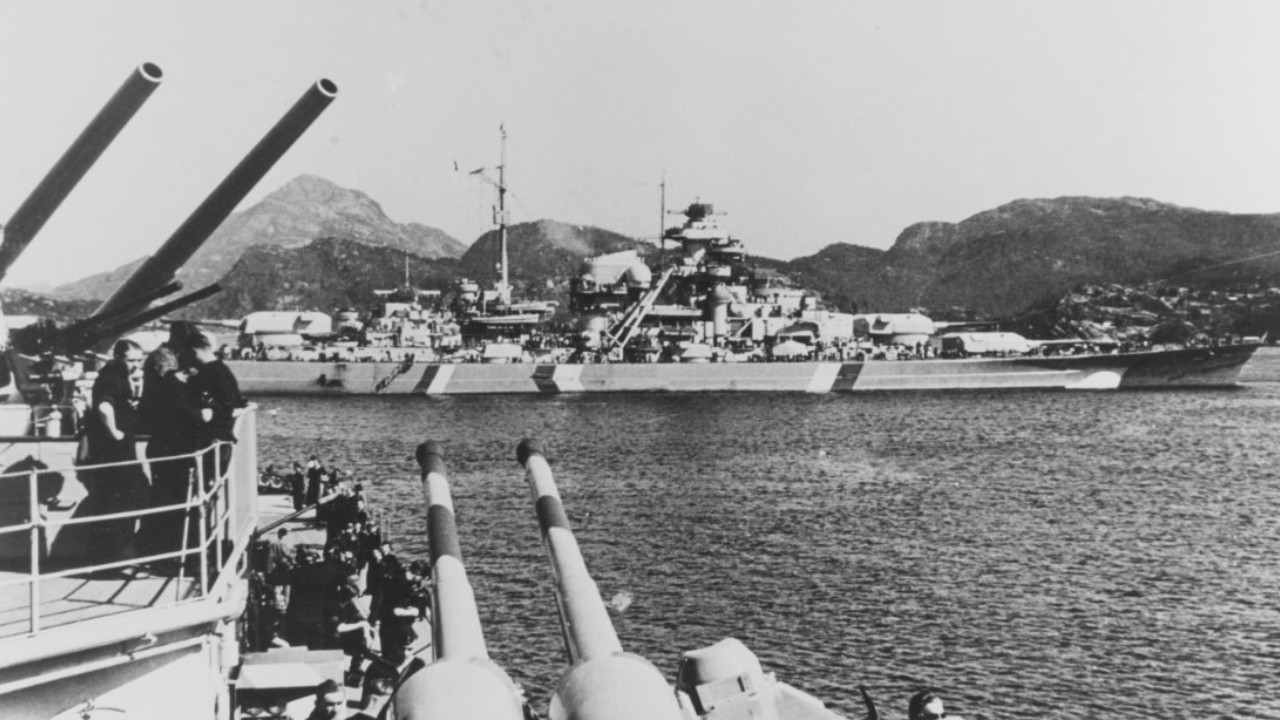
Few battleships have a legend as large as Bismarck, and few had a career as short. Germany laid her down in 1936 and launched her in 1939. A British reconnaissance aircraft spotted her off Bergen, Norway, in May 1941. She displaced 52,600 tons, carried eight 15-inch guns and could steam at 30 knots.
Her only operation lasted barely a week. In May 1941, with Admiral Gunther Lutjens aboard, she broke out into the North Atlantic. Off Iceland, she met HMS Hood and HMS Prince of Wales. One of her shells detonated in Hood’s magazine and destroyed the British battlecruiser. Bismarck then headed for Brest, but an aircraft torpedo jammed her steering gear on May 26.
The end came the next morning. On May 27, 1941, the battleships King George V and Rodney battered her for about an hour. Torpedoes from the cruiser Dorsetshire then sent her down. Of roughly 2,300 men aboard, only about 110 survived, according to Encyclopaedia Britannica. In our view, Bismarck shows both the power and the limits of the big-gun ship. In 1989, Robert Ballard’s expedition found her wreck sitting upright more than 15,000 feet down.
6. Yamato
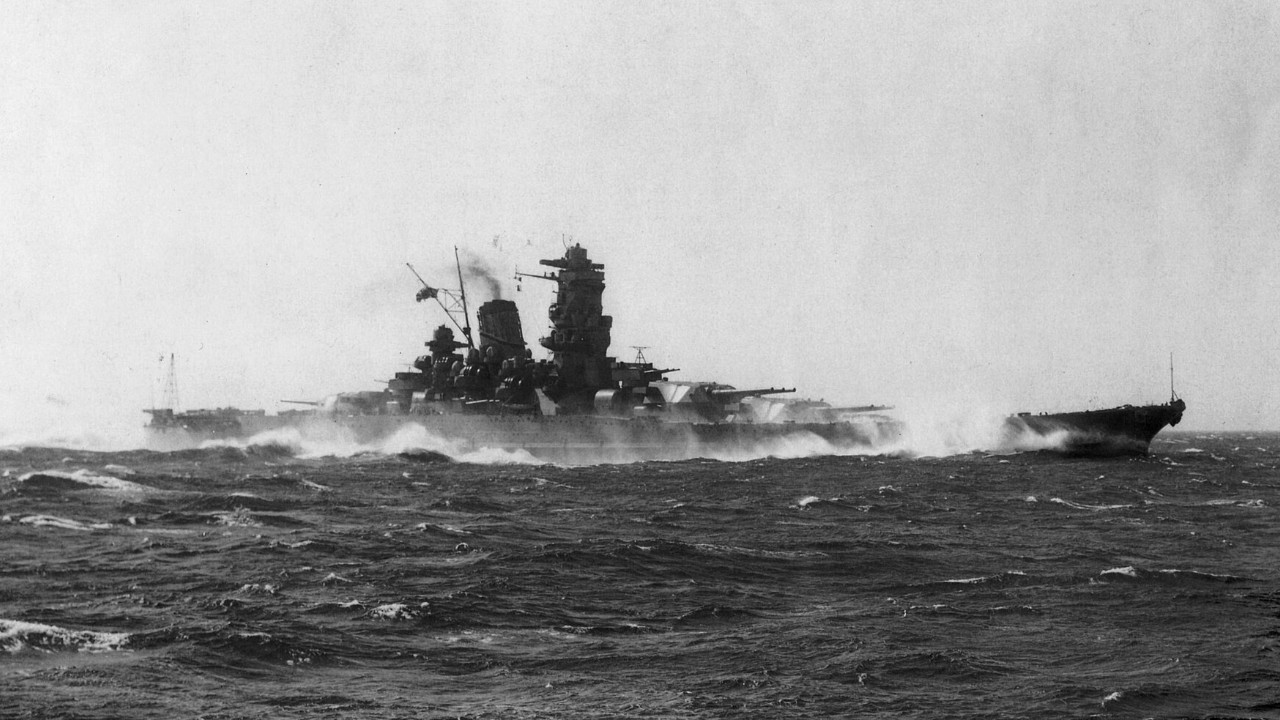
Yamato was the largest warship in the world, and her guns were the biggest ever mounted on a ship. Japan began her design in 1934 and started construction in 1937 in great secrecy. She commissioned in December 1941, the same month as Pearl Harbor.
Her size still impresses. She displaced about 65,000 tons, or roughly 72,000 tons fully loaded. Meanwhile, nine 18.1-inch guns in three triple turrets formed her main battery. Her sister Musashi shared the design and went down at Leyte Gulf. Yet by 1945, the war at sea belonged to aircraft carriers, and Yamato’s last mission showed it.
On April 7, 1945, she sailed on a one-way “special attack” toward Okinawa, with orders to sink transports and beach herself. Instead, about 390 aircraft from Task Force 58 caught her at sea, and she sank at about 1430, according to the Naval History and Heritage Command. Our take: Yamato marked the peak of battleship engineering, and no one will build a warship around guns that size again. Today, the Yamato Museum in Kure displays a 1:10 scale model of her.
7. USS North Carolina (BB-55)
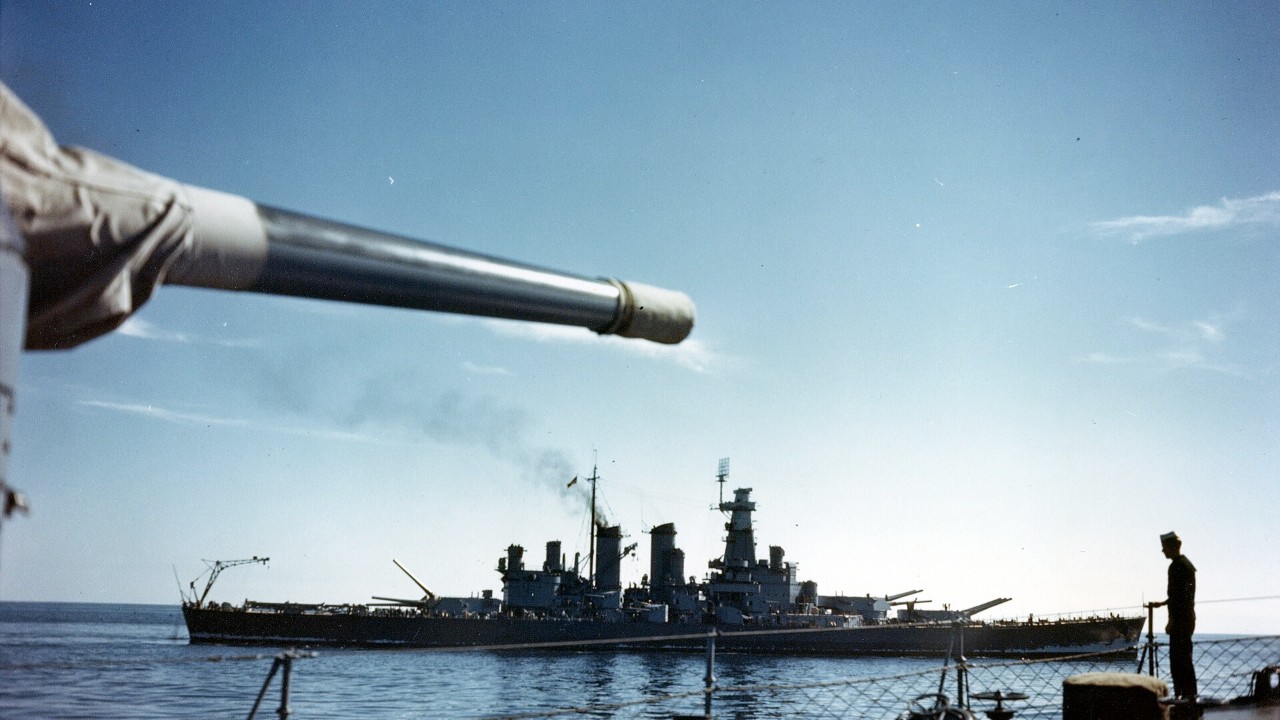
North Carolina opened a new era for American battleships. She commissioned at the New York Naval Shipyard on April 9, 1941, with nine 16-inch guns. At the time, she was hailed as the “greatest sea weapon in the world.”
Her nickname came from a joke, and it fit her perfectly. According to the story, USS Washington’s crew played the Broadway tune “Here Comes the Showboat” as she passed, and “Showboat” stuck. More importantly, she backed it up. Over the next four years, she took part in every major South Pacific offensive, including Guadalcanal. By war’s end, she had earned 15 battle stars. That record is why supporters call her America’s most decorated World War II battleship, and it gave them a strong case when her future came into question.
Then she almost vanished. In 1960, the Navy slated her for scrap. However, a statewide citizens’ campaign raised $345,000 to buy her from the federal government. As NCpedia explains, she was permanently docked across the Cape Fear River from Wilmington. In our view, her rescue showed what a determined public could save. She opened to visitors on October 14, 1962.
8. USS Massachusetts (BB-59)
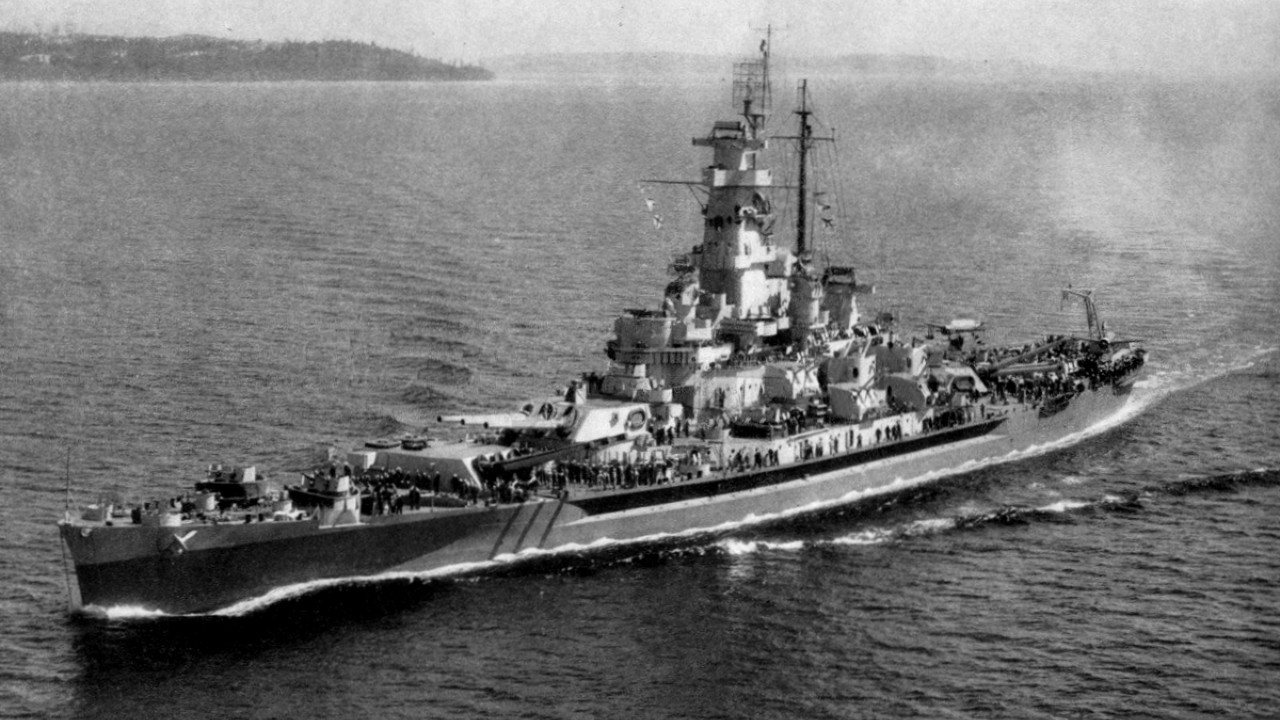
Massachusetts has a claim few warships can make: she may have fired America’s first and last big-gun shells of the war. Bethlehem Steel built her at Quincy, Massachusetts. She launched on September 23, 1941, and commissioned on May 12, 1942.
Her first fight came fast. On November 8, 1942, off Casablanca, the French battleship Jean Bart opened fire with 15-inch guns. Massachusetts answered at 0740, and her 16-inch shells were the first fired by U.S. forces against the European Axis powers. Within minutes, she silenced Jean Bart’s main battery, then sank two French destroyers that joined the attack. Then she sailed to the Pacific, where she shelled Nauru and Kwajalein and supported the Truk raid and the Hollandia landings.
Her war ended where it began, with her big guns. On August 9, 1945, she bombarded Kamaishi on Honshu, where she likely fired the last 16-inch shell of World War II, according to the Naval History and Heritage Command. She earned 11 battle stars. Later, the state took her over, and she was enshrined at Fall River on August 14, 1965, as Massachusetts’s World War II memorial.
9. HMS Vanguard
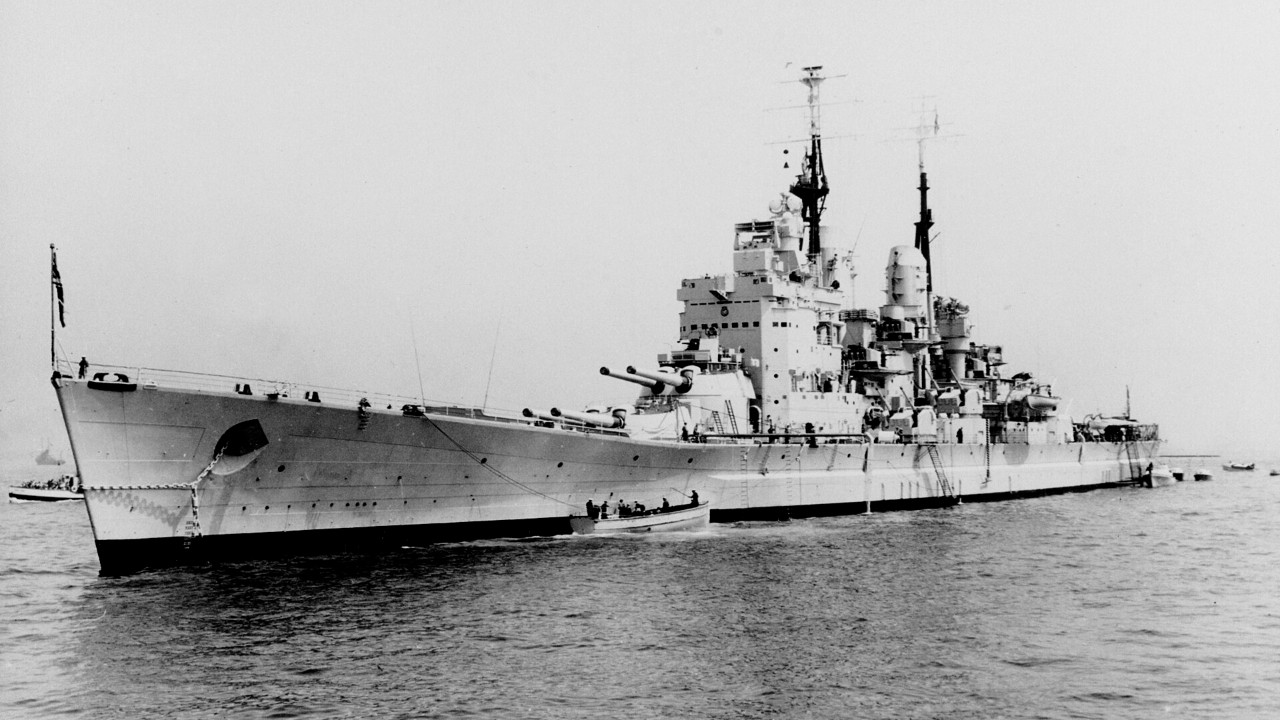
Vanguard was the last battleship the Royal Navy ever built. Workers laid her down at Clydebank in 1941. However, she arrived too late for the war, commissioning on April 25, 1946. As a result, she enjoyed something rare for a battleship of her era: a long, careful trial period in peacetime.
Her main guns told an unusual story. She carried eight 15-inch guns in four twin turrets, and those guns and mountings came from the battlecruisers Courageous and Glorious. Britain had removed them when it converted those ships to aircraft carriers. Even so, she was a modern ship, designed for 30 knots and displacing more than 45,000 tons light.
Instead of combat, she drew royal duty. In 1947, she carried the royal family on a tour of South Africa. She stayed active until 1955, then served as a training ship and reserve fleet flagship. Plans to convert her into a missile ship came to nothing. In our view, she was the finest British battleship ever built. When she went to the breakers in 1960, the Royal Navy had no battleships for the first time in almost a century, as the Naval Historical Foundation notes.
10. USS Missouri (BB-63)
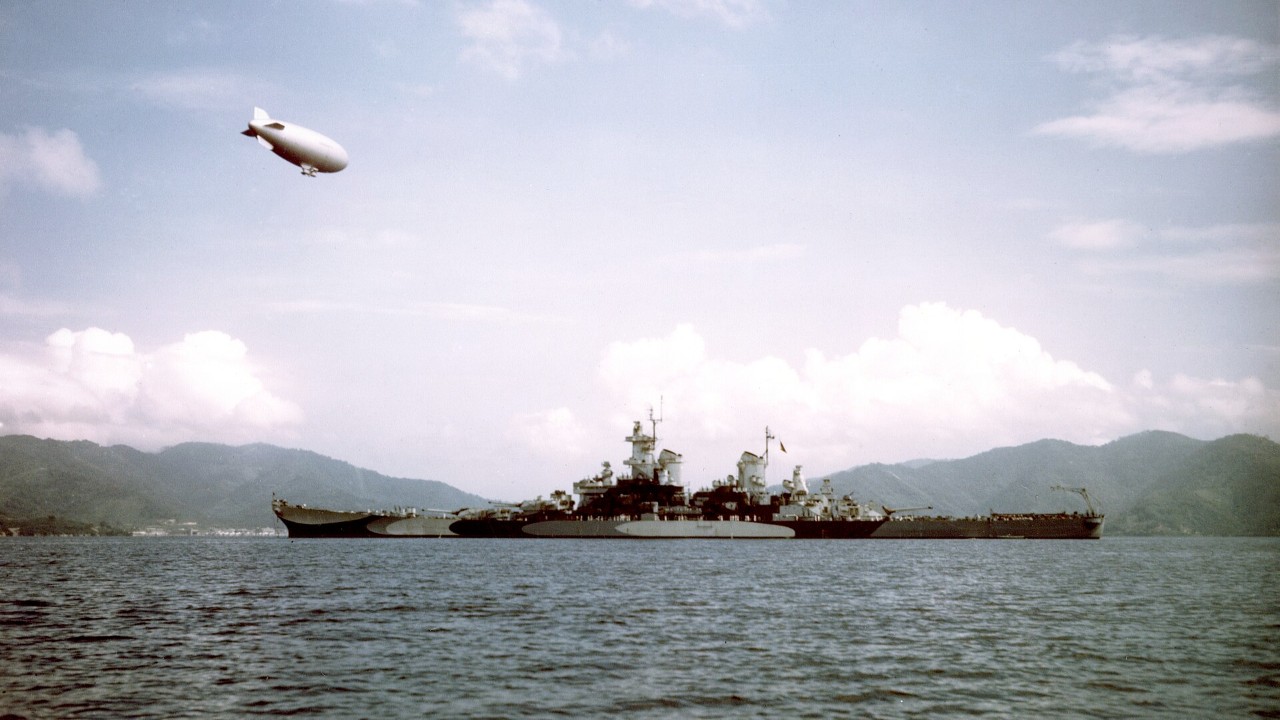
Missouri is the most famous battleship in American history, and her deck explains why. She commissioned on June 11, 1944, under Captain William M. Callaghan. She was the youngest of the Iowa-class sisters, with nine 16-inch guns, a top speed of more than 30 knots and a World War II crew of more than 2,500.
On September 2, 1945, she became the stage for the end of World War II. Fleet Admiral Chester Nimitz, General Douglas MacArthur and other Allied leaders came aboard in Tokyo Bay. Japan’s representatives then signed the surrender in a 23-minute ceremony broadcast around the world. However, her career did not end there. She earned five battle stars in the Korean War.
Decades later, she came back for one more fight. When Operation Desert Storm began, Missouri became the first battleship to fire Tomahawk cruise missiles at Iraqi targets, according to the Naval History and Heritage Command. She decommissioned on March 31, 1992. Then, on May 4, 1998, the Navy donated her as a museum and memorial ship. Today she rests at Pearl Harbor near the USS Arizona Memorial, bookending America’s war in the Pacific.