
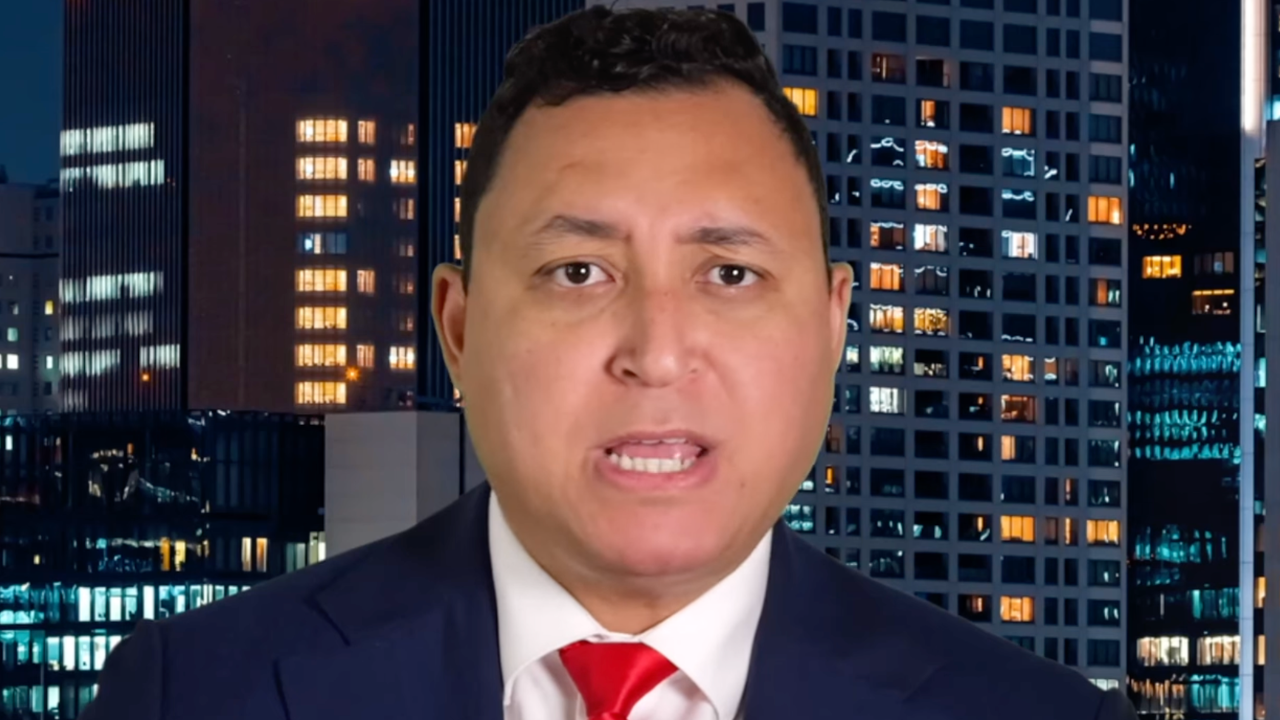
Australian Senator Ralph Babet said in a post on X on Sunday that anyone who believes Russia is losing the war in Ukraine is “deluding themselves,” arguing that Russian President Vladimir Putin has deliberately withheld the full weight of Moscow’s military because the consequences of doing so “would be catastrophic.” The United Australia Party senator went further, telling his more than half a million followers that it is the West, not Russia, that has prolonged and widened the conflict, declaring plainly: “Russia is not the aggressor here. We are.”
The post, published to Babet’s official X account at 4:39 a.m. AEST on August 9, 2026, read in full:
“Anyone who thinks Russia is losing the war in Ukraine is deluding themselves. Putin has avoided total escalation because the consequences would be catastrophic. If Russia unleashed its full military capability, the devastation would be unimaginable. It is the West that continues to prolong and expand this conflict, not Russia. Russia is not the aggressor here. We are. I explain why and how in my detailed long form video. Link in the comments.”
Babet, a Melbourne-based senator for Victoria first elected in 2022, linked the post to a roughly 20-minute video posted to his YouTube channel titled about Ukrainian President Volodymyr Zelensky being “exposed” on the world stage, laying out at length the argument behind his position that Washington and its allies, not the Kremlin, bear responsibility for the war’s continuation.
The video opens by revisiting the February 2025 Oval Office meeting between President Donald Trump, Vice President JD Vance and Zelensky, which turned tense on camera after Vance accused Ukraine of struggling to recruit soldiers and Zelensky pushed back on the characterization. Babet described Zelensky’s conduct in that meeting as disrespectful and accused him of squandering an offer of American security guarantees, at one point suggesting — citing a widely shared but unverified social media post — that Zelensky had sworn at Vance in Russian during the exchange.
From there, Babet’s video sets out a broader historical case: that modern Ukraine is, in his words, a “relatively new invention” carved from what he calls the historic Russian world, and that the split between the two nations was “provoked not by Russian aggression but by Western interference.” He argued that U.S. and NATO officials assured Soviet leader Mikhail Gorbachev in 1990 that the alliance would not expand eastward, a claim that has been examined by historians for decades and remains genuinely disputed — no written treaty language to that effect has surfaced, though declassified U.S. and German cables show the assurance was discussed verbally during German reunification talks, and Russian officials have long cited it as a broken promise.
Babet’s video also revisits the leaked 2014 phone call between then-Assistant Secretary of State Victoria Nuland and U.S. Ambassador Geoffrey Pyatt, in which the two discussed preferred candidates for post-Maidan Ukrainian leadership, presenting it as evidence that Washington engineered the ouster of Ukraine’s Russia-aligned president, Viktor Yanukovych. He linked that 2014 upheaval directly to the loss of Crimea and the war in the Donbas that followed, framing Russia’s 2022 invasion as a continuation of a conflict the West had already provoked rather than, as most Western governments and the United Nations General Assembly have formally characterized it, an unprovoked invasion of a sovereign country.
The senator also cited the U.S. asset manager BlackRock’s involvement in a postwar Ukrainian reconstruction fund, arguing that Kyiv’s Western backers are more interested in controlling Ukrainian assets than in the country’s independence. Ukraine’s government signed a memorandum with BlackRock in 2022 to help structure a reconstruction investment vehicle, a deal that has drawn scrutiny from critics in both Ukraine and the West over its terms, though it has not resulted in the kind of direct asset transfer Babet’s video describes.
Quoting former U.S. President Dwight D. Eisenhower’s 1961 farewell address warning of the dangers posed by “the military-industrial complex,” Babet argued that Trump’s push for a negotiated settlement represents a break from a Washington national-security establishment he says has profited from the war’s continuation. He credited Trump with resisting pressure to keep funding what he called a “losing venture,” and criticized UK Prime Minister Keir Starmer, French President Emmanuel Macron and Australian Prime Minister Anthony Albanese for continuing to back Kyiv — noting Australia’s roughly $1.5 billion in support for Ukraine and Albanese’s stated openness to contributing personnel to any postwar security arrangement.
Babet’s characterization of the war runs counter to the position adopted by successive Australian governments and the overwhelming majority of the international community, which has treated Russia’s February 2022 invasion as a violation of Ukrainian sovereignty condemned in multiple United Nations General Assembly resolutions. It also comes as the U.S. Senate, on July 28, voted 86-12 to advance the Lindsey O. Graham Sanctioning Russia and Iran Act, sweeping bipartisan legislation aimed at tightening economic pressure on Moscow’s war economy, in a vote that followed a personal appeal to senators by Zelensky.
On the ground, the war Babet describes as one Russia is not losing has continued to produce contested and heavy fighting rather than a clear outcome for either side. Ukrainian forces mounted a counterattack in Zaporizhzhia province in February 2026 that reclaimed roughly 100 square miles of territory, according to the Council on Foreign Relations’ conflict tracker, while Russia has pressed assaults around the eastern town of Huliaipole. Several short, holiday-linked truces — around Orthodox Easter in April and Russia’s Victory Day commemorations in May — briefly paused large-scale operations before both sides accused each other of violations and hostilities resumed.
Babet is not new to staking out positions sympathetic to Moscow’s framing of the war. A report examining Russian-aligned narratives in Australian public life noted that an Australian Senate inquiry into foreign interference had cited Babet as an example of a parliamentarian “actively spreading Russian disinformation” in domestic political debate, pointing to earlier videos in which he used similar language describing Ukraine as a “relatively new invention” and accusing Zelensky of being willing to “burn his country to the ground.” The senator has also previously voiced opposition to Australian sanctions on Russia and questioned Canberra’s participation in NATO-linked initiatives.
Babet closed the video by casting Trump as the only major world leader still pursuing peace, arguing that European leaders and Zelensky are prepared to “drive Ukraine all the way to ruin” rather than accept a negotiated end to the fighting. He signed off identifying himself as “Senator Ralph Babet for the United Australia Party,” inviting viewers to share the video further.