
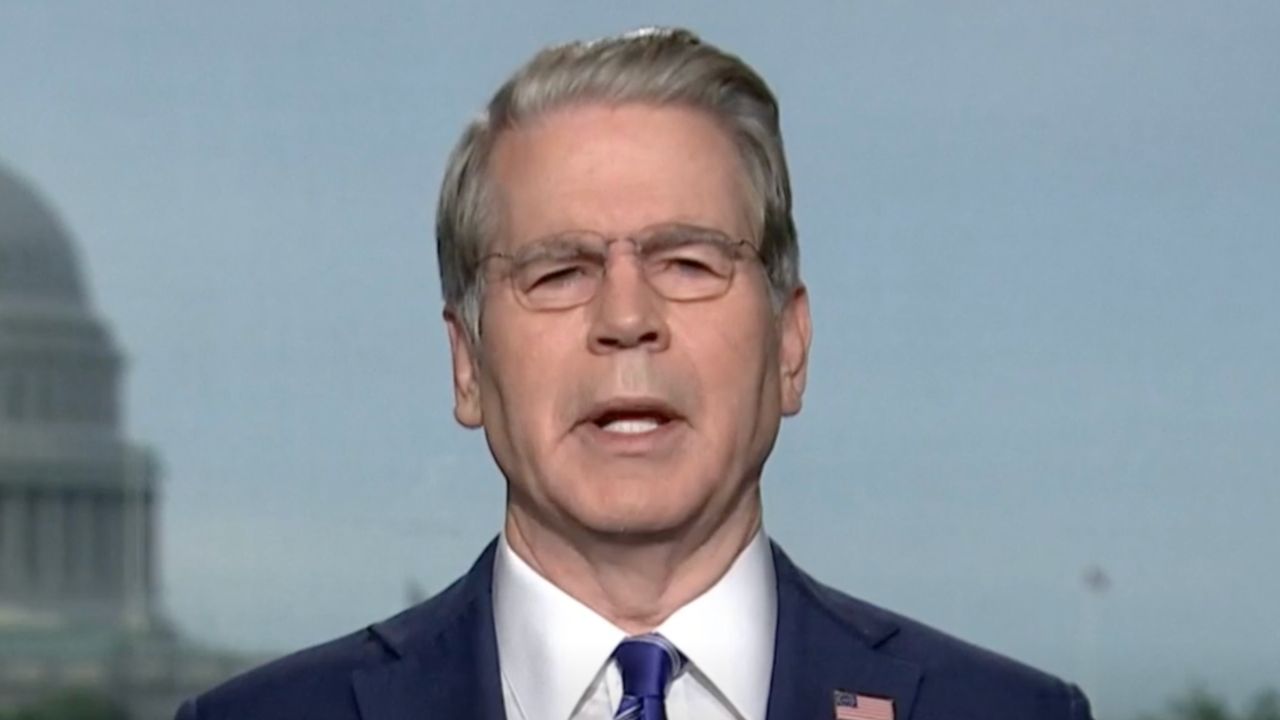
Treasury Secretary Scott Bessent warned Friday that Iran may never recover revenue from oil it has already sold, as the Treasury Department imposed sanctions on four Iranian nationals accused of helping the government sell oil abroad and diverting proceeds for personal gain under Operation Economic Outcast.
In a November 20 announcement, Treasury said Iran was attempting to recover billions of dollars owed by intermediaries it described as “oil trustees,” who facilitate petroleum sales and collect payments on behalf of the Iranian government. The department said some of those intermediaries had retained the proceeds instead of transferring them to Tehran.
“Iran’s tyrannical regime never fails to put its own interests before those of its own citizens, even as ordinary Iranians face shortages of bread and fuel,” Bessent said.
“The regime has exhausted its seaborne oil supply, and it may never see the revenue from the oil it has already sold. The ship is sinking.”
Bessent also published the statement on X, responding to a Treasury Department post announcing the sanctions.
Treasury said no Iranian oil remained on the water outside the U.S. military blockade and that Iran had not loaded oil onto vessels since Operation Economic Outcast began on August 24. Those assessments were presented by the department as evidence of the pressure the campaign has placed on Iran’s petroleum exports. Treasury did not provide an independently verifiable accounting of the remaining oil supply or the amount of revenue Iran could ultimately recover.
The sanctions target Mohammad Javad Bavand, a former intelligence officer in Iran’s Islamic Revolutionary Guard Corps (IRGC), and Majid Taj, the brother of Iranian Football Federation President Mehdi Taj. Treasury accused both men of participating in a network responsible for selling Iranian oil and recovering proceeds held in other countries.
According to Treasury, Bavand coordinated efforts to recover payments through a network of personal contacts that included Taj. The department said the Iranian government continued relying on the network despite members owing billions of dollars from previous petroleum transactions.
Treasury also linked Bavand to Sepehr Energy Jahan Nama Pars Company, a previously sanctioned business that U.S. officials describe as a front company responsible for selling petroleum on behalf of the Iranian Armed Forces General Staff. Bavand and Taj were designated under Executive Order 13902 for operating in Iran’s petroleum sector.
The other two individuals sanctioned were Mohammadhossein Servati, the son of IRGC Brig. Gen. Mohsen Servati, and Mojtaba Arabnejad, whose father, Hamid Arabnejad, is the chief executive of the sanctioned Iranian airline Mahan Air.
Treasury said Servati held executive positions at companies associated with Sepehr Energy Jahan Nama Pars, including Xin Rui Jin Trad Co., Limited, which the department accused of arranging and receiving Iranian oil shipments destined for independent Chinese refineries, commonly known as “teapot” refineries.
Servati was designated under Executive Order 13224, as amended, for allegedly providing material support to Sepehr Energy Jahan Nama Pars.
Arabnejad was accused of using connections to the IRGC-Qods Force to procure aircraft parts for Mahan Air and weapons for the Iranian military through businesses operating under the guise of agricultural companies. Treasury also alleged that he supervised oil sales whose proceeds helped support Mahan Air.
He was designated under the same counterterrorism authority for providing support to the airline. The Office of Foreign Assets Control confirmed all four additions to its Specially Designated Nationals and Blocked Persons List on November 20.
The designations block any property or interests in property belonging to the individuals that are located in the United States or controlled by U.S. persons. They also generally prohibit U.S. persons from conducting transactions involving the designated individuals, subject to applicable authorizations and exemptions.
Companies owned 50 percent or more, directly or indirectly and in aggregate, by one or more blocked persons are also subject to blocking restrictions. Treasury warned that foreign financial institutions facilitating certain transactions involving sanctioned individuals could face additional restrictions on their access to the U.S. financial system.
The latest action is part of Operation Economic Outcast, launched by Bessent on August 24 at President Donald Trump’s direction. The initiative seeks to restrict the Iranian government’s access to international financial networks, oil revenues and other sources of funding that U.S. officials say support its military and regional activities.
At the campaign’s launch, Bessent said Treasury had identified networks and financial channels used by Iran to sell petroleum and evade existing sanctions. The department announced plans to increase pressure on foreign companies, financial institutions and intermediaries continuing to conduct business with sanctioned Iranian entities.
In Friday’s announcement, Treasury said it was coordinating with other U.S. agencies and international partners, including the European Union, United Kingdom and Gulf countries, to identify and restrict additional sources of Iranian revenue. The department warned that businesses facilitating sanctions evasion or money laundering on behalf of Iran risk exclusion from the U.S. financial system.
The sanctions come amid the continuing U.S. military blockade affecting Iranian oil shipments. Washington has sought to restrict Tehran’s ability to export petroleum and receive payments from overseas buyers as part of its broader military and economic campaign against Iran.
In a separate November 20 report, Reuters said U.S. Treasury officials had pressed authorities in Singapore and Malaysia to strengthen enforcement against Iranian sanctions-evasion networks, particularly those involving maritime transportation, aviation and procurement. The outreach reflected Washington’s efforts to limit Iran’s access to overseas commercial and financial channels.
The State Department also issued a statement on November 20 supporting the four designations, saying the individuals had helped generate revenue for the Iranian military and its activities abroad.
Treasury’s announcement did not establish how much of the outstanding oil revenue would ultimately remain inaccessible to Iran. Bessent’s warning that Tehran may never recover the money reflects the administration’s assessment of the combined effects of the blockade, sanctions enforcement and alleged diversion of proceeds by intermediaries.