
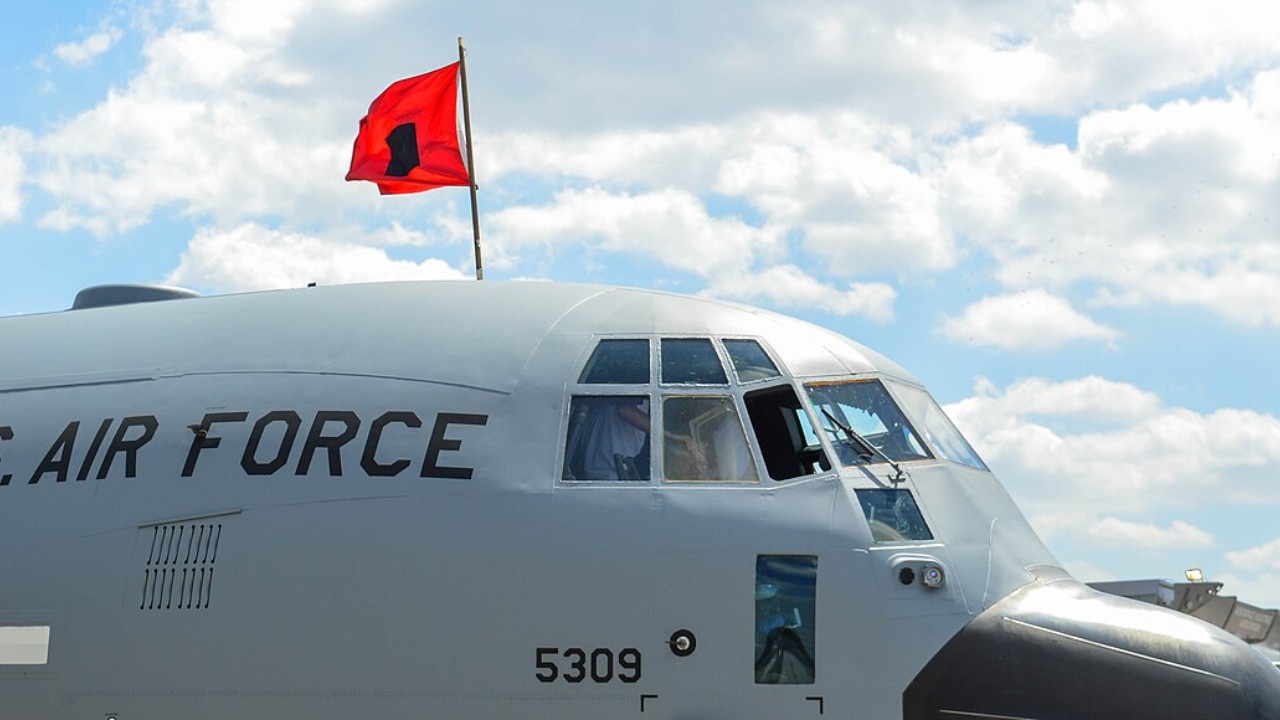
One of the airframes Colombia’s air force turned into a modern gunship first went to war over Normandy on D-Day. That airframe began life as a Douglas C-47 in the 1940s. Few machines in any air force can claim that kind of career, yet the best transports often can, from the Douglas twin to the C-130 Hercules.
Cargo planes rarely make headlines. Instead, they haul troops, fuel, vehicles and aid in the background, often from rough strips, while fighters get the attention. However, the strongest designs keep flying long after their replacements were supposed to take over.
This list is Combat Rated’s pick of eight military transport planes that have quietly proven almost impossible to wear out. Each entry rests on a documented service life, a production record or a surviving airframe, from Lockheed and Douglas to Antonov, Ilyushin and de Havilland Canada.
1. Lockheed C-130 Hercules
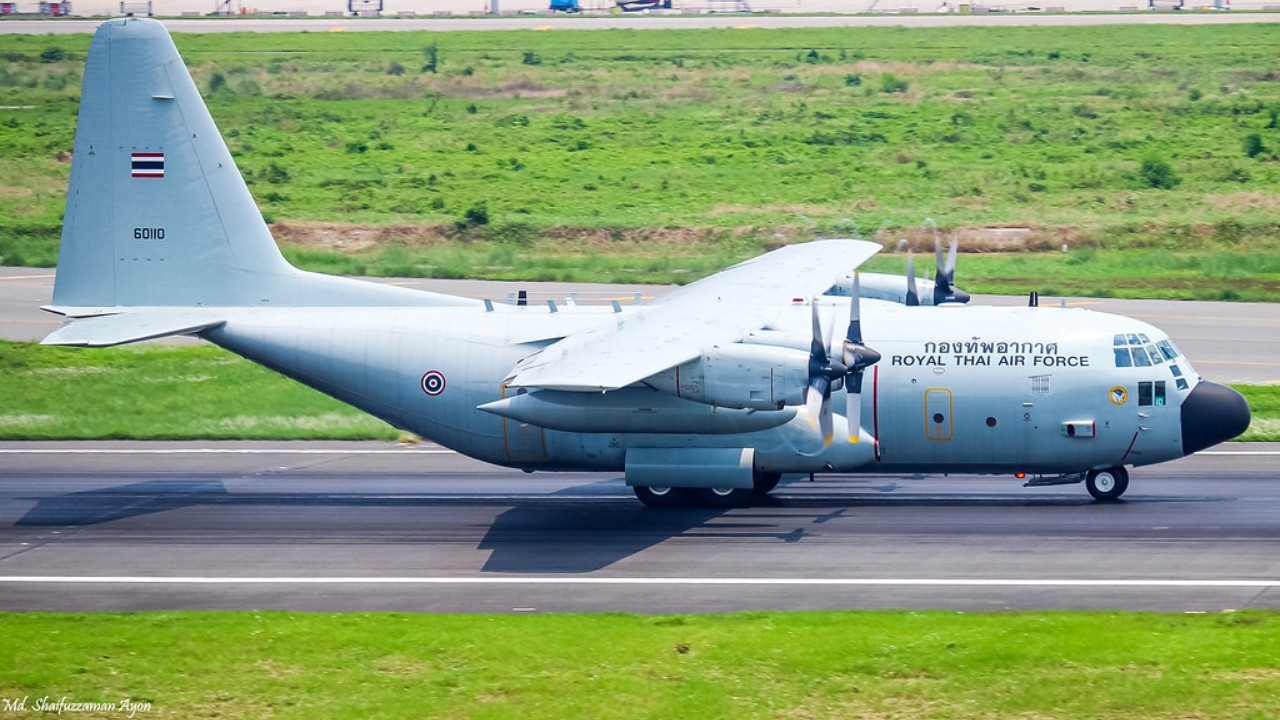
The U.S. Air Force asked for a medium cargo plane in 1951, during the Korean War. Lockheed’s answer, the YC-130 prototype, first flew on 23 August 1954, from Burbank to Edwards Air Force Base. Strikingly, it got airborne after only 855 feet of runway. That short-field talent became the type’s trademark.
Since then, the numbers have kept climbing. According to Air & Space Forces Magazine’s 70th-anniversary feature, more than 2,500 airframes have been built, and 70 nations fly the type. The magazine calls it one of the longest continually produced aircraft in history. Meanwhile, the current C-130J carries six-bladed propellers and a glass cockpit.
The variety is just as impressive, from gunships and tankers to the Hurricane Hunters, who have flown the type since 1965. Lockheed engineer Willis Hawkins said it was built for places “where there weren’t any nice, clean places to take care of it.” For us, that design brief explains everything, because a transport built for rough conditions handles ordinary wear with ease. Gen. Mike Minihan has gone further and called it “the greatest airplane ever built.”
2. Basler BT-67 (Douglas C-47)
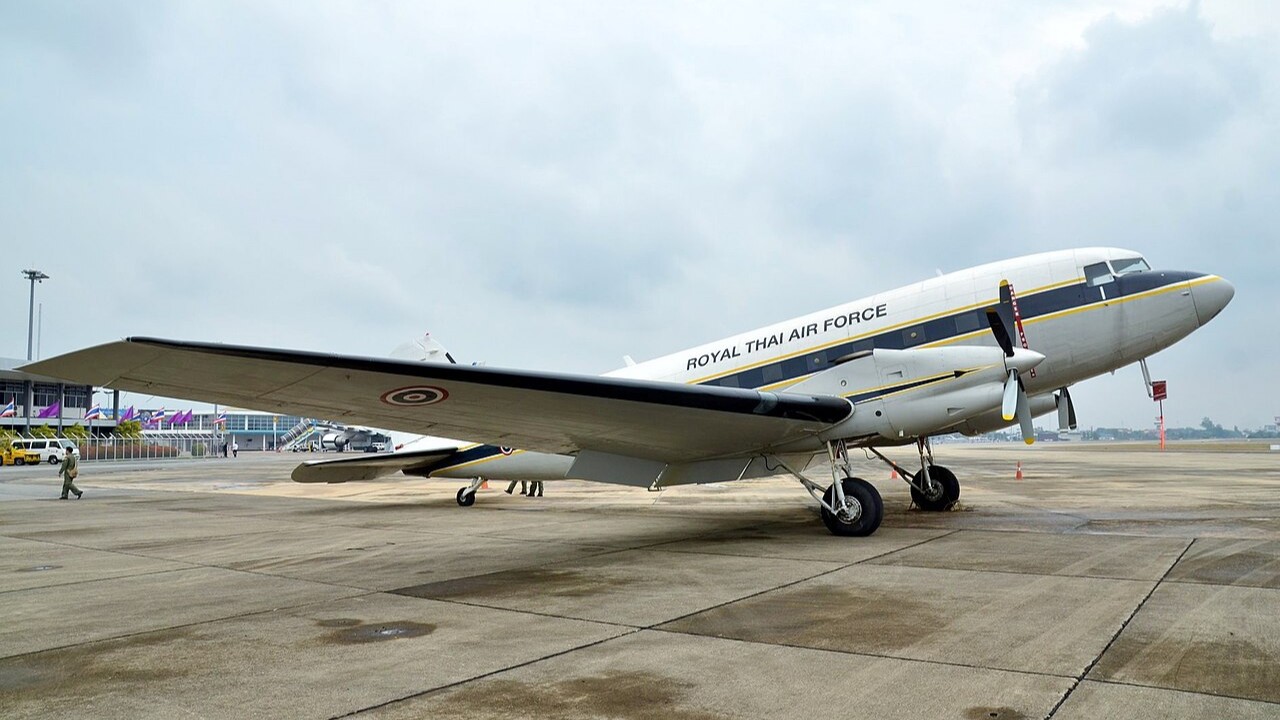
The Douglas C-47 was a wartime transport, yet some still fly in military service in modernized form. Colombia’s air force began turning its surviving C-47s into gunships in 1987, modeled on the Vietnam-era AC-47. Then, in 1993, the first three went to Basler’s facility in Wisconsin for a deeper rebuild. The result entered service as the AC-47T in 1994, and nine aircraft eventually reached that standard.
The Basler work is extensive. Its turboprop conversion swaps the original radial engines for Pratt & Whitney PT6A-67R turboprops of more than 1,400 hp each, driving five-bladed propellers. It also stretches the forward fuselage by just over three feet. According to The War Zone’s profile of Colombia’s AC-47T fleet, some of these airframes are more than 60 years old.
One is a former Royal Air Force aircraft from the 1940s. Another flew over Normandy with the U.S. Army Air Forces in 1944. In our view, no transport design better proves that a sound airframe can outlive its engines several times over. Even with a 10-hour endurance and a modern infrared turret, the bones underneath are still Douglas originals.
3. Antonov An-2
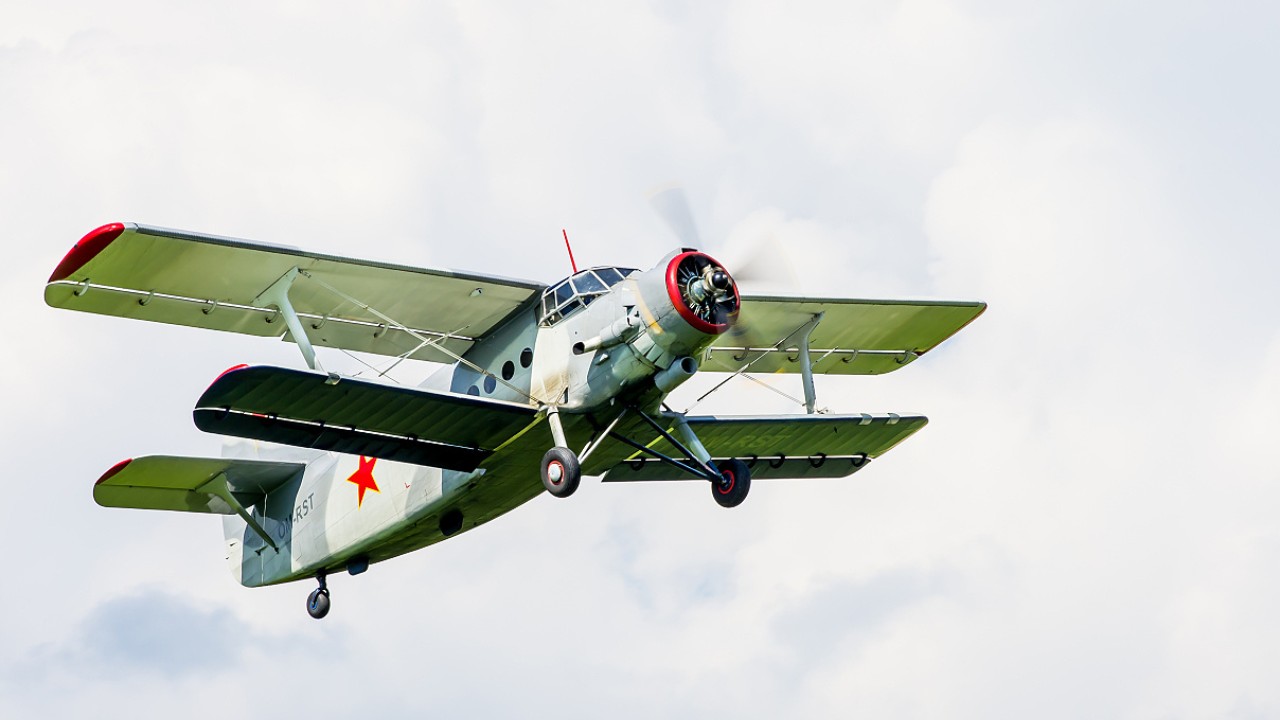
The An-2 first flew in 1947, and it looks older than that. It is a single-engine biplane, and by most accounts the largest ever made. Antonov designed it for farm and forestry work across the Soviet Union, yet military operators soon put paratroop and transport versions to work. The most common version, the An-2T, carries up to 12 passengers.
Production numbers are staggering, starting with more than 5,000 Soviet-built examples by 1960, when production moved to Poland. There, about 12,000 more followed before full-scale production ended in 1992. China also built a licensed version, the Shijiazhuang Y-5. Over the decades, variants appeared as crop dusters, firefighters, floatplanes, air ambulances and paratroop transports.
Estimates for the total run from 18,000 to 20,000, and some go higher still. As a result, the An-2 is widely credited with the largest production run of any transport plane. Civil and military versions have served at least 50 nations, and some are still assembled in small numbers from spare parts. In our view, few aircraft are simpler to keep flying, which is exactly why it refuses to fade away.
4. Antonov An-12
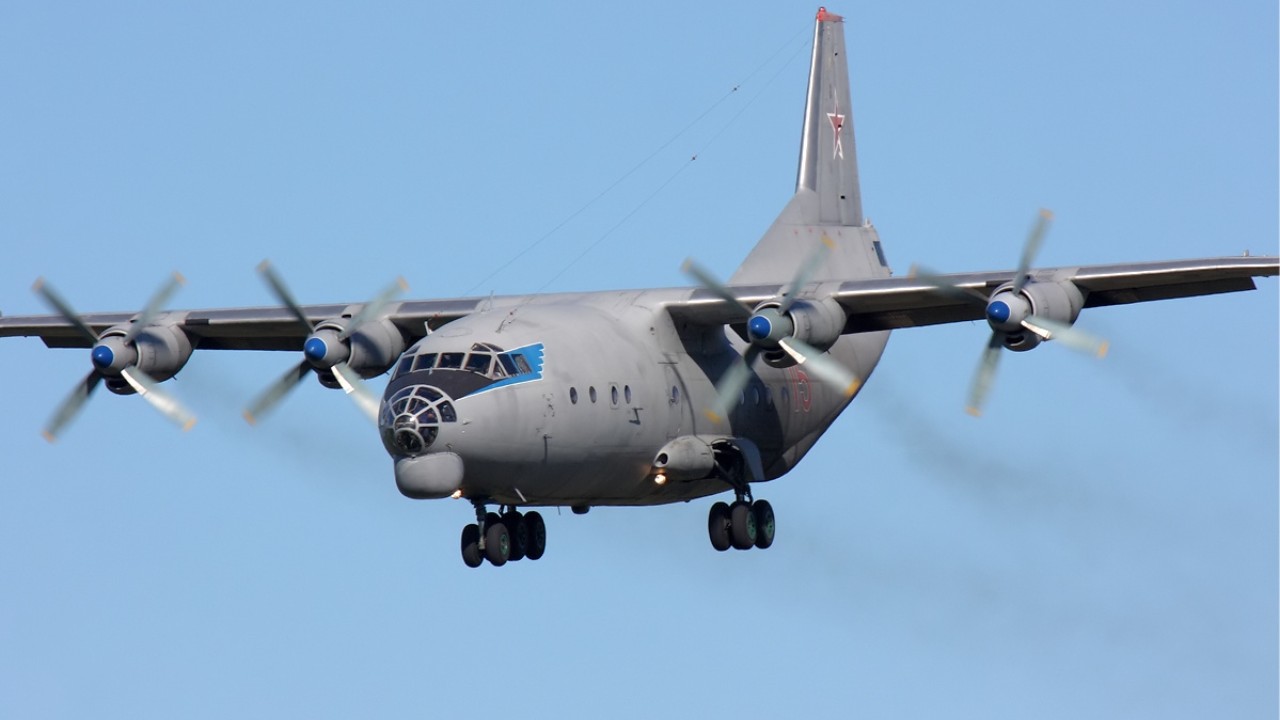
The An-12 began as a military version of Antonov’s earlier An-10, and it became the Soviet Union’s standard medium-range transport and paratroop aircraft. It first flew on 16 December 1957. Antonov built 1,248 of them between 1957 and 1973. With a crew of five, it could carry 60 paratroopers, two BMD-1 airborne combat vehicles or about 44,000 lb of cargo.
It also kept a feature from the bomber era. A tail turret with two 23 mm cannons sat behind the cargo hold for self-defense, an unusual sight on a transport. According to Vintage Aviation News, the type served Soviet forces for roughly three decades from the 1960s. It remains in the Russian Air Force inventory today.
Its reach went well beyond the Soviet Union: China built a licensed version as the Shaanxi Y-8, and civilian freight operators in Russia and Ukraine still fly the An-12. One example was still operating at Malmö Airport in Sweden at 47 years old. For us, that proves the design will not wear out, even though the last one left the factory in 1973.
5. Transall C-160
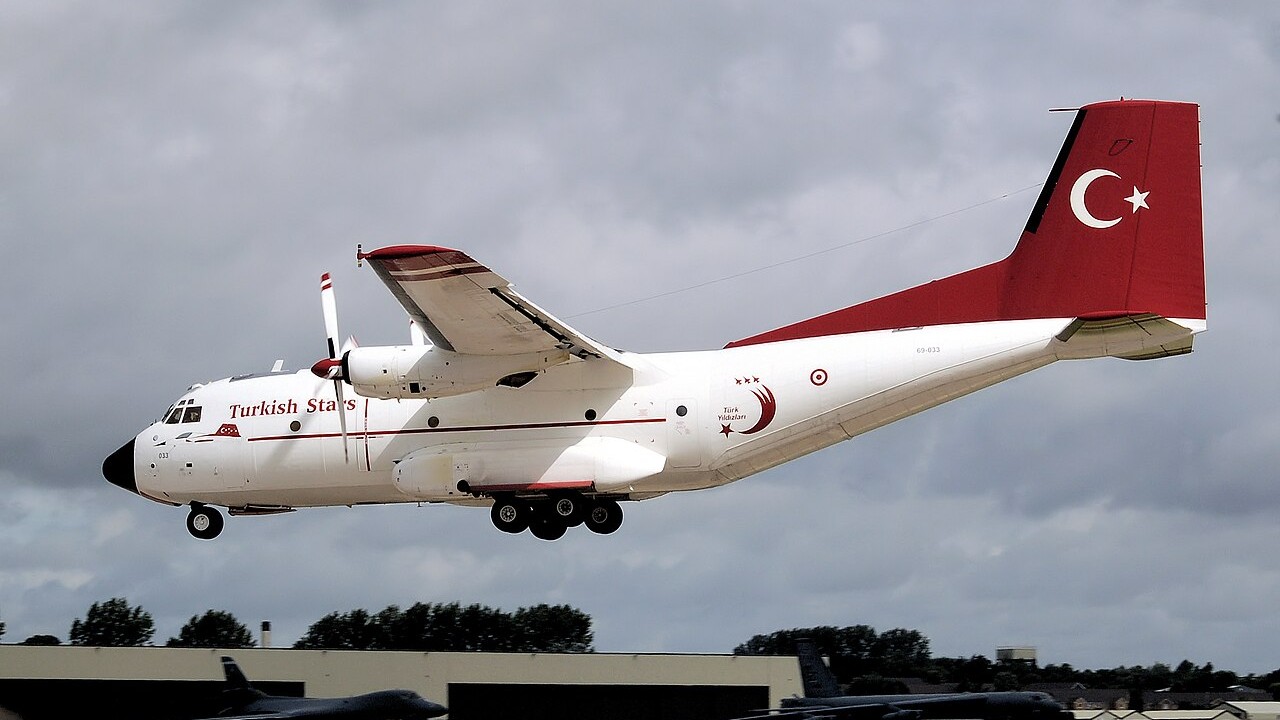
France and West Germany built the Transall together as a tactical airlifter. The prototype first flew on 25 February 1963 at Melun-Villaroche, near Paris. In all, 169 were built in the first production run, which ended in 1973. Germany’s Luftwaffe took 110 serial aircraft, while the French Air Force took 50.
Then the Transall simply kept going, decade after decade. According to Airbus’s 60th-anniversary history, the “robust and reliable” Transall took part in military and humanitarian operations from the 1970s to 2020. The Luftwaffe retired its last C-160 on 11 October 2021. France flew its final mission on 3 April 2022, and that aircraft went to the Aeroscopia Museum in Blagnac.
Turkey carried on longest, having acquired 20 aircraft from Germany in 1971. Its 221 Squadron at Kayseri, part of the 12th Wing, still had two C-160Ts flying in 2023. After a hard landing there in January 2024, one was reported beyond economic repair, leaving a single airworthy example in the fleet. In our view, a 1960s airlifter still flying in the 2020s needs no further argument about its toughness.
6. de Havilland Canada CC-138 Twin Otter
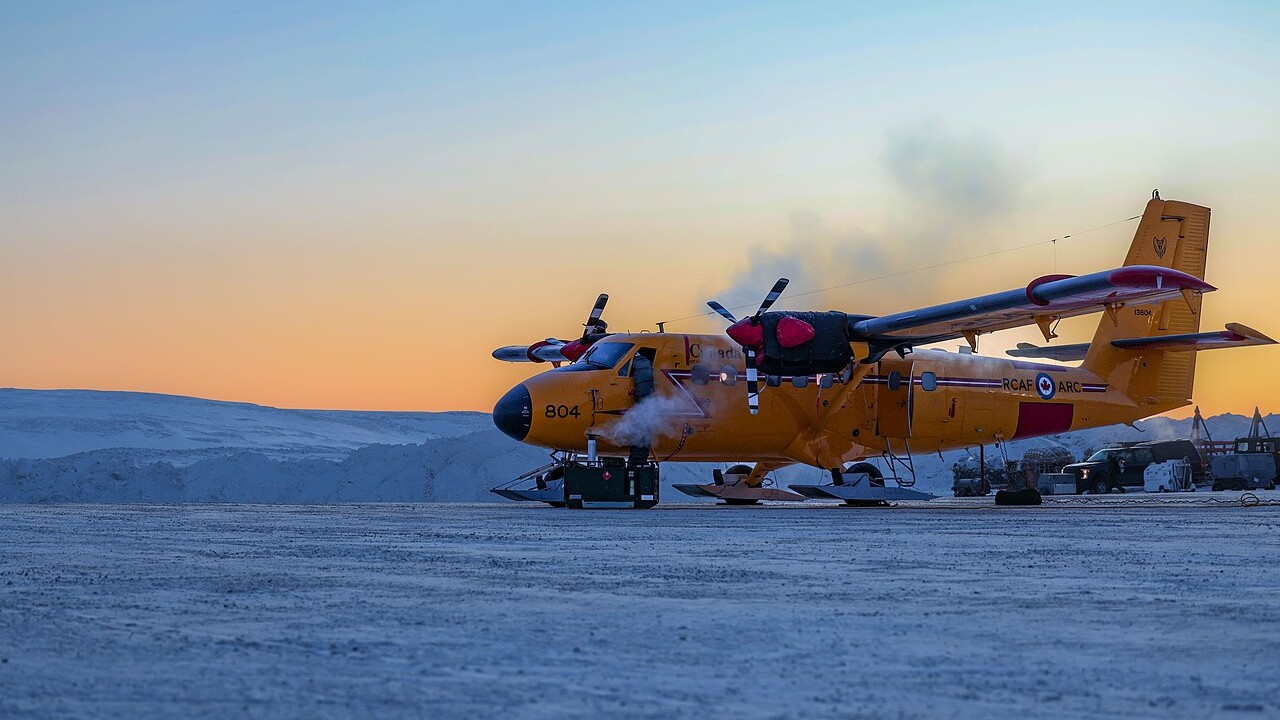
Canada’s northern squadron has relied on the same small airlifter for decades. Since 1972, No. 440 (Transport) Squadron has operated the Twin Otter from Yellowknife, in the Northwest Territories. It is the only formed Royal Canadian Air Force unit based full-time in the North. The squadron flies four CC-138s, a fleet small enough that every airframe matters.
The Twin Otter suits the job. It can carry up to 20 passengers or 2,000 kg of cargo, with a range of 1,300 km. Its crews support the Canadian Rangers, drop parachutists, deliver cargo to troops and fly fishery patrols on Great Slave Lake. When rescue coordination centres ask, they also fly search and rescue across a vast and sparsely populated region.
Rather than replace the fleet, the RCAF upgraded it. In 2012, its avionics life extension project swapped 1970s-era instruments for modern displays, GPS and collision avoidance. That work aimed to keep the aircraft effective beyond 2015, and the squadron’s official page still lists four CC-138s. For us, that is a remarkable run for a light twin in some of the harshest flying conditions on Earth.
7. Ilyushin Il-76
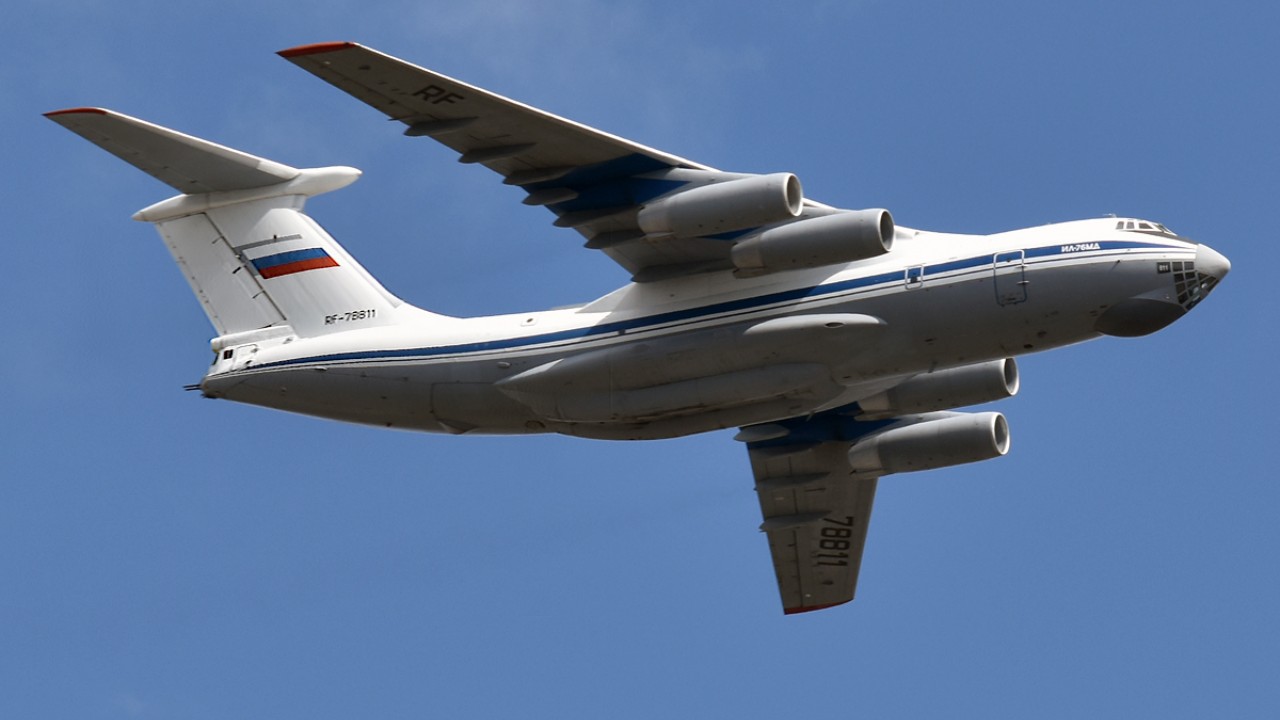
The Il-76 started as the An-12’s successor. It first flew on 25 March 1971, built to haul heavy machinery to remote parts of the Soviet Union. It entered service in 1974, and Ilyushin went on to build 981 airframes. The design served in the Soviet-Afghan War, and many examples have since flown cargo for civilian operators.
Today, more than half a century after its first flight, the Il-76 still serves with the Russian, Chinese and Indian air forces. In 2011, for example, a Chinese air force Il-76 flew an evacuation mission, one of many humanitarian roles for the type. Its derivatives also include an aerial tanker and an airborne command platform, and hundreds of Il-76s remain in operation.
Better still, it is still being renewed. With a crew of five, the modernized Il-76MD-90A uses four Aviadvigatel PS-90A-76 turbofans rated at 35,300 lbf each and can carry about 130,000 lb. At that maximum payload, its range reaches about 2,700 nautical miles. In our view, an airlifter that gets new engines five decades after its first flight is the definition of hard to wear out.
8. Martin JRM Mars
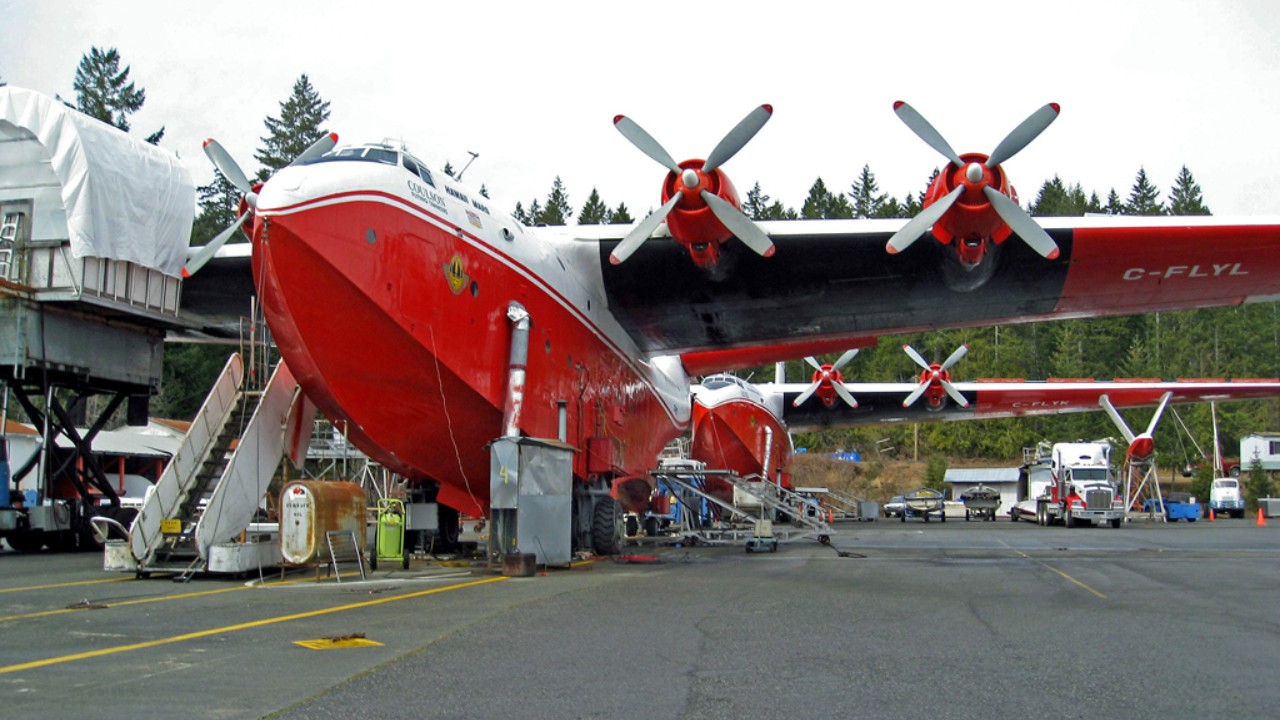
The Mars began in 1938 as a Navy patrol bomber, the PB2M. After the war began, Martin redesigned it as a giant long-range transport flying boat. The Navy accepted the first JRM Mars for trials in 1943, and the first production airframe arrived in 1945. In total, seven Mars airframes were produced, and the Navy cancelled further construction after the war.
The Navy flew its four remaining transports until 1956. A few years later, a Canadian consortium bought them and turned them into water bombers for forest fires on Canada’s west coast. By 1963, only the Hawaii Mars and the Philippine Mars were left. Both stayed on firefighting duty into the 2010s, long after most wartime flying boats had been scrapped.
Remarkably, the story did not end there, and the last chapter played out more than 80 years after work on the Mars began. On 10 February 2025, the Philippine Mars made its last flight from Alameda, California, to Lake Pleasant, Arizona. Pima Air & Space Museum CEO Scott Marchand said the museum will “preserve this World War II-era aircraft for decades to come.” Its fuselage arrived by truck at the museum in Tucson on 16 May 2025.