
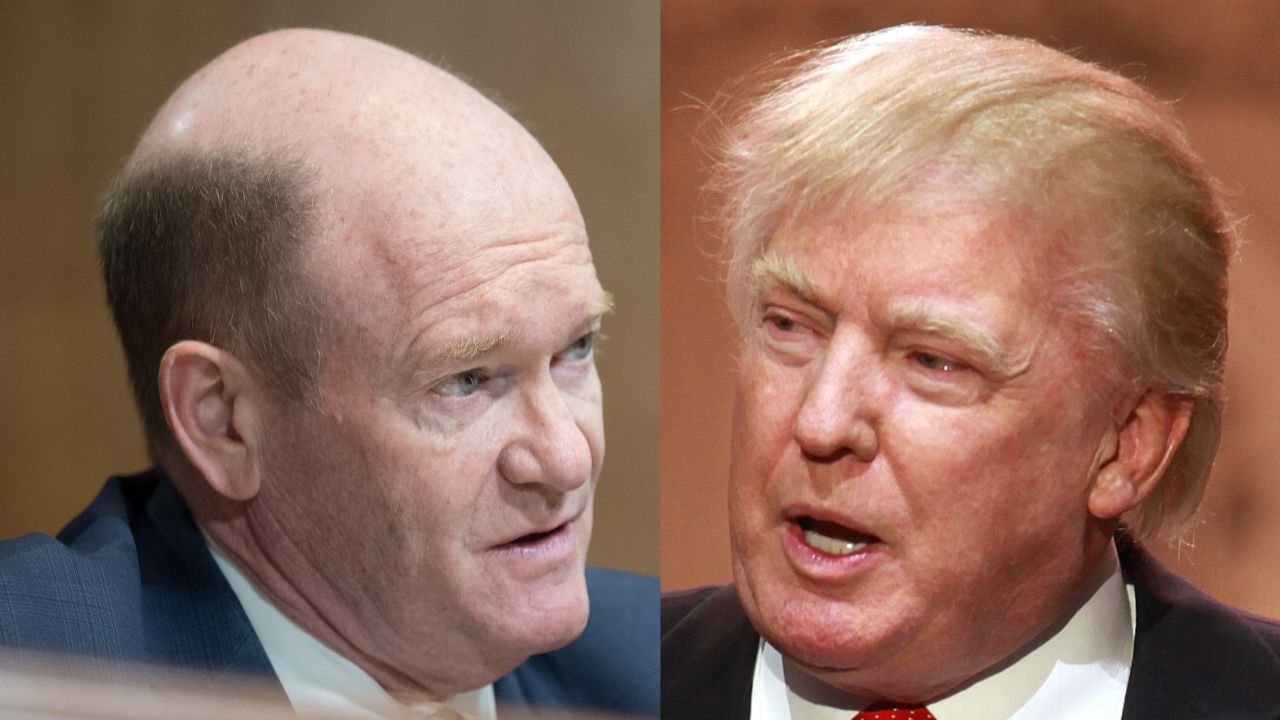
Senator Chris Coons said Tuesday, November 10, that the financial consequences of President Donald Trump’s agenda were becoming increasingly burdensome for American households, calling for immediate action to lower costs. His statement followed the release of October inflation data showing consumer prices increased more than economists had expected.
Coons published the statement on X while sharing a CNN article titled “US inflation rose more than expected last month.” The report described continued increases in everyday expenses, including housing, groceries and energy.
Coons’ full post:
“There’s a price tag on Trump’s agenda, and it’s getting steeper by the day. We need to lower costs now.”
CNN reported that consumer prices rose 0.4% in October, exceeding economists’ expectations of a 0.3% increase. Core inflation increased 0.3%, while shelter costs contributed substantially to the overall rise.
The report also documented increases in food prices, including baby food and formula, beef and other household necessities. The inflation data came after Democrats’ midterm victories, with the cost of living emerging as a major issue for voters.
Coons has repeatedly criticized Trump’s tariff policies as a source of higher prices. In February 2026, he issued a statement following a Supreme Court decision limiting the president’s authority to impose tariffs under the International Emergency Economic Powers Act.
Coons argued that tariffs had raised prices on everyday goods, squeezed businesses and strained relationships with international partners.
His opposition to tariffs has also included legislation. In April 2025, Coons joined Senator Maria Cantwell in introducing the Trade Review Act of 2025, a measure intended to reassert Congress’ role in setting and approving trade policy.
The legislation would establish limits on the president’s ability to impose unilateral tariffs without congressional approval.
Coons has also connected the administration’s tariffs to housing affordability. In March 2026, he joined Senator Jacky Rosen in introducing the Housing Tariff Exclusion Act, which would exempt certain homebuilding materials from tariffs to reduce construction costs.
The senators argued that tariffs on materials could make homes more expensive at a time when the country faces a housing shortage.
The Iran war has also featured prominently in Coons’ statements about the economy. On February 28, 2026, he criticized the administration’s military campaign, describing it as a war of choice without a clear strategy or endpoint.
Coons argued that the administration had not demonstrated an imminent threat requiring the military action and called on Congress to exercise its authority over the use of military force.
As ranking member of the Senate Appropriations Subcommittee on Defense, Coons has questioned the financial and strategic consequences of the war. During a May 12, 2026, hearing with Defense Secretary Pete Hegseth, he sought answers about the conflict’s cost, duration and objectives.
Coons asked how the administration planned to explain the financial burden to constituents and when Congress would be asked to authorize the war.
Coons has also raised concerns about the conflict’s effects on fuel prices and energy markets. During an April 22, 2026, hearing, he pressed Energy Secretary Chris Wright on rising gasoline prices and warned that the war could increase costs for manufacturers, farmers and consumers.
He specifically cited the potential for higher food prices as energy and transportation expenses rise.
In July 2026, Coons highlighted a Joint Economic Committee report estimating that Delaware households had incurred more than $3,000 in additional costs since Trump took office. His office identified housing, groceries, gasoline, electricity and healthcare as areas affected by rising prices.
The report’s findings were used by Coons to argue that the administration’s tariffs and Iran war were contributing to the affordability crisis.
Coons’ November 10 statement did not specify a new piece of legislation or an individual policy change. Instead, it reflected his broader record of opposing tariffs, questioning the Iran war’s costs and supporting legislation designed to reduce household expenses.
The inflation data provides the immediate context for his remarks, while his previous official statements show that affordability has been a recurring focus of his congressional work.
His position on Trump’s agenda combines trade-policy criticism, scrutiny of military spending and support for measures aimed at reducing housing, energy and consumer costs.