
Few diplomats have ever offered to sink their own navy. Yet on November 12, 1921, Secretary of State Charles Evans Hughes did exactly that before the world’s naval powers in Washington. For the United States alone, his plan meant scrapping six battlecruisers and seven battleships under construction, plus two battleships already launched. Within three months, the major naval powers had signed a treaty built on that idea, and ships like USS Washington paid the price.
The Washington Naval Treaty followed in February 1922. It fixed a 5:5:3 ratio for the American, British and Japanese battle fleets and halted new capital ship construction. As a result, some of the most powerful warships ever designed went straight from the slipway to the scrapyard. Others went to the bottom as targets.
These are Combat Rated’s picks: nine capital ships that the treaty cancelled, scrapped or sank. Most carried 16-inch guns on paper. None of them ever fired a shot in anger.
1. USS Washington (BB-47)
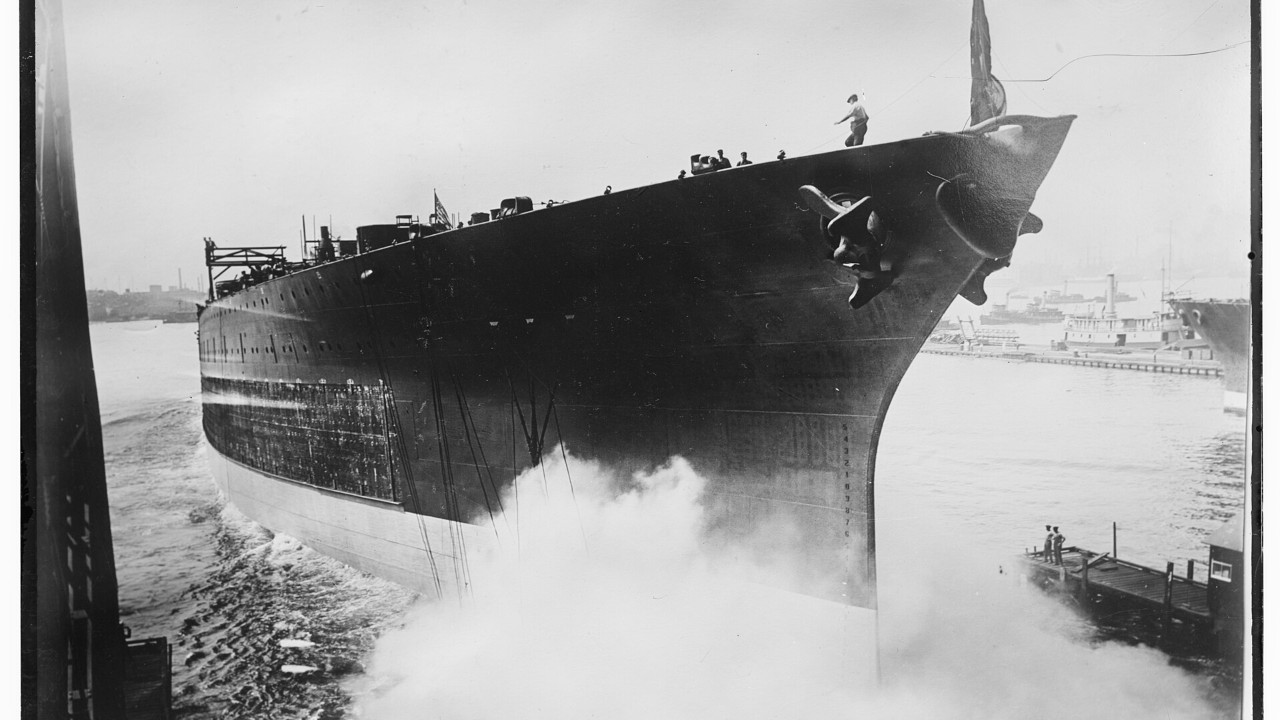
Washington came closer to service than any other American ship on this list. New York Shipbuilding laid her down at Camden, New Jersey, on June 30, 1919. She was launched on September 1, 1921, sponsored by the daughter of a Washington state congressman. By early 1922, she was about three-quarters finished.
At the time, her design matched the best American battleships afloat. She would have carried eight 16-inch guns, backed by twenty 5-inch guns and eight 3-inch antiaircraft guns. Then the treaty arrived. The powers signed it on February 6, 1922, and work on Washington stopped just two days later. In other words, the shipyard downed tools almost as soon as the ink dried. At that point, she was 75.9 percent complete, according to the Naval History and Heritage Command.
Instead of joining the fleet, she became a lesson. On November 25, 1924, the Navy sank her hull at sea as a gunnery target. In our view, Washington is the clearest case of what the treaty cost the Navy. She was a nearly finished modern battleship, and she ended her life as practice for her own fleet’s gunners.
2. USS South Dakota (BB-49)
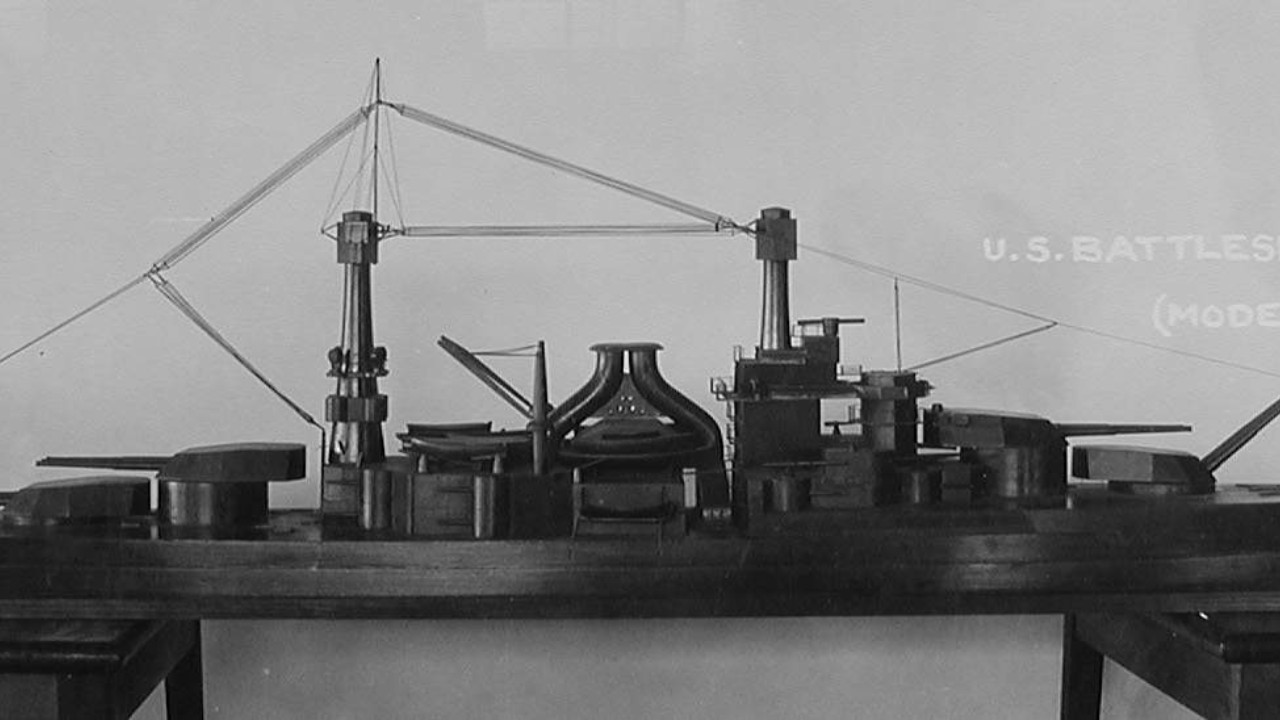
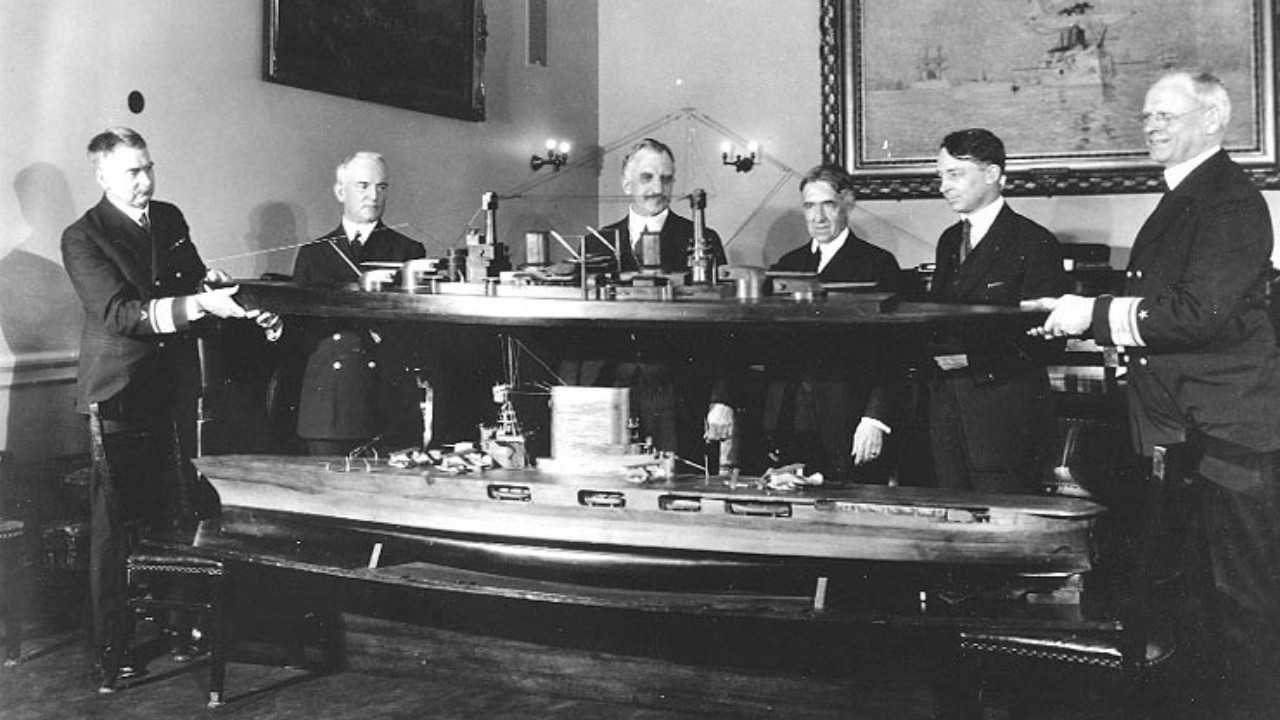
South Dakota was meant to lead the biggest American battleships yet. Congress authorized her on August 29, 1916, and the New York Navy Yard laid her keel on March 15, 1920. In addition, she headed a planned class of six ships, numbered BB-49 through BB-54.
The numbers explain why she worried rival navies. She would have displaced 43,200 tons, nearly a third more than earlier American battleships. Moreover, she was to carry twelve 16-inch/50 guns in four triple turrets, a 50 percent jump over the eight guns of her predecessors. Turbo-electric drive would have pushed her to 23 knots. You can see the class details in the NHHC’s photo history of BB-49.
However, work stopped on February 8, 1922, under the treaty. South Dakota was 38.5 percent complete at the time, the furthest along of her class. On October 25, 1923, the Navy sold her unfinished hull for scrap while it still sat on the slipway. Some of her class’s 16-inch guns later went to seacoast defense, and their armor helped modernize older battleships. Our take: with twelve 16-inch guns, she was the most heavily armed American battleship designed up to that time, and she never touched water.
3. USS United States (CC-6)
The Lexington-class battlecruisers hold a unique place in American naval history. In fact, they were the only ships of their type the U.S. Navy ever ordered. Planners wanted them as fast scouts for the battle fleet, and United States was the last of six. Hughes’s November 1921 offer to scrap six American battlecruisers covered this entire class, as The National WWII Museum recounts.
The final design called for 43,500 tons, eight 16-inch guns in four twin turrets and a speed of 33.25 knots. That combination of heavy guns and speed was the reason navies built battlecruisers in the first place. The Philadelphia Navy Yard laid down United States on September 25, 1920. By the time work stopped on February 8, 1922, she was 12.1 percent complete.
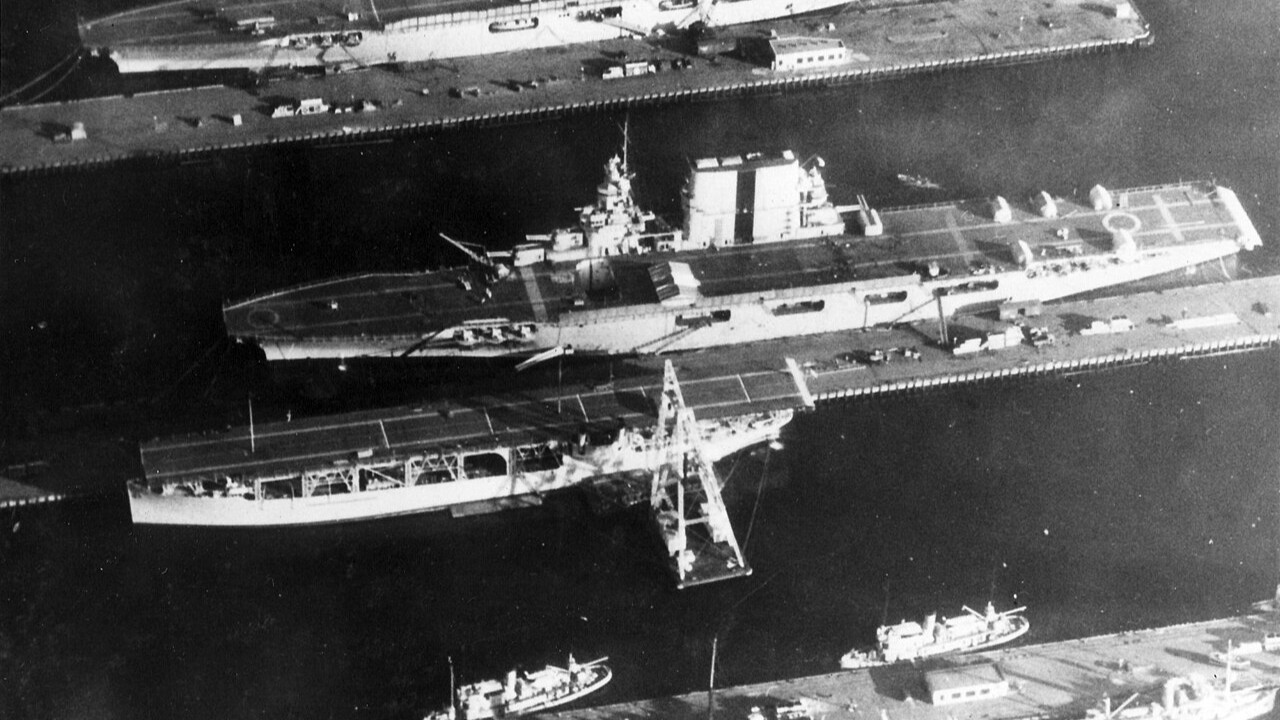
Two of her sisters escaped. Lexington and Saratoga were completed as aircraft carriers, which the treaty allowed. United States had no such luck. The Navy sold her unfinished hull for scrap on October 25, 1923, under the Washington Naval Treaty, and broke her up on the building ways. In our view, she carried the most fitting name of any ship lost to the treaty. Ironically, a nation named its grandest warship after itself and then signed the deal that ended her.
4. USS Ranger (CC-4)
Ranger shows how early the treaty caught some of these ships. Newport News Shipbuilding laid her down on June 23, 1921, as the fourth Lexington-class battlecruiser. Interestingly, she began on paper as Lexington before the Navy renamed her Ranger on December 10, 1917.
She would have shared the class’s punch: eight 16-inch guns and a speed above 33 knots on a hull of about 43,500 tons. Yet she barely got started, because the treaty halted work on American capital ships then on the ways. Her hull was only about 4 percent complete when work ended. Construction officially ended on August 17, 1923, under the Treaty Limiting Naval Armaments, according to her official Navy ship history.
The end came quickly after that. On November 8, 1923, the Navy sold the hull to the Steel Scrap Company of Philadelphia. Her sisters Constellation and Constitution met the same fate. In our view, Ranger earns a spot because she shows the treaty’s reach. It did not stop only nearly finished ships. It also stopped powerful designs before shipyards could even give them shape, and that saved every navy a fortune.
5. Tosa
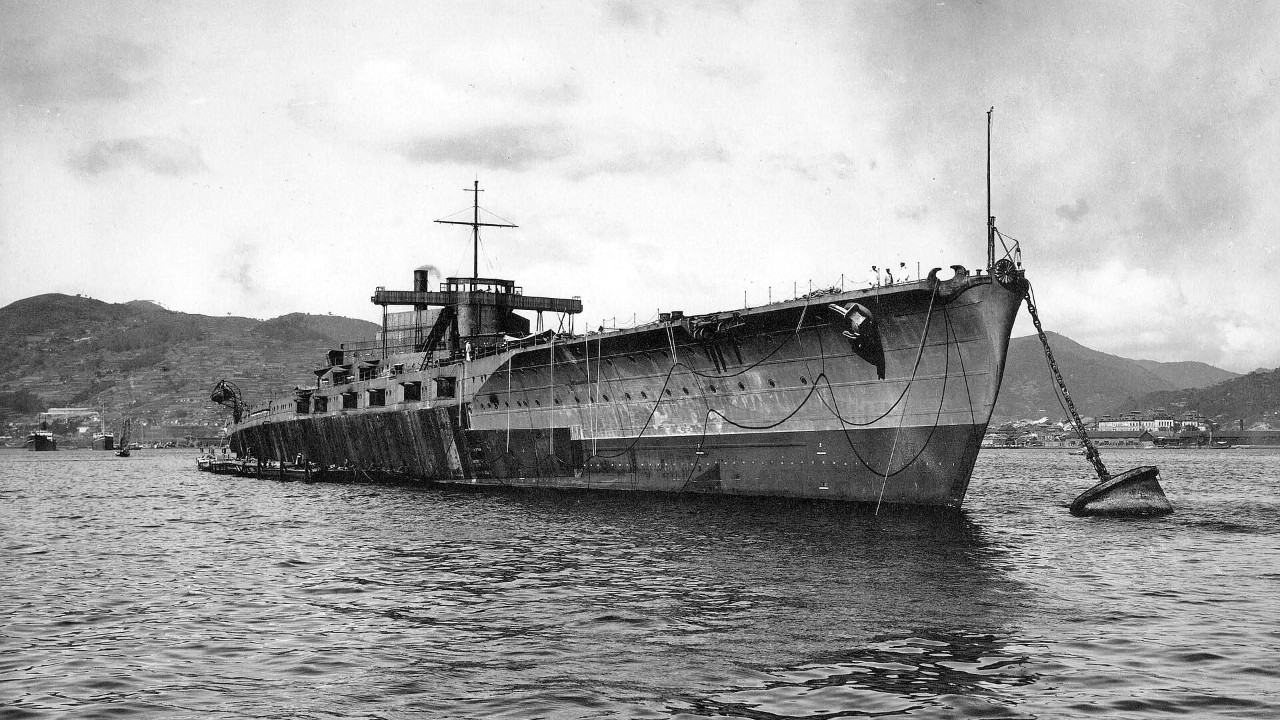
Japan’s Tosa was one of the most advanced battleships of her era. Naval architect Yuzuru Hiraga designed her, and Mitsubishi built her at Nagasaki. She was laid down in February 1920 and launched on December 18, 1921.
Her specifications show why she mattered. She was to carry ten 41-centimeter (16.1-inch) guns in five twin turrets on about 39,900 long tons standard, with a speed of 26.5 knots. Even so, work on her stopped on February 5, 1922, one day before Japan signed the Washington Naval Treaty. Japan formally cancelled her construction on May 5, 1922.
She still served one purpose. The navy struck her from its list on April 1, 1924, and from June 1924 used her hull for weapons and torpedo tests at Kure. Finally, on February 9, 1925, crews scuttled her in the Bungo Channel area. Her sister Kaga escaped the same end, because Japan reordered her as an aircraft carrier. Kaga later fought as a carrier in World War II, while Tosa lay on the seabed. Our take: Tosa died as a test hull, but her lessons sailed on.
6. Amagi
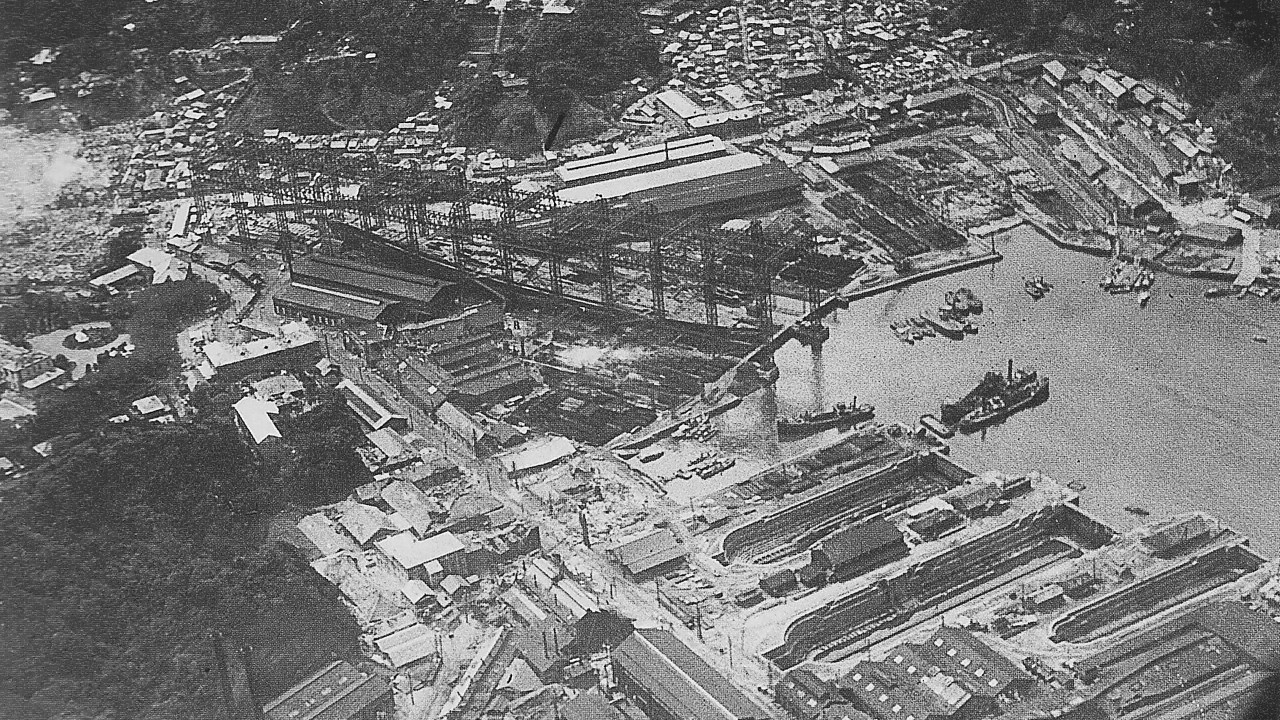
Amagi was the lead ship of Japan’s fastest planned capital ships. The Yokosuka Naval Arsenal laid her down on December 16, 1920. Accordingly, the class design called for ten 41-centimeter guns, a planned speed of 30 knots and a normal displacement of about 41,217 tonnes.
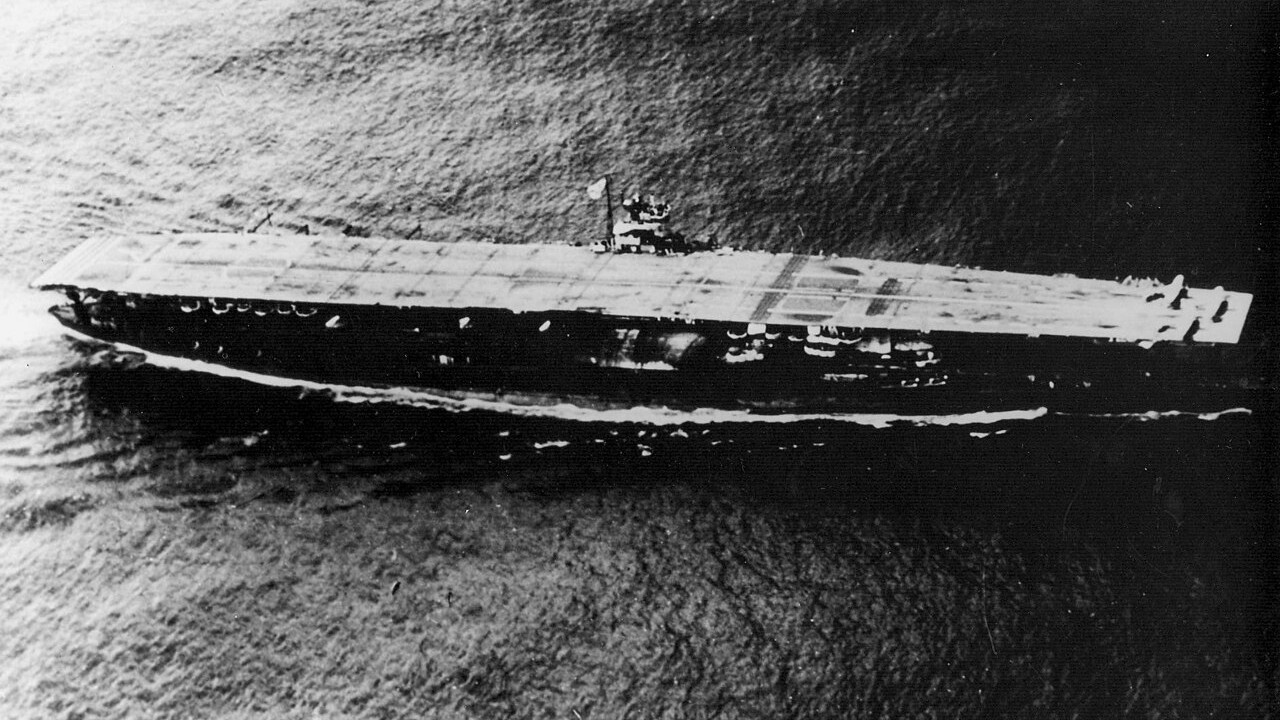
The treaty cancelled the class. However, it also allowed signatories to convert some capital ships under construction into aircraft carriers. Japan chose Amagi and her sister Akagi, the two ships nearest completion. For a moment, it looked as if Amagi would survive in a new form.
Then nature finished what the treaty started. The Great Kanto earthquake struck in September 1923 and badly strained her hull. The structure was too damaged to use, so Japan abandoned the conversion. Scrapping began on April 14, 1924. Instead, Japan picked the incomplete battleship Kaga to take her place. Meanwhile, Akagi completed her conversion in 1927 and later led the carrier strike on Pearl Harbor. In our view, Amagi is the strangest loss on this list. The treaty doomed her as a battlecruiser, and the earthquake doomed her as a carrier.
7. Atago
Atago was the third ship of the Amagi class. As a result, she shared Amagi’s goal of pairing heavy guns with high speed. Kawasaki laid her down at Kobe on November 22, 1921, just days after the Washington conference opened. Her planners projected completion in December 1924.
She would have matched Amagi’s design. That meant ten 41-centimeter guns and a planned 30 knots on a hull of more than 41,000 tonnes. Unlike Amagi and Akagi, though, she was not one of the two ships Japan chose for carrier conversion. As a result, she had no path forward under the treaty’s ban on new capital ships.
Her sister Takao followed an identical track. For the record, Takao had started life under the name Ashitaka. Later, Mitsubishi laid Takao down at Nagasaki on December 19, 1921. Neither ship was ever launched, so neither ever floated. In our view, Atago and Takao show how quickly the treaty moved. Shipyards had barely started them before the diplomats ended the race. Japan officially cancelled both ships on July 31, 1924, and workers broke them up on their slipways.
8. G3 battlecruisers
Britain’s answer to the American and Japanese building programs never even received names. The Admiralty ordered four G3 battlecruisers on October 24, 1921. Accordingly, the contracts went to John Brown, Swan Hunter, William Beardmore and Fairfield, four of Britain’s great shipbuilders.
The design was formidable. Each ship would have carried nine 16-inch guns in three triple turrets and reached an expected 32 knots. Normal displacement came to about 48,400 long tons. Simply put, the G3 combined battleship firepower with battlecruiser speed. By comparison, its sister design, the N3 battleship, would have carried 18-inch guns but moved more slowly.
Unfortunately for the Royal Navy, timing killed it. The Washington conference opened on November 11, 1921, and Britain suspended the G3 order a week later. Then, on February 21, 1922, it cancelled all four, because the treaty capped new capital ships at 35,000 long tons. The design did not vanish completely, however. Britain’s two Nelson-class battleships borrowed many G3 features and the guns intended for it. Our take: the G3 is the best battlecruiser Britain never built. The two Nelsons are as close as anyone came to seeing one at sea.
9. HMS Lion
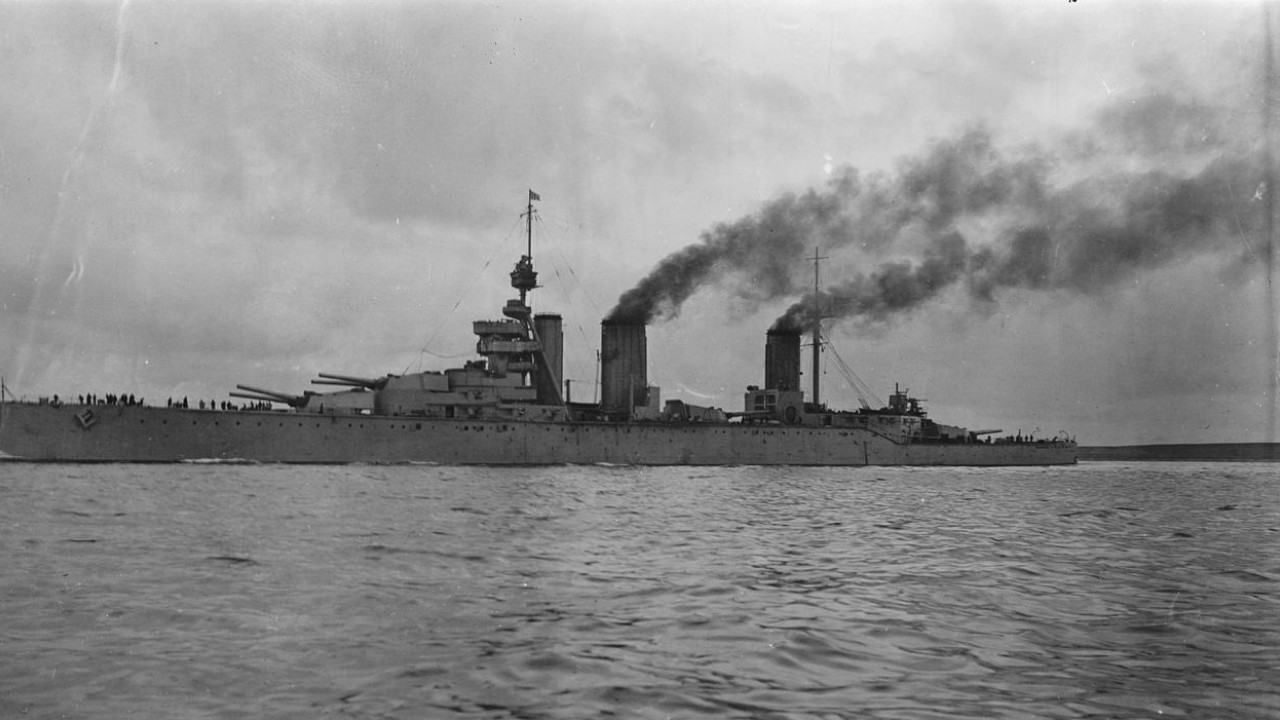
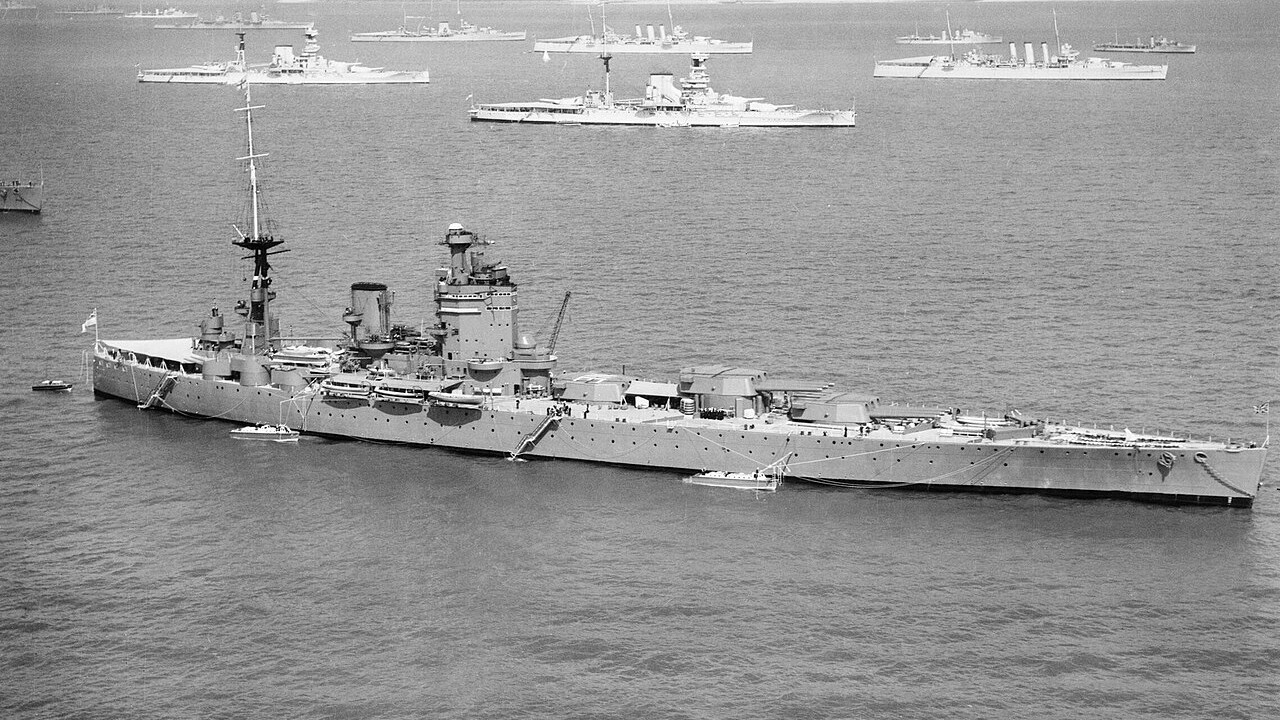
Not every treaty victim was a new ship. Some, like HMS Lion, were proven veterans. Devonport Dockyard launched her on August 6, 1910, and she commissioned on June 4, 1912. Her class earned the nickname the “Splendid Cats.”
Lion carried eight 13.5-inch guns and had a designed speed of 28 knots. More importantly, she served as Vice Admiral David Beatty’s flagship in the battlecruiser force through the biggest North Sea fights of World War I. She fought at Heligoland Bight in 1914 and at Dogger Bank in 1915. At Jutland in 1916, a fire destroyed her Q turret. Royal Marine Major Francis Harvey received a posthumous Victoria Cross for ordering its magazine flooded.
Peace proved more dangerous than the Germans. The treaty set strict tonnage limits, as the State Department’s Office of the Historian explains, so Britain had to cut older capital ships to make room. Lion paid off in 1922. In our view, she is the most famous British casualty of the treaty, a Jutland veteran lost to paperwork rather than gunfire. She was sold for scrap on January 31, 1924.