
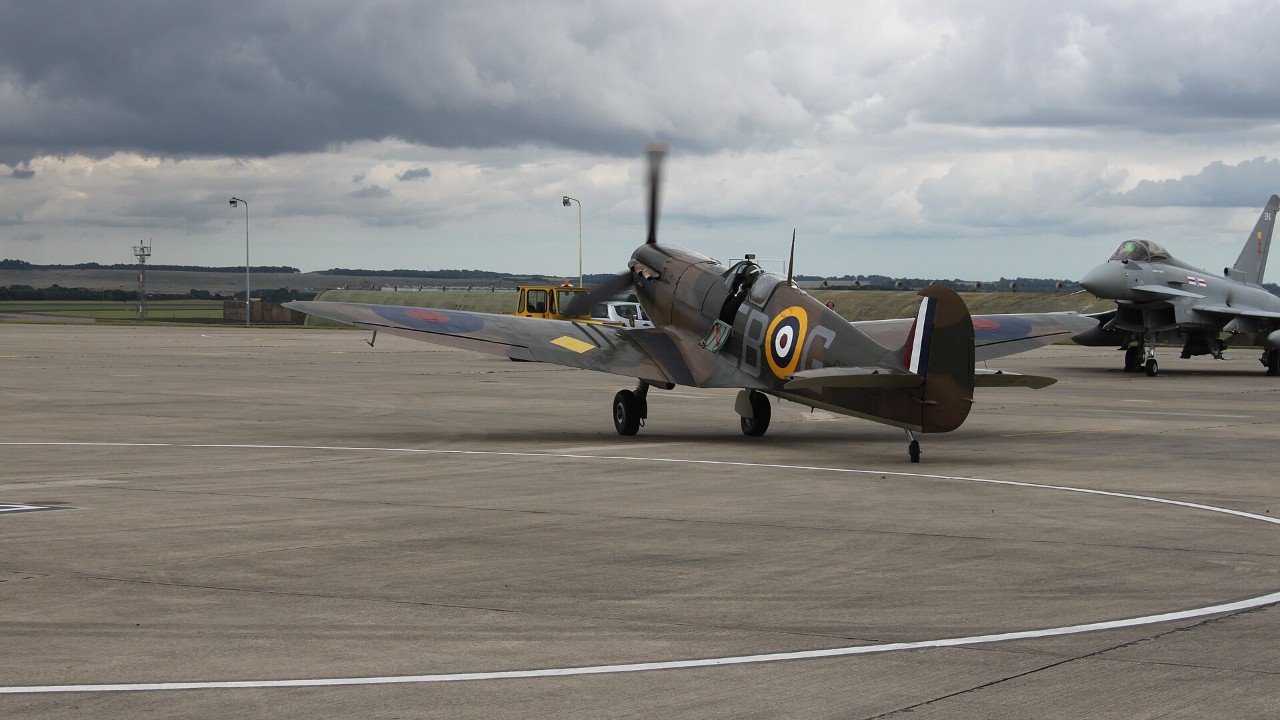
In 1947, a Supermarine Spitfire that had fought in the Battle of Britain was sold for scrap for £25. It never reached the furnace. Today, that same airplane still flies, and crowds still stop talking when its Merlin engine fires up.
That is the magic of a living warbird. A museum can show you the shape of an airplane. Only a flying example lets you hear it, smell the exhaust and feel it pass overhead. Thanks to volunteer crews, air forces and private owners, a handful of WWII legends still do exactly that.
These are Combat Rated’s picks for the seven WWII warbirds that still draw the biggest reactions on the flight line. Every entry names a real, airworthy airframe that has flown for the public in recent seasons.
1. Supermarine Spitfire
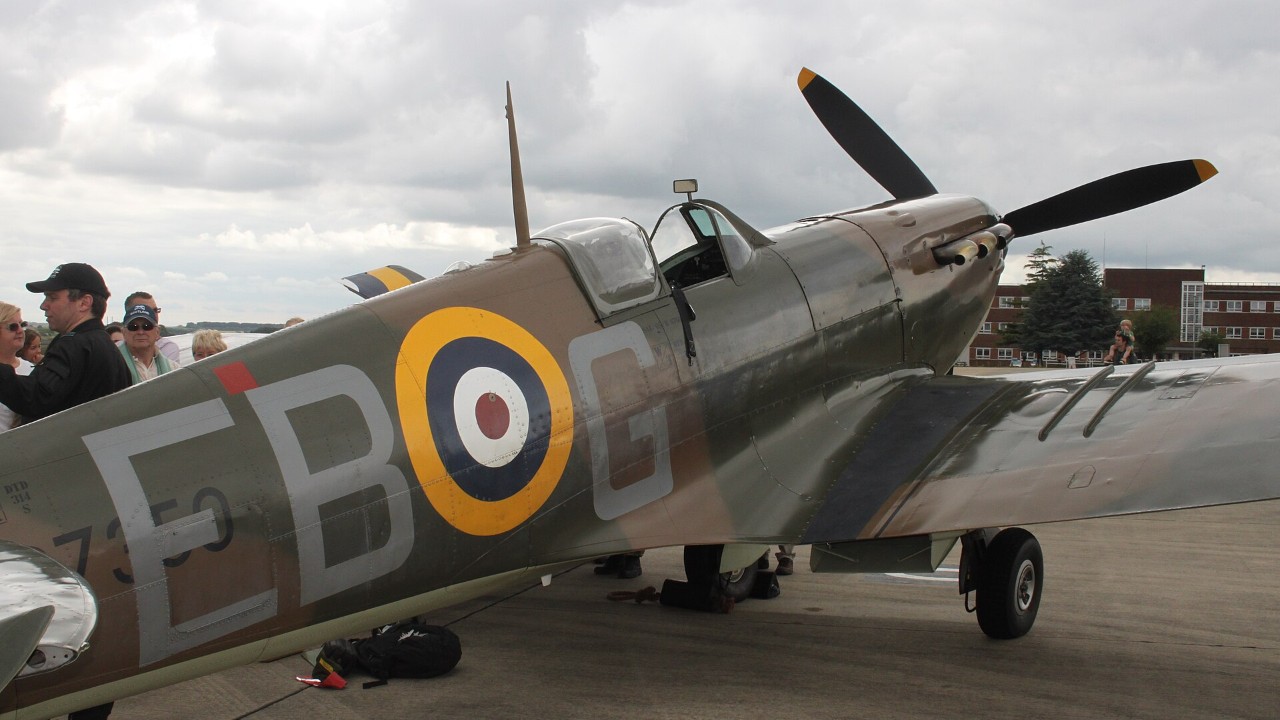
Several Supermarine Spitfires still fly, but one carries a history no other can match. Spitfire Mk IIa P7350 flew with No. 603 Squadron from Hornchurch in 1940. On 25 October that year, a German cannon shell punched a large hole in its port wing. Its 20-year-old Polish pilot, Pilot Officer Ludwik Martel, was wounded and force-landed wheels-up near Hastings.
The airplane was repaired and back in the air by 7 December 1940. It survived at least three more damaging incidents before 1944. Then, in 1947, it was declared surplus and sold for scrap for £25 to John Dale and Sons. Instead of melting it down, the firm gave it to a museum at RAF Colerne. It was made airworthy again in 1967 for the film Battle of Britain, and it joined the RAF’s Battle of Britain Memorial Flight in 1968.
It still flies with the Memorial Flight. The Battle of Britain Memorial Trust calls P7350 “the oldest airworthy Spitfire in the world.” In our view, no airshow sight beats an airplane that fought in 1940 still crossing the English coast.
2. Avro Lancaster
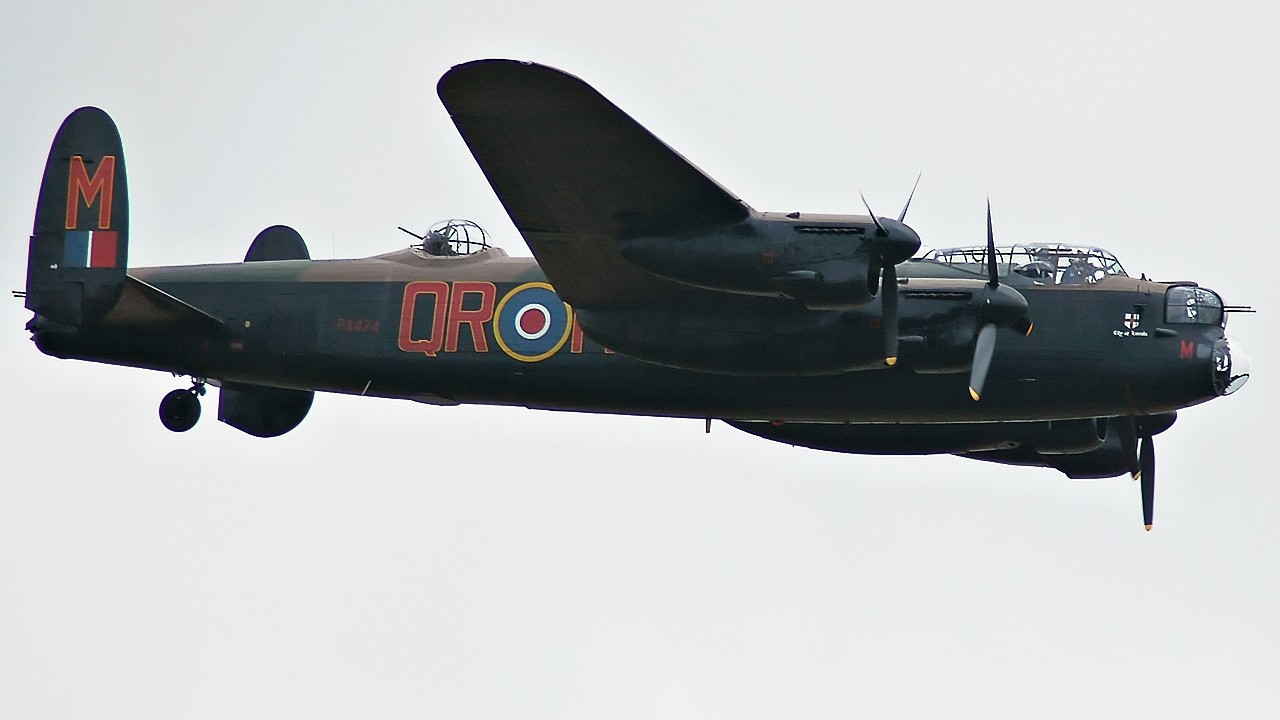
The sound of four Merlins at low level is something few people forget. Avro Lancaster PA474 rolled out of Vickers Armstrong’s Broughton factory in Cheshire on 31 May 1945. She was too late for the bombing war, yet her career since then has been anything but quiet.
After the war, PA474 mapped Africa for the Colonial Office with 82 Squadron. Later, she flew laminar flow research with the College of Aeronautics at Cranfield until 1964. She even appeared in the films Operation Crossbow and The Guns of Navarone. Then, in 1965, Wing Commander Michael D’Arcy of 44 Squadron secured her for the RAF. Engineers spent about two years restoring her to factory specification, and she taxied out again in November 1967.
On 20 November 1973, she joined the newly renamed Battle of Britain Memorial Flight. She was named “The City of Lincoln” in 1975. According to the Royal Air Force, which marked her 80th birthday in 2025, she is the only airworthy Lancaster in Europe. The RAF calls her “the jewel in the BBMF crown,” and we agree completely. Since 1976, she has flown from RAF Coningsby in Lincolnshire.
3. Boeing B-29 Superfortress
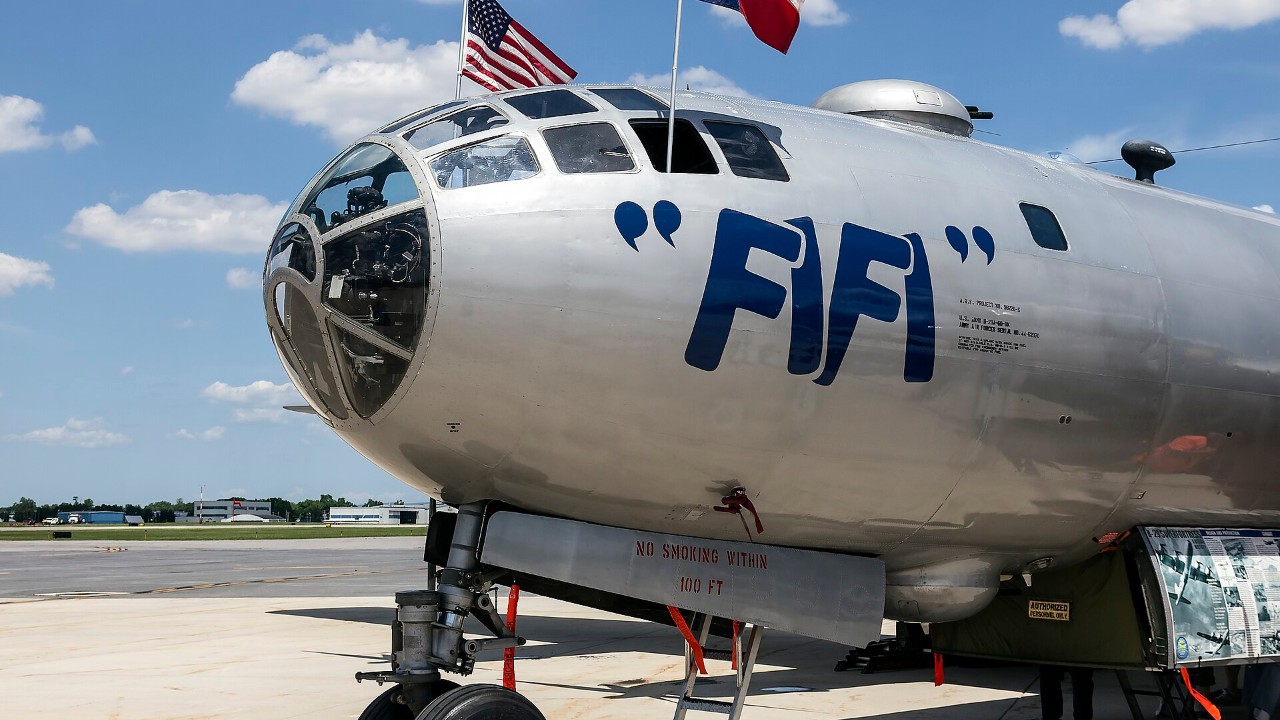
Only two Boeing B-29 Superfortresses still fly anywhere in the world, and both spent years as Navy targets in the California desert. The Commemorative Air Force’s B-29 FIFI was found at the Navy proving ground at China Lake, where she served as a missile target. CAF members rescued her in the early 1970s and kept her flying for more than 30 years.
FIFI was grounded in 2006, pending new engines. However, after a four-year effort, she returned to the sky in 2010 with four custom-built hybrid engines. Her sister ship Doc had an even longer road back. Built in 1944, Doc retired in 1956 and then sat as a Navy target at China Lake until 1998. Volunteers moved her to Wichita, Kansas, in pieces in 2000. Restoration took 16 years and more than 450,000 volunteer hours.
Doc finally flew again in July 2016, 60 years after retirement. Both bombers came to EAA AirVenture Oshkosh together in 2024, according to Doc’s operators. “These airplanes are big favorites wherever they appear,” said EAA’s Rick Larsen. Booked to return in 2025, the pair keep drawing crowds, and frankly, that quote might be an understatement.
4. North American P-51 Mustang
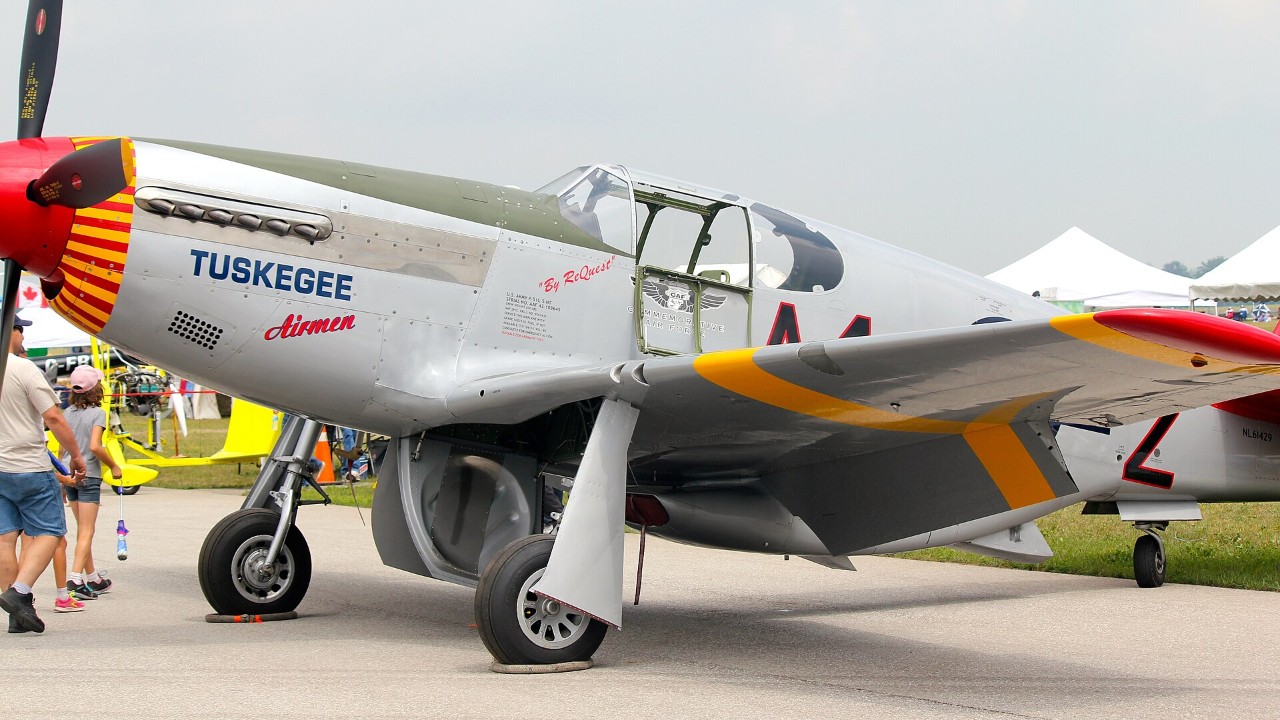
The P-51 Mustang is a familiar sight on the airshow circuit, yet one example stands apart. The Commemorative Air Force Red Tail Squadron flies a rare P-51C named Tuskegee Airmen. Its red tail honors the Black aviators who painted their aircraft that way in WWII so others could identify them over Europe.
The airplane itself served stateside as a trainer in 1945. After the war, it spent about 40 years on display at Montana State College. Restored to fly in 2001, it then suffered an engine failure at a Minnesota air show in 2004. Pilot Don Hinz, the project’s first leader, steered it away from houses and crash-landed among trees. Sadly, he died of his injuries the next day. Even so, his team refused to let the Mustang’s story end there.
The team spent five years rebuilding the Mustang, and it flew again in July 2009. In 2026, the squadron’s schedule lists performance flights at Sioux Falls and formation flying at Rochester, alongside many static displays. In our view, no other Mustang carries a story quite like this one, which is why crowds gather around it at every stop.
5. Vought F4U Corsair
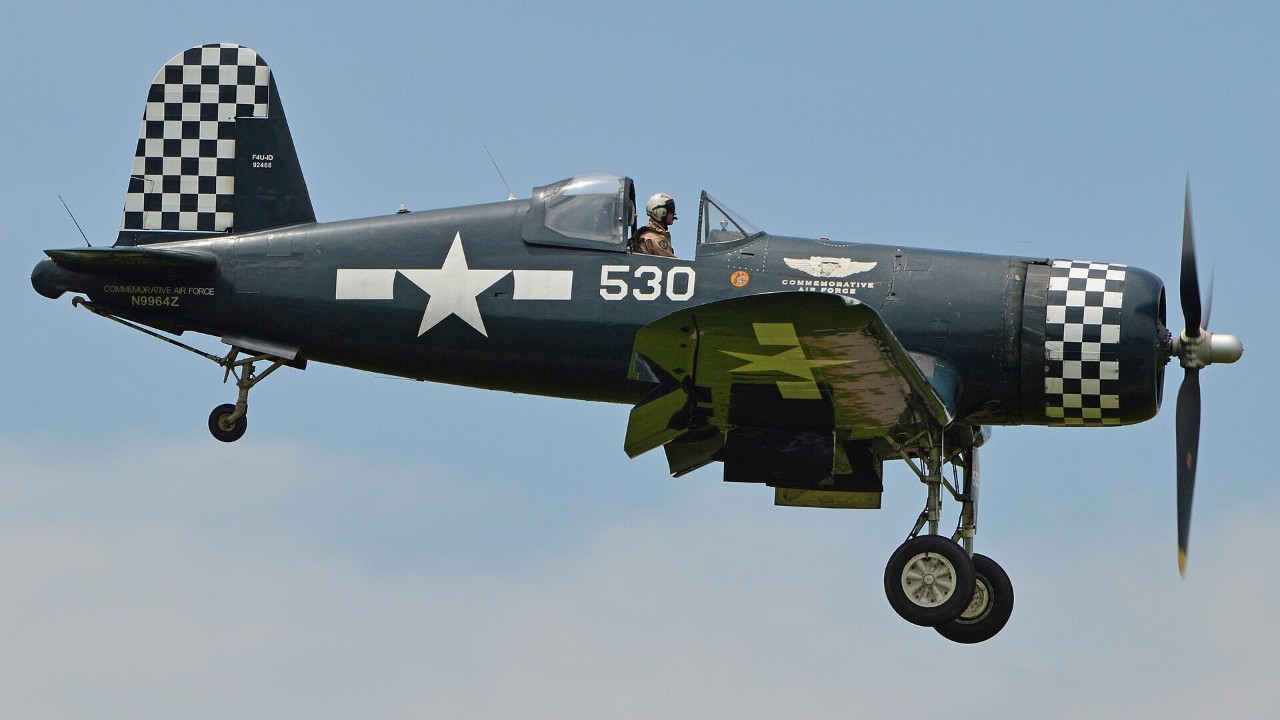
The Corsair’s inverted gull wing makes it impossible to mistake for anything else. The Commemorative Air Force’s example is an FG-1D, the Goodyear-built version of the Vought design, Navy serial Bu.92468. It never saw combat. Instead, it moved between stateside naval air stations and reserve squadrons, including a 1952 stint with VF-102 at NAS Oceana.
The airplane nearly vanished in 1957, when Ernest Huggins saved it from destruction. CAF Hall of Fame pilot Marvin “Lefty” Gardner bought it in 1960, and the CAF later restored it to flying condition. It has survived plenty since then. A 1974 collision at Fort Worth sent it back to Vought for a rebuild. Then, in 1982, a forced landing in a grass field ended with the Corsair hitting a fence.
Each time, it came back. Now based with CAF Airbase Georgia at Peachtree City, the Corsair was slated for the US Navy Legacy Flight program in 2025, flying beside modern fighters, according to Vintage Aviation News. For our money, that pairing of old and new is airshow gold. Seeing a Corsair tucked beside a jet fighter shows how far naval aviation has come in eight decades.
6. North American B-25 Mitchell
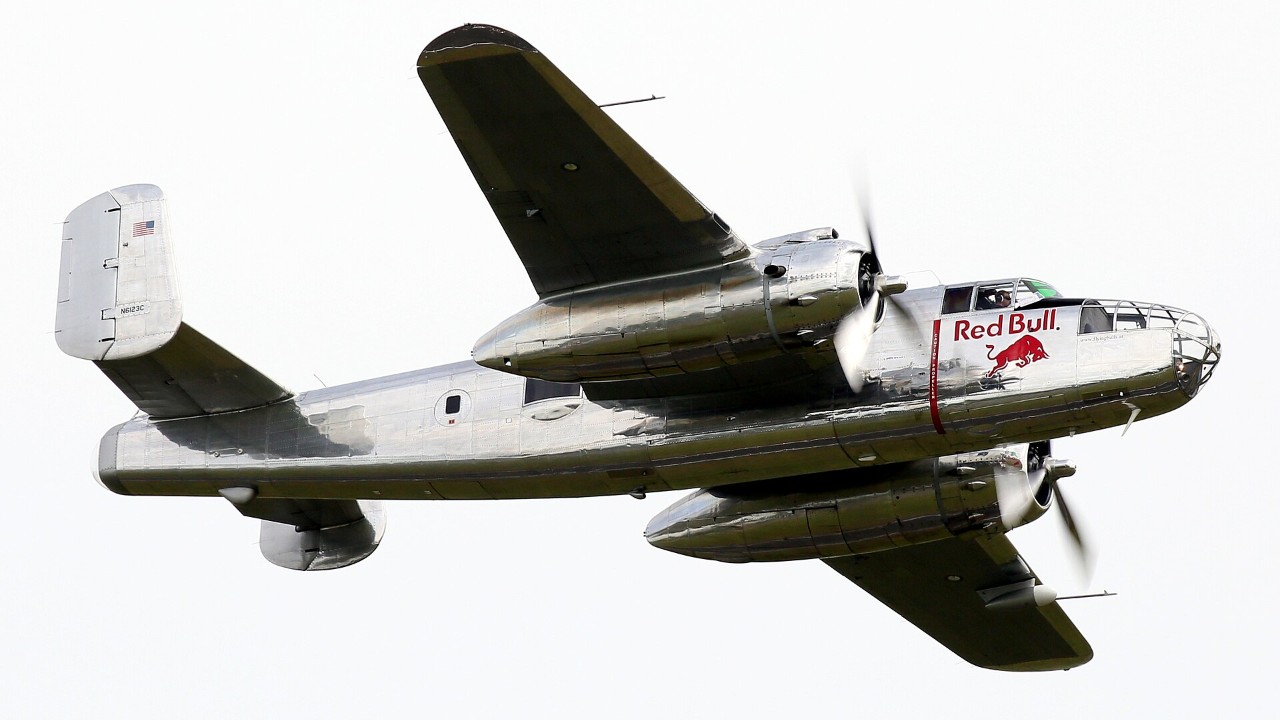
The B-25 Mitchell earned its fame on 18 April 1942, when 16 of them took off from the deck of USS Hornet to strike Tokyo. That raid, flown by 80 airmen under Jimmy Doolittle, gave American morale a lift early in the war. Ever since, the Mitchell has carried that story to every airfield it visits.
Reunions proved how many still fly. For the 70th anniversary in 2012, organizers expected 21 B-25s to fly over the National Museum of the US Air Force, as Air & Space Forces Magazine reported. Five years later, plans called for 17 Mitchells to land at the museum for the 75th anniversary. The last surviving Raider, Lt. Col. Richard “Dick” Cole, then 101, planned to attend.
The Mitchells keep touring today. One example is the CAF’s B-25J “Show Me,” delivered to the Army Air Forces in January 1945 as a trainer. It reached the Missouri Wing of the CAF in 1982. In 2026, it was booked for ride flights on a summer tour that included Lexington, Kentucky. In our view, few bombers offer a better seat in the sky.
7. Lockheed P-38 Lightning
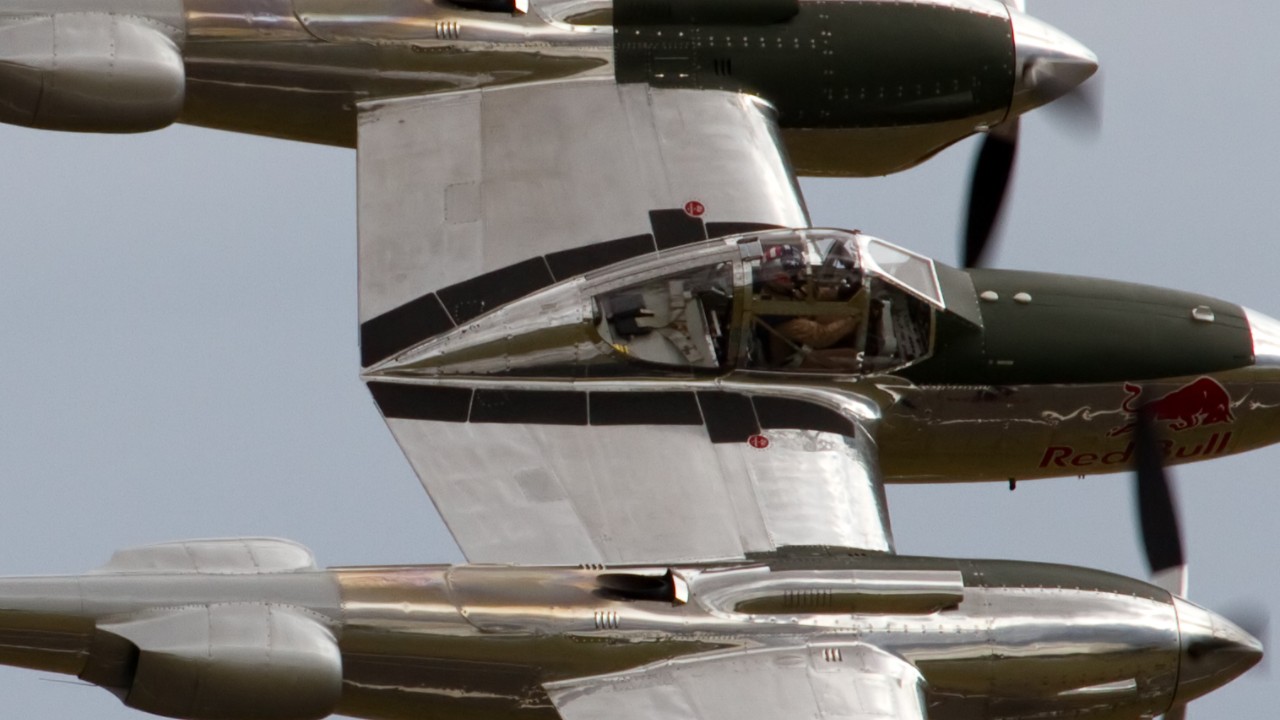
The twin-boom P-38 Lightning is one of the rarest sights at any airshow, which makes every appearance an event. Europe’s flying example belongs to The Flying Bulls, based at Hangar-7 in Salzburg, Austria. It was built in the United States and once belonged to warbird pilot Lefty Gardner, the same man who owned the CAF Corsair.
According to Vintage Aviation News, it is the only airworthy P-38 operating in Europe. In 2026, it crossed the Atlantic to fly in the daily afternoon air shows at EAA AirVenture Oshkosh, held July 20 to 26. That was its only public American air show appearance of the year.
Other Lightnings have their own legends. One P-38F, later named “Glacier Girl,” was forced down on the Greenland ice cap on 15 July 1942. Recovery teams pulled its remains from under 268 feet of ice in 1992, and restoring it took about ten years. Still, for European crowds, the Flying Bulls Lightning remains the only chance to see the shape in the air. Its two engines and twin booms give it a silhouette no other fighter of the war shared. We would cross an ocean for that sight too.