
“Once I flipped the switch to manual reversion, I don’t remember it being overly difficult.” That is how Kim Campbell remembers flying her crippled A-10 Warthog home from Baghdad in 2003, with no hydraulic pressure left. Most pilots would call that an understatement.
Every air force has a few machines that crews trust with their lives. These airplanes come home with holes in the wings, shredded tails and dead engines. Afterward, the people who flew them say things like “a bloody miracle,” and they mean it literally.
These are Combat Rated’s picks for 11 aircraft that the people who flew them, or fought them, describe as nearly impossible to bring down. Every entry rests on a named account from a pilot or crew member. We quote them only where we read their exact words.
1. Hawker Hurricane
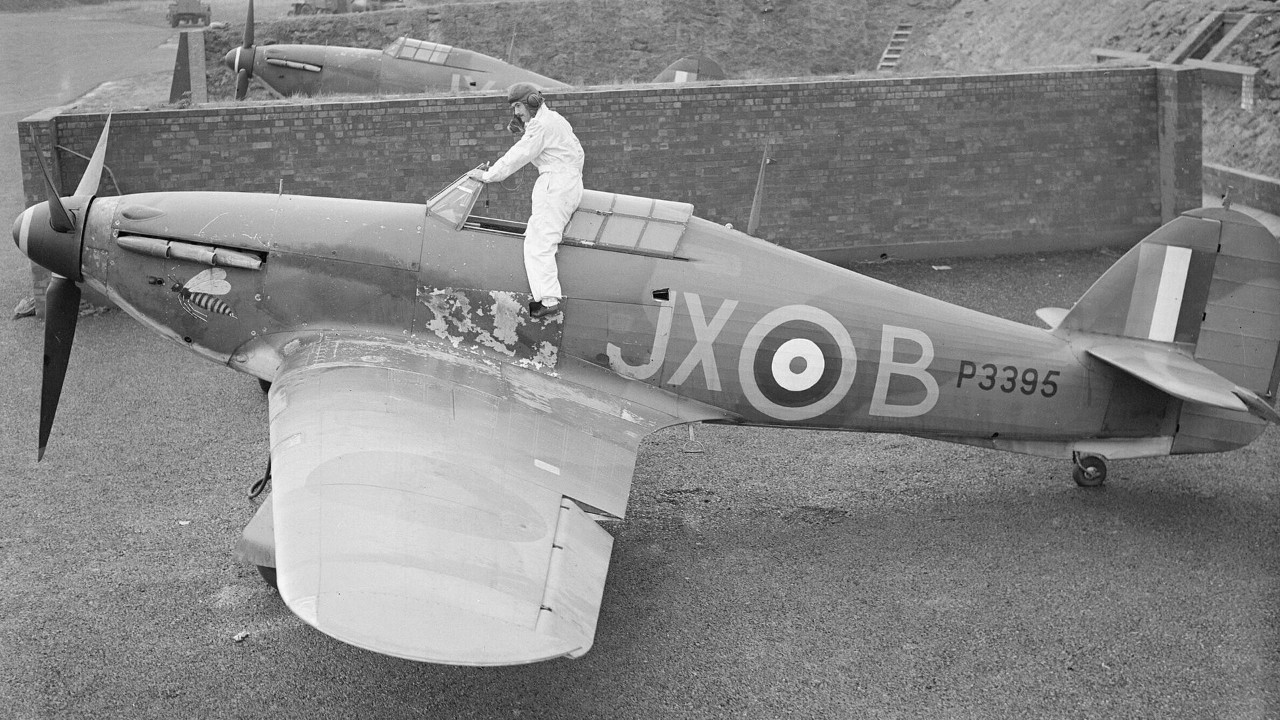
The Spitfire got the glamour in 1940, but the Hawker Hurricane did much of the heavy lifting. In mid-1940, Hurricanes equipped 29 Fighter Command squadrons, against 19 for the Spitfire. According to Air Ministry figures, Hurricanes destroyed three German aircraft for every two downed by Spitfires.
Its old-fashioned construction was part of its strength. The fuselage was fabric-covered, so enemy bullets often passed straight through without hitting anything vital. Ben Bowring of No. 111 Squadron claimed the Hurricane would keep flying almost after it was destroyed. After combat nearly tore his wings off, he landed and called the airplane “a bloody miracle.”
RAF ace “Ginger” Lacey put it even more bluntly. He said he would rather fly a Spitfire but fight in a Hurricane, because so many non-essential parts could be shot away without hurting performance. In our view, that is the highest praise a fighter pilot can give. The Hurricane was also easy to repair. That put damaged airplanes back in the fight quickly. Douglas Bader liked it for another reason. He said it was rock steady when firing.
2. Vickers Wellington
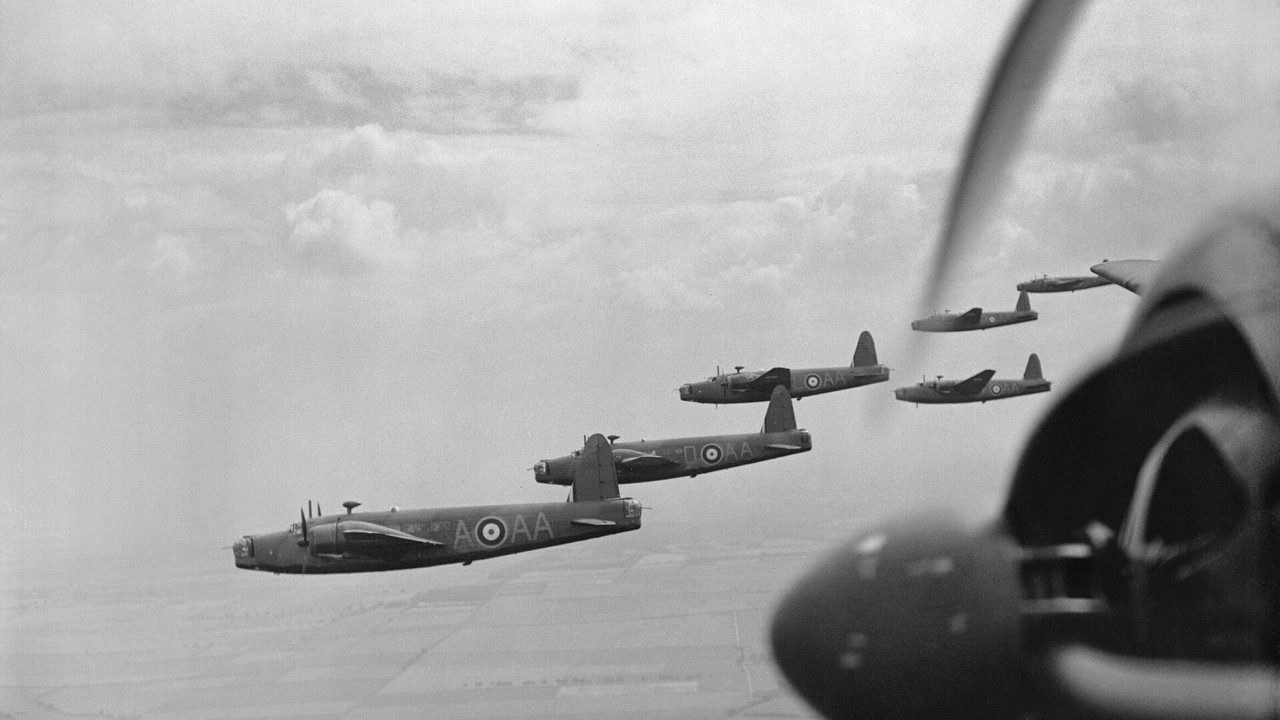
The Vickers Wellington looked unusual from the inside out. Its geodetic structure was a lattice of metal framework with fabric sewn over it. Bruce Allen, a wireless operator with No. 172 Squadron of Coastal Command, described that design in an interview for Veterans Affairs Canada.
His verdict was simple. Wellingtons “could be shot at and holed and banged and bruised and blown to pieces and they still flew,” Allen said. He added one honest limit: “as long you didn’t knock out an engine or something of that nature.” Comparing them with metal-skinned bombers, he concluded that “the old Wellingtons were tough as could be.”
One famous night proved his point. On 7 July 1941, a 75 (NZ) Squadron Wellington was attacked by a Messerschmitt over the Zuider Zee, and fire broke out near the starboard engine. Sgt. James Ward climbed out onto the wing to smother the flames, cutting holds in the fabric as he went. The fire finally burned out with no fabric left to feed it. Even so, the RAF Museum notes that the crew made a safe landing. Ward received the Victoria Cross.
3. Grumman F4F Wildcat
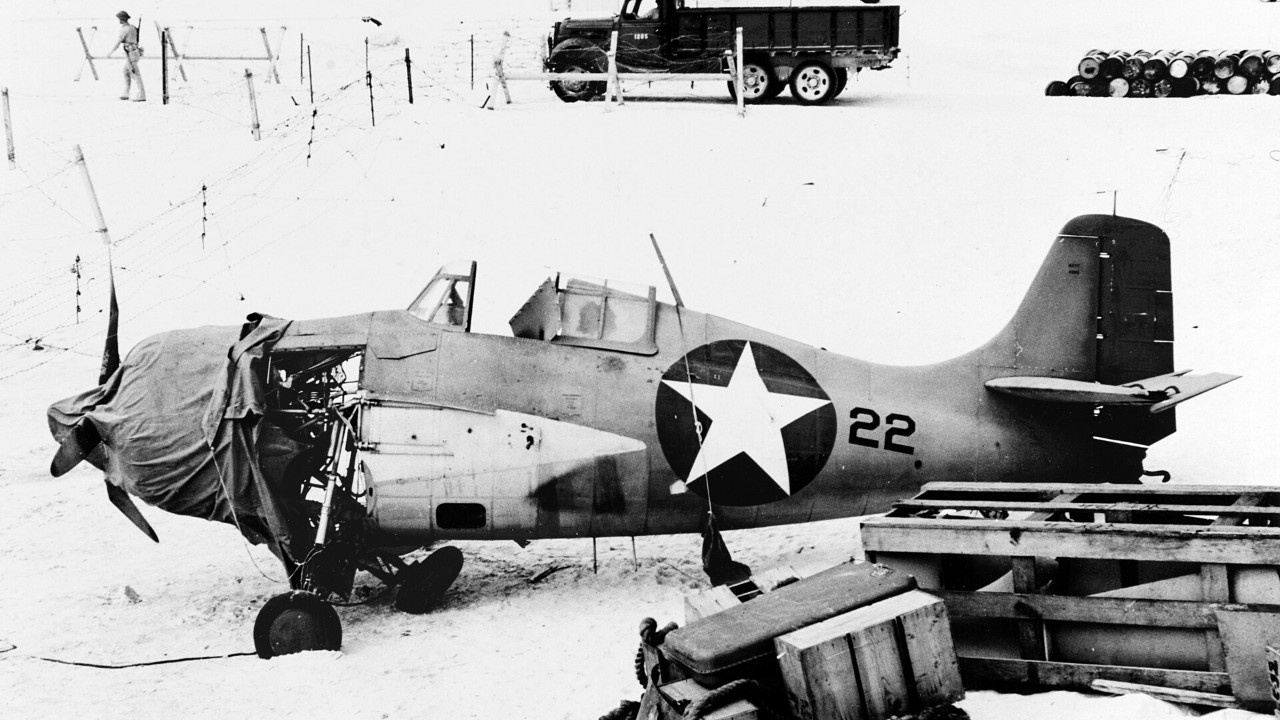
The most striking praise for the Grumman F4F Wildcat came from the enemy. On 7 August 1942, over Guadalcanal, Japanese ace Saburo Sakai attacked a lone Wildcat flown by James Southerland. In his memoir, Samurai!, Sakai wrote: “I pumped 200 rounds into the Grumman’s cockpit.”
The result stunned him. “I could not believe what I saw; the Wildcat continued flying almost as if nothing had happened,” Sakai recalled. He described bullet holes that “had cut the fuselage and wings up from one end to the other.” Meanwhile, the skin of the rudder was gone, and “the metal ribs stuck out like a skeleton.” In his words, “It was incredible that his plane was still in the air.”
Sakai eventually hit the engine, and the American pilot bailed out over the Guadalcanal coast. Still, we think that account says more about the Wildcat than any spec sheet. Sakai had fired 200 rounds and still needed more. Here was one of Japan’s top aces, struggling to bring down an airplane that simply refused to fall. In our view, few compliments from an enemy carry more weight.
4. Douglas SBD Dauntless
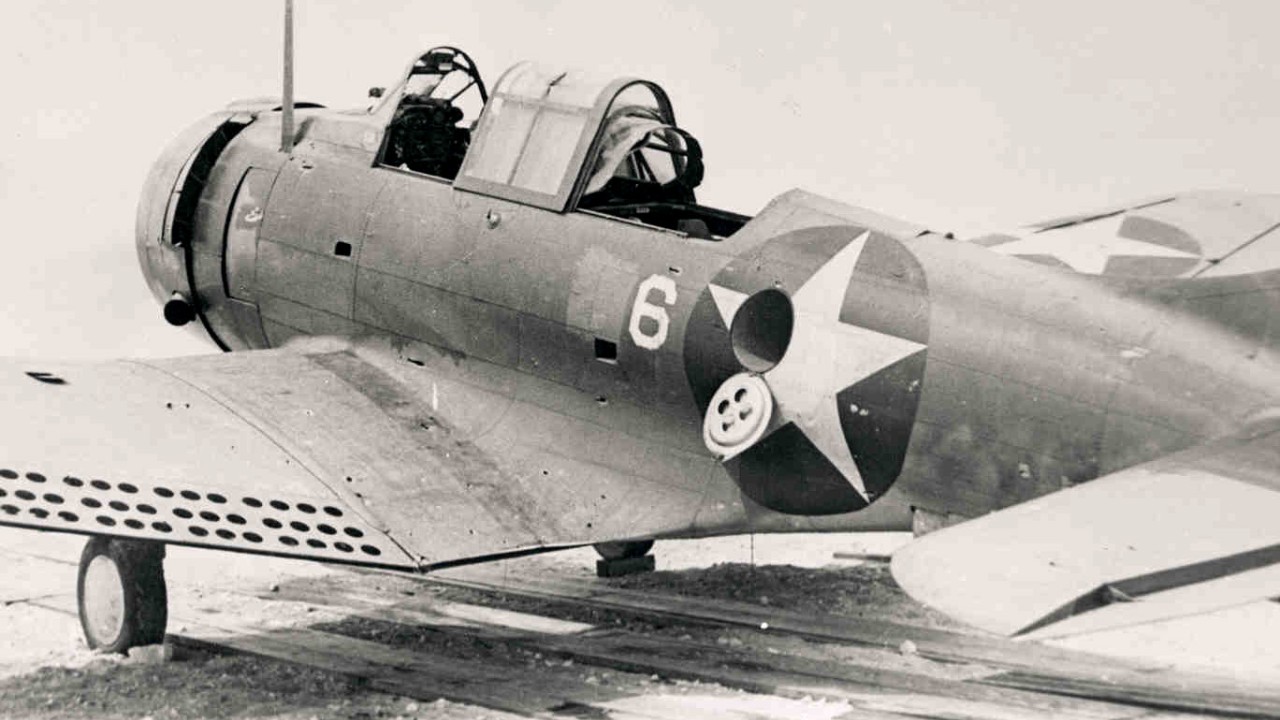
The Douglas SBD Dauntless was the Navy’s dive bomber at Midway, and it brought many of its crews home. In September 1944, the Navy’s Bureau of Naval Personnel Information Bulletin published a “War Record of the SBD.” It reported that “many Dauntlesses returned from Midway with gaping wounds in their wings, fuselages and tail surfaces.”
According to that wartime bulletin, pilots who saw the damage in the repair hangars found it hard to believe a plane could take so much punishment and still reach its carrier. Small wonder that crews knew the SBD as “the pilot’s friend.” The full bulletin text also makes a striking statistical claim.
Specifically, it says “the SBD maintained the lowest ratio of losses per mission of any plane operating in the theater.” In our view, that is a remarkable record for a dive bomber. After all, its job was to dive straight at defended ships and targets, then pull out low and slow. The Dauntless did that again and again. Its crews kept coming home to tell the story, and the Navy’s own bulletin said so while the war was still on.
5. Boeing B-17 Flying Fortress
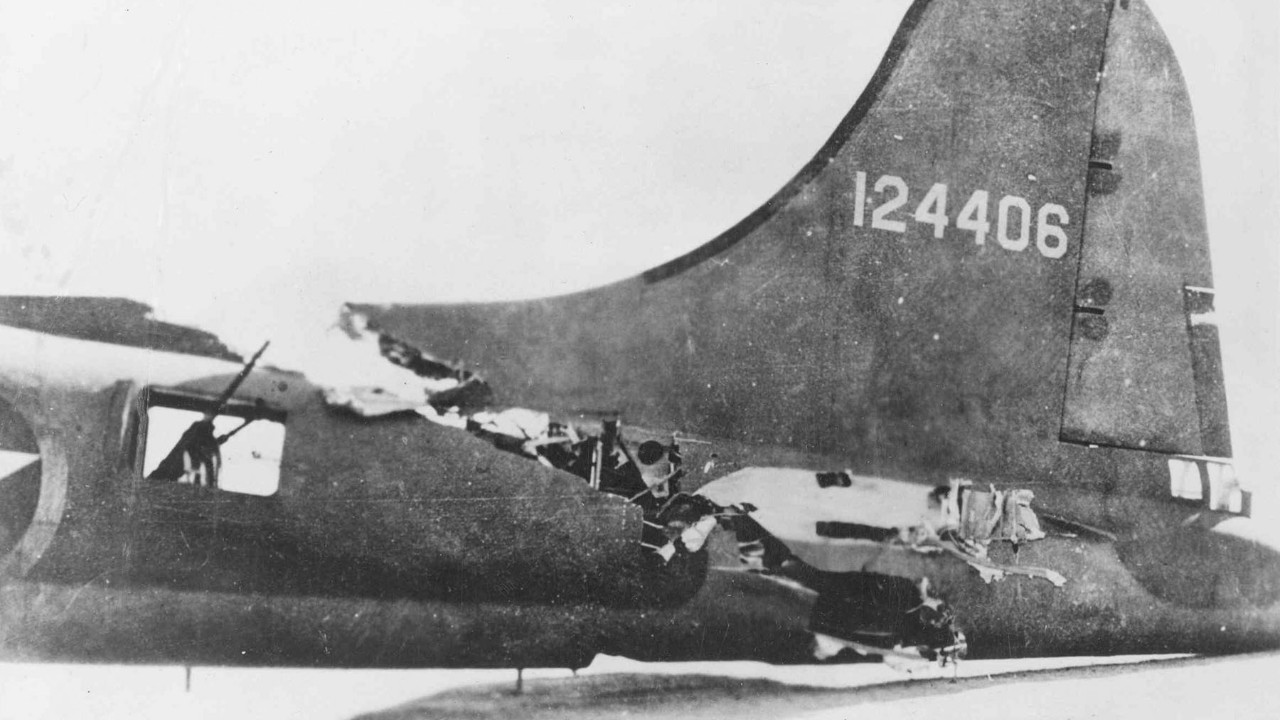
The B-17 Flying Fortress earned its name in hundreds of crew stories, but one stands out. In early 1943, the B-17 All American of the 97th Bomb Group flew from a base near Biskra, Algeria. During a raid, a German fighter collided with the bomber’s tail. Bombardier Ralph Burbridge later described the damage: “That Jerry plane had lopped off half of our tail section completely off.”
The remaining half looked ready to fail. “The other half and the rudder looked like they would shake loose at any moment,” Burbridge said. Pilot Kendrick “Kenny” Bragg nursed the bomber home anyway, escorted by other crews. “It seemed like the trip back took 10 years,” Burbridge recalled, “but the base wasn’t really that far.” Remarkably, none of the crew was hurt.
The All American landed with its tail wheel stuck up, skidding the last 100 yards. When ground crew climbed aboard to inspect it, the damaged tail section fell off. Photos of the crippled bomber became famous, and one appeared on the cover of Life magazine. For us, no single image captures the Fortress’s reputation better. Eddie Cantor later dedicated a 1943 hit song to Bragg and his crew.
6. Republic P-47 Thunderbolt
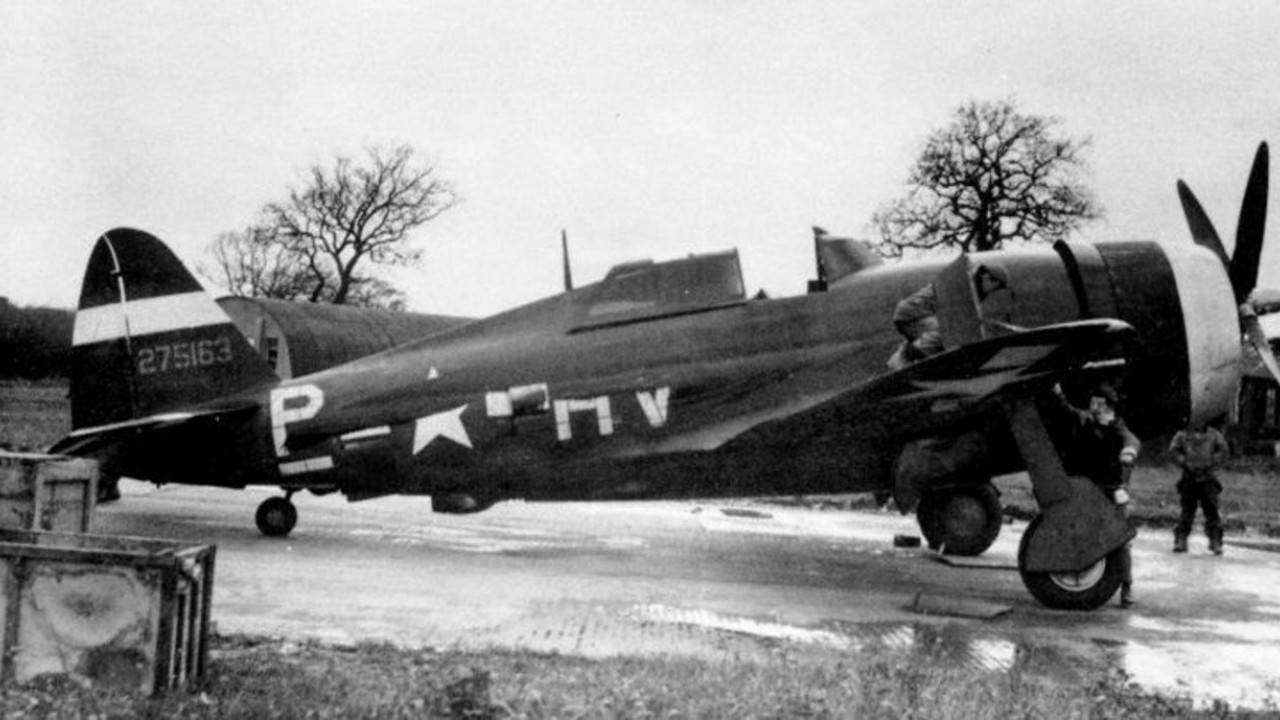
Robert S. Johnson went on to become a celebrated ace, but one mission nearly ended his career early. On 26 June 1943, he was flying at the rear of 48 P-47s from the 61st Fighter Squadron over occupied France. Then 16 Fw 190s attacked. A 20mm cannon round hit his Thunderbolt, destroying the hydraulics and setting the airplane on fire.
The canopy jammed shut, so Johnson could not bail out. His airplane went into a spin, but the spin snuffed out the fire. As the Air Force tells Johnson’s story, he then turned for home while one Fw 190 kept firing. He rolled and turned until the German pilot ran out of ammunition.
Johnson survived because the Thunderbolt kept flying, even with its guns knocked out and its systems shredded. Later accounts say he stopped counting at 200 bullet holes. He told that story in his own memoir, Thunderbolt!, and it became the P-47’s defining legend. In our view, few fighters ever earned their nickname, “the Jug,” with more grit than that. His unit lost two fighters that day. Johnson was not one of them.
7. Ilyushin Il-2 Sturmovik
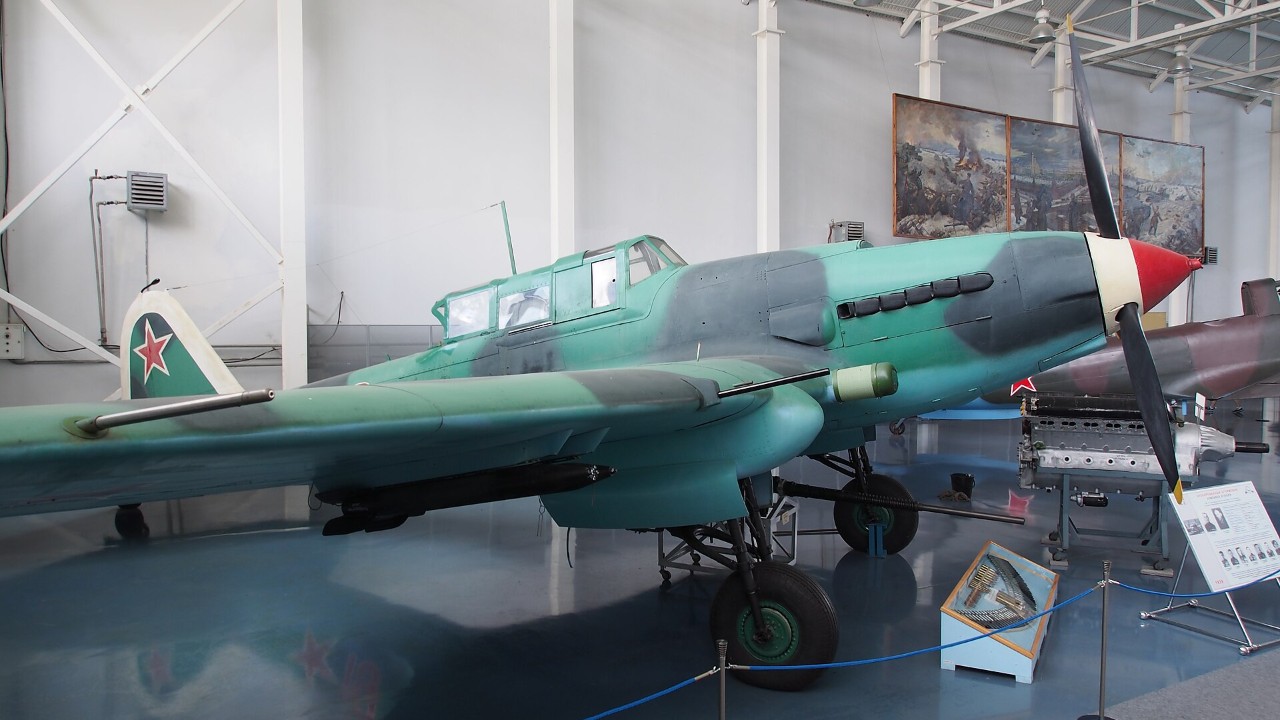
The Ilyushin Il-2 Sturmovik was built around armor. Its front fuselage formed an armored “bathtub” that shielded the engine, cockpit, radiators and fuel tanks. The Soviet Union manufactured more than 36,000 of them, so few aircraft saw more combat.
Vasily Emelianenko flew it, and he told his story in the memoir Red Star Against the Swastika. He earned the title Hero of the Soviet Union after 80 combat sorties and went on to fly 92 in all. According to his publisher, Emelianenko was shot down three times, and each time he brought the damaged airplane back to base. In our view, few attack pilots of any air force could match that.
Still, his account is honest about the Il-2’s weaknesses. His publisher describes it as “practically unrivalled in terms of fire power,” yet “slow to manoeuvre and an easy target for fighters.” Crews attacked flak columns at extremely low altitude, and losses were heavy. In our view, that makes Emelianenko’s three returns even more telling. The Il-2 was often hit. Yet its armor gave pilots a real chance to come home.
8. Republic F-105 Thunderchief
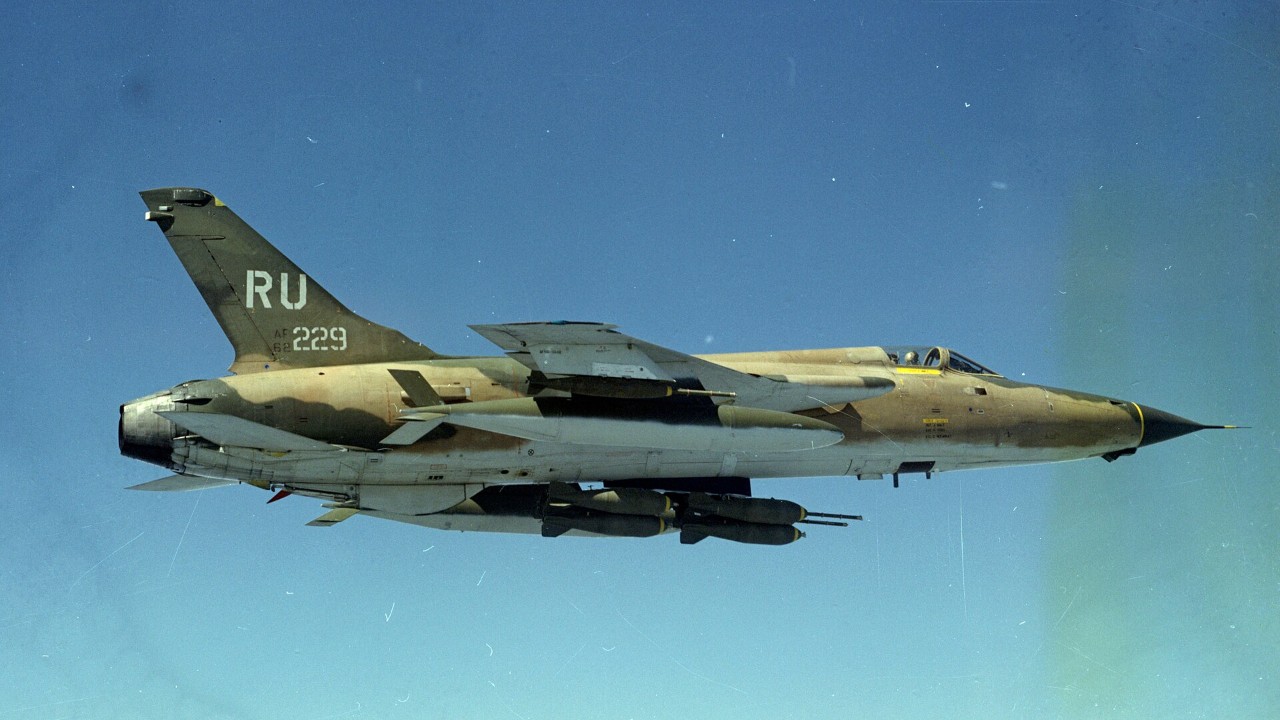
The Republic F-105 Thunderchief was the workhorse of the air war over North Vietnam. In the first five years of the war, it flew 75 percent of all Air Force strikes there. The pilots called it the “Thud,” and they knew it well.
Vic Vizcarra, a Thud veteran, put its reputation plainly in a joint interview: “The aircraft was known for its toughness and ability to return to base with extensive battle damage.” His fellow Thud pilot Paul Metz summed it up in three words: “Big, Rugged, Fast.”
The F-105 was not invulnerable, however. Vizcarra explained that its original layout put both flight-control hydraulic lines close together, so “a hit on one line usually meant both lines would be cut.” As a result, engineers added a third hydraulic line along the top of the spine. In our view, that fix shows how seriously the Air Force took survivability. A jet that already shrugged off heavy damage became even harder to bring down. In our view, that combination of brute strength and smart fixes is exactly what the Thud’s pilots trusted.
9. McDonnell Douglas F-15 Eagle
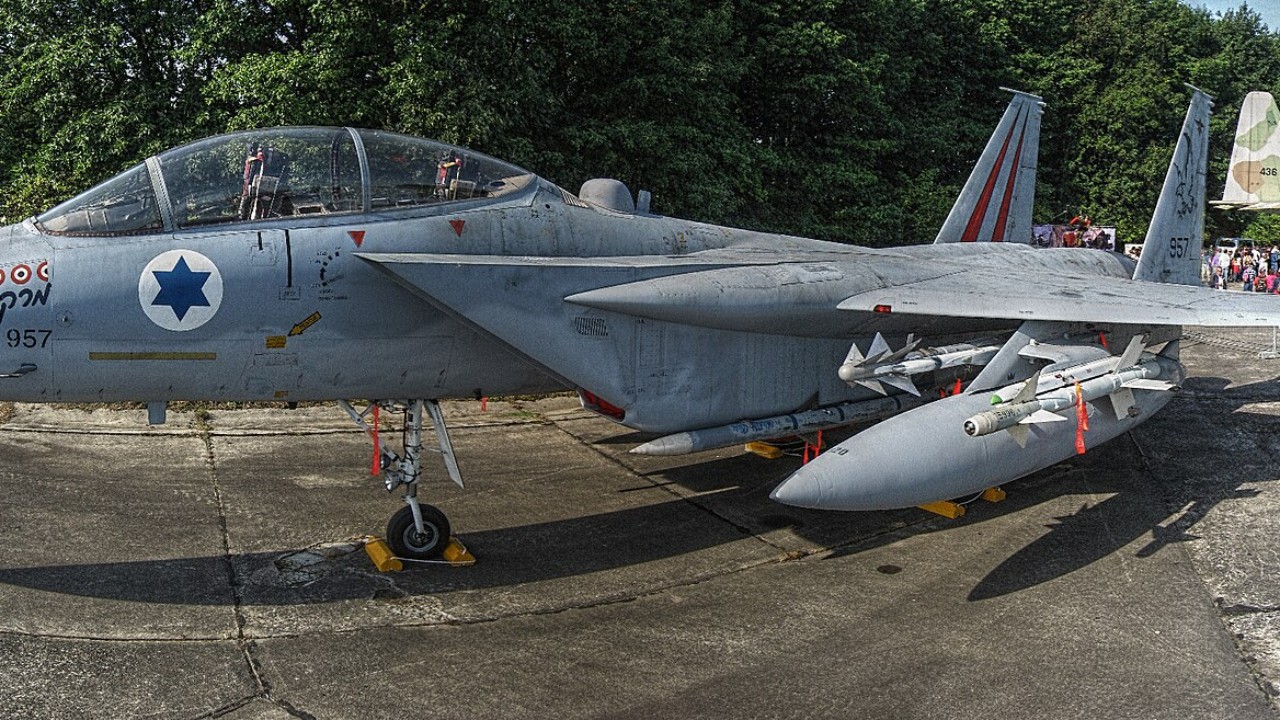
On 1 May 1983, an Israeli Air Force F-15D collided with an A-4N Skyhawk during a training exercise over the Negev desert. The Skyhawk broke apart, and its pilot ejected safely. Meanwhile, the Eagle’s right wing was sheared off about two feet from the root.
Pilot Ziv Nedivi kept flying. With most of a wing gone, he had to land fast. “I was landing at approximately twice the normal landing speed,” he later said. The recommended speed was about 130 knots, and Nedivi came in at close to 260. “We stopped maybe 20 feet short of the barrier,” he recalled. His verdict: “I don’t think any other aircraft could have taken that amount of damage.”
McDonnell Douglas could hardly believe it. According to Nedivi, the company’s “first inclination was that it was a taxiing accident, it couldn’t happen in the air.” The jet, Baz 957, later received a new wing and returned to service. For us, the one-winged Eagle is the most famous survival story of the jet age. Without that toughness, Nedivi would almost certainly have had to eject.
10. Fairchild Republic A-10 Warthog
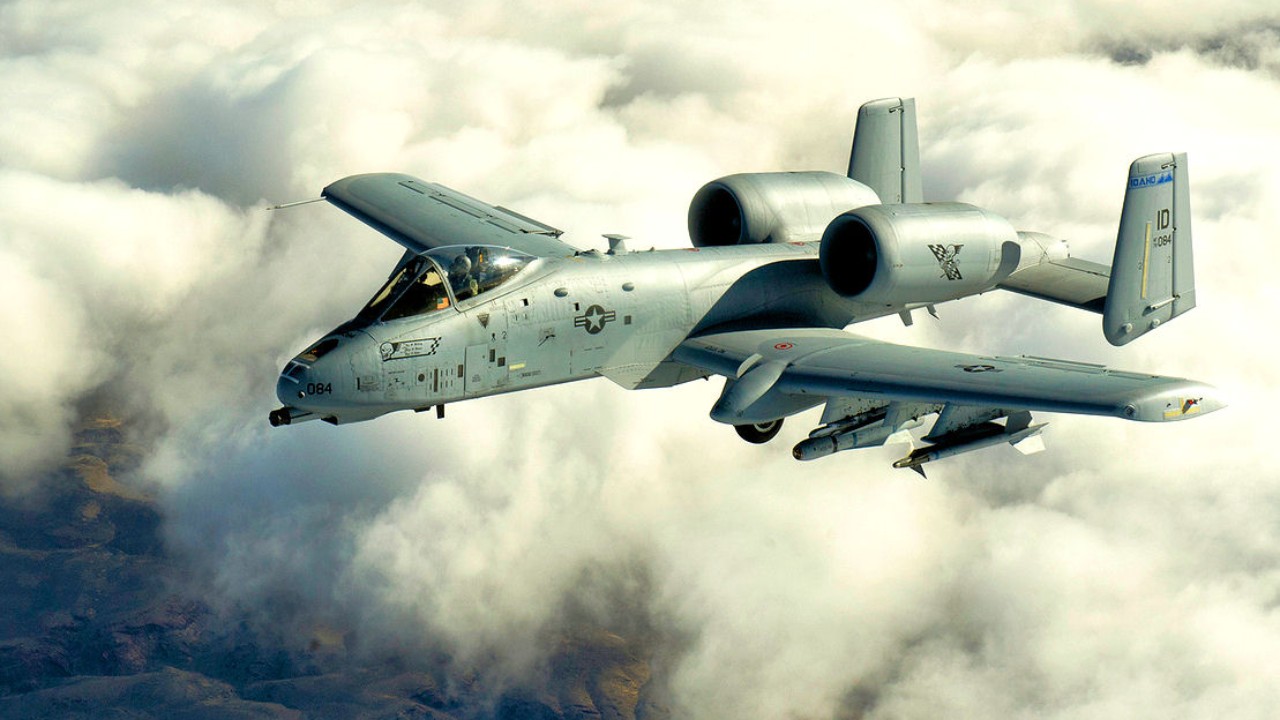
The A-10 Warthog was designed to take a beating, and it even has a manual backup for its flight controls. On 7 April 2003, while Kim Campbell was flying close air support over Baghdad, a surface-to-air missile exploded at the back of her jet. Her hydraulic gauge dropped to zero, which meant losing the systems that normally move the controls.
Campbell switched to manual reversion, a system of cranks, pulleys and cables. She flew about 300 miles back to Ahmad Al-Jaber Air Base in Kuwait and landed roughly an hour after the hit. Her flight lead, Lt. Col. Rick Turner, reported hundreds of small holes and a football-sized hole in the right horizontal stabilizer. “Kim landed that jet with no hydraulics better than I land the A-10 every day with all systems operational,” retired Lt. Col. Mike Millen later said.
Other Hog pilots share that faith. One active-duty A-10 pilot told Task & Purpose that “in all my time in combat I’ve never once worried” about whether the jet would bring him home. Campbell’s jet, tail number 81-987, never flew again. It is now displayed at Seymour Johnson Air Force Base, North Carolina.
11. Sukhoi Su-25 Frogfoot
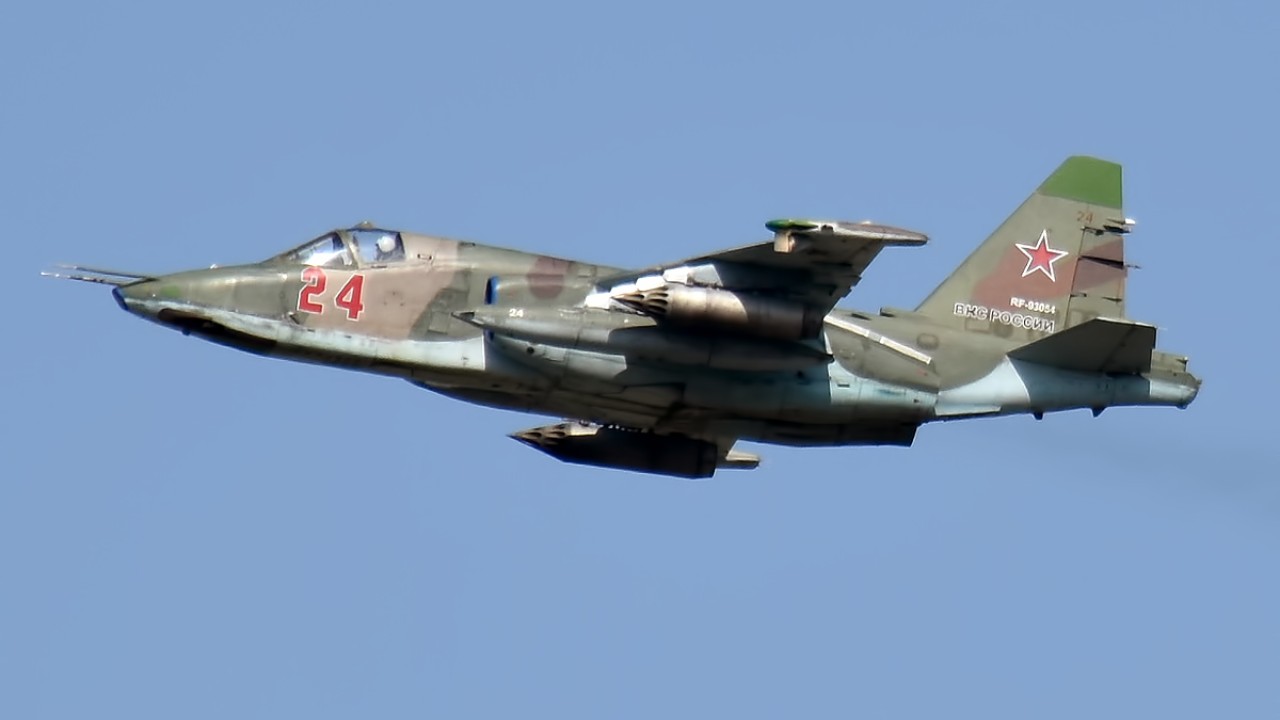
The Sukhoi Su-25 is Russia’s answer to the A-10, and it carries even more armor. It first flew in February 1975. According to The Aviationist, it carries about 1,100 kg of titanium armor, compared with 540 kg on the A-10. Like the American jet, it has a titanium “bathtub” around the cockpit, and most of its systems are duplicated.
In March 2022, Russia’s Ministry of Defense released footage of an Su-25 taxiing back with heavy damage from a shoulder-fired missile hit on its rear fuselage. In the ministry’s account, the pilot shut down the damaged engine and chose not to abandon the aircraft. His wingman, Lt. Col. Denis Litvinov, reportedly covered him, and flares diverted a second missile.
The jet reportedly suffered avionics and control failures on approach but landed without incident. Because that account comes from the Russian government, we treat it as a claim, not a verified fact. Nevertheless, the footage of the damaged jet back on the ground matches the Su-25’s reputation. At the same time, at least six Su-25s had been confirmed lost in Ukraine by then, a reminder that “nearly impossible” is never the same as impossible.