
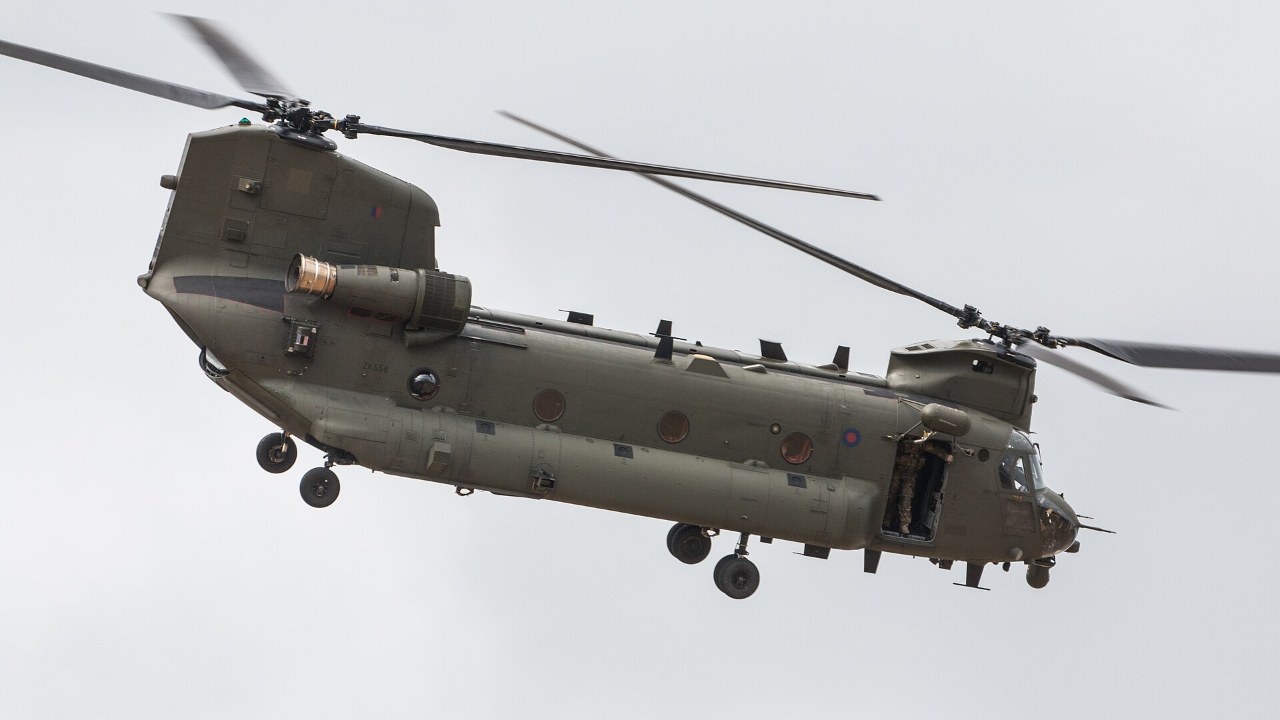
Britain has decided to turn two of the Royal Air Force’s workhorses into firefighters. The government said on Oct. 22, 2026, that the RAF’s Chinook helicopters and A400M transport aircraft “will be equipped so they can fight fires,” and that the Ministry of Defence will develop an aerial firefighting capability permanently based in the UK.
The aircraft are meant for the fires that ground crews struggle to reach. The government says they will be ready, on request, to help crews tackle blazes on remote moorland and steep, hard-to-reach terrain, after a summer the release calls the UK’s hottest on record.
The decision was announced in a joint government release from the Ministry of Housing, Communities and Local Government, the Ministry of Defence and the Prime Minister’s Office, issued for a wildfire summit on Oct. 22 and updated on Oct. 26. It was one item in a wider wildfire package for England.
How the military help will be requested
The release keeps the existing route for military help in place. Civilian fire and rescue services in all four UK nations can still request firefighting support “through the Military Aid to the Civil Authorities (MACA) process,” the government says.
What the release does not give is hardware detail. It names no water tank, bucket or retardant system for either aircraft, sets no date for the first equipped Chinook or A400M, and does not say how many airframes will be fitted. The Defence Secretary’s statement in the release refers only to “new specialist firefighting equipment.” Nor does it attach a separate figure to the military element.
What the A400M has already shown
The A400M has carried firefighting gear before, in its manufacturer’s trials. Airbus said in a Dec. 5, 2023, release that its prototype kit was “capable of dropping 20,000 litres in a single discharge” and “does not require any modification to the aircraft,” so it can be moved between any A400M in a fleet. The liquid sits in a tank in the cargo hold and leaves by gravity through a discharge pipe, and the tanks can be filled in under 10 minutes with standard ground pumps, Airbus said.
That campaign, run over two weeks in south-western and central Spain with advice from the Spanish Air Force’s 43rd Firefighting Squadron, made six drops, three of red retardant and three of water, laying lines more than 400 meters long, according to Airbus. The company first tested a removable demonstrator on the A400M in July 2022. The UK government has not said whether the RAF will use the Airbus kit or another system.
Airbus Defence and Space UK did appear in the Oct. 22 release. Kata Escott, its managing director, said: “With our life saving capabilities, we are supporting the UK effort in the air.” She also pointed to the company’s digital and early-warning space assets.
The rest of the wildfire package
The aircraft decision sits alongside civilian measures in the same release. The government committed up to £45 million for lighter, more breathable wildfire-specific protective equipment for firefighters in England and for additional specialist wildfire teams, and £25 million to restore peatlands in England so they hold more water and act as natural firebreaks. A Peatland Restoration Grant Scheme is set to run from April 2027 to April 2029.
The release also announced a new Wildfires AI Unit in COBR’s National Situation Centre, work with the Met Office on better wildfire forecasts, and England’s first Wildfire Action Plan. It cited Met Office findings that “climate change made the extreme heat around 130 times more likely.”
What the RAF has now is a decision, not a date. The government’s commitment is that its Chinooks and A400Ms will be equipped to fight fires and that the Ministry of Defence will build a permanent UK-based aerial firefighting capability; the equipment, the number of aircraft and the timetable are still to be announced.